React Native 0.75 Release Marks Strategic Shift Toward Framework-First Development and Architectural Stabilization


The Meta-led React Native team has officially announced the release of React Native 0.75, a version that signals a major evolution in the ecosystem’s development philosophy while delivering significant performance optimizations and layout capabilities. This update introduces Yoga 3.1, provides essential stabilization fixes for the "New Architecture," and formalizes a recommendation that marks a departure from the project’s historical onboarding process: the transition toward a framework-centric development model. By prioritizing the use of integrated frameworks like Expo, the React Native team aims to streamline the developer experience and reduce the maintenance burden of the core library, ensuring that the platform remains competitive in an increasingly complex mobile development landscape.
The Strategic Pivot to Framework-Based Development
The most significant non-technical change in React Native 0.75 is the official recommendation for developers to utilize a React Native Framework rather than starting with a bare-metal installation. This guidance, which was first previewed during React Conf earlier this year, is now being reinforced through structural changes within the software itself. Historically, the react-native init command served as the primary gateway for new developers. However, the development team has determined that this "opinionated" template approach, bundled within the core NPM package, no longer aligns with the long-term vision of a "Lean Core."
To reflect this shift, React Native 0.75 has moved its default project template to a separate package, @react-native-community/template. This decoupling allows the community to iterate on the template without waiting for core React Native release cycles. Furthermore, the react-native init command has been officially sunsetted; while it remains functional in 0.75 with a prominent deprecation warning, it is scheduled to stop creating new projects on December 31, 2024. After this date, developers will be directed to use the Expo CLI or the Community CLI’s init command directly.
This shift is rooted in the "Frameworks" philosophy, which posits that managed environments like Expo provide a superior developer experience by handling complex tasks such as native dependency management, over-the-air (OTA) updates, and automated build pipelines. For enterprise-level applications, this reduces the "boilerplate" fatigue and allows engineering teams to focus on feature development rather than infrastructure maintenance.
Yoga 3.1 and the Modernization of Layout Capabilities
On the technical front, React Native 0.75 integrates Yoga 3.1, the latest version of the layout engine that powers React Native’s cross-platform UI rendering. This version introduces long-requested support for percentage-based values in several key layout properties, bringing React Native closer to standard CSS behavior found in web development.
Specifically, the gap, columnGap, and rowGap properties now support string values with percentages. This allows for more fluid and responsive designs where spacing between elements can adapt dynamically to the parent container’s dimensions. Additionally, the transform property now accepts percentage values for translateX and translateY transformations. For example, a developer can now move an element by 100% of its own width or height, a common requirement for creating sliding animations and off-screen menus.
These layout enhancements are exclusive to the "New Architecture," further incentivizing developers to migrate away from the "Old Architecture" (the Bridge). By aligning more closely with web standards, Meta is lowering the barrier to entry for web developers transitioning to mobile, while simultaneously improving the precision of UI implementations for experienced mobile engineers.

Stabilization of the New Architecture
Since the New Architecture entered its Beta phase, the React Native team has focused on bridging the functional gaps between the legacy Bridge-based system and the modern Fabric/TurboModule system. React Native 0.75 includes a suite of bug fixes and performance improvements designed to bring the New Architecture closer to its "Stable" designation.
Key improvements in this release include:
- Enhanced Reliability: Addressing edge-case bugs in the Fabric renderer and TurboModules.
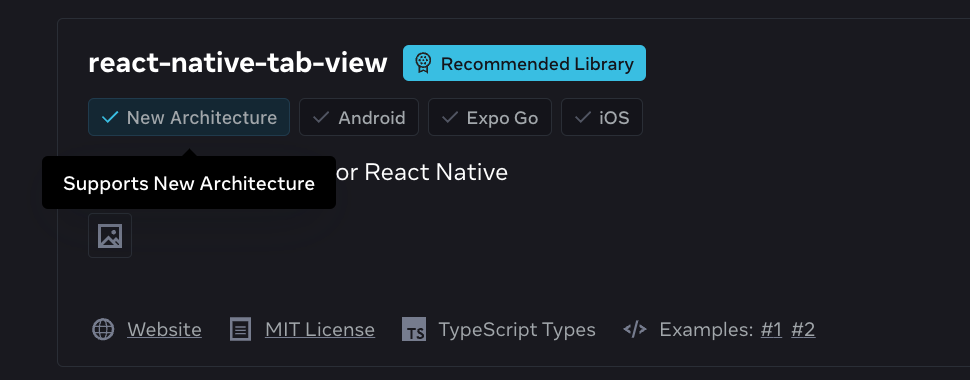
- Library Compatibility: The React Native Directory has been updated in collaboration with Expo to clearly display which libraries support the New Architecture. This transparency is vital for developers planning migrations, as third-party library support has historically been a bottleneck for architectural shifts.
- UIManager Support: A new post in the New Architecture Working Group details how
UIManagercan be supported during the transition, providing an API overview for Android that assists in the migration of advanced apps and complex native libraries.
Furthermore, React Native 0.75 stabilizes the API for accessing the jsi::Runtime within TurboModules. In previous versions, developers often resorted to risky workarounds to access the JavaScript Interface (JSI) runtime. The new stable APIs, such as RCTTurboModuleWithJSIBindings on iOS and TurboModuleWithJSIBindings on Android, provide thread-safe access to the runtime, enabling more performant and secure native-to-JS interactions.
Performance Benchmarks: Auto-linking and Build Speeds
Developer productivity is a core pillar of the 0.75 release. During the process of refactoring the initialization logic, the team successfully rewrote the auto-linking mechanism to optimize performance. Auto-linking is the process by which React Native automatically connects native dependencies to the project during the build phase.
The performance gains in version 0.75 are substantial:
- Android Build Speed: Auto-linking now runs approximately 6.5 times faster.
- iOS Build Speed: Auto-linking performance has improved by roughly 1.5 times.
For large-scale projects with dozens of dependencies, these improvements significantly reduce the time spent in the "build-and-wait" cycle, directly impacting the daily efficiency of development teams. These optimizations are particularly beneficial for developers using Expo, where the underlying tooling can fully leverage the revamped logic.
Breaking Changes and the Path to Legacy Support Termination
As React Native moves toward its 1.0 milestone, the team is becoming more aggressive in pruning legacy code and updating platform requirements. Version 0.75 serves as a final warning for several older technologies.
Minimum OS Requirements
The development team has confirmed that React Native 0.75 is the final version to support Android 6.0 (minSdk 23) and iOS 13.4. Starting with React Native 0.76, the minimum requirements will jump to Android 7.0 (minSdk 24) and iOS 15.1. This change is necessary to allow the core team to utilize modern native APIs and reduce the complexity of the codebase.
Component Refactoring
A notable breaking change in this release involves TouchableOpacity and TouchableHighlight. These components have been converted from class components to functional components. While this is a positive step for modernizing the library, it impacts TypeScript users who previously used these components as types in generic expressions. Developers must now use React.ElementRef<typeof TouchableOpacity> or the generic View type to maintain type safety.
Command Line Interface (CLI) Reductions
Two commands have been removed from the Community CLI:
ram-bundle: This command is now obsolete because the Hermes engine, which is the default for React Native, handles bundle loading more efficiently than the old RAM bundle format.profile-hermes: This tool used an outdated.cpuprofileformat. The team now recommends using the "Profiler" panel in the new Experimental Debugger, which provides a more accurate and modern debugging experience.
Ecosystem Impact and Chronology
The release of React Native 0.75 is the result of a massive collaborative effort, featuring 1,491 commits from 165 contributors. This high level of community involvement underscores the platform’s continued dominance in the cross-platform mobile space.
The timeline for React Native’s evolution is now clearly defined:
- Early 2024: New Architecture enters Beta at React Conf.
- August 2024: Release of 0.75, introducing Yoga 3.1 and framework recommendations.
- Late 2024: Final end-of-life update for version 0.72.
- December 31, 2024: Full sunset of the legacy
react-native initcommand. - Late 2024/Early 2025: Release of 0.76 with increased minimum OS requirements.
Analysis of Implications
The decision to push developers toward frameworks like Expo is a calculated move to solve the "fragmentation" problem that has plagued React Native for years. By standardizing the environment in which React Native apps are built, the core team can focus on the underlying engine (Hermes, Fabric, Yoga) while leaving the high-level developer experience to specialized framework maintainers.
For the average developer, this means a more "Apple-like" experience: things are more likely to "just work" because they are being tested within the context of a unified framework. However, for "bare-metal" enthusiasts or companies with highly customized build pipelines, this requires a deeper understanding of the underlying CLI and template structures as they move out of the core package.
The layout improvements in Yoga 3.1 also signal a continued commitment to UI fidelity. By supporting percentages in gaps and translations, React Native is addressing long-standing criticisms regarding the difficulty of creating truly responsive designs compared to web-based technologies like Flutter or standard CSS.
In conclusion, React Native 0.75 is more than just a collection of bug fixes; it is a strategic realignment. By embracing frameworks, stabilizing the New Architecture, and optimizing the build pipeline, Meta is ensuring that React Native remains the primary choice for cross-platform mobile development in an era where speed of delivery and architectural robustness are paramount. Developers are encouraged to use the React Native Upgrade Helper to transition their existing projects to 0.75, while new projects should look toward Expo to align with the platform’s future trajectory.