
Jobs Created Using AI
Jobs created using chatgpt – Jobs created using AI sets the stage for a fascinating exploration of the future of work. This analysis dives deep into the emerging job roles, examining how these new positions differ from traditional ones and the skills needed to succeed in this rapidly changing landscape.
From the impact on existing roles to the global implications and ethical considerations, this comprehensive overview provides a clear picture of the transformations ahead. We’ll also explore the necessary training and education programs, future trends, and the importance of workforce adaptability in this new era.
Job Types Created by Kami
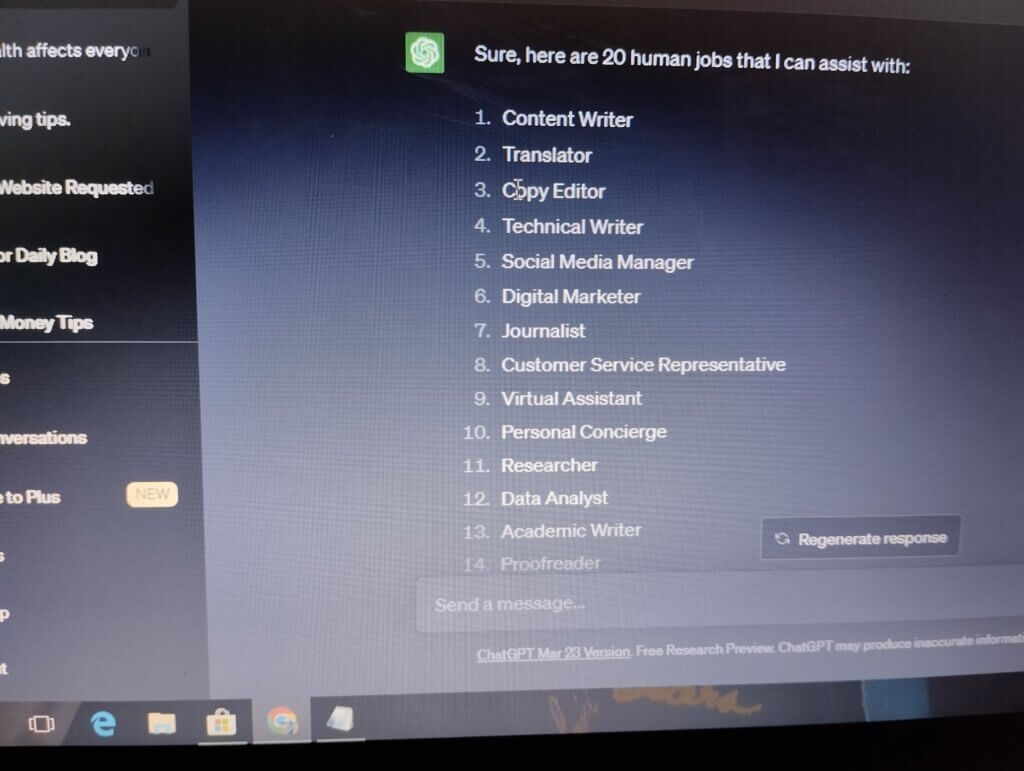
The proliferation of AI tools like Kami is reshaping the job market, creating new opportunities and demanding adaptations in existing roles. This evolution presents both challenges and exciting prospects for professionals and organizations alike. The nature of work is fundamentally changing, requiring a nuanced understanding of the skills needed to thrive in this new landscape.The emergence of AI-driven tools is not simply automating tasks; it’s creating entirely new roles that demand unique combinations of human ingenuity and technological expertise.
These roles will require a shift in focus, emphasizing human-centric skills like critical thinking, creativity, and complex problem-solving, while complementing them with technical proficiency in leveraging these tools.
Emerging Job Roles
The use of AI tools like Kami necessitates a shift in job roles, requiring professionals to adapt and acquire new skills. This includes the creation of new roles focused on AI development, implementation, and management, as well as roles that leverage AI for tasks previously performed by humans.
- AI Trainer/Prompt Engineer: These professionals design and refine prompts and training data to optimize AI models for specific tasks, ensuring accuracy and effectiveness. They are crucial in guiding the AI’s learning process and refining its output.
- AI Content Curator/Editor: This role focuses on identifying, organizing, and validating content generated by AI tools. They ensure accuracy, consistency, and adherence to ethical standards, refining the output for use in various applications.
- AI Ethics and Compliance Officer: With the rise of AI, there’s a critical need for professionals who understand and address the ethical implications of AI technology. This role focuses on ensuring responsible AI development and deployment, mitigating biases, and addressing potential risks.
- AI Integration Specialist: This role bridges the gap between AI tools and existing business processes. They analyze current workflows, identify areas for automation, and integrate AI tools to optimize efficiency and productivity.
Differences from Traditional Roles
Traditional roles often focus on singular tasks, while the new roles necessitate a broader skillset. These roles often require professionals to blend technical skills with creative problem-solving and adaptability. The ability to learn and adapt to rapidly evolving AI technologies is paramount.
- Traditional roles often focus on specific, well-defined tasks with limited interaction between different functions. New roles necessitate collaboration and a deep understanding of how AI tools interact with different departments and processes.
- Traditional roles might rely on established methods and procedures. New roles demand adaptability and creativity in the development and application of AI tools.
- Traditional roles may involve limited interaction with technology, while new roles require deep technical understanding and proficiency in using AI tools effectively.
Skill Set Comparison, Jobs created using chatgpt
This table highlights the key differences in skill sets required for traditional and emerging roles related to AI tools.
| Skill Category | Traditional Role | New Role (AI-Related) |
|---|---|---|
| Technical Skills | Specific domain expertise, manual data entry, basic software usage | Programming, AI model development, data analysis, prompt engineering, and algorithm understanding |
| Cognitive Skills | Following procedures, performing routine tasks, data interpretation | Critical thinking, problem-solving, creative problem-solving, adaptability, and complex decision-making |
| Interpersonal Skills | Collaboration within specific teams | Collaboration across diverse teams, communication with AI tools, and explanation of complex technical concepts to non-technical audiences |
Projected Growth Rate
Predicting the exact growth rate of these new roles is challenging, as the AI landscape is still evolving. However, based on current trends and industry projections, these roles are expected to experience significant growth in the coming years.
| Job Type | Projected Growth Rate (2024-2029) | Rationale |
|---|---|---|
| AI Trainer/Prompt Engineer | 30-40% | Increasing demand for optimized AI models across various industries. |
| AI Content Curator/Editor | 25-35% | Rising use of AI-generated content and need for quality control. |
| AI Ethics and Compliance Officer | 20-30% | Growing awareness of ethical implications of AI technologies. |
| AI Integration Specialist | 20-30% | Need for integrating AI into existing workflows and processes across industries. |
Skill Requirements
The burgeoning world of AI-driven job creation necessitates a new skillset. Traditional job descriptions are rapidly evolving, demanding adaptability and a willingness to learn alongside emerging technologies. This shift necessitates a focus on both hard skills, like coding and data analysis, and soft skills, like critical thinking and problem-solving, to succeed in these new roles. Understanding the evolving requirements is key to navigating this changing landscape and securing a future-proof career.
Crucial Skills for Success
The successful execution of tasks within newly created roles hinges on a unique blend of skills. These skills extend beyond the conventional and encompass a combination of technical prowess and human-centered capabilities. Proficiency in leveraging AI tools, understanding data manipulation, and mastering problem-solving techniques are essential.
Importance of Adaptability and Continuous Learning
Adaptability is paramount in today’s rapidly evolving job market. The ability to quickly learn new technologies and concepts is crucial for navigating the ever-changing landscape. Continuous learning is not a choice, but a necessity. The rate of technological advancement is accelerating, and those who fail to adapt and continuously upskill risk being left behind. The workforce needs to embrace the mindset of lifelong learning to stay relevant and competitive.
This dynamic environment demands an openness to new ideas, an eagerness to explore emerging trends, and a proactive approach to skill development. Companies are seeking individuals who are not only proficient in their current roles but also possess the aptitude to adapt to new technologies and methodologies. A prime example is the evolution of software development; from traditional coding to incorporating AI tools, developers need continuous learning to stay relevant.
Top 5 Skills for Emerging Roles
To effectively navigate the intricacies of the new job landscape, a solid foundation in specific skills is critical. These skills are not static; they evolve alongside technological advancements, and the ability to adapt is a crucial component. A dynamic skillset is required for success.
| Rank | Skill | Description |
|---|---|---|
| 1 | Data Analysis | The ability to extract insights from data, analyze trends, and make data-driven decisions. |
| 2 | AI/ML Proficiency | Understanding and applying Artificial Intelligence (AI) and Machine Learning (ML) concepts and tools. |
| 3 | Problem-Solving | The capacity to identify problems, evaluate solutions, and implement effective strategies. |
| 4 | Communication Skills | The ability to clearly and effectively convey information, both verbally and in writing. |
| 5 | Critical Thinking | The capacity to analyze information objectively, identify biases, and form reasoned judgments. |
Education and Training Paths
The educational pathways for emerging roles diverge significantly from those of traditional jobs. Traditional jobs often rely on specific, structured educational programs. Emerging roles, however, frequently necessitate a blend of formal education and practical experience, often obtained through online courses, workshops, or apprenticeships. The emphasis on continuous learning and adaptability is key. Individuals seeking careers in the emerging field of AI-driven jobs must actively engage in self-directed learning to stay ahead of the curve.
This adaptability and proactive approach are essential to navigate the dynamic and rapidly evolving technological landscape. A prime example of this is the shift from traditional university degrees in engineering to online courses and certifications focusing on specific AI tools.
ChatGPT is undeniably creating new job opportunities, but ensuring the code it generates is secure is crucial. We need to deploy AI code safety goggles, like those discussed in Deploying AI Code Safety Goggles Needed , to avoid potential vulnerabilities. Ultimately, these safeguards will allow ChatGPT to be even more useful, expanding the range of jobs it can support and creating new opportunities for skilled developers.
Impact on Existing Roles: Jobs Created Using Chatgpt
Kami and similar AI tools are poised to reshape the job market, impacting existing roles in significant ways. From routine tasks to complex analyses, automation promises to alter the landscape of work, necessitating adaptability and skill development among workers. The extent of this change will vary across industries and job types, requiring careful consideration of the potential consequences and proactive strategies for navigating the evolving job market.
Augmentation of Existing Roles
Many existing jobs will not be entirely replaced but rather augmented by AI tools. Workers will need to integrate these tools into their workflows, leveraging their capabilities to enhance productivity and efficiency. For instance, a legal researcher can use Kami to quickly sift through legal documents, identifying relevant precedents and case laws. This frees up the researcher to focus on higher-level tasks, such as strategic analysis and argumentation, thereby improving the quality and speed of their output.
Replacement of Existing Roles
Some roles, particularly those heavily reliant on repetitive tasks, are vulnerable to complete automation. Customer service representatives handling simple inquiries or data entry clerks processing standardized information are examples of roles where AI can potentially take over core functions. While the emotional intelligence and problem-solving skills of human workers remain valuable, the potential for AI to automate these roles is real.
The impact of this automation will depend on the specific role and the willingness of employers and employees to adapt.
Susceptibility to Automation
The degree to which a job is susceptible to automation depends on several factors, including the level of routine and predictability of the work, the need for human judgment and critical thinking, and the availability of data for AI training. The table below provides a basic categorization of existing job types and their susceptibility to automation by Kami and similar technologies.
It is important to note that this is a simplified representation and specific circumstances may differ.
| Job Type | Susceptibility to Automation | Explanation |
|---|---|---|
| Data Entry Clerk | High | These roles involve repetitive data input, making them highly susceptible to automation. |
| Customer Service Representative (basic inquiries) | Medium | While human interaction is still important, simple inquiries can be handled by AI chatbots. |
| Software Developer | Medium-Low | While AI can assist in coding tasks, the creative and problem-solving aspects of software development remain uniquely human. |
| Financial Analyst | Medium | AI can analyze data and identify trends, but human judgment and interpretation are still crucial. |
| Physician | Low | Complex medical diagnoses and patient care require human judgment, empathy, and critical thinking. |
Adapting to Changes
Workers in roles susceptible to automation can adapt by focusing on skill development that complements AI capabilities. Developing skills in critical thinking, complex problem-solving, creativity, and emotional intelligence will be increasingly important. Upskilling and reskilling initiatives are vital to help workers transition into roles that are less susceptible to automation or that leverage the potential of AI. For instance, customer service representatives can transition into roles that require empathy and problem-solving in complex scenarios.
ChatGPT is rapidly creating new job opportunities in various sectors. From content creation to customer service, the possibilities are endless. The Department of Justice Offers Safe Harbor for MA Transactions here highlights the need for adapting to evolving legal landscapes, which in turn might spark new roles related to AI compliance and legal tech. These new roles are further evidence of how AI is shaping the future of work.
The key is to understand the changing job market and invest in the development of skills that are not easily replaceable by AI.
Global Implications
Kami-driven job creation isn’t a localized phenomenon. Its impact reverberates globally, with potential ramifications for economies in both developed and developing nations. Understanding this global distribution is crucial to anticipating and mitigating potential disparities in access to these new opportunities. The uneven distribution of digital literacy and infrastructure will undoubtedly shape the adoption and impact of these roles across the globe.The potential for these roles to disrupt existing labor markets is significant, and the degree of this disruption will likely vary across different regions.
Factors such as existing educational systems, technological infrastructure, and cultural attitudes towards automation will play a key role in determining how these new roles are adopted and how they reshape existing industries.
Global Distribution of New Roles
The creation of new roles stemming from Kami technology isn’t uniform across the globe. Developing nations often lack the robust digital infrastructure and educational systems necessary to train a significant workforce in these emerging fields. This disparity in access to technology and training could exacerbate existing economic inequalities. Conversely, developed nations, with their established technological infrastructure and skilled labor pools, are more likely to see faster adoption and integration of these new roles into their existing economies.
Potential Impact on Developing and Developed Nations
The impact of Kami-driven job creation will likely differ considerably between developed and developing nations. Developed nations, with their existing technological infrastructure and skilled labor pools, are more likely to see faster adoption and integration of these roles into their existing economies. This could lead to significant displacement of workers in traditional sectors, but also create new, higher-skilled roles.
Developing nations, on the other hand, may face challenges in adapting to these changes, potentially leading to a widening gap in economic opportunity. Examples of this disparity are already visible in the global adoption of other technologies.
Potential Job Demand by Region
| Region | Estimated Demand for Kami-Related Roles (2024-2028) | Key Factors Influencing Demand |
|---|---|---|
| North America | High | Strong technological infrastructure, established educational systems, and large existing market for AI applications. |
| Europe | High | High levels of digital literacy and significant investment in AI research and development. |
| Asia-Pacific | Moderate to High | Rapid growth in the technology sector, increasing investment in AI, and a large pool of tech-savvy workers. |
| Latin America | Moderate | Varying levels of digital infrastructure and educational systems, but growing interest in technology and AI. |
| Africa | Low to Moderate | Significant need for infrastructure development, digital literacy programs, and investment in AI talent. |
This table provides a simplified estimation of the potential demand for Kami-related roles. It’s crucial to remember that these are estimates, and the actual demand will depend on a complex interplay of economic, social, and technological factors. The estimated demand should be considered as a preliminary guideline, and more precise figures will emerge as the technology matures and its impact on various sectors becomes clearer.
Comparison of Job Creation Impact in Various Regions
The impact of Kami-driven job creation will vary greatly between regions. North America and Europe, with their established tech sectors and digital literacy, are likely to experience a more rapid and significant shift in job markets. Developing regions like Africa and Latin America may experience a slower and potentially more uneven transition, with challenges in training and adaptation.
Factors like existing infrastructure, educational systems, and economic structures will play a critical role in determining the precise impact on each region. The experience of other technological shifts in different parts of the world offers insights into the potential outcomes.
Training and Education
The rise of Kami-powered jobs necessitates a proactive approach to training and education. Simply relying on existing educational structures won’t suffice; we need tailored programs that equip individuals with the skills needed to thrive in this evolving job market. This involves not just acquiring technical proficiency but also fostering adaptability and critical thinking, crucial attributes for navigating the complexities of AI-driven workplaces.
Educational Programs for New Roles
Existing educational institutions need to adapt their curricula to incorporate AI literacy and skills. This might involve introducing introductory courses in machine learning, natural language processing, and data analysis, along with practical exercises utilizing tools like Kami. Specialization tracks focused on AI-related job functions, such as AI-assisted writing, content moderation, or data annotation, will be increasingly valuable.
Upskilling and Reskilling Initiatives
Upskilling and reskilling initiatives are critical for professionals in existing roles to remain competitive. These initiatives should focus on bridging the gap between current skillsets and the demands of AI-integrated workplaces. For example, a journalist might need to learn how to leverage AI tools for data analysis and content generation, while a customer service representative might require training in AI-powered chatbots and support systems.
Online courses, workshops, and mentorship programs can play a crucial role in facilitating this transition.
Training Courses
| Course Name | Description | Target Audience |
|---|---|---|
| Introduction to AI and Machine Learning | Fundamental concepts of AI and machine learning, including algorithms and applications. | Individuals with little or no prior knowledge of AI. |
| Kami Prompt Engineering | Strategies for crafting effective prompts to generate desired outputs from Kami. | Content creators, writers, marketers, and anyone who uses Kami. |
| AI-Powered Data Analysis | Utilizing AI tools to extract insights and trends from large datasets. | Data analysts, researchers, and business professionals. |
| AI Ethics and Responsible Use | Understanding the ethical considerations surrounding AI development and implementation. | All stakeholders involved in AI projects, from developers to end-users. |
Learning Resources
Staying informed about the latest advancements in AI and new job roles is paramount. Numerous resources provide valuable insights and practical training.
- Online courses platforms (Coursera, edX, Udacity): These platforms offer a wide range of courses on AI and related topics, catering to diverse skill levels.
- AI research publications (arXiv, Google Scholar): Keeping abreast of the latest research in AI can help individuals understand the technology’s evolution and potential applications.
- Industry blogs and podcasts: Following industry experts and news sources can provide valuable insights into emerging trends and new job roles.
- Kami’s own documentation and community forums: Official resources offer guidance and support for using Kami effectively.
Future Trends
The rapid advancement of Kami and similar AI technologies promises a profound reshaping of the job market. While some jobs may become obsolete, a new wave of roles and responsibilities will undoubtedly emerge, requiring a workforce adaptable to the evolving landscape. Understanding these future trends is crucial for navigating the transformations ahead.The evolution of the job market is no longer a gradual shift but a dynamic transformation.
Traditional roles will be reimagined, augmented, or even rendered obsolete as AI takes on tasks previously handled by humans. This isn’t a singular event, but a continuous process of adaptation and innovation.
Potential for Future Job Creation
The emergence of new roles, often intertwined with existing ones, is a significant outcome of AI integration. Instead of eliminating jobs entirely, AI often refines existing tasks, freeing human workers for more strategic and creative endeavors. This synergistic relationship between humans and AI is expected to generate a multitude of new roles focused on managing, overseeing, and optimizing AI systems.
Evolution of the Job Market
The job market is poised for a fundamental shift. Automation will continue to displace some tasks currently performed by humans, leading to the need for reskilling and upskilling initiatives. Simultaneously, new roles demanding specialized expertise in AI development, maintenance, and ethical considerations will emerge. The evolution won’t be linear; rather, it will be characterized by periods of rapid change interspersed with periods of adaptation.
The workforce will need to embrace continuous learning to thrive in this dynamic environment.
Potential Future Job Roles
The integration of AI will necessitate a diverse range of specialized roles to manage, monitor, and optimize AI systems.
| Job Role | Description |
|---|---|
| AI Ethics Officer | Ensures AI systems are developed and deployed responsibly, addressing biases and potential harm. |
| AI Trainer | Develops and implements training programs for humans to effectively collaborate with AI. |
| AI System Architect | Designs and builds complex AI systems, integrating various technologies. |
| Data Scientist (AI-focused) | Extracts insights from vast datasets to enhance AI models and optimize their performance. |
| AI Content Creator | Generates creative content, including writing, music, and art, leveraging AI tools. |
| AI Security Analyst | Identifies and mitigates security risks associated with AI systems and data. |
| AI Project Manager | Manages projects involving AI implementation, ensuring timely completion and alignment with business goals. |
Long-Term Implications for the Workforce
The long-term implications for the workforce are multifaceted. Adaptability and continuous learning will be crucial for individuals seeking to maintain relevance in the job market. The workforce will need to develop skills that complement AI capabilities, focusing on areas like critical thinking, problem-solving, and creativity. Educational institutions and businesses must adapt their curricula and training programs to equip individuals with the skills necessary for the future.
The workforce will need to embrace a new paradigm of work where human ingenuity and AI collaboration are essential for success.
Ethical Considerations

The rapid advancement of AI, particularly with tools like Kami, raises critical ethical questions regarding the future of work. The potential for job displacement due to automation necessitates careful consideration of the societal impact and the responsible development and deployment of this technology. Addressing the ethical implications is paramount to ensuring a just and equitable transition for workers and society as a whole.
ChatGPT is rapidly creating new jobs, particularly in content creation and customer service. However, security vulnerabilities like those found in Microsoft Azure Cosmos DB, detailed in Azure Cosmos DB Vulnerability Details , highlight the need for robust cybersecurity measures. This necessitates a new wave of professionals focused on data protection and system hardening, alongside the existing roles emerging from AI tools like ChatGPT.
Job Displacement and Economic Inequality
The automation of tasks previously performed by humans can lead to significant job displacement across various sectors. This can exacerbate existing economic inequalities, particularly for lower-skilled workers. The transition to a new job market, in which AI plays a significant role, requires careful planning and support for those impacted. Strategies to mitigate this impact include reskilling and upskilling programs, potentially funded by government initiatives, as well as social safety nets for those who face difficulty adapting to the changing job market.
Bias and Discrimination in AI Systems
AI models, like Kami, are trained on vast datasets that may contain biases reflecting societal prejudices. These biases can be inadvertently perpetuated and amplified by AI systems, potentially leading to discriminatory outcomes in areas such as hiring, lending, and criminal justice. Careful consideration must be given to the data used to train these models and to the potential for algorithmic bias to manifest in real-world applications.
Ensuring Transparency and Accountability
The “black box” nature of some AI algorithms can make it difficult to understand how decisions are made. This lack of transparency can erode trust and hinder accountability. Developing AI systems with greater transparency, allowing users to understand the reasoning behind outputs, is crucial. This includes clear explanations of the decision-making processes and a commitment to making AI systems more understandable to the public.
Responsible Development and Deployment
The ethical development and deployment of AI tools like Kami requires a multi-faceted approach. This involves considering the potential societal impact of these technologies, establishing clear guidelines and regulations, and fostering ongoing dialogue among stakeholders. Examples of specific considerations include the development of ethical guidelines for AI developers, the establishment of independent oversight bodies to review AI systems, and ongoing public engagement to ensure that AI systems are aligned with societal values.
Examples of Ethical Concerns
One example of an ethical concern involves the potential for AI-powered tools to be used for malicious purposes, such as generating fake news or deepfakes. The spread of misinformation can have serious consequences, including undermining democratic processes and eroding public trust. Another example arises in the use of AI in recruitment processes. If AI systems are trained on biased datasets, they could perpetuate existing prejudices in hiring decisions, potentially leading to discriminatory outcomes.
A third example concerns the displacement of workers in sectors such as customer service or data entry. The transition to a new job market requires proactive measures, including retraining and upskilling programs to equip affected workers with the skills needed for future employment opportunities.
Workforce Adaptability
The modern workforce is experiencing unprecedented change, driven largely by technological advancements. Kami and similar AI tools are rapidly altering the job landscape, demanding a new level of adaptability and continuous learning from individuals. This dynamic environment necessitates a proactive approach to skill development and a willingness to embrace new roles and responsibilities. Adaptability is no longer a desirable trait, but a fundamental requirement for career success.Adaptability in the modern workforce is not just about learning new skills; it’s about a mindset shift.
It’s about embracing change, seeing challenges as opportunities, and actively seeking ways to enhance one’s skillset. This mindset allows individuals to navigate the ever-evolving job market with confidence and resilience. The ability to adapt to new technologies and processes is critical for success in the current job market and will be even more so in the future.
Strategies for Adapting to Technological Changes
Proactive learning and skill enhancement are crucial for adapting to technological shifts. Workers should actively seek opportunities to expand their knowledge base. This includes online courses, workshops, and mentorship programs. Formal education can also provide a solid foundation for future roles.
- Embrace lifelong learning: The modern workplace demands continuous learning. Individuals should actively seek opportunities to develop new skills, stay updated on industry trends, and embrace new technologies. This can involve taking online courses, attending workshops, reading industry publications, and participating in professional development programs.
- Develop transferable skills: Identifying and developing transferable skills is vital. These skills, such as communication, problem-solving, critical thinking, and collaboration, are valuable across various roles and industries. Developing these skills allows individuals to adapt to new roles more effectively.
- Seek mentorship and networking: Mentorship and networking can provide valuable insights and guidance. Connecting with experienced professionals can provide a wealth of knowledge and support during the transition to new roles. Mentors can offer advice, guidance, and support as individuals navigate the challenges of a changing job market.
Navigating the Transition from Traditional to New Roles
Transitioning from traditional roles to emerging ones often requires a significant shift in skills and responsibilities. Understanding the required skillsets for new roles and acquiring them is critical. Proactively researching new roles and the associated skills is essential.
- Identify emerging job roles: Researching new job roles and understanding the required skillsets can be beneficial. This research should focus on the skills and knowledge needed for these new roles, helping to understand the gap between current skills and the required skills for new roles.
- Develop relevant skills: Focusing on acquiring relevant skills for new roles is important. This includes identifying the skill gap and taking steps to acquire those skills through training or self-study.
- Portfolio building: Demonstrating skills and experience through a portfolio can be a powerful tool for navigating transitions. This can involve showcasing projects, accomplishments, and certifications that highlight relevant skills and abilities.
Leveraging Technology for Professional Growth
Technology can be a powerful tool for professional growth and adaptation. Workers can leverage various technologies to enhance their skills and knowledge.
- Utilizing online resources: Online resources, such as online courses, tutorials, and documentation, can be invaluable for skill development. These resources are readily available and can be accessed at any time.
- AI tools for skill enhancement: AI tools can provide personalized learning experiences. Chatbots and other AI-powered tools can offer tailored feedback and support to improve specific skills.
- Building a digital presence: Building a strong digital presence is essential for showcasing skills and experience. This can include a professional online portfolio, a LinkedIn profile, and other online platforms to promote one’s work and skills.
Conclusive Thoughts
In conclusion, the emergence of AI-driven jobs presents a complex but exciting opportunity. While displacement of some roles is inevitable, the potential for new and innovative positions is substantial. Adaptability, continuous learning, and a focus on upskilling are crucial for navigating this transformation. The future of work is dynamic, and the key to success lies in embracing this change.
FAQ Compilation
What are the top 5 skills needed for these new roles?
Identifying the precise top 5 skills requires further analysis of specific job roles. However, key skills will likely include problem-solving, critical thinking, communication, adaptability, and proficiency in using new technologies.
How will AI impact existing jobs?
Automation will likely augment some existing roles, requiring workers to adapt and learn new skills. In some cases, tasks may be fully automated, leading to potential job displacement. The analysis will detail the impact on specific roles.
What educational paths are needed for these new roles?
Formal education will likely be important, but in many cases, upskilling and reskilling programs will be crucial. A combination of formal training, hands-on experience, and continuous learning will be vital.
Will these jobs be globally distributed?
The global distribution of these jobs will depend on various factors, including the specific technology, the location of companies utilizing the technology, and the availability of skilled workers in different regions.