Google Play Introduces Stricter Quality Mandates Targeting App Memory Footprint and Device Migration Seamlessness

The Android ecosystem is entering a new phase of platform governance as Google Play implements stringent quality standards designed to address persistent hardware constraints and streamline user transitions between devices. Announced by Raghavendra Hareesh Pottamsetty, General Manager of Google Play Developer and Monetization, these new requirements establish explicit thresholds for app memory usage, code optimization, and device migration authentication. With enforcement deadlines scheduled for early 2027, developers are being urged to integrate updated diagnostic tools within the Play Console to evaluate their applications and prevent potential penalties related to store visibility and publishing capabilities.
The initiative represents a coordinated response to broader macroeconomic and supply-chain pressures affecting mobile hardware availability. As the lifecycle of consumer devices extends and hardware configurations vary more widely across global markets, system-wide performance degradation caused by resource-heavy applications has become an acute challenge for the Android platform. By establishing rigorous boundaries for dynamic memory consumption, bitmap allocation, and compiled code efficiency, Google aims to safeguard overall operating system stability, mitigate unexpected app terminations, and ensure a uniformly responsive user experience.
Concurrently, the platform is addressing friction points in the consumer lifecycle by mandating the adoption of zero-tap sign-in technologies during device upgrades. The integration of the Android Restore Credentials API seeks to eliminate repetitive authentication steps, providing a frictionless onboarding journey when users migrate their digital footprints to new hardware. These dual mandates underscore Google’s strategic shift toward proactive quality enforcement, moving beyond advisory guidelines to mandatory thresholds that directly influence application discoverability within the Play Store.
Background Context and Industry Drivers
The mobile application economy has matured significantly over the past decade, yet developers continue to grapple with the tension between feature-rich software and physical hardware limitations. Industry analysts note that while processing power and memory capacities have grown, consumer expectations for app responsiveness have risen in tandem. Furthermore, global trends in hardware purchasing indicate that users are retaining their mobile devices for longer periods, placing a premium on software efficiency that does not overtax aging hardware components.
Android has historically championed an open ecosystem model, offering developers immense flexibility in how applications utilize system resources. However, this flexibility has occasionally resulted in memory leaks, inefficient garbage collection cycles, and excessive background processing, which collectively degrade battery life and device performance. Google’s introduction of broader memory limits at the operating system level, coupled with the new Google Play performance thresholds, signals a definitive pivot toward tighter ecosystem stewardship.
This policy evolution aligns with broader software industry movements toward sustainability and resource optimization. Operating system developers across the mobile and desktop landscapes are increasingly enforcing strict power and memory profiles to meet consumer demands for reliability and device longevity. By codifying these expectations into Google Play policy, the platform operator is establishing a baseline of quality that protects end-users from anomalous application behavior and hardware throttling.
Memory Footprint Optimization and Performance Thresholds

At the core of the new quality requirements is a comprehensive framework designed to curb memory bloat and optimize code execution. Starting in February 2027, applications and games distributed via Google Play must comply with specific bad behavior thresholds covering Anonymous RSS (Resident Set Size) combined with Swap, bitmap memory utilization, and DEX (Dalvik Executable) code optimization.
Excessive memory consumption is one of the primary catalysts for application crashes and system-level intervention, often resulting in the Android operating system forcibly terminating background or foreground processes to reclaim RAM. Under the updated standards, developers must monitor how their software behaves across various RAM buckets and process states. Anonymous RSS metrics will track the unshared, private memory allocated by an app, while swap usage metrics account for memory pushed to compressed storage areas, offering a holistic view of an application’s true memory footprint.
Bitmap memory usage represents another critical vector for optimization. Inefficient image decoding, improper caching strategies, and oversized graphical assets frequently contribute to sudden memory spikes, particularly on entry-level and mid-range devices. The new thresholds establish clear boundaries for bitmap allocation, compelling developers to implement smarter loading mechanisms, appropriate downsampling, and efficient recycling routines.
In addition to RAM management, the policy emphasizes DEX code optimization to reduce storage overhead and improve load times. Bloated executable code can slow down application startup and increase memory pressure during runtime. By enforcing adherence to optimization benchmarks, Google Play aims to ensure that compiled code is streamlined, executing efficiently without redundant instructions or dead code paths.
Chronology and Enforcement Timeline
The rollout of these quality mandates follows a carefully structured timeline designed to provide developers with adequate preparation and diagnostic windows. Google has already initiated the deployment of new telemetry tools within the Play Console, allowing engineering teams to audit their current performance metrics against the forthcoming standards.
Phase 1: Diagnostic Tool Integration (Current – Late 2026)
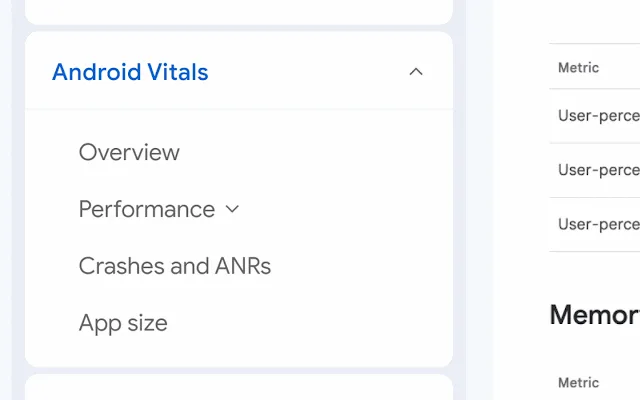
Developers currently have access to updated Android vitals metrics within the Play Console. These dashboards enable teams to identify memory bloat, investigate Anonymous RSS and swap usage trends, and review DEX code optimization insights. Later in the year, Google plans to introduce advanced diagnostic features, including state-duration metrics and deeper analytics associated with the Android Memory Limiter framework. This period serves as a crucial runway for teams to refactor legacy codebases and test optimizations in staging environments.
Phase 2: Enforcement Commencement (February 2027)
Beginning in February 2027, compliance with the memory usage (Anonymous RSS + Swap), bitmap memory usage, and DEX code optimization thresholds becomes mandatory. Applications that consistently exceed these bad behavior thresholds will be flagged as sources of degraded user experience. Non-compliant titles may face administrative actions, including reduced app visibility in search results and potential restrictions on publishing capabilities within the Google Play Store.
Phase 3: Zero-Tap Sign-In Mandate (April 2027)
In April 2027, the second major policy requirement takes effect. Applications supporting user authentication—whether optional or mandatory—must implement the Zero-Tap Sign-In standard using the Android Restore Credentials API. This ensures that users transitioning to a new device experience seamless, automated credential restoration upon their first launch.

Streamlining Device Migration via Zero-Tap Sign-In
Device upgrades historically presented a frustrating hurdle for mobile consumers, frequently requiring them to manually re-enter usernames, passwords, or two-factor authentication codes across dozens of individual applications. To resolve this friction, Google is institutionalizing a secure, streamlined onboarding standard known as Zero-Tap Sign-In.
The requirement leverages the Android Restore Credentials API, a secure cryptographic bridge that facilitates the transfer of authentication states during device setup. When a user migrates their data to a new Android device, participating applications utilize this API to automatically recognize the user and restore their active session upon initial launch, entirely bypassing manual input while maintaining rigorous security protocols.
Google Play will require all applicable apps to support this standard by April 2027 to maintain optimal visibility and full publishing privileges. While mobile games are currently exempt from this specific mandate due to the diverse and often complex authentication mechanisms utilized in gaming ecosystems (such as third-party platform logins and decoupled account servers), Google strongly encourages game developers with single-account sign-in structures to adopt the Restore Credentials API proactively. Specialized guidance and tailored authentication solutions for the gaming sector are slated for release later in the year.
Technical Implications and Developer Ecosystem Response
The introduction of these mandates has sparked significant discussion within the Android developer community. Engineering leads and product managers are currently assessing the labor and resource implications of refactoring existing applications to meet the strict February and April 2027 deadlines.
From an architectural standpoint, meeting memory thresholds often requires a fundamental reassessment of third-party libraries, image loading pipelines, and caching architectures. Applications that rely heavily on unoptimized cross-platform frameworks or expansive software development kits (SDKs) may experience disproportionate memory overhead, necessitating custom patches or library replacements. Consequently, development organizations are reallocating sprint cycles to prioritize performance profiling and technical debt reduction.
Conversely, industry observers note that these standards could yield long-term benefits for the ecosystem as a whole. Applications that consume fewer system resources inherently offer better battery efficiency, faster launch times, and superior stability, leading to improved user ratings and higher retention metrics. By setting a uniform quality floor, Google Play is actively addressing the "tragedy of the commons" phenomenon in mobile development, where individual applications acting without regard for aggregate resource consumption collectively degrade the user experience of the host device.
Implications for Market Visibility and Store Dynamics
.gif)
The enforcement mechanism tied to these new requirements—namely, adjustments to app visibility and publishing access—represents a potent regulatory tool for the platform operator. In a crowded digital marketplace where organic discoverability is paramount, any penalty affecting search ranking or store placement can have profound commercial consequences for developers.
Market analysts suggest that this policy shift will further professionalize the Android application market, favoring well-resourced development teams capable of continuous maintenance and performance tuning over abandoned or neglected software titles. As low-quality applications are systematically deprioritized or removed, consumers can expect a more curated, reliable storefront experience.
At the same time, smaller independent developers and solo studio operations may face hurdles in meeting the technical demands of memory profiling and code optimization without adequate tooling. To mitigate this risk, Google’s ongoing provision of automated diagnostics within the Play Console will play a critical role in leveling the playing field, offering actionable insights that guide developers toward compliance before administrative enforcement begins.
Forward Outlook and Adaptation Strategy
As the mobile computing landscape continues to evolve, Google has indicated that performance thresholds will not remain static. The company anticipates refining and adapting these requirements over time in response to hardware advancements, shifting developer use cases, and emerging telemetry data. However, platform leadership has reiterated a commitment to providing reasonable transition windows for any future policy updates.
For development teams navigating the current roadmap, immediate action is recommended. Reviewing the detailed specifications available in the Google Play developer documentation, auditing current performance metrics via the Play Console, and establishing automated regression testing for memory allocation will be vital steps in avoiding future penalties. By embracing these quality standards early, developers can ensure uninterrupted market presence while contributing to a faster, more secure, and more reliable Android ecosystem for millions of users worldwide.