In an era defined by rapid technological shifts and a growing emphasis on personalized health, two distinct stories have emerged as focal points of global discourse: the proliferation of misinformation surrounding perimenopause and the significant narrowing of the artificial intelligence gap between China and the United States. While the former highlights the risks of a commercialized wellness industry operating in the absence of robust scientific data, the latter signals a pivot in the global balance of technological power as Chinese firms leverage open-source models to challenge American dominance. These developments, alongside breakthroughs in neurotechnology, space science, and environmental engineering, underscore a complex landscape where innovation frequently outpaces regulation and public understanding.
The Commercialization of Perimenopause and the Rise of Medical Misinformation
Perimenopause, the transitional phase leading up to menopause, has transitioned from a taboo subject to a central theme in the modern "wellness" economy. This shift has been driven by a combination of increased social media visibility, the influence of celebrity doctors, and a growing demand for female-centric healthcare solutions. However, experts warn that this newfound openness is being exploited by marketers and influencers who promote unproven treatments and diagnostic tools.
Despite the aggressive marketing of "at-home" hormone tests, medical professionals maintain that there is currently no definitive clinical test for perimenopause. The condition is characterized by fluctuating hormone levels—specifically estrogen and progesterone—which can vary wildly from day to day, making a single blood or saliva test an unreliable indicator of a woman’s reproductive status. The diagnosis remains primarily clinical, based on a patient’s age, symptoms, and menstrual history.
The "menopause gold rush" is projected to be a $600 billion global market by 2025. This financial incentive has led to a surge in supplements, specialized diets, and hormone replacement therapies (HRT) marketed directly to consumers. While HRT is a legitimate and effective treatment for many, the misinformation surrounding it often suggests that every symptom experienced in midlife—from weight gain to brain fog—is exclusively hormonal. Scientific consensus suggests that while hormones play a role, lifestyle factors, aging, and external stressors are equally significant. The lack of standardized education for general practitioners on menopause has created a vacuum that social media influencers and for-profit companies have been quick to fill, often at the expense of scientific accuracy.
China’s Strategic Leap in the Global Artificial Intelligence Race
The geopolitical landscape of technology shifted significantly this week as a Chinese startup unveiled what is reportedly the world’s largest open-source AI model. This release marks a pivotal moment in the ongoing competition between Beijing and Washington, suggesting that the "AI gap" once thought to favor the United States may be closing faster than anticipated.
The new model, developed by a prominent Beijing-based startup, is designed to compete directly with high-end proprietary systems like OpenAI’s GPT-4 and Anthropic’s Claude. By opting for an open-source release, Chinese developers are effectively democratizing access to high-tier AI capabilities, a move that analysts suggest is a strategic response to U.S. export controls on high-end semiconductors. If Chinese firms cannot access the same hardware as their American counterparts, they appear determined to outpace them in software efficiency and model architecture.
The impact of this launch was felt immediately in global markets. Semiconductor and AI-related stocks experienced volatility as investors recalibrated the long-term value of American "closed-garden" models. Furthermore, the rise of Chinese Nvidia alternatives suggests that domestic hardware production is gaining traction, potentially insulating China’s tech sector from future sanctions. At the World Artificial Intelligence Conference (WAIC) in Shanghai, President Xi Jinping emphasized China’s commitment to leading the world in both AI technology and the establishment of international standards. This suggests that China no longer views itself as a follower in the digital age but as a primary architect of the future technological order.
Medical Innovation: Restoring Sensation Through Neural Bypass
In a landmark achievement for medical science, researchers have successfully used a brain implant to restore the sense of touch and motor control in a paralyzed man. This "neural bypass" technology works by intercepting signals from the brain and transmitting them directly to the muscles and sensory nerves of the hand, effectively skipping the damaged portion of the spinal cord.
The recipient of the implant, who had been paralyzed for years, is now able to perform complex daily tasks, such as feeding himself and holding a cup. Perhaps more significantly, researchers observed that some level of movement continued even when the electronic stimulation was turned off, suggesting a degree of neuroplasticity and long-term recovery previously thought impossible.
This breakthrough coincides with China’s approval of its own world-first brain-computer interface (BCI) chip. The global race for BCI dominance is not merely about medical recovery; it represents the next frontier of human-machine integration. As companies like Neuralink and various state-sponsored laboratories in China accelerate their testing, the ethical and regulatory frameworks for such invasive technologies remain largely unwritten.

Planetary Discovery and the Search for Extraterrestrial Life
Astronomers have confirmed the discovery of an atmosphere on a nearby Earth-like planet, a development that has profound implications for the search for life beyond our solar system. While thousands of exoplanets have been identified over the last two decades, finding one with a stable atmosphere is a rare and essential step in determining habitability.
The planet, located in a "habitable zone" where temperatures could allow for liquid water, is now the primary target for the James Webb Space Telescope. Scientists will look for biosignatures—chemical compositions such as oxygen, methane, and carbon dioxide—that might indicate biological activity. This discovery moves the field of astrobiology from theoretical speculation to empirical investigation, providing a concrete target for the next generation of deep-space observation.
However, life in space remains a challenge for humans. A recent study conducted on the International Space Station has shed light on why astronauts’ bodies experience muscle wasting and bone density loss in microgravity. The research suggests that the lack of gravity disrupts mitochondria, the powerhouses of the cell, leading to a significant reduction in protein production. Understanding these cellular mechanisms is vital for the success of long-term missions to Mars and beyond.
Regulatory Pressure and the Privacy Crisis in Personal Tech
The European Union has intensified its regulatory scrutiny of Big Tech, ordering Google to share its search data with competitors and open the Android operating system to rival AI chatbots. This move, part of the Digital Markets Act (DMA), aims to dismantle the "gatekeeper" status of major tech firms and foster a more competitive digital ecosystem. For Google, this represents a significant challenge to its data-driven business model, as it will be forced to provide rivals with the very data that has fueled its search dominance for decades.
Simultaneously, privacy concerns are mounting in the realm of personal health apps. New research into period-tracking software has revealed significant vulnerabilities in how users’ private health data is stored and shared. In a post-Roe v. Wade legal environment in the United States, the privacy of reproductive data has moved from a consumer concern to a legal necessity. The study found that many apps lack the robust encryption required to protect users from third-party data brokers or legal subpoenas.
In response to the pervasive nature of surveillance, a new trend in "adversarial clothing" has emerged. These garments are designed with specific patterns that confuse facial recognition algorithms, rendering the wearer "invisible" to certain types of digital monitoring. While currently a niche fashion statement, the rise of such privacy-focused technology highlights a growing public desire to opt out of the pervasive digital dragnet.
Sustainability: Transforming Waste into Agricultural Resources
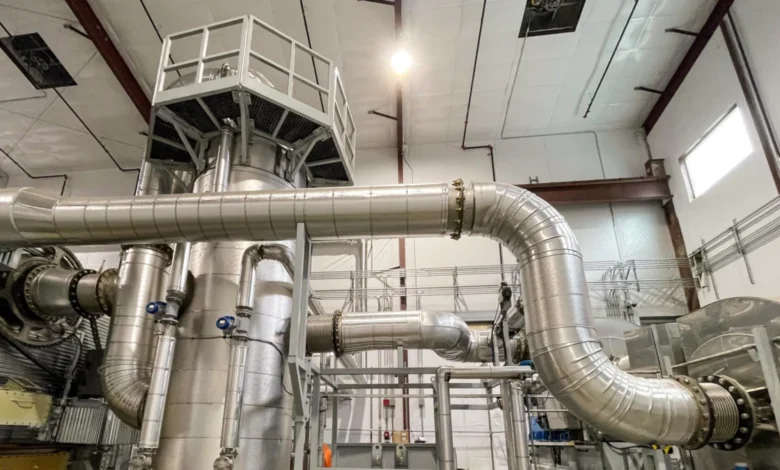
As the global population grows and traditional fertilizer components like phosphorus become increasingly scarce, a new industrial facility in Seattle is demonstrating how human and livestock waste can be repurposed. The facility uses a proprietary technology known as Varcor to treat fecal waste, extracting clean water and concentrated nutrients for use in commercial agriculture.
This "circular economy" approach to waste management reframes feces and urine not as pollutants to be disposed of, but as valuable natural resources. By recycling nitrogen and phosphorus locally, these systems can reduce the carbon footprint associated with fertilizer production and transport while preventing the runoff that leads to toxic algal blooms in waterways.
Chronology of Key Events
- July 15, 2026: BBC publishes an investigative report on the data-sharing practices of popular period-tracking apps, sparking a global privacy debate.
- July 16, 2026: Astronomers announce the detection of an atmosphere on a nearby Earth-sized exoplanet using data from the James Webb Space Telescope.
- July 16, 2026: The Guardian reports on the success of a neural bypass implant in a paralyzed patient, marking a milestone in BCI technology.
- July 17, 2026: A Chinese AI startup releases a record-breaking open-source model at the World Artificial Intelligence Conference in Shanghai.
- July 17, 2026: The EU officially mandates that Google must share search data and open Android to third-party AI bots.
- July 17, 2026: NTSB investigators reveal that a fatal Tesla crash in Texas was the result of a driver overriding the Full Self-Driving system by applying 100% throttle.
Broader Impact and Future Implications
The intersection of these stories points toward a future where the boundaries between the physical and digital worlds are increasingly blurred. In the realm of health, the gap between commercial hype and scientific reality necessitates a new era of consumer education and regulatory oversight. In the geopolitical arena, the rise of Chinese AI suggests that the era of American technological unipolarity is ending, replaced by a multipolar world where open-source collaboration may be as powerful as proprietary innovation.
Furthermore, the breakthroughs in BCI and sustainable waste management illustrate how technology can address fundamental human needs—mobility and food security—while also raising new questions about privacy and the ethics of human enhancement. As these technologies continue to evolve, the challenge for society will be to harness their benefits while mitigating the risks of misinformation, data exploitation, and environmental degradation.
Related posts: