A Comparative Analysis of LLM Evaluation Frameworks and the Evolving Risks of Algorithmic Bias in Judge Models

As the deployment of Large Language Models (LLMs) moves from experimental prototypes to mission-critical enterprise infrastructure in 2026, the industry is facing a quiet crisis of reliability. The traditional "vibe check"—a manual, subjective review of a few model outputs—has proven insufficient for catching the subtle, confident failures inherent in generative AI. In response, a sophisticated ecosystem of open-source evaluation frameworks has emerged, led by RAGAS, DeepEval, and Promptfoo. While these tools offer programmatic ways to measure model performance, new research highlights a critical vulnerability: the "LLM-as-a-judge" mechanism, which powers nearly all modern evaluation frameworks, contains measurable biases that can lead to false confidence in AI safety and accuracy.
The Shift from Manual Review to Automated Quality Assurance
In the early stages of the generative AI boom, software teams often "shipped and prayed," relying on manual spot-checks to ensure model quality. However, the complexity of 2026-era applications, which often involve multi-step Retrieval-Augmented Generation (RAG) and agentic workflows, has made manual oversight impossible at scale. Unlike traditional software bugs that trigger stack traces or clear error codes, LLM failures are often "hallucinations"—outputs that are factually incorrect but linguistically plausible.
Industry data suggests that silent regressions are the leading cause of user churn in AI-driven services. A single prompt tweak intended to improve formatting can inadvertently break a model’s ability to follow safety guidelines or extract data accurately. To mitigate this, engineering teams are increasingly adopting "Continuous Evaluation" (CE) pipelines, where every model update is subjected to a battery of automated tests before deployment.
The Triad of Modern Evaluation: RAGAS, DeepEval, and Promptfoo
The current landscape is dominated by three frameworks, each serving a distinct architectural need. Rather than direct competitors, these tools are frequently used in tandem to create a comprehensive defense-in-depth strategy for AI quality.
RAGAS: The Academic Standard for Retrieval-Heavy Systems
RAGAS (Retrieval-Augmented Generation Assessment) has positioned itself as the gold standard for applications that rely on external data sources. Its methodology is rooted in peer-reviewed research, focusing on a "triad" of metrics: faithfulness, answer relevance, and context precision.
Faithfulness, perhaps the most critical metric in the RAGAS suite, measures whether a model’s answer is derived strictly from the retrieved context. This prevents "extrinsic hallucinations," where a model uses its internal training data to answer a question instead of the specific, updated information provided in a business’s knowledge base. RAGAS is preferred by research-oriented teams who require a high degree of mathematical rigor and published methodology behind their scoring.
DeepEval: The CI/CD Quality Gate
While RAGAS focuses on the "what" of evaluation, DeepEval focuses on the "how" of the developer workflow. Built to integrate natively with the Python testing framework pytest, DeepEval treats LLM outputs like unit tests. This allows organizations to implement "quality gates" in their CI/CD pipelines. If a model’s "toxicity" score rises or its "policy adherence" score falls below a predefined threshold, the build is automatically blocked.
DeepEval’s versatility is its primary selling point. It offers over 14 distinct metrics, including G-Eval, which allows developers to define custom rubrics in plain natural language. This flexibility makes it the tool of choice for enterprise teams that need to enforce specific brand guidelines or complex legal compliance standards.
Promptfoo: Security and Red-Teaming
Promptfoo specializes in the "adversarial" side of evaluation. As security concerns around prompt injection and data exfiltration grow, Promptfoo provides a robust environment for red-teaming and multi-model comparisons. It features an extensive library of over 500 attack vectors, allowing teams to stress-test their models against known jailbreaks and security vulnerabilities. Its YAML-based configuration makes it accessible for security auditors who may not be proficient in deep Python programming but need to ensure the model remains within its "guardrails."
Chronology of the Evaluation Evolution (2023–2026)
The path to these sophisticated tools was paved by several key industry milestones:
- Late 2023: The release of the MT-Bench study popularized the concept of using a high-performing model (like GPT-4) to grade the responses of smaller models. This "LLM-as-a-judge" approach solved the scalability problem of human evaluation.
- 2024: The "Hallucination Crisis" hit enterprise AI. Companies realized that high "accuracy" on standard benchmarks did not translate to reliability on private corporate data. RAGAS emerged to address this gap specifically for retrieval systems.
- 2025: Standardization began. Organizations like OWASP and various AI safety institutes began recommending specific automated evaluation metrics as part of their compliance frameworks.
- 2026: The current era of "Hybrid Evaluation." Leading firms now combine automated "judges" with periodic human-in-the-loop (HITL) audits to calibrate their metrics.
Technical Methodology: How Faithfulness is Measured
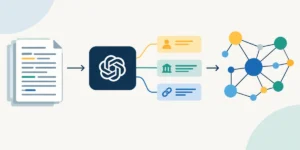
To understand the power of these frameworks, one must look at the underlying mechanics of a "Faithfulness Check." In a typical RAGAS-style evaluation, the process follows a strict logical decomposition:
- Claim Decomposition: The judge LLM takes the generated answer and breaks it down into "atomic claims"—individual statements that can be independently verified.
- Context Verification: Each atomic claim is compared against the retrieved source documents.
- Scoring: The final faithfulness score is the ratio of supported claims to total claims.
For example, if a model states that a city has a population of 3 million, but the retrieved document only mentions its founding date, the claim is marked as unsupported. This deterministic approach allows developers to identify exactly where a model is overstepping its bounds, even if the resulting sentence sounds entirely convincing to a human reader.
The Hidden Risk: Systemic Biases in LLM Judges
Despite the efficiency of automated frameworks, a growing body of evidence suggests that "LLM-as-a-judge" is not a neutral arbiter. Because these judges are themselves LLMs, they inherit the cognitive biases of their training data.
Position Bias
One of the most documented issues is "position bias." When an LLM judge is asked to compare two responses (A and B), it is statistically more likely to prefer the response in the first position (Slot A), regardless of quality. In production audits, this "primacy effect" can lead to a 10–15% inconsistency rate. If the order of the responses is swapped, the judge frequently flips its verdict.
Self-Preference and Verbosity Bias
Models also exhibit "self-preference bias," where a judge model (e.g., GPT-4o) tends to give higher scores to outputs generated by itself or models in the same family. Furthermore, "verbosity bias" remains a persistent challenge; judges often equate longer, more detailed-sounding answers with higher quality, even if the extra text contains "fluff" or irrelevant information.
Industry Response and Implementation Strategies
In light of these biases, MLOps engineers are moving away from naive scoring. The emerging "best practice" involves a multi-pronged approach to evaluation:
- Order Permutation: Running every pairwise comparison twice with the positions of the answers swapped. A result is only considered valid if the judge remains consistent across both trials.
- Judge Diversification: Using a judge model from a different provider than the model being evaluated (e.g., using Anthropic’s Claude to judge OpenAI’s GPT, or vice-versa) to minimize self-preference.
- Human Calibration: Establishing a "Golden Dataset" of 100–500 examples where humans have provided the definitive scores. The automated judge is then tuned until its agreement rate with the human baseline exceeds 80–85%.
Impact and Future Implications
The professionalization of LLM evaluation marks a turning point in the maturity of the AI industry. As the "black box" of generative AI is replaced by transparent, metric-driven pipelines, the barrier to entry for highly regulated industries like healthcare and finance will lower.
However, the reliance on automated judges creates a recursive loop of "models judging models." If the industry does not remain vigilant about the biases documented in these frameworks, we risk creating a feedback loop where AI systems optimize for the preferences of other AI systems rather than human truth or utility. The frameworks—RAGAS, DeepEval, and Promptfoo—provide the necessary machinery for this new era, but the responsibility for auditing the "audit" remains firmly with the human engineers.
In the coming years, we expect to see the rise of "meta-evaluation" tools—systems specifically designed to monitor the performance and bias of the evaluation frameworks themselves. Until then, the most resilient AI teams will be those who treat their evaluation scores not as absolute truths, but as indicators that require constant, skeptical calibration.
Related posts: