The Evolution of Agentic AI Post-Training and the Rise of Intelligence per Dollar

The landscape of artificial intelligence is undergoing a fundamental shift, moving away from static generative models that merely respond to prompts toward autonomous "agentic" systems capable of reasoning, planning, and executing complex tasks. This transition is redefining how the industry measures success, shifting the focus from the cost of generating a single piece of data to the total value of the intelligence delivered. As agentic AI becomes the new standard, the traditional boundaries between model training and deployment are dissolving, replaced by a continuous cycle of refinement that mirrors the rigorous preparation of elite professional athletes. In this new era, the primary benchmark for enterprise success is no longer just "cost per token," but the more comprehensive "intelligence per dollar."
The Paradigm Shift: From Generative to Agentic AI
To understand the current transformation, one must first distinguish between the generative AI models of the past few years and the agentic models now entering the market. A generative model is designed to produce a fluent response based on a specific input; it is a one-off transaction. In contrast, an agentic AI model is given a goal rather than a prompt. To achieve that goal, the agent must navigate shifting environments, account for edge cases that were not present in its training data, and utilize various digital tools—such as search engines, code interpreters, or database queries—to find a solution.
Crucially, an agentic model must possess the ability to recover from errors. If a specific tool fails or a reasoning path leads to a dead end, the agent must be able to backtrack and try a different approach. This requires a level of cognitive flexibility that goes far beyond simple pattern matching. This "agentic" behavior is not inherent in the initial pre-training of a large language model (LLM); rather, it is forged in the post-training phase.
The Role of Continuous Post-Training
Historically, AI development followed a linear path: pre-training on massive datasets, followed by a one-time "fine-tuning" or post-training step to align the model with specific human preferences or tasks. However, the rapid pace of change in digital environments has made this static approach obsolete. The tools an AI agent uses may be updated weekly, and the codebase it interacts with may change daily.
Consequently, post-training has evolved into a continuous, looping process. As an agent operates in a production environment, it encounters new problems and edge cases. These "real-world" challenges are fed back into the training loop. This does not necessarily mean the compute footprint grows because the models are getting larger; rather, the footprint grows because the learning process never stops. This continuous refinement ensures that the model’s "intelligence" remains relevant to the current state of its environment.
Demystifying the Post-Training Process
If pre-training is where a model learns the "rules of language," post-training is where it learns "how to think." During pre-training, the model’s goal is to predict the next token in a sequence, which provides fluency but not necessarily logic or problem-solving skills. Post-training is the crucible where the model learns to write functional code, plan multi-step strategies, and implement search tools effectively.
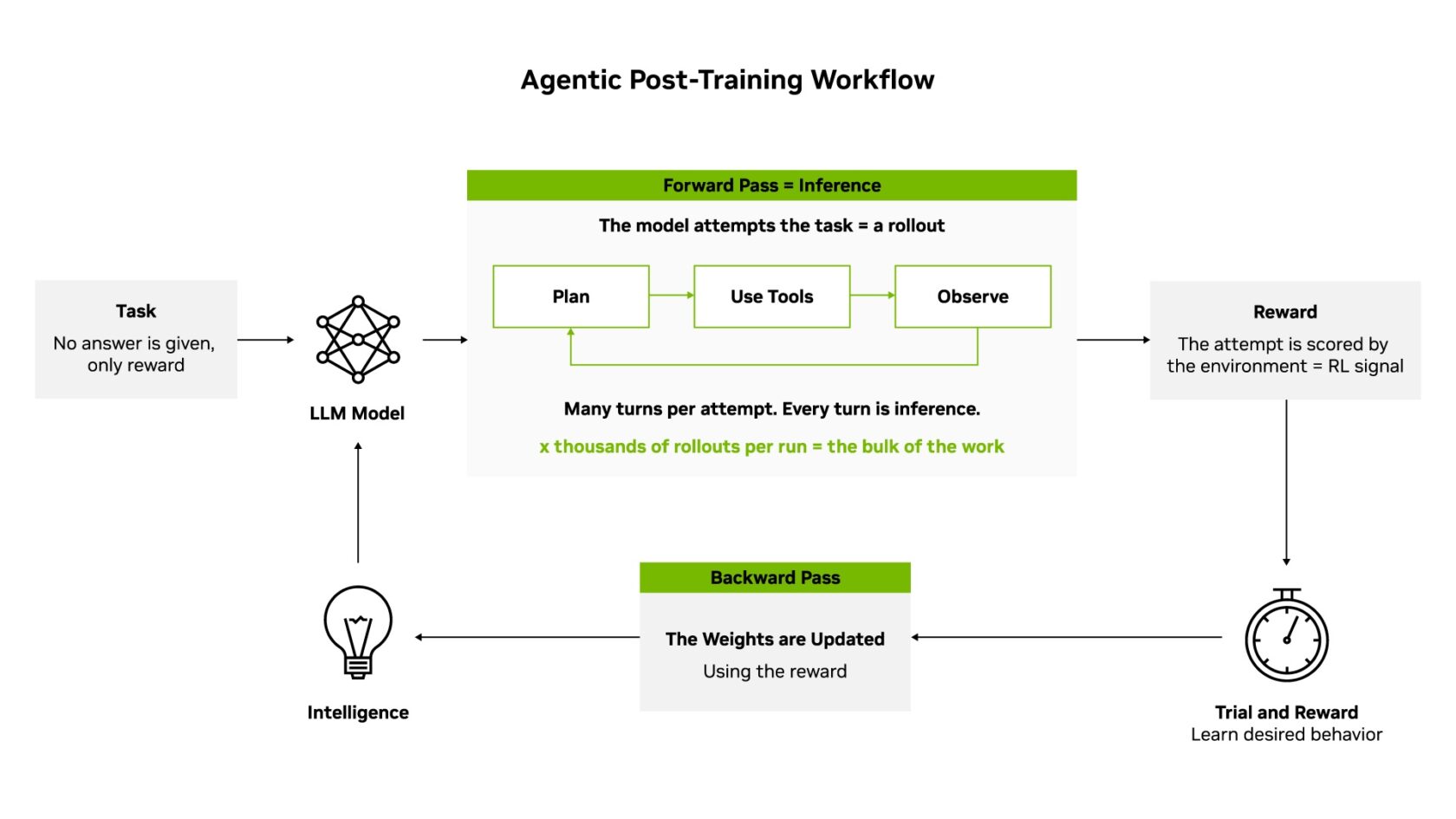
Because there is rarely a single "correct" answer key for complex agentic tasks, researchers utilize Reinforcement Learning (RL) techniques. In this framework, the model is given a task and generates an attempt—this is the "forward pass," identical to the work it would do on the job. This attempt is then scored based on its success or failure. The resulting feedback is used to update the model’s internal weights—the "backward pass." Through millions of these iterations, the model’s reasoning capabilities grow.
To facilitate this at scale, NVIDIA has introduced the NeMo open libraries. NeMo Gym provides the necessary training environments, while NeMo RL handles the distributed post-training process. These tools have transformed post-training from a bespoke research experiment into a standardized, repeatable infrastructure capable of running thousands of simulations in parallel.
Defining a New Metric: Intelligence per Dollar
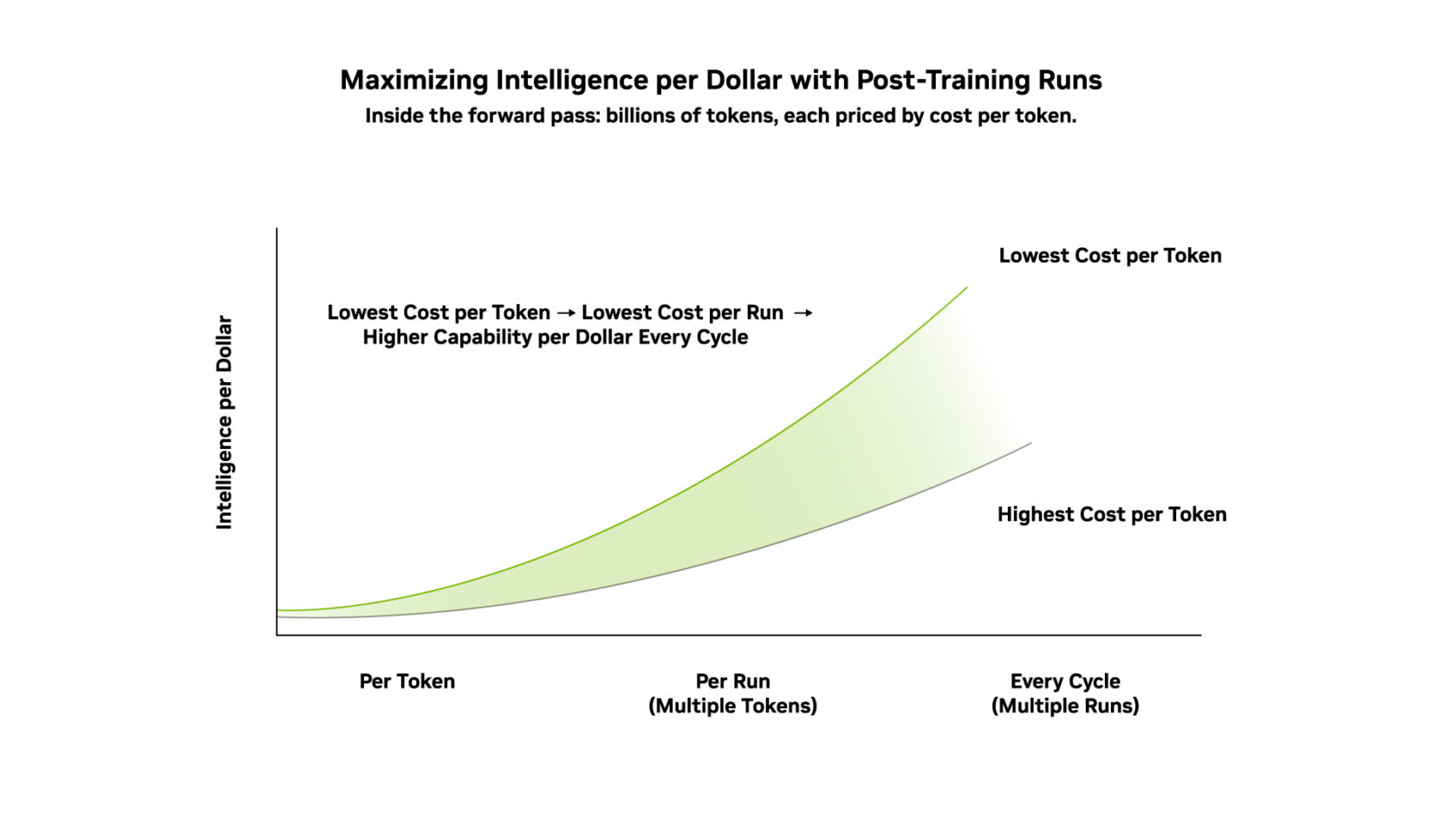
As the AI industry matures, the economic metrics used to evaluate performance are becoming more sophisticated. For several years, "cost per token" was the gold standard, measuring the all-in cost of delivering one million tokens of inference. While still a vital metric for operational efficiency, it is increasingly seen as insufficient for the agentic era.
"Intelligence per dollar" is the new overarching metric. It asks a more profound question: What does it cost to build a model that is actually worth serving, and how much does it cost to maintain that worth as the environment changes?
These two metrics are nested. Any technological advancement that lowers the cost per token—such as more efficient GPUs or optimized inference kernels—automatically increases the intelligence per dollar by making the learning cycles cheaper. Conversely, every point of intelligence added during post-training increases the value of every token the model eventually serves. In essence, cost per token measures the efficiency of the "AI factory," while intelligence per dollar measures the return on investment for the "AI’s mind."
Case Study: NVIDIA Nemotron 3 Ultra
A primary example of this philosophy in action is the NVIDIA Nemotron 3 Ultra. This is an open-weight, 550-billion-parameter Mixture-of-Experts (MoE) model designed specifically for high-reasoning tasks. Unlike monolithic models, MoE architectures only activate a fraction of their parameters for any given task, significantly increasing efficiency.
The Nemotron 3 Ultra was refined using a fully disclosed post-training recipe on NeMo RL. Its performance was validated using the SWE-bench verified benchmark, a rigorous test involving real-world software bugs from open-source projects. The model achieved a 71.7% success rate, meaning it produced a working fix for approximately seven out of ten bugs, each verified against the project’s own internal tests. This level of performance demonstrates the power of specialized post-training in creating agents capable of performing high-value engineering work.
Hardware Evolution: Blackwell and Vera Rubin
The economic viability of continuous post-training depends heavily on the underlying hardware. The NVIDIA Blackwell platform was engineered to lower the cost per training run, making frequent updates commercially feasible for enterprises. By reducing the energy and time required for the forward and backward passes of the RL loop, Blackwell serves as a catalyst for the agentic era.

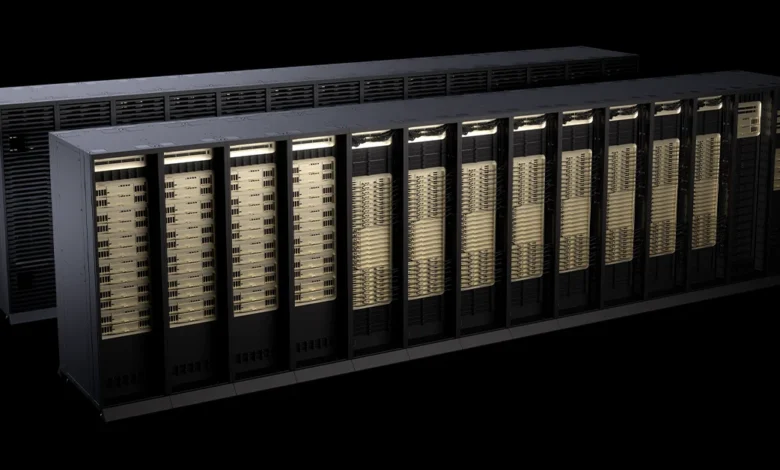
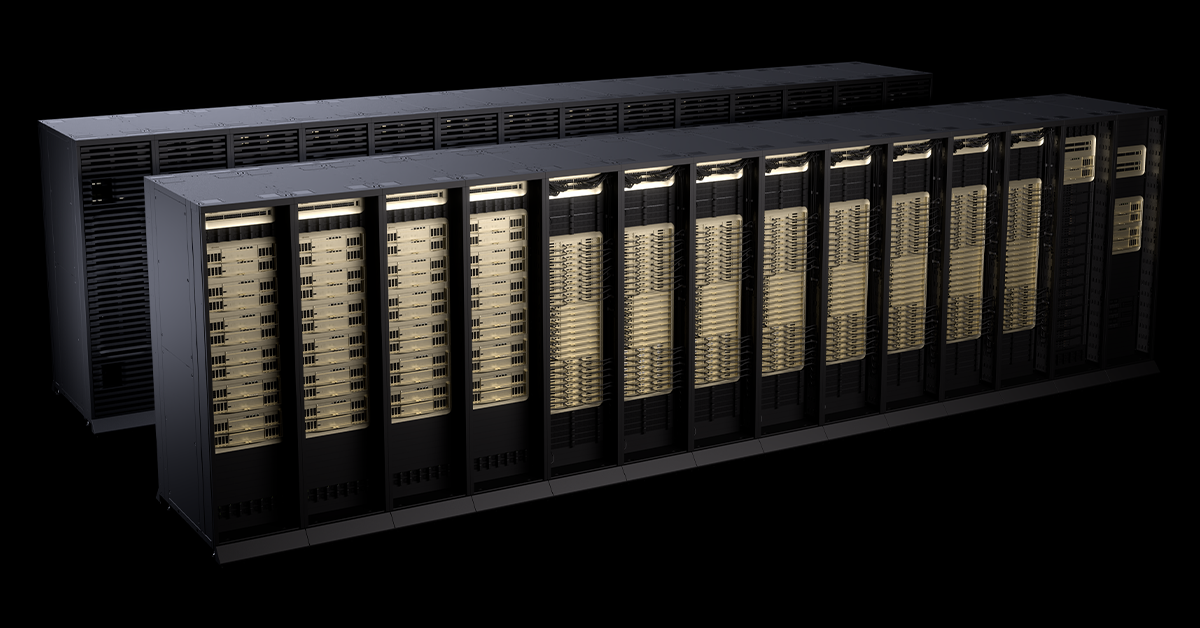
Looking further ahead, the NVIDIA Vera Rubin platform represents the next leap in this trajectory. Designed specifically for the massive workloads of agentic post-training, Vera Rubin is capable of training the largest frontier models with only one-fourth the number of GPUs required by the Blackwell generation. This platform was co-designed from the silicon level up to maximize intelligence per dollar, supporting more simultaneous environments and more rollouts per run.
Furthermore, the Vera CPU within this platform has shown significant promise in handling the sandbox environments required for reinforcement learning. In comparisons against traditional x86 architectures, the Vera CPU delivered a 30% increase in throughput for RL sandbox workloads, providing the low-latency, energy-efficient compute necessary for high-speed learning cycles.
Industry Adoption and Real-World Applications
Several leading AI organizations are already implementing these continuous post-training workflows to gain a competitive edge.
Prime Intellect: This organization’s lab uses the NVIDIA Blackwell platform to continuously post-train open models. By integrating NVIDIA Dynamo for inference orchestration and Vera CPUs for sandbox environments, Prime Intellect has accelerated its training-to-inference loops. Their focus is on generating more "rollouts"—simulated attempts at a task—per run to maximize the intelligence gains for their business clients.
Perplexity: The AI-powered search engine has developed an asynchronous RL post-training stack that runs across hundreds of NVIDIA GPUs. To maintain the speed of their service, they utilize an RDMA-based weight transfer engine that can synchronize trillion-parameter models between training and inference nodes in less than two seconds. This allows them to serve highly optimized Qwen3 235B models on NVIDIA GB200 systems, ensuring their search agent remains the most accurate in the market.
Together AI: Operating as a "post-training as a service" provider, Together AI offers supervised fine-tuning and direct preference optimization via a specialized API. By running their AI Native Cloud on NVIDIA’s optimized libraries, they allow other companies to harness the power of agentic AI without needing to build their own internal infrastructure from scratch.
The Broader Impact and Future Implications
The shift toward continuous post-training and the pursuit of intelligence per dollar will have profound implications for the global economy. As the cost of "building intelligence" drops, we can expect to see AI agents integrated into increasingly complex sectors, from autonomous scientific discovery to real-time supply chain management.
The democratization of these tools means that "intelligence" is no longer a static asset owned by a few large tech firms, but a dynamic capability that any enterprise can cultivate. By treating AI models as "athletes" that require constant training and refinement, businesses can ensure their digital agents remain effective in an ever-changing world. The focus has moved beyond the mere generation of text; the industry is now in a race to build the most efficient, capable, and economically viable artificial minds.