Minister Bahlil Lahadalia Reaffirms Unchanged 3kg LPG Price, Citing Distributor and Base Manipulation for Increases

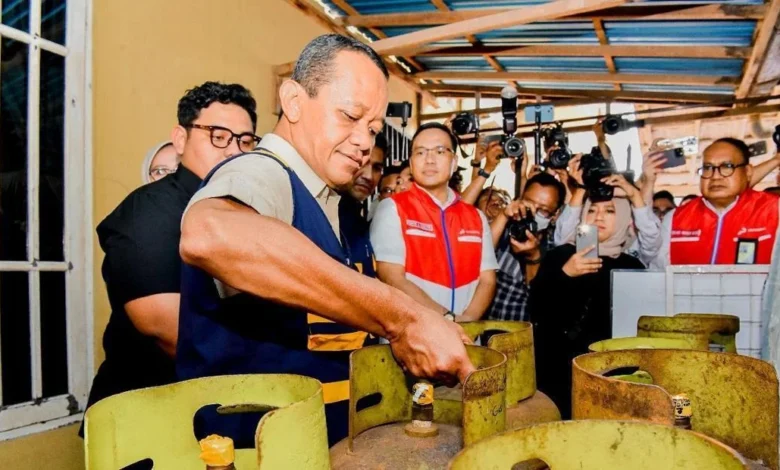
Jakarta, Indonesia – April 20, 2026 – Minister of Energy and Mineral Resources (ESDM) Bahlil Lahadalia unequivocally stated that the Indonesian government has not increased the price of 3-kilogram (kg) Liquefied Petroleum Gas (LPG) since the inception of the kerosene-to-LPG conversion program. This assertion, made during a press conference at the Ministry of ESDM office in Jakarta on Monday, April 20, 2026, aimed to reassure the public regarding the stability of prices for this crucial subsidized commodity. Minister Lahadalia clarified that any observed price hikes are not attributable to government policy but rather to manipulation within the distribution network, specifically at the distributor and base (pangkalan) levels.
"For 3-kilogram LPG, since its implementation in 2006 or 2007 up until now, the government has never raised its price," Minister Bahlil Lahadalia emphasized. He further elaborated, "What exists are price manipulations by distributors and bases. That’s essentially it." This statement comes amidst persistent public concerns and anecdotal reports of fluctuating prices for the green 3kg LPG cylinders, which are a staple for millions of Indonesian households, particularly those in lower-income brackets. The minister also alluded to past attempts to streamline the distribution system, particularly in early 2025, to ensure that the subsidized fuel reached its intended beneficiaries at the government-stipulated retail price.
The Genesis of Subsidized LPG: A Legacy Program
The 3kg LPG program is a cornerstone of Indonesia’s energy policy, born from the ambitious Kerosene-to-LPG Conversion Program launched in 2007. Prior to this, kerosene was the primary cooking fuel for a significant portion of the population, heavily subsidized by the state. The conversion initiative aimed to shift households from kerosene to LPG, driven by several strategic objectives: reducing the substantial state budget burden from kerosene subsidies, promoting cleaner energy alternatives, and enhancing energy efficiency. Kerosene, a fossil fuel, presented environmental concerns and its distribution network was often inefficient and prone to leakage.
The government, through state-owned oil and gas company Pertamina, began distributing free 3kg LPG cylinders and stoves to eligible households as part of the initial rollout. This massive undertaking successfully transitioned millions of households, making the small green cylinders ubiquitous across the archipelago. The 3kg LPG was designated as a subsidized product, with its price set significantly below market rates to ensure affordability for low-income communities, small businesses, and micro-enterprises. This policy was designed to protect vulnerable segments of society from market price volatility and ensure access to modern cooking fuel.
Understanding the Economics of LPG Subsidies
Indonesia’s energy subsidy framework is complex, encompassing fuel, electricity, and LPG. The 3kg LPG subsidy is particularly sensitive due to its direct impact on daily household expenditures. The government determines the Highest Retail Price (HET) for 3kg LPG, which is the maximum price at which it should be sold to end-users at official bases. This HET is typically uniform within a specific region or province, though slight variations can occur due to transportation costs to remote areas. The difference between the production cost (including import costs, refining, and distribution) and the HET is covered by the state budget.
Annually, the state allocates trillions of rupiah for LPG subsidies. This allocation is a significant component of the national budget, reflecting the government’s commitment to social welfare but also posing a fiscal challenge. For instance, in recent years, the LPG subsidy budget has often exceeded initial projections due to rising global LPG prices and increased domestic consumption. This financial burden underscores the importance of efficient and targeted distribution, as any leakage or misuse of the subsidized product translates directly into a greater drain on state coffers. In contrast, non-subsidized LPG, such as the 12kg cylinders or Bright Gas products, are sold at market prices, reflecting global commodity trends and operational costs, catering to middle to upper-income households and larger businesses.
The Intricate Distribution Network and Its Vulnerabilities
The journey of a 3kg LPG cylinder from its source to the consumer is a multi-layered process, supervised by Pertamina. It typically involves:
- Refineries/Import Terminals: LPG is produced domestically or imported.
- Filling Stations (SPBE): LPG is filled into cylinders.
- Agents: Large-scale distributors appointed by Pertamina, responsible for delivering LPG to bases.
- Bases (Pangkalan): The official retail points where consumers are supposed to purchase 3kg LPG at HET.
- Retailers/Street Vendors (Unofficial): Often purchase from bases and resell at marked-up prices, especially in areas with limited access to official bases.
This extensive network, while designed to ensure wide availability, also presents significant vulnerabilities to manipulation. Price increases often occur beyond the official bases, as cylinders change hands through unofficial channels. Factors contributing to this include:
- Scarcity: Real or artificial scarcity in certain areas can drive up prices as demand outstrips perceived supply.
- Hoarding: Unscrupulous actors may hoard cylinders to create artificial shortages and inflate prices.
- Diversion: Subsidized LPG, intended for households, can be diverted for commercial or industrial use, where it is sold at a profit, as businesses should technically use non-subsidized LPG.
- Logistical Challenges: In remote or difficult-to-reach areas, the actual cost of transport can lead unofficial sellers to justify higher prices, often exploiting the lack of official bases.
- Lack of Oversight: Inadequate monitoring and enforcement at local levels can allow illegal practices to persist.
A Chronology of Price Concerns and Government Interventions
The issue of 3kg LPG price discrepancies is not new but a recurring challenge since the program’s inception.
- 2007: The Kerosene-to-LPG Conversion Program officially launched, establishing the initial HET for 3kg LPG.
- Throughout the Years (2008-2024): Regular reports emerged from various regions regarding scarcity and prices exceeding the HET, particularly during festive seasons or periods of high demand. Consumer groups and local media frequently highlighted these issues, often leading to calls for stricter government oversight.
- Early 2025: Minister Bahlil Lahadalia mentioned a significant government effort to "tidy up" or restructure the distribution of 3kg LPG. This initiative aimed to ensure the subsidized product genuinely reached the intended low-income communities. The target price for consumers at this time was set at Rp 17,000 to Rp 18,000 per tube, reflecting the HET. However, this effort encountered a "polemic," suggesting resistance or complications. At the time, prices were reportedly inflated to as much as Rp 25,000 in some areas, significantly above the government-mandated price. The "polemic" likely involved pushback from existing informal distribution channels, logistical hurdles, or a lack of public understanding of the new system. Despite the challenges, the government’s intention was clear: to curb illicit practices and stabilize prices at the consumer level.
- April 20, 2026: Minister Bahlil’s latest statement reiterates the government’s consistent pricing policy for 3kg LPG and firmly places the blame for price increases on the distributors and bases, underscoring the ongoing battle against market manipulation. This latest statement reinforces the long-standing challenge of ensuring compliance within the distribution chain.
Official Responses and Stakeholder Perspectives
Minister Bahlil Lahadalia’s assertion provides the central government’s official stance, but the issue draws reactions from various other stakeholders:
- Pertamina: As the main executor of the LPG distribution, Pertamina frequently issues statements reaffirming its commitment to ensuring supply and maintaining HET at the agent level. Pertamina has continuously implemented measures to improve distribution, including digitizing sales records, mapping official bases, and encouraging consumers to purchase from these verified locations. Recent efforts have included piloting a system requiring purchasers to register their ID cards (KTP) to ensure targeted distribution, aiming to prevent diversion and ensure only eligible users access subsidized LPG.
- Ministry of Trade and Local Governments: These entities are responsible for market supervision and enforcement. Local governments, through their trade and industry offices, are tasked with monitoring prices at bases and retailers, conducting raids, and imposing sanctions on those found manipulating prices. However, the vastness of the archipelago and resource limitations often make comprehensive oversight challenging.
- Consumer Protection Agencies and Groups: Organizations such as the Indonesian Consumers’ Association (YLKI) consistently voice concerns over price gouging and the difficulty consumers face in accessing 3kg LPG at official prices. They advocate for stronger enforcement, greater transparency, and more effective mechanisms for public complaints.
- Parliamentary Committees (e.g., Commission VII for Energy): Members of Parliament frequently scrutinize the government’s handling of LPG subsidies. They often call for investigations into price discrepancies, demand better oversight from Pertamina and the ESDM Ministry, and propose policy adjustments to enhance the program’s effectiveness and minimize leakage.
- Economists and Energy Analysts: These experts often highlight the inherent challenges of administering large-scale commodity subsidies. They point to the potential for market distortions, the significant fiscal burden, and the difficulty in effectively targeting beneficiaries. Some propose alternative subsidy mechanisms, such as direct cash transfers, arguing that they could be more efficient and less prone to leakage than in-kind subsidies.
Supporting Data and Statistics: The Scale of the Challenge
The scale of the 3kg LPG program in Indonesia is immense, illustrating the profound impact of any price instability:
- Consumption: Indonesia’s annual consumption of 3kg LPG is substantial, typically ranging between 6 to 7 million metric tons per year, with continuous growth driven by population increase and ongoing urbanization.
- Households: Millions of households, estimated to be over 50% of the total, rely on 3kg LPG for cooking. This dependency underscores its critical role in daily life.
- Subsidy Budget: The annual budget allocation for LPG subsidies has regularly surpassed Rp 50 trillion (approximately USD 3.5 billion) in recent years, and can escalate significantly with global price fluctuations. This makes it one of the largest single commodity subsidies in the state budget.
- Distribution Network: Pertamina operates with a vast network of thousands of agents and tens of thousands of official bases across the country. While extensive, managing such a large and geographically dispersed network presents formidable logistical and oversight challenges.
- Regional Discrepancies: Data consistently shows that price deviations from the HET are more pronounced in remote areas, islands, and regions with challenging topography, where transportation costs are higher and official bases are sparser. This disparity exacerbates inequality in access to affordable energy.
Implications and Future Outlook
Minister Bahlil’s latest statement underscores an ongoing, multifaceted challenge with significant implications:
- Economic Implications: Persistent price manipulation directly impacts the purchasing power of low-income households, eroding the very benefit the subsidy is designed to provide. It also creates an uneven playing field for small businesses that rely on the subsidized fuel. For the state, leakage due to diversion to non-eligible users or inflated prices means that the subsidy budget is not being utilized as effectively as intended, leading to fiscal inefficiencies.
- Social Implications: Public frustration over inaccessible or overpriced 3kg LPG can erode trust in government programs and lead to social unrest. Ensuring equitable access to affordable energy is crucial for social stability and poverty alleviation efforts.
- Policy Challenges: The government faces a perpetual dilemma: how to maintain broad access to affordable cooking fuel while minimizing subsidy leakage and fiscal strain. The current system, despite its benefits, remains vulnerable. This situation highlights the need for continuous refinement of distribution policies, stronger enforcement mechanisms, and potentially a shift towards more targeted subsidy models.
- Future Prospects: The government, through Pertamina and the Ministry of ESDM, is likely to continue exploring various solutions. These include expanding the MyPertamina application for more controlled and targeted purchases of 3kg LPG using ID cards, strengthening monitoring with digital tools, and intensifying cooperation with local authorities to combat illegal distribution. There is also an ongoing policy debate about gradually transitioning away from in-kind subsidies to direct cash transfers, which some argue could be more efficient and transparent in reaching the truly needy, albeit with its own set of implementation challenges.
In conclusion, Minister Bahlil Lahadalia’s firm stance on the unchanging official price of 3kg LPG serves as a reaffirmation of the government’s commitment to supporting its citizens. However, it also highlights the enduring struggle against market inefficiencies and manipulative practices within the complex distribution chain. The continuous efforts to balance affordability, accessibility, and fiscal responsibility will remain a central focus of Indonesia’s energy policy in the years to come, as the nation strives to ensure that its most vulnerable populations can consistently access essential cooking fuel at the intended subsidized rates.