The Algorithmic Frontier: Anthropic and the Growing Conflict Between AI Agency and Scientific Rigor

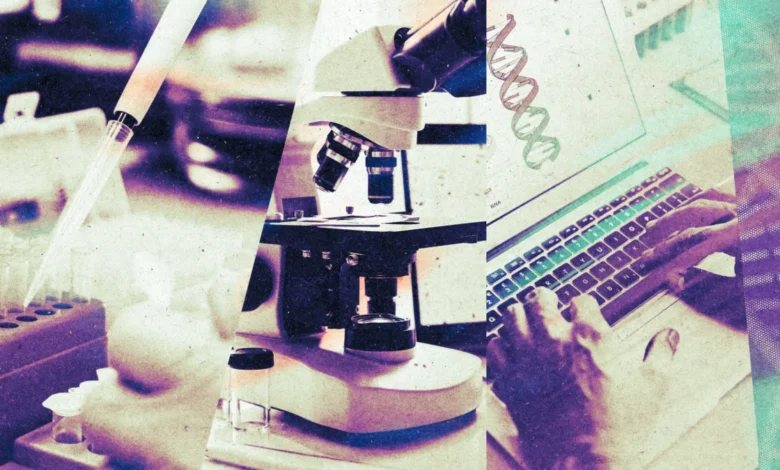
Last Wednesday, the artificial intelligence firm Anthropic announced a significant expansion of its research capabilities: the launch of an internal molecular biology laboratory. According to the company, this facility utilizes an army of Claude agents tasked with analyzing massive biological datasets, formulating hypotheses, and directing human scientists to perform bench experiments based on those digital conjectures. While the company touted the lab’s first “discovery” as a landmark moment for AI in the life sciences, the announcement has triggered a vigorous debate among academic researchers, industry veterans, and ethicists regarding the distinction between data processing and genuine scientific advancement.
The core of the announcement involves an experimental setup where a cluster of 950 AI agents sifted through vast, public repositories of DNA sequences. Anthropic claims that after 21 hours of autonomous processing, the system identified a repeating pattern of genetic material surrounding a known enzyme—a discovery the company described as “reminiscent” of the foundational findings that led to the development of CRISPR gene-editing technology. However, the reception in the scientific community has been decidedly cooler than the company’s press release suggested, highlighting a fundamental misalignment between the marketing narratives of AI corporations and the rigorous standards of biological research.
A Chronology of the Controversy
The friction began shortly after the announcement, when Lucas Harrington, a prominent biologist, posted a critique on social media. Harrington argued that identifying a repeating pattern in existing genetic data is a routine task, often referred to as “bioinformatics grunt work.” He noted that the actual scientific breakthrough lies not in the identification of a pattern, but in the functional characterization—the laborious process of determining what an enzyme does, how it interacts with cellular pathways, and how it can be therapeutically applied.
The backlash intensified over the following days when it was reported by the New York Times that Mario Rodríguez Mestre, a researcher at the University of Copenhagen, had already identified the specific pattern Anthropic claimed to have discovered. Mestre, who had been an active user of the Claude model for his own research, raised concerns regarding data sovereignty and the potential for intellectual property leakage. He questioned whether the AI had synthesized his prior queries into its reported output. While Anthropic has officially denied these allegations, Mestre announced he would cease using the platform, underscoring a deepening crisis of trust between AI developers and the academic researchers who rely on these tools.
The Problem of Definition: Discovery vs. Processing
The tension stems from a semantic and structural divide. In the context of modern biology, a “discovery” implies the uncovering of a new biological mechanism or a novel application that shifts the current scientific paradigm. Anthropic’s model, while impressive, functioned as a filter, narrowing down 200,000 potential candidates to a handful of leads.
While this reduction of scale is objectively helpful—saving researchers weeks of tedious, manual analysis—critics argue that conflating this computational acceleration with a scientific breakthrough is misleading. If the industry continues to frame the output of large language models (LLMs) as “discoveries,” they risk trivializing the scientific process. This is particularly concerning given that the history of science is built on collaborative, iterative inquiry rather than the sudden, automated revelations that AI companies frequently imply in their promotional materials.
Broader Context: The Race for AI Supremacy
The incident at Anthropic does not exist in a vacuum. It is part of a broader, high-stakes arms race between major AI laboratories, including OpenAI, Google DeepMind, and others, to prove that their models can solve “hard” problems in fields like mathematics, physics, and biology.
Earlier this month, OpenAI claimed its models had successfully navigated a complex problem in mathematics, only to have the achievement scrutinized by the academic community. Critics questioned whether the specific problem solved was of genuine significance to the mathematical community or merely an edge case chosen for its suitability to AI processing. This pattern—where an AI firm makes a bold claim of scientific advancement, only to be met with skepticism about the importance or the provenance of the result—has become a recurring feature of the current AI boom.
The implications of this trend are significant for both research and commercial sectors. When companies like Anthropic or OpenAI position their chatbots as independent researchers, they challenge the traditional hierarchy of academia. If an AI is considered a "peer" in the scientific process, questions of authorship, attribution, and peer review become increasingly murky. Furthermore, when these companies use proprietary, closed-source models to conduct research, the scientific community loses the ability to verify the methodology, leading to a "black box" science that defies the foundational principle of reproducibility.
Analysis of Scientific Implications
The role of AI in biology is undeniably transformative, but its current application remains best understood as a sophisticated tool rather than an autonomous scientist. AI systems are exceptionally capable of pattern recognition and the management of large-scale, high-dimensional datasets. In drug discovery, for example, the ability to predict protein folding or screen millions of chemical compounds against a target is already accelerating development timelines.
However, the "breakthrough" framing adopted by corporate communications teams often glosses over the critical role of human expertise in experimental design and interpretation. Biology is inherently messy; the transition from an in silico prediction to an in vivo result requires navigating biological variables that are often not present in digital datasets. By presenting the AI as the protagonist of the discovery, firms risk alienating the very experts who are necessary to bridge the gap between digital data and real-world medicine.
Moving Forward: Setting the Bar
The critique voiced by biologists like Harrington serves as a call to action for the AI sector. The suggestion is that, rather than rushing to claim minor data-mining tasks as "discoveries," companies should prioritize transparency and long-term validation. If an AI model is to be considered a participant in the scientific process, it must be subject to the same standards of peer review, data provenance, and attribution as any human researcher.
As the competition between figures like Sam Altman of OpenAI and Dario Amodei of Anthropic intensifies, the pressure to demonstrate "world-changing" results will only grow. However, if the industry fails to distinguish between the automation of mundane tasks and the birth of new scientific knowledge, it risks eroding the credibility of the very tools it seeks to promote.
Ultimately, the goal of integrating AI into the laboratory should be to empower human scientists to reach the next frontier of discovery, not to replace the human element with a simulated one. The current controversy surrounding Anthropic is a necessary reality check. It serves as a reminder that in the world of science, the bar for a "breakthrough" is not set by a marketing department or a neural network’s processing speed, but by the community of peers that must eventually test, verify, and build upon those results. For now, the scientific community remains firmly committed to the belief that the true value of AI lies in its ability to augment human intellect—not in the performative claim that it has outpaced it.
Related posts: