AWS Continuum for code vulnerabilities is now generally available | Amazon Web Services

The release of AWS Continuum marks a significant shift in how cloud-native organizations manage the mounting pressure of application security. As modern software development cycles accelerate, the volume of vulnerability alerts generated by automated scanning tools has reached a critical threshold, often leading to "alert fatigue" among security engineers. By integrating deep analysis of both code repositories and live AWS infrastructure, AWS Continuum aims to move beyond traditional, static vulnerability management toward a model of evidence-based, actionable remediation.
The Problem of Scale in Modern DevSecOps
In the contemporary threat landscape, the interval between a vulnerability disclosure and the appearance of weaponized exploit code has collapsed to mere minutes. Threat actors increasingly leverage generative artificial intelligence to automate the identification and exploitation of security flaws. For large-scale enterprises managing thousands of microservices, this creates an unmanageable backlog. Standard vulnerability scanners typically output raw lists of findings, lacking the necessary business context to distinguish between a critical risk in a public-facing payment gateway and a theoretical, unreachable flaw in a legacy development utility.
Historically, organizations have relied on manual triage to filter these alerts. Security teams must perform exhaustive investigations to determine if a vulnerability is reachable over the network, if it is exploitable in the current runtime environment, and what the potential "blast radius" might be. This process, often involving coordination between disparate infrastructure, security, and application teams, can turn a simple patch into a multi-day ordeal. AWS Continuum is designed to eliminate this bottleneck by automating the evidence-gathering phase.
Mechanics of Contextual Intelligence
At the heart of AWS Continuum lies a sophisticated "context graph" that merges data from two critical silos: the source code repository and the live AWS production environment. By deploying a collector within specific AWS accounts and regions, the service gains visibility into complex network configurations, identity and access management (IAM) roles, and resource dependencies.
This architecture allows the platform to perform a reachability analysis. Instead of merely flagging a vulnerable library, the system determines whether an attacker could realistically traverse the network to reach that code path. By mapping how services interact and identifying high-value targets—such as databases containing customer PII (Personally Identifiable Information) or financial transaction pipelines—Continuum assigns risk based on actual business exposure rather than generic severity scores.

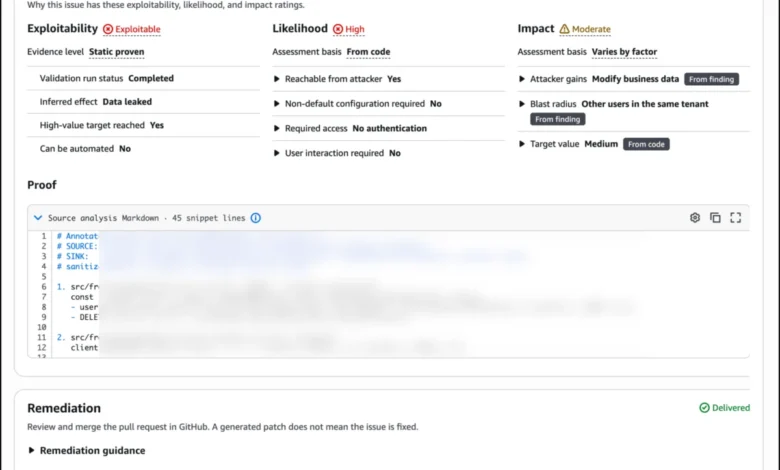
Furthermore, the system employs advanced sandbox testing for findings it can replicate. By running the exploit in an isolated environment, it generates concrete proof-of-concept code. This shift from theoretical risk to validated evidence provides developers with the clarity needed to prioritize critical patches over "noise" that presents no real-world danger.
Chronology and Development Roadmap
The introduction of AWS Continuum follows a broader industry trend toward "intelligent remediation." While the service is now generally available in the US East (N. Virginia) and US West (Oregon) regions, its development reflects years of internal AWS research into the lifecycle of security vulnerabilities.
- Phase 1: Discovery and Integration: Initial development focused on establishing seamless pipelines between common source code management systems (such as GitHub) and AWS infrastructure, ensuring that security teams could pull data without requiring invasive or disruptive changes to their existing CI/CD workflows.
- Phase 2: Validation and Sandbox Development: The engineering focus shifted to creating a reliable, isolated execution environment where potential exploits could be tested without risk to production data, ensuring the "proof" provided to developers was accurate and actionable.
- Phase 3: General Availability and Automated Remediation: With today’s launch, the focus is on providing a "human-in-the-loop" model. Currently, all fixes are proposed as pull requests, requiring explicit human approval. This maintains the essential balance between automation efficiency and human oversight.
Looking ahead, AWS has signaled an intent to introduce configurable "confidence gates." This future capability will allow organizations to automate the application of patches for specific classes of vulnerabilities—provided those patches meet predefined criteria such as successful passing of existing test suites and alignment with historical success metrics.
Analyzing the Impact on Industry Security Standards
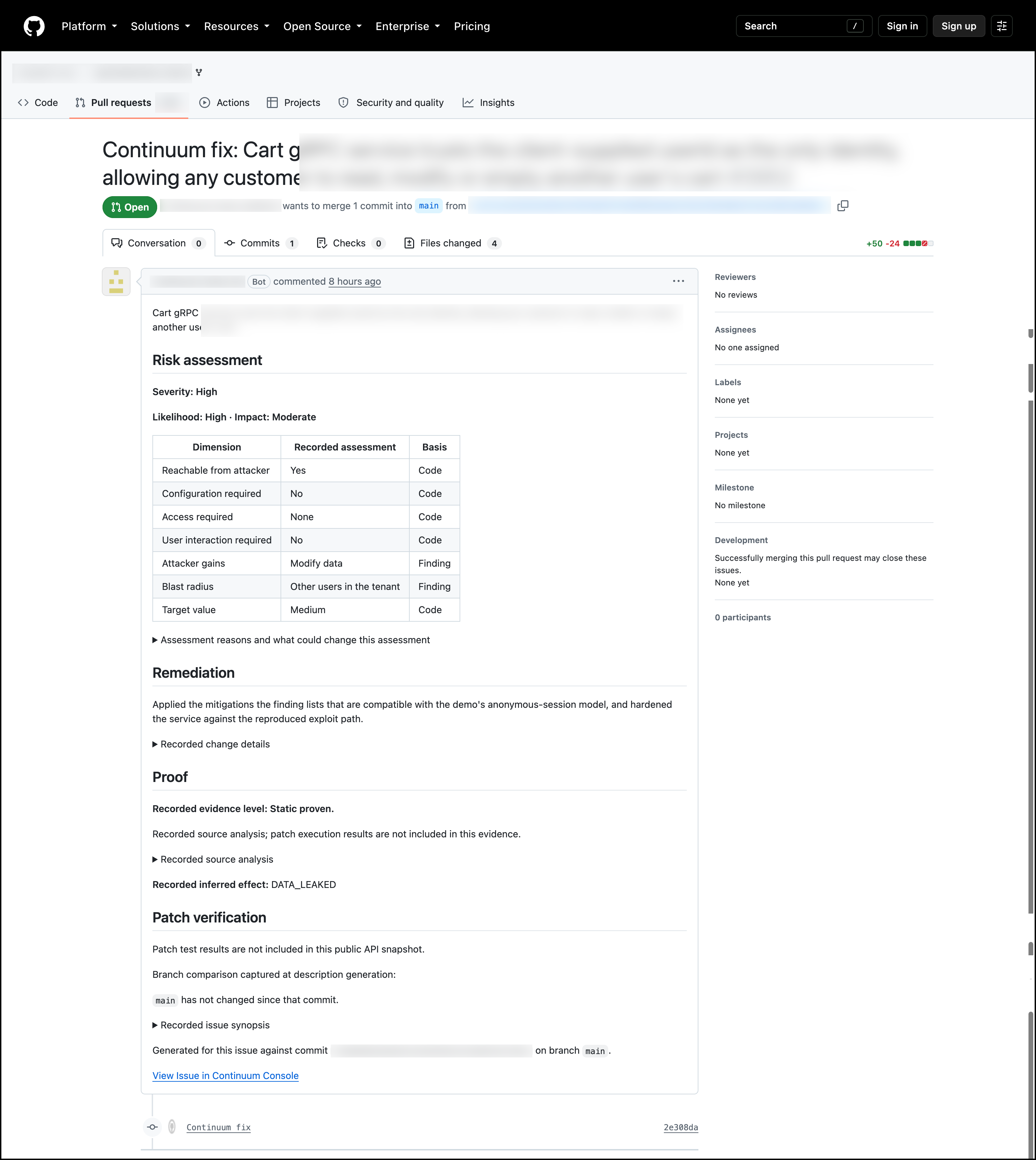
The introduction of this tool signals a broader shift in the "shift-left" security paradigm. By providing developers with a pull request that includes the fix, the proof of the exploit, and the blast radius assessment, the friction traditionally associated with security updates is significantly reduced.
Data from cybersecurity research firms suggests that the average time-to-remediate for critical vulnerabilities in large enterprises currently exceeds 60 days. AWS Continuum aims to reduce this window by providing the "how-to" alongside the "what." When a developer receives a pull request that is already validated, their capacity to focus on feature development increases, while the overall security posture of the organization improves through faster, more confident patching cycles.
However, the implementation of such services necessitates a robust governance framework. Industry analysts emphasize that while tools like Continuum reduce manual labor, they do not absolve organizations of the responsibility to manage their security architecture. The "human-in-the-loop" requirement for current patch approvals is a critical safety valve that ensures organizational control remains paramount.
Implementation and Operational Workflow
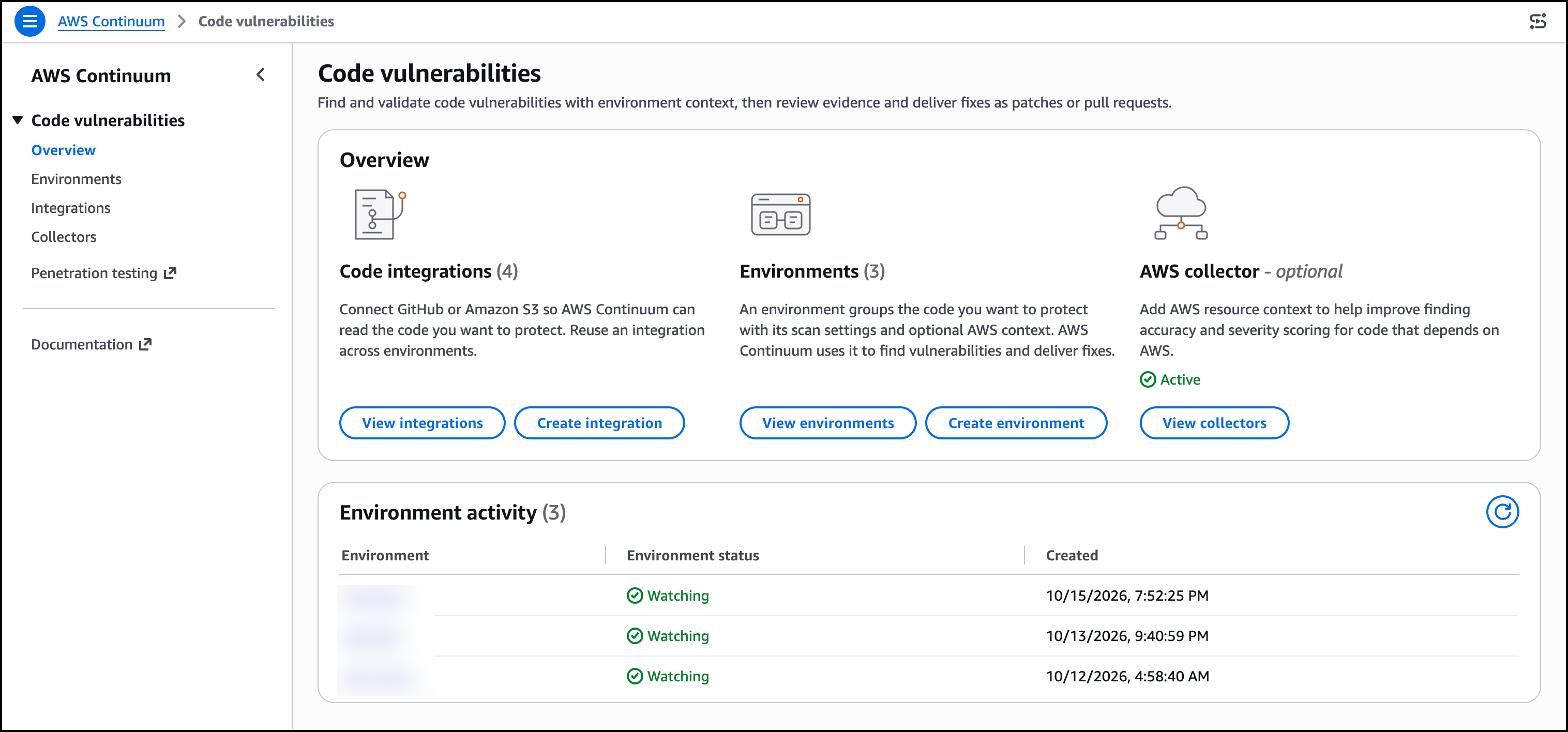
For organizations ready to adopt this technology, the integration process is designed for minimal operational overhead. The service connects directly to existing code repositories and AWS accounts. Once the collector is active, the system begins building the environmental graph, automatically cataloging assets via AWS Config and network telemetry.
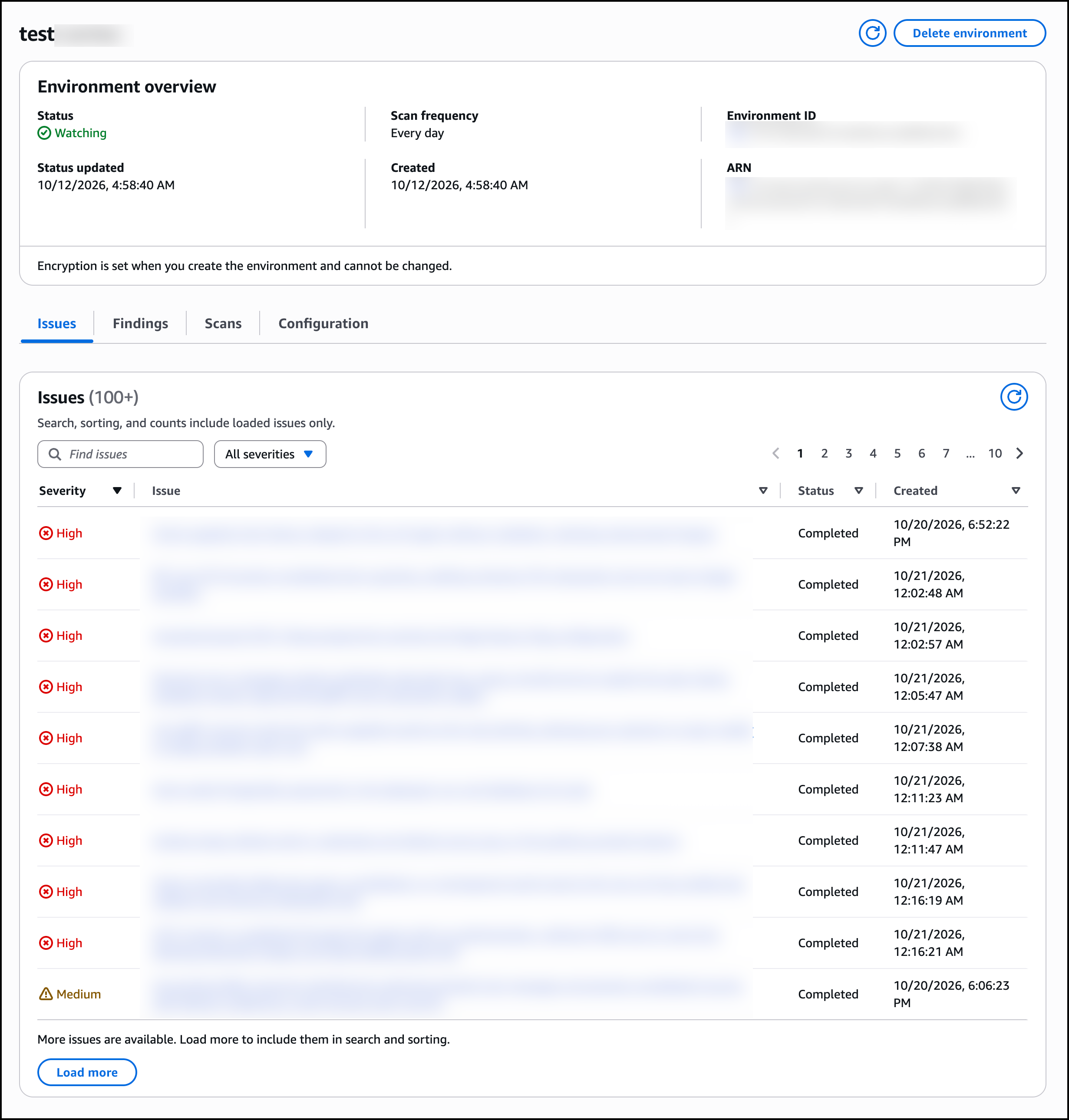
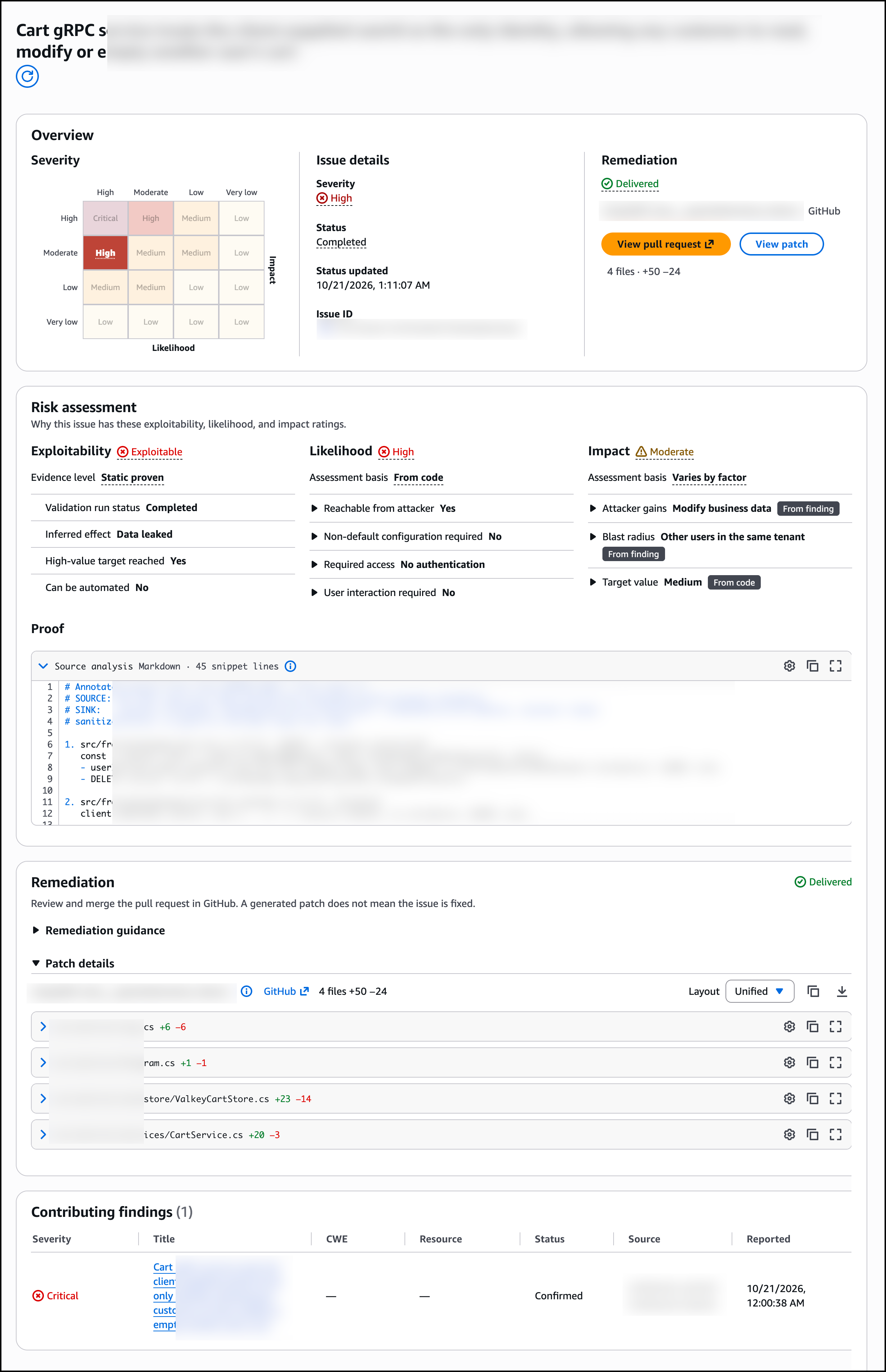
The console provides a centralized "Overview" dashboard, which serves as a command center for security operations. Instead of browsing thousands of raw findings, security leaders can view a prioritized list of validated issues. Each item includes a comprehensive risk assessment, explaining why the issue is classified as "High" or "Moderate" based on factors like public reachability, lack of authentication, and the specific impact on sensitive data.
Crucially, the remediation process is integrated directly into the developer workflow. When Continuum generates a fix—whether a dependency update, a code patch, or a configuration change—it appears as a standard pull request. This allows for seamless review within existing platforms like GitHub, where the security context and the proposed fix exist side-by-side.
Broader Implications for Cloud Infrastructure
The release of AWS Continuum is a calculated move to further solidify the AWS ecosystem as a "security-first" cloud provider. By automating the most tedious aspects of the vulnerability lifecycle, Amazon is effectively lowering the barrier to entry for robust security practices, particularly for small-to-mid-sized teams that may lack a dedicated, large-scale security operations center (SOC).
The ability to prove, rather than guess, that a vulnerability is exploitable represents a fundamental change in how CISOs will evaluate their risk dashboards. In a world where every minute counts, the move from "number of vulnerabilities" to "number of exploitable and reachable vulnerabilities" provides a much clearer picture of an organization’s actual threat surface.
As AWS continues to roll out this service to additional regions, the industry will likely observe a tightening of security standards across the board. The ease of access to this level of analysis suggests that "unpatched vulnerabilities" will become an increasingly unacceptable metric for software quality. While the technology is currently in its early stages of public deployment, its trajectory suggests that AI-assisted, context-aware remediation will become the standard requirement for all cloud-native application development in the coming years.
For those looking to adopt the service, documentation and integration guides are currently available via the AWS management console, providing clear paths for both initial setup and ongoing management of the security posture.