US President Donald Trump Extends Controversial US$ 100,000 H-1B Visa Fee Executive Order Through September 2027

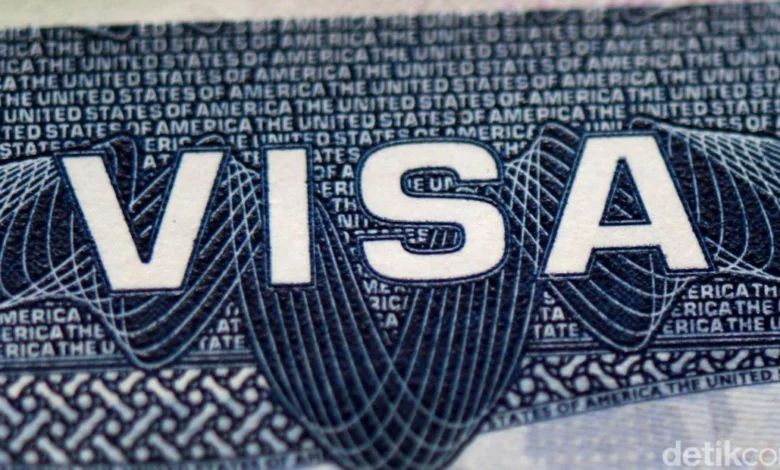
Washington, D.C. — United States President Donald Trump has officially signed an extension of the controversial executive order mandating a staggering US$ 100,000 fee for H-1B non-immigrant visa applications, maintaining the heavy financial barrier for skilled foreign workers for another full year. The extension ensures that the policy, which has sent shockwaves through the global technology and corporate sectors, will remain in effect until September 2027.
The H-1B visa program has historically served as a critical pipeline for American enterprises—particularly in Silicon Valley and across the broader technology, engineering, and financial landscapes—to recruit highly specialized international talent. By allowing companies to sponsor professionals with advanced skills for multi-year employment in the United States, the program has long been touted by industry leaders as essential for maintaining America’s competitive edge in global innovation. However, under the stringent immigration-restrictionist agenda championed by the Trump administration, the program has increasingly become a focal point of intense regulatory scrutiny and financial deterrence.
The continuation of the executive order prolongs a policy originally enacted by President Trump in September 2025, which was initially slated to expire this month. By pushing the expiration date to September 2027, the administration has doubled down on its efforts to reshape the American labor market, curb corporate reliance on foreign labor, and incentivize domestic workforce development, despite mounting legal challenges from the business community.
Mechanics and Exemptions of the Extended Mandate
Under the terms of the extended executive order, any employer petitioning for an initial H-1B non-immigrant worker must account for the substantial US$ 100,000 regulatory fee, a dramatic escalation from historical baseline costs that typically ranged between US$ 2,000 and US$ 5,000, depending on company size and specific filing categories.
Despite the sweeping nature of the fee, the policy maintains specific exemptions designed to cushion certain segments of the academic and domestic labor ecosystems. According to reports from Reuters, the executive order does not apply to foreign nationals who are already residing within the United States on valid student visas—such as F-1 visa holders transitioning via Optional Practical Training (OPT)—who historically constitute a significant portion of new H-1B visa recipients. Furthermore, the mandate exempts standard visa renewals and extensions for individuals already holding active H-1B status within the country, targeting the policy primarily at newly incoming foreign professionals rather than disrupting workers already embedded in the domestic workforce.
Chronology of Policy Evolution and Legislative Shifts
The journey toward the US$ 100,000 visa fee has been marked by aggressive executive maneuvering and persistent resistance from corporate stakeholders. The chronology of the policy highlights the administration’s determination to fundamentally alter United States immigration policy through executive authority:
- Pre-2025 Advocacy: Throughout previous political campaigns and administrative terms, President Trump frequently criticized the H-1B visa program, arguing that it depressed wages for American workers and facilitated the outsourcing of white-collar technology jobs. He consistently voiced support for permanently raising application costs to price out smaller firms and discourage the widespread recruitment of foreign nationals.
- September 2025: President Trump signs the initial executive order establishing the temporary US$ 100,000 fee for H-1B visa applications, bypassing traditional congressional legislative pathways by utilizing emergency executive powers tied to national labor market protection.
- June 2026: A federal district court judge issues a landmark ruling declaring the steep fee increase illegal, temporarily blocking the federal government from collecting the US$ 100,000 levy while litigation proceeds through the court system.
- Mid-2026: Legal battles intensify as the United States Chamber of Commerce and various corporate coalitions file extensive lawsuits challenging the executive branch’s authority to impose exorbitant fees without congressional authorization. Appeals wind their way through multiple circuit courts, including a high-stakes review by a Boston-based federal appeals court.
- September 2026: With legal challenges still unresolved in appellate courts, President Trump formally signs the extension order, securing the continuation of the policy through September 2027 and signaling the administration’s willingness to sustain the legal fight.
Corporate Backlash and Ongoing Legal Battles
The imposition of the six-figure fee has triggered a fierce legal and political war between the White House and corporate America. Major business syndicates argue that the fee structure is punitive, economically destructive, and ultra vires—meaning it exceeds the legal authority granted to the executive branch by existing immigration statutes passed by Congress.
Chief among the institutional opponents is the U.S. Chamber of Commerce, the nation’s largest business lobbying group, which spearheaded legal actions to invalidate the fee structure. Business advocates contend that forcing companies to pay US$ 100,000 per applicant effectively prices startup companies, mid-sized enterprises, and even major corporations out of the global talent market. They warn that such prohibitive costs will stifle research and development, accelerate the migration of tech talent and capital to more welcoming jurisdictions such as Canada, the United Kingdom, and the European Union, and ultimately weaken the long-term growth trajectory of the American economy.
Legal analysts note that the future of the executive order now hinges heavily on the federal judiciary. The Boston-based court of appeals is currently evaluating the validity of the June 2026 lower court ruling that temporarily halted the fee collection. Simultaneously, appellate panels are reviewing whether lower court judges acted appropriately in dismissing or advancing challenges brought forth by trade associations. If higher courts ultimately rule that the executive branch overstepped its statutory boundaries, the administration could be forced to refund collected fees and rescind the policy entirely. Conversely, a favorable legal outcome for the White House would cement executive pricing mechanisms as a powerful tool for immigration enforcement.
Broader Economic Implications and Industry Outlook
The prolonged implementation of the US$ 100,000 H-1B fee carries profound implications for the global mobility of labor and the strategic planning of multinational corporations. For decades, the H-1B program served as a vital bridge for engineers, data scientists, healthcare professionals, and financial analysts seeking to build careers in the United States.
Economists and labor market experts point to several key consequences resulting from the extended policy:
- Acceleration of Nearshoring and Offshore Operations: Facing prohibitive administrative expenses in the United States, multinational technology and financial services firms are increasingly pivoting toward establishing or expanding engineering hubs outside American borders. Countries like India, Canada, Vietnam, and Mexico are absorbing the influx of specialized talent that would have otherwise migrated to Silicon Valley, New York, or Seattle.
- Stratification of the American Corporate Landscape: While multinational conglomerates and trillion-dollar technology giants may absorb a US$ 100,000 per-head cost as a steep cost of doing business, emerging startups and mid-market firms face insurmountable barriers. This dynamic threatens to reduce market competition by concentrating top-tier global talent exclusively within a handful of hyper-capitalized corporations.
- Domestic Workforce Adaptation: Proponents of the policy argue that the artificial inflation of foreign labor costs will compel American educational institutions and corporations to invest more aggressively in domestic STEM (Science, Technology, Engineering, and Mathematics) training programs, ultimately fostering a more self-reliant national workforce.
As the policy enters its extended phase through September 2027, all eyes remain fixed on federal appellate courts and upcoming legislative sessions. Whether the executive order survives judicial scrutiny will determine not only the immediate financial liabilities of American employers seeking international expertise but also the broader trajectory of U.S. competitiveness in the global knowledge economy.