Jakarta, Indonesia – Samsung, the South Korean technology conglomerate, has announced a significant strategic realignment in its burgeoning robotics endeavors with the establishment of a new dedicated division named Robotics eXperience (RX). This pivotal move, signaling Samsung’s intensified commitment to the burgeoning field of physical artificial intelligence, will centralize all existing robotics research and development initiatives under a unified umbrella. The newly formed division is slated to be spearheaded by Samsung’s influential CEO, TM Roh, underscoring the company’s executive-level dedication to making robotics a core pillar of its future growth strategy.
The formation of the RX division represents a critical juncture for Samsung, as the company seeks to accelerate its transition from a consumer electronics giant to a leader in advanced robotics and intelligent automation. By bringing together disparate research efforts, Samsung aims to foster greater synergy, streamline development cycles, and expedite the commercialization of its robotic innovations. This strategic consolidation is particularly timely, given the accelerating global race among technology behemoths to establish dominance in the physical AI landscape.
Leadership and Strategic Direction
A key appointment within the RX division is Lee Dong-geon, who will assume the critical role of Head of Strategy. Lee’s impressive professional trajectory includes a tenure as a leader of the robotics strategy team at Hyundai, a period during which he was notably involved with Boston Dynamics, a globally recognized pioneer in advanced robotics. His expertise, particularly in navigating the complex strategic landscapes of the robotics industry and leveraging cutting-edge technological advancements, is expected to provide the RX division with a formidable competitive edge. Lee’s arrival at Samsung in May, preceding the formal announcement of RX, foreshadowed the company’s aggressive pivot towards a more integrated and strategically driven robotics agenda.
Joining this high-caliber team is Kim Eui-gyeom, a distinguished professor from Ajou University specializing in robotic hands and manipulation. Kim’s expertise will be invaluable, particularly as Samsung already operates a discreet Robotic Hand Labs, which is reportedly engaged in the development of advanced robotic hand technologies. The integration of such specialized academic knowledge directly into the RX division highlights Samsung’s intent to push the boundaries of robotic dexterity and human-robot interaction, crucial elements for both industrial automation and the burgeoning field of humanoid robotics.
Global R&D Footprint and Talent Acquisition
While the primary headquarters for the RX division will be situated within Samsung’s expansive research and development center in Seoul, South Korea, the company harbors ambitious plans for a global expansion of its robotics innovation network. Strategic development centers are slated for establishment in key technological hubs across the United States, Japan, and China. This multi-regional approach is designed to tap into diverse pools of local expertise, foster international collaboration, and ensure that Samsung’s robotics initiatives are responsive to varying market demands and regulatory environments. By decentralizing its R&D efforts, Samsung aims to create a global ecosystem of innovation that can rapidly prototype, test, and deploy robotic solutions tailored for specific regional needs.
The Industrial Imperative: Autonomous Factories by 2030
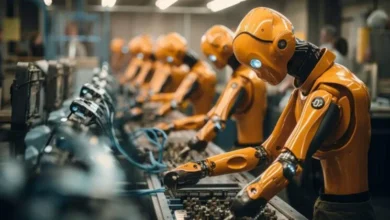
The immediate strategic thrust of the RX division will focus on the development and deployment of industrial robots. Samsung’s initial vision centers on leveraging advanced robotics to achieve comprehensive automation across its vast network of manufacturing facilities. This internal implementation strategy is conceived as a rigorous testing ground, allowing Samsung to refine its robotic technologies in real-world, high-stakes environments before offering these sophisticated solutions to external enterprises.
This internal transformation is not merely an incremental upgrade but a radical overhaul. Samsung’s ambitious long-term objective is to convert all its manufacturing facilities into fully "AI autonomous factories" by the year 2030. This initiative aligns perfectly with the global trend of Industry 4.0, which emphasizes smart manufacturing, interconnected systems, and data-driven decision-making. The transition to AI-powered autonomous factories promises not only significant gains in efficiency, precision, and production scalability but also a reduction in operational costs and enhanced quality control.
The global industrial robotics market, which was valued at approximately $16.2 billion in 2023, is projected to reach over $30 billion by 2028, growing at a compound annual growth rate (CAGR) of around 13%. Samsung’s entry as a major developer and potential vendor in this space could significantly reshape the competitive landscape. By demonstrating the efficacy of its robotic solutions within its own operations, Samsung aims to establish a compelling proof of concept, positioning itself as a credible and formidable player in the global industrial automation market. This internal transformation will serve as a powerful showcase for its capabilities, potentially attracting numerous industrial clients seeking to modernize their own manufacturing processes.
Beyond the Factory Floor: The Rise of Humanoid Robotics
Beyond industrial applications, Samsung’s RX division is also deeply invested in the development of humanoid robots – machines designed to mimic human physical characteristics and movements. According to reports from the Korea JoongAng Daily, Samsung is not merely researching but plans to commence the production of humanoid robots as early as this year, implying a significant acceleration in its development timeline. This move into humanoid robotics signals Samsung’s ambition to explore broader applications beyond manufacturing, potentially extending into service industries, elder care, education, and even household assistance.
The development of humanoid robots presents unique challenges, particularly in achieving human-like dexterity, balance, and interaction capabilities. The involvement of Professor Kim Eui-gyeom, with his specialization in robotic hands and manipulation, underscores Samsung’s strategic focus on overcoming these very hurdles. Advanced robotic hands, capable of intricate grasping and manipulation, are crucial for humanoids to perform complex tasks in unstructured environments. The confidential nature of Samsung’s existing Robotic Hand Labs suggests proprietary breakthroughs that could give the company a distinct advantage in this highly competitive and technologically demanding segment. The market for service robots, which includes humanoids, is projected to grow substantially, with estimates placing its value at over $100 billion by the end of the decade, highlighting the immense commercial potential Samsung is targeting.
A Foundation of Strategic Investments: Mergers, Acquisitions, and Startups
Samsung’s aggressive push into robotics is not solely reliant on internal R&D; it is also underpinned by a robust strategy of external investment, including funding robotics startups, and engaging in mergers and acquisitions (M&A). This proactive approach was notably demonstrated in 2024 when Samsung became the majority shareholder in Rainbow Robotics, a South Korean startup renowned for its collaborative robots (cobots) and humanoid robot platforms.
The Rainbow Robotics acquisition provided Samsung with immediate access to cutting-edge technology and a proven track record in robotics, effectively accelerating its capabilities in areas like motion control and sophisticated robotic manipulation. This strategy of strategic investment and M&A allows Samsung to quickly integrate external innovations, mitigate R&D risks, and rapidly expand its intellectual property portfolio in the robotics domain. This pattern is consistent with other tech giants, such as Amazon’s acquisition of Kiva Systems (now Amazon Robotics) and Google’s series of robotics acquisitions in the early 2010s, all aimed at bolstering their respective positions in automation and AI. By continuing to fund promising startups and actively pursue strategic acquisitions, Samsung is positioning itself to be a consolidator and innovator in the fragmented but rapidly growing global robotics market.
The Broader Landscape: A Global Race in Physical AI
Samsung’s establishment of the RX division is not an isolated event but rather a significant indicator of a broader technological trend: the escalating global race in "physical AI." This concept refers to the manifestation of artificial intelligence in tangible, physical forms that can interact with and manipulate the real world, transcending purely digital applications. Major technology companies worldwide are increasingly recognizing the immense potential of integrating advanced AI with robotics.
In February, for instance, Alphabet, Google’s parent company, consolidated its various robotics ventures under the Google umbrella, signaling a unified and intensified effort in this domain. Similarly, OpenAI, a leader in generative AI, has reportedly been exploring the development of physical manifestations of its ChatGPT technology, including smart speakers that could serve as precursors to more sophisticated robotic assistants. These developments underscore a collective industry pivot towards creating intelligent agents that can operate autonomously in physical spaces, blurring the lines between the digital and the physical.
The convergence of advancements in artificial intelligence, machine learning, computer vision, and advanced materials is making sophisticated robotics more feasible and economically viable than ever before. Companies like Boston Dynamics, Agility Robotics, and Figure AI are pushing the boundaries of what bipedal robots can achieve, while industrial robotics firms continue to innovate in factory automation. Samsung’s entry with the RX division, under the leadership of a seasoned executive like TM Roh and bolstered by key external hires and investments, positions it as a formidable contender in this transformative technological frontier.
Implications and Future Outlook
The implications of Samsung’s Robotics eXperience division are far-reaching, impacting not only the company’s internal operations and product lines but also the broader technology landscape and potentially the global economy. Internally, the successful implementation of AI autonomous factories could revolutionize Samsung’s manufacturing efficiency, cost structure, and supply chain resilience, giving it a significant competitive advantage in its core electronics businesses. Furthermore, successful development of humanoid robots could open entirely new revenue streams in service, healthcare, and consumer markets, diversifying Samsung’s portfolio beyond traditional electronics.
From a broader perspective, Samsung’s aggressive move is likely to intensify competition in the robotics sector, spurring further innovation and investment from rivals. It also highlights the growing importance of intellectual property in robotics and AI, with companies vying to secure patents and talent. Socially, the widespread adoption of advanced robotics, particularly in manufacturing and service, raises important questions about workforce retraining, job displacement, and the ethical considerations surrounding autonomous systems. Samsung, as a global leader, will likely play a significant role in shaping these discussions and setting industry standards.
Ultimately, the establishment of the RX division marks a decisive step for Samsung into a future where physical AI is ubiquitous. By centralizing efforts, attracting top talent, investing strategically, and setting ambitious long-term goals, Samsung is not merely participating in the robotics revolution; it is actively seeking to lead it, with a clear vision of transforming both its own operations and the world at large through intelligent machines.