Indonesia Jadi Pendiri Organisasi AI Dunia, Wamenkomdigi Angga Ungkap Manfaatnya

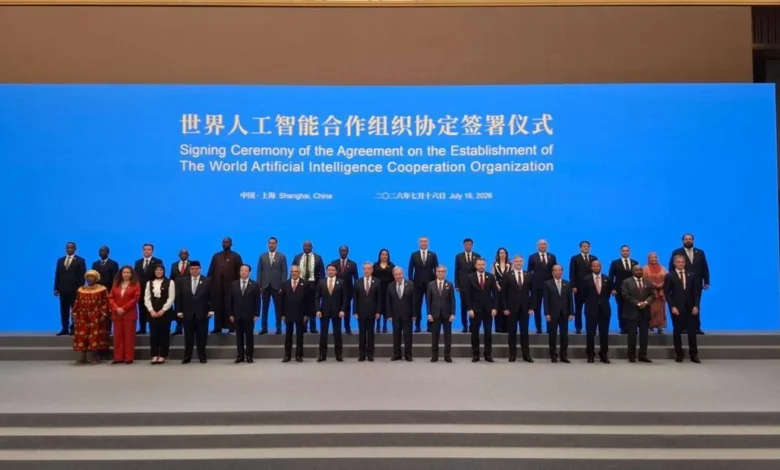
Indonesia has officially joined the ranks of 29 pioneering nations in establishing the World Artificial Intelligence Cooperation Organization (WAICO), a significant international body dedicated to fostering global collaboration in the advancement and governance of Artificial Intelligence (AI). This strategic move positions Indonesia at the forefront of shaping future AI policies and ensuring equitable access and responsible development of this transformative technology on a global scale. The formalization of Indonesia’s participation was marked by the signing ceremony for WAICO’s establishment in Shanghai, China, on July 16, 2026. The Indonesian delegation, a testament to the nation’s high-level commitment, was led by Coordinating Minister for Economic Affairs Airlangga Hartarto, who was accompanied by Vice Minister of Communication and Digital Angga Raka Prabowo. The gravity of WAICO’s formation was further underscored by the presence of United Nations Secretary-General António Guterres at the signing ceremony, signifying the global institution’s endorsement and emphasis on multilateral cooperation in the AI domain.
The Genesis and Mandate of WAICO: A New Era for Global AI Collaboration
WAICO emerges as an independent, non-profit intergovernmental international organization operating under the overarching framework of the United Nations. Its foundational purpose is to amplify global cooperation, stimulating innovation in artificial intelligence while simultaneously ensuring that its development trajectory is characterized by openness, inclusivity, responsibility, and tangible benefits for all nations. The rapid and pervasive advancement of AI technologies across various sectors has created an urgent need for concerted international action to navigate its complexities, harness its potential, and mitigate its risks. WAICO’s establishment is a direct response to this global imperative, aiming to prevent a fragmented or uneven landscape of AI development and governance.
The organization’s comprehensive mandate extends beyond mere collaboration. It is designed to facilitate crucial capacity building for human resources, addressing the global talent gap in AI. Furthermore, WAICO is committed to expanding access to AI technologies, particularly for developing nations, thereby democratizing the benefits of this cutting-edge field. A critical objective involves strengthening the coordination of national AI development strategies among member states, fostering a harmonized approach to policy-making and implementation. Crucially, WAICO is poised to play a pivotal role in driving the formulation of international AI governance frameworks and ethical guidelines, ensuring that technological progress is aligned with human values and societal well-being. This multifaceted approach underscores WAICO’s ambition to create a robust and equitable global AI ecosystem.
A Chronology of Indonesia’s Engagement
Indonesia’s journey to becoming a founding member culminated on July 16, 2026, with the formal signing event in Shanghai. The presence of Coordinating Minister for Economic Affairs Airlangga Hartarto at the helm of the delegation signaled the strategic economic importance Indonesia places on AI. His involvement indicates a recognition that AI is not merely a technological frontier but a significant driver for economic transformation and competitiveness. Vice Minister of Communication and Digital Angga Raka Prabowo’s participation further highlighted the country’s commitment to digital policy and infrastructure in the AI era.
Following the landmark signing, the Indonesian delegation participated in the "Informal Preparatory Session on the Establishment of WAICO" held on July 17, 2026. This crucial follow-up meeting, chaired by Vice Minister Angga Raka Prabowo as the head of the Indonesian delegation, served as an initial forum to deliberate on the operational steps for the newly formed organization. Discussions focused on laying the groundwork for WAICO’s functional structure, identifying immediate priorities, and exploring concrete opportunities for cooperation among member states in the realm of artificial intelligence. This session was vital in translating the foundational agreements into actionable plans, setting the stage for WAICO’s active role in the global AI landscape.
Indonesia’s Strategic Motivations and Anticipated Benefits
Indonesia’s decision to join WAICO as a founding member is rooted in a clear strategic vision for its digital future and its role on the international stage. This membership offers a significant platform for Indonesia to actively participate in the formulation of global AI policy directions, ensuring that the perspectives and needs of developing economies are adequately represented. It is an opportunity to influence the ethical considerations, regulatory frameworks, and developmental pathways of AI at an international level, rather than merely adopting policies set by others.
Moreover, WAICO membership is expected to substantially broaden Indonesia’s international cooperation in critical areas such as technology transfer, investment attraction, collaborative research, and the development of a robust domestic artificial intelligence ecosystem. By engaging with a diverse group of nations and experts under the WAICO umbrella, Indonesia can gain access to cutting-edge research, best practices, and innovative solutions that can accelerate its own AI capabilities. This collaborative environment can foster partnerships that bring in foreign direct investment into Indonesia’s nascent AI sector, stimulate local innovation, and create new economic opportunities.
The Indonesian government views WAICO’s establishment as a pivotal strategic step in supporting the acceleration of its national digital transformation agenda. The organization is anticipated to act as a significant catalyst in the development of Indonesia’s digital economy, which the government targets as a new engine for economic growth. Through increased investment in AI-driven technologies and the development of high value-added technology sectors, WAICO can help Indonesia achieve its ambitious economic objectives, contributing to a more diversified and resilient economy.
Vice Minister of Communication and Digital Angga Raka Prabowo articulated the significance of this involvement, stating that Indonesia’s participation in WAICO represents a critical moment for strengthening national AI governance. He emphasized that this engagement would ensure Indonesia’s AI regulatory and ethical frameworks align with international best practices. "Indonesia’s participation in WAICO is a strategic momentum to strengthen national AI governance that is in harmony with international best practices, while opening up cross-country collaboration spaces in the development of an inclusive and responsible AI ecosystem," Angga remarked in a press statement released on Saturday, July 18, 2026. This statement underscores the dual benefits of membership: enhancing internal governance and fostering external collaboration for shared progress.
The Global AI Governance Landscape and WAICO’s Unique Position
The establishment of WAICO comes at a time of intense global debate and action regarding AI governance. Various international bodies and nations have already initiated efforts to define ethical guidelines and regulatory frameworks for AI. For instance, the G7 Hiroshima AI Process has focused on developing a common international code of conduct for AI developers. The Organisation for Economic Co-operation and Development (OECD) has published its AI Principles, advocating for AI that is inclusive, responsible, and trustworthy. The European Union has taken a pioneering step with its comprehensive AI Act, aiming to regulate AI based on its risk level. Even the United Nations itself, through various agencies and initiatives, has consistently highlighted the importance of a human-centric approach to AI, emphasizing ethics, human rights, and sustainable development goals.
WAICO, however, distinguishes itself by its explicit focus on being an intergovernmental organization under the UN framework, bringing together a diverse set of nations with a particular emphasis on inclusivity and capacity building for developing countries. While other initiatives often originate from economically advanced nations, WAICO’s founding membership list, which includes China, Brazil, Russia, Malaysia, South Africa, Pakistan, Kazakhstan, Uzbekistan, Serbia, Kenya, Ethiopia, Venezuela, and Zambia, alongside Indonesia, reveals a strong representation of emerging and developing economies. This composition suggests a collective recognition among these nations that a collaborative platform is essential to prevent a widening "AI divide" and ensure that the benefits of AI are distributed equitably across the globe, rather than concentrating wealth and power in a few tech-dominant regions.
WAICO’s emphasis on capacity building, expanding access to technology, and coordinating national strategies is particularly resonant for these countries. Many developing nations face challenges in terms of skilled talent, infrastructure, and investment in AI research and development. WAICO provides a crucial avenue for knowledge transfer, resource sharing, and collective problem-solving, enabling these countries to leapfrog developmental stages and integrate AI responsibly into their national growth strategies. By fostering a shared understanding of ethical AI and responsible deployment, WAICO aims to build trust and prevent potential harms, ensuring that AI serves humanity’s broader interests.
Implications for Indonesia’s Digital Future
Indonesia’s membership in WAICO is deeply aligned with its ambitious national digital agenda, including the "Digital Indonesia 2045" vision, which aims to transform the nation into a leading digital economy. This involves a concerted effort to develop digital talent, attract technology investments, and foster a vibrant innovation ecosystem. WAICO can serve as a powerful accelerator for these goals.
The organization’s focus on human resource capacity building directly supports Indonesia’s initiatives to train a skilled workforce in AI, data science, and related fields. Through WAICO, Indonesian experts and policymakers can participate in international workshops, training programs, and knowledge exchange forums, bringing back invaluable expertise to bolster domestic capabilities. Furthermore, WAICO’s mandate to expand access to AI technology could translate into opportunities for Indonesia to adopt and adapt advanced AI solutions for its specific developmental challenges, such as optimizing agricultural yields, improving public health services, or enhancing disaster management systems.
From an economic perspective, WAICO membership enhances Indonesia’s attractiveness as a destination for AI-related foreign direct investment. By demonstrating a commitment to responsible AI governance and active participation in global policy discussions, Indonesia signals to international investors and tech companies that it is a serious and reliable partner in the AI space. This could lead to increased investment in data centers, AI research labs, and AI-powered startups within Indonesia, further fueling the digital economy and creating high-value jobs.
However, Indonesia’s involvement also comes with challenges. Ensuring effective implementation of global AI standards at the national level will require robust domestic regulatory frameworks and enforcement mechanisms. Bridging the digital divide within the archipelago remains a priority, as equitable access to AI benefits hinges on widespread digital literacy and infrastructure. Moreover, addressing critical concerns such as data privacy, algorithmic bias, and the ethical deployment of AI will be paramount to building public trust and ensuring that AI truly serves the Indonesian people responsibly.
In conclusion, Indonesia’s proactive stance as a founding member of the World Artificial Intelligence Cooperation Organization marks a pivotal moment in its digital transformation journey and its engagement with the global technological landscape. By committing to multilateral cooperation in AI development and governance, Indonesia not only secures its place at the table where the future of AI is being shaped but also reaffirms its dedication to fostering an inclusive, responsible, and beneficial AI ecosystem for its own citizens and for the world. This strategic move is set to unlock new avenues for collaboration, investment, and innovation, ultimately contributing to a more robust and equitable digital future.