Manus 2.0 adds a new agent harness, persistent execution environment, and workflow automation tools aimed at developers and enterprise use cases.

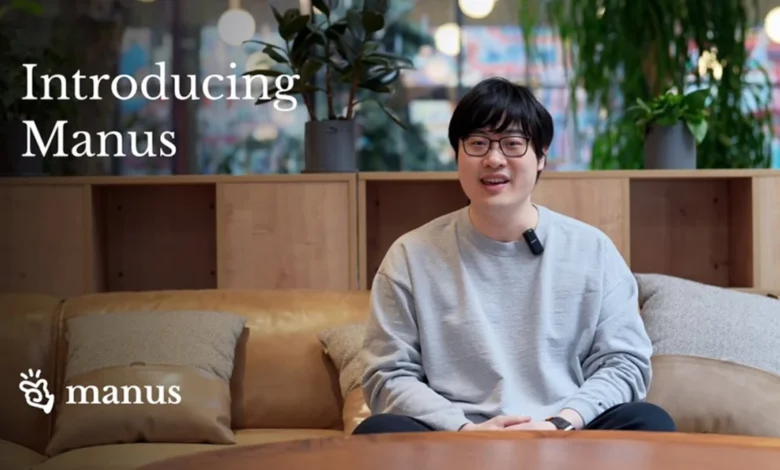
The release of Manus 2.0 marks a significant pivot for the startup, which has transitioned from a potential acquisition target to a direct competitor against some of the world’s largest technology firms. Following the collapse of its high-profile merger with Meta earlier this year, Manus is reasserting its independence by unveiling a comprehensive architectural overhaul. This new platform, spanning web, desktop, and mobile, represents a shift toward "agentic" computing—systems that do not merely respond to prompts but proactively manage tasks, resources, and workflows across diverse digital environments.
A Chronology of Independence
The trajectory of Manus has been defined by its turbulent relationship with Meta. In December 2025, Meta announced its intent to acquire the high-profile AI startup, a move viewed by many as an attempt to accelerate Meta’s own agentic AI ambitions. However, the deal faced significant regulatory headwinds, specifically from China’s National Development and Reform Commission. By April 2026, the regulatory body blocked the acquisition, leading to months of uncertainty. By August 2026, the companies officially terminated the agreement.
Since returning to independent operations, Manus has faced the dual challenge of re-establishing its market presence while Meta has simultaneously ramped up its own AI efforts, including the launch of its Muse personal assistant app and the subsequent rollout of the Meta Enterprise Platform. Manus 2.0 serves as a definitive response to these industry shifts, offering a feature-rich alternative that seeks to capture both individual power users and enterprise organizations.
The New Architecture: Cascade and Cloud Computer
At the core of the 2.0 release is the "Cascade" agent harness. This orchestration layer is designed to solve one of the most pressing issues in current AI deployments: the inefficient consumption of compute resources. In many traditional AI agent systems, models are tasked with broad, resource-heavy operations that often result in "token bloat"—the unnecessary use of computational tokens that drive up costs and latency.
Manus claims that Cascade addresses this through a selective invocation process. By managing how agents are coordinated within a project, the system only triggers specialized capabilities when necessary. Internal testing conducted by the company revealed that this architecture resulted in a 23.2% reduction in token usage, a 28.2% improvement in task completion speed, and a 32% overall reduction in operational costs compared to their previous system. While specific testing metrics were not disclosed, these figures align with the broader industry trend toward optimizing AI runtime environments to make them viable for large-scale enterprise integration.
Complementing this is the "Cloud Computer," a persistent execution environment. Unlike standard chatbot interfaces that reset with every session, the Cloud Computer provides a permanent, dedicated space for automated services. This allows for long-running processes—such as data monitoring, background research, or recurring software testing—to function without manual intervention, effectively providing agents with a "home" that persists regardless of whether the user is logged into the interface.
Cue: Personal Agents in the Modern Ecosystem
Perhaps the most consumer-facing component of the update is Cue, a standalone application designed to act as a personal agent. Positioned as a direct rival to Meta’s Muse, Cue distinguishes itself by granting every agent a unique digital identity. Within the Cue environment, each agent can be assigned its own email address, phone number, digital wallet, and even virtual computing resources.
This independence allows for a level of task delegation previously unseen in consumer AI. For instance, a user can deploy multiple agents into a single group chat, each equipped with specific permissions and tools. These agents can communicate with one another, trade tasks, and execute transactions within pre-defined security parameters. By allowing agents to interact with the outside world—and each other—Manus is attempting to move beyond the "chat-with-a-bot" paradigm into an era of collaborative, automated assistance.
Manus Studio and Remote Execution
The desktop experience has been entirely rebranded as Manus Studio. This workspace acts as a centralized hub where human users and AI agents collaborate in real-time. It integrates support for a vast array of file types, including spreadsheets, PDFs, code repositories, and multimedia assets. Additionally, the inclusion of dedicated modules for video editing and game development indicates that Manus is targeting creative and technical professionals who require deep integration between generative AI and specialized software.
Furthermore, the platform introduces enhanced remote control functionality. When authorized, the system can operate within the user’s own computing environment, performing tasks such as file retrieval, application testing, or executing complex workflows while the user is offline. This "visible workspace" approach ensures that the agent’s actions remain transparent, allowing users to monitor progress and maintain oversight of the automation process.
The Governance Gap in Agentic AI
While the technical capabilities of Manus 2.0 are robust, industry analysts urge caution regarding the implications of such autonomy. Anushree Verma, a Senior Director Analyst at Gartner, highlights that the "orchestration layer" is the new competitive battleground for enterprise AI. However, she warns that autonomy must not outpace governance.
"The capability is becoming enterprise-relevant, but the autonomy is currently ahead of the governance," Verma noted. She emphasized that businesses should not treat these systems as fully trusted autonomous entities. Instead, she advocates for a framework of "untrusted or semi-trusted automation," which includes strong isolation, rigorous approval gates, and detailed telemetry to track exactly what an agent is doing at any given moment.
This sentiment is echoed by Sakshi Grover, research director for Asia/Pacific Cybersecurity Services at IDC. Grover argues that the true measure of an agent platform lies in its portability and the visibility of its state. "Enterprises should assess an agent platform by the systems it can access, the state it retains, and how quickly that state can be recovered elsewhere," she explained.
Grover advises organizations to map out exactly where their data—including prompts, intermediate states, logs, and connector credentials—is being stored. She warns that an "export" feature is often insufficient for true enterprise portability. Instead, she recommends that companies implement "narrowly scoped, short-lived credentials" and maintain "external audit logging" to ensure that if a platform fails or a security incident occurs, the organization can revoke access instantly and rebuild its workflows on alternative systems.
Future Implications for Enterprise Adoption
The success of Manus 2.0 will likely hinge on the company’s ability to prove that its "agent-first" architecture is secure enough for the enterprise. While companies like OpenAI and Anthropic are also aggressively pursuing agentic capabilities, the market remains fragmented.
For businesses looking to integrate these technologies, the decision-making process is becoming increasingly complex. It is no longer just about which Large Language Model (LLM) is the most capable; it is about which orchestration layer provides the best balance of productivity, security, and portability.
As Manus 2.0 enters the market, it represents a pivotal test case. By providing tools for both personal autonomy (via Cue) and enterprise-grade orchestration (via Cascade), the company is attempting to cover the full spectrum of AI deployment. Whether it can maintain its momentum as an independent player in a market dominated by tech giants will depend on its ability to satisfy the high security and reliability standards demanded by global enterprises. For now, the release of 2.0 serves as a clear signal that the race to define the next generation of AI agents has only just begun.