How Power-Flexible AI Factories are Revolutionizing Grid Stability and Accelerating the Global Energy Transition

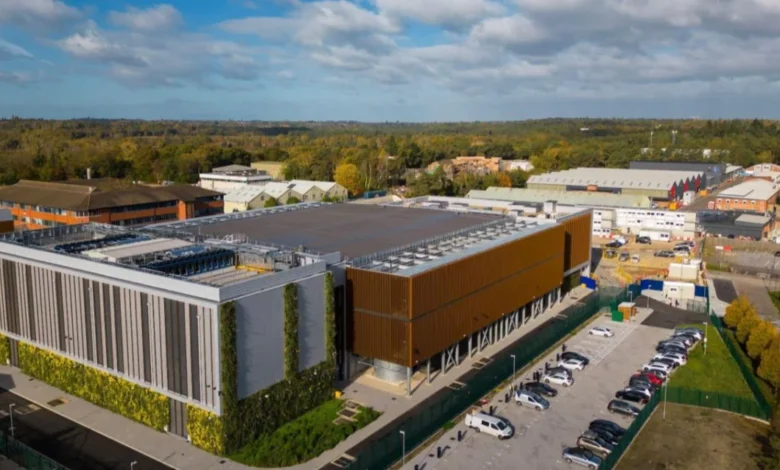
The intersection of high-performance computing and national energy security has reached a critical turning point as the global demand for artificial intelligence infrastructure threatens to outpace the capacity of aging electrical grids. In a landmark demonstration of grid-responsive technology, Emerald AI, in collaboration with NVIDIA, the Electric Power Research Institute (EPRI), National Grid, and Nebius, has successfully showcased a new paradigm for data center operations. By utilizing "power-flexible" AI factories, these massive energy consumers can now function as autonomous shock absorbers for the electrical grid, adjusting their consumption in real-time to prevent blackouts and stabilize national power supplies during periods of peak demand. This breakthrough addresses one of the most significant hurdles in the modern industrial landscape: the multi-year wait times for grid connections that currently stall the deployment of critical AI infrastructure across the globe.
The TV Pickup Phenomenon: A Legacy Challenge for Grid Operators
To understand the necessity of flexible AI infrastructure, one must look at the historical challenges faced by grid operators like National Grid, which manages the high-voltage electricity transmission network in England and Wales. One of the most famous and difficult-to-manage events in British energy history is known as "TV pickup." This phenomenon occurs when millions of viewers simultaneously step away from their televisions during a major broadcast event to perform energy-intensive tasks, most notably turning on electric kettles.
A quintessential example occurred during the UEFA EURO 2020 round of 16 match between England and Germany. At the half-time whistle, National Grid recorded a sudden demand spike of approximately 1 gigawatt (GW). To put this figure in perspective, 1 GW is the average output of a standard nuclear reactor. Managing such an abrupt surge requires grid operators to maintain "spinning reserves"—power plants that are kept running at sub-capacity specifically to handle these spikes. This practice is not only expensive but often relies on carbon-intensive fossil fuel plants that can ramp up production quickly.
As the world transitions toward renewable energy sources like wind and solar, which are inherently intermittent, the grid’s ability to handle these sudden swings becomes more precarious. The addition of large-scale AI data centers, which traditionally require a constant, "always-on" power draw, has historically been seen as an added strain on this delicate balance. However, the latest results from Emerald AI suggest that these facilities could actually be the solution to the very problem they were once thought to exacerbate.
The London Pilot: Testing Resilience in a Modern AI Factory
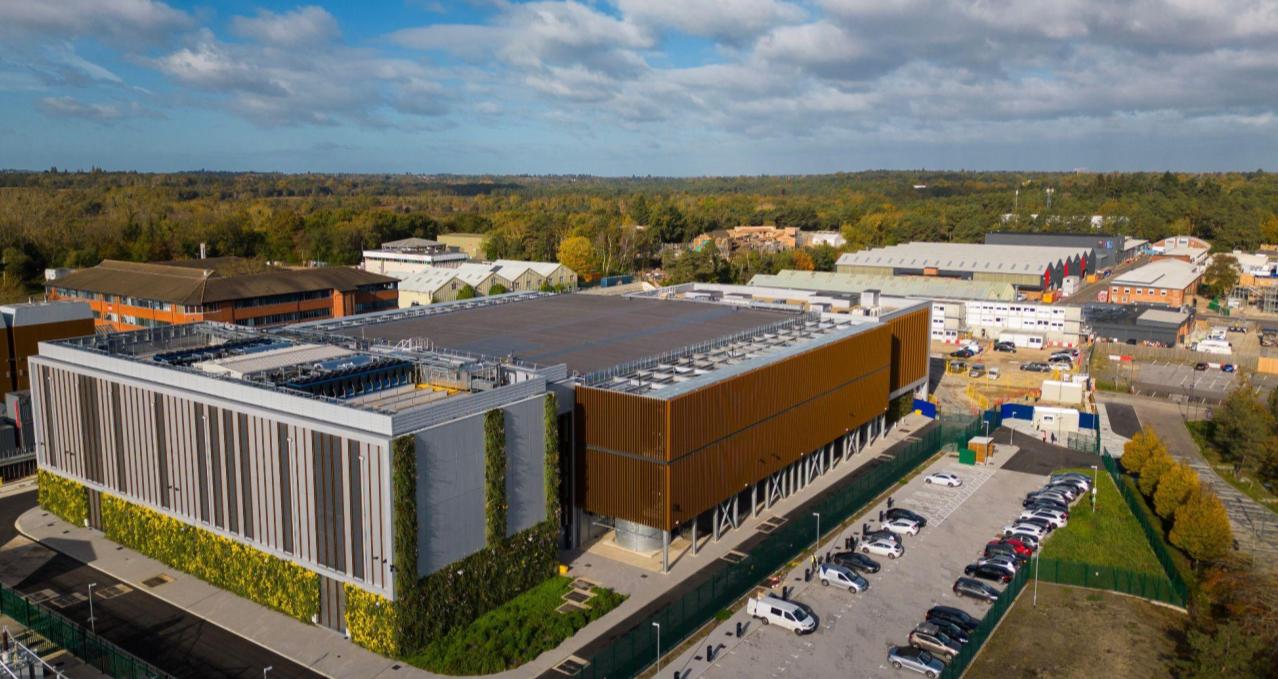
In December, Emerald AI moved its testing operations from the United States to the United Kingdom, deploying the Emerald AI Conductor Platform at a new Nebius AI factory in London. This facility represents the cutting edge of European AI infrastructure, built on NVIDIA’s advanced Blackwell architecture. The demonstration was designed to prove that an AI factory could respond to grid stress signals with the same speed and precision as a dedicated battery storage system, but without the need for additional physical hardware.
The technical core of the demonstration involved a cluster of 96 NVIDIA Blackwell Ultra GPUs, interconnected via the NVIDIA Quantum-X800 InfiniBand platform. To monitor and control this hardware, the team utilized the NVIDIA System Management Interface (nvidia-smi), which provides high-fidelity, seconds-level telemetry of GPU power consumption. This level of granular control is essential for grid-balancing, as the electrical frequency of a national grid can fluctuate in a matter of seconds.
During the trial, EPRI and National Grid simulated a series of high-stress scenarios. These included physical disruptions such as lightning strikes on transmission lines, as well as environmental challenges like "wind droughts"—extended periods of low wind speed that cause a drop in renewable energy generation. Most notably, the team reenacted the Euro 2020 "TV pickup" surge. As the simulation signaled the moment millions of kettles were switched on, the Emerald AI Conductor Platform autonomously instructed the AI cluster to ramp down its power usage. The system acted as a "virtual battery," releasing capacity back into the grid to accommodate the public’s sudden need for power.
Performance Metrics and Technical Reliability
The results of the London pilot provided empirical evidence of the viability of power-flexible computing. According to the white paper released by Emerald AI, the system achieved 100% alignment with over 200 power targets set by National Grid and EPRI. Across 22 distinct real-time dispatch events, the AI factory demonstrated the ability to slash its power consumption by as much as 30% in under 40 seconds.
Crucially, this reduction in power did not result in a total cessation of operations. The Conductor Platform is designed to distinguish between different types of AI workloads. High-priority tasks, such as real-time user queries or critical "inference" operations, were maintained at peak throughput. Meanwhile, more flexible, "batch" workloads—such as the long-term training of large language models—were temporarily slowed down. This intelligent prioritization ensures that while the grid is protected, the primary business functions of the AI factory remain uninterrupted.
Steve Smith, Group Chief Strategy Officer of National Grid, emphasized that the London tests went further than previous American trials by monitoring the total power consumption of the IT equipment, including CPUs and peripheral systems, rather than just the GPUs. This holistic approach confirms that the entire data center ecosystem can be orchestrated to serve the needs of the national infrastructure.
Strategic Chronology: From Proof-of-Concept to Real-World Deployment
The success in London is the culmination of a rapid development cycle that has spanned several key energy markets in the United States. The timeline of Emerald AI’s expansion illustrates the growing urgency for this technology:
- Initial Proof-of-Concept Trials: Successful tests were first conducted at AI facilities in Arizona, Virginia, and Illinois. These trials focused on the basic ability of GPU clusters to respond to throttle commands without crashing system software.
- The London Expansion (December): The partnership with Nebius and National Grid marked the first international deployment, proving the technology’s adaptability to different regulatory and technical grid standards.
- Real-World Integration (2024): Following the success of the four demonstrations, Emerald AI and NVIDIA are now moving toward permanent, real-world deployment. The Aurora AI Factory in Virginia is scheduled to open later this year as the first facility designed from the ground up to be fully grid-responsive.
This progression suggests that "power-flexibility" will soon become a standard requirement for large-scale data center permits, particularly in areas where the grid is already operating near capacity.
Economic and Infrastructure Implications
The implications of this technology extend far beyond simple grid stability; they represent a fundamental shift in the economics of digital infrastructure. Currently, many data center developers face "gridlock"—a situation where they must wait five to ten years for utility companies to build new substations and transmission lines before a facility can be powered.
By adopting flexible power protocols, AI factories can bypass these bottlenecks. Grid operators are more likely to approve connections for large customers who can promise to "get out of the way" during peak hours. This allows for faster deployment of AI talent and infrastructure, providing a significant competitive advantage for nations like the U.K. that are looking to establish themselves as global hubs for artificial intelligence.
Furthermore, this technology offers a direct benefit to the general public. When large industrial users can reduce their peak load, it lessens the need for utilities to invest billions in "overbuilding" the grid to handle worst-case scenarios. These savings are eventually passed down to everyday consumers, helping to keep electricity rates affordable even as the overall demand for power increases.
Analysis: The Future of the AI-Energy Paradox
For years, a narrative has persisted that the "AI revolution" and the "Green transition" are at odds. Critics point to the massive energy consumption of data centers as a threat to climate goals. However, the work of Emerald AI, NVIDIA, and National Grid suggests a more nuanced reality: AI infrastructure can be the most flexible and responsive load the grid has ever seen.
Unlike traditional industrial loads—such as steel mills or chemical plants, which cannot easily vary their power usage without damaging equipment or spoiling product—AI workloads are uniquely divisible. Because AI training is essentially a massive mathematical calculation distributed across thousands of chips, it can be throttled or "checkpointed" with high precision.
As we look toward a future dominated by electric vehicles and heat pumps, the ability to find "spare" gigawatts of power in the digital infrastructure will be invaluable. The AI factory of the future will not be a passive drain on the nation’s resources, but a dynamic participant in the energy market, acting as a buffer that enables the wider adoption of renewable energy and ensures that when the next big football match reaches half-time, the lights—and the kettles—stay on for everyone.
Related posts: