Tesco and Adobe Forge Strategic AI Partnership to Revolutionize Personalized Grocery Shopping and Digital Engagement through New Innovation Lab

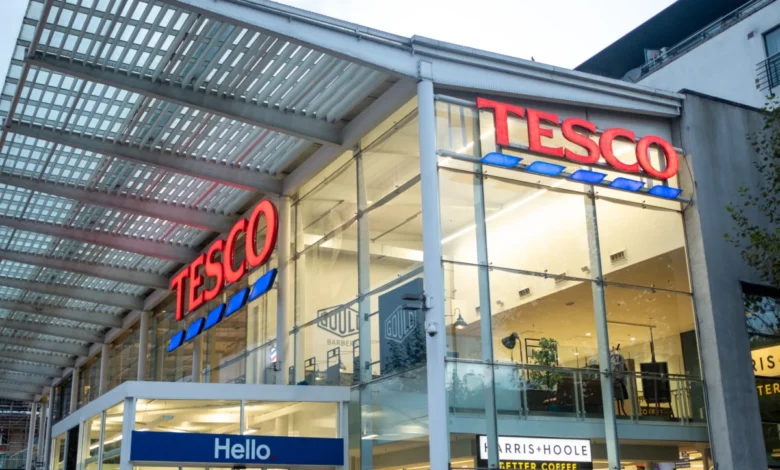
The United Kingdom’s leading grocery retailer, Tesco, has entered into a significant multi-year strategic partnership with U.S. software powerhouse Adobe to integrate advanced generative and agentic artificial intelligence into its vast digital ecosystem. This collaboration aims to redefine the grocery shopping experience for millions of consumers by leveraging Adobe’s cutting-edge AI technologies, specifically Adobe Firefly Foundry and its burgeoning agentic AI capabilities. The primary objective is to enhance the retailer’s ability to predict customer needs and deliver hyper-personalized content, promotions, and digital experiences across all consumer touchpoints.
At the heart of this alliance is the transformation of Tesco’s digital presence into a more responsive and intuitive platform. By utilizing Adobe’s enterprise-grade AI tools, Tesco intends to empower its personalization and AI teams to move beyond traditional data analysis toward a more proactive model of customer engagement. The retailer, which serves millions of customers weekly, seeks to ensure that every digital interaction—whether through its mobile app, website, or email communications—feels uniquely tailored to the individual shopper’s preferences and current context.
The Evolution of the Clubcard and the Focus on Personalization
A central pillar of this partnership is the further evolution of the Tesco Clubcard program. Since its inception in 1995, the Clubcard has been a cornerstone of Tesco’s customer loyalty strategy, and it currently spans more than 24 million households in the United Kingdom. While the program has long been a leader in using purchase data to reward loyalty, the integration of Adobe’s AI capabilities represents a quantum leap in how that data is utilized.
Tesco aims to make the Clubcard experience feel more relevant and responsive in real-time. Rather than receiving generic vouchers or delayed offers based on past purchases, shoppers will increasingly see "in-the-moment" personalization. This could include real-time recipe suggestions based on items added to a digital basket, or personalized discounts that trigger exactly when a customer is likely to be planning their weekly shop. The goal is to shift the Clubcard from a passive reward system to an active shopping assistant that adds tangible value to the consumer’s daily routine.
The Tesco x Adobe Innovation Lab: A New Model for Co-Development
To facilitate this technological transition, the two companies have announced the launch of the Tesco x Adobe Innovation Lab. This initiative represents a departure from standard vendor-client relationships, opting instead for a co-innovation model. Under this arrangement, Adobe’s specialized software engineers will be embedded directly within Tesco’s in-house technology and digital teams.
This collaborative environment is designed to accelerate the pace of experimentation. By working side-by-side, the teams can rapidly prototype AI-driven features and scale on-brand content production. The use of Adobe Firefly Foundry is particularly significant here; it allows Tesco to generate high-quality, brand-consistent visual content at a scale that was previously impossible. This means that personalized marketing assets—such as custom images for promotional emails or tailored banners on the Tesco app—can be produced and deployed in a fraction of the time, ensuring that the visual experience is as personalized as the offers themselves.
Historical Context and Tesco’s Market Position
Tesco’s move into high-level AI integration is a logical progression of its long-standing digital strategy. Currently ranked ninth in the Europe Database—which tracks the continent’s top 500 online retailers by annual e-commerce sales—Tesco has consistently outpaced many of its domestic and international rivals in the digital space. The retailer was an early pioneer of online grocery delivery in the late 1990s and has maintained a dominant market share in the UK online grocery sector, often accounting for a significant portion of all online grocery orders in the country.
The partnership comes at a time when the UK grocery market is facing intense competition. Traditional "Big Four" rivals like Sainsbury’s and Asda, as well as discounters Aldi and Lidl, have all been investing heavily in digital infrastructure and loyalty schemes. By doubling down on AI-driven personalization, Tesco is attempting to fortify its lead by creating a "stickier" ecosystem where the convenience of a personalized experience becomes a primary reason for customer retention.
Official Perspectives on the Digital Transformation
Leadership at Tesco has emphasized that the partnership is fundamentally about the customer. Becky Brock, Tesco Group Customer Digital Transformation Director, highlighted the importance of making the loyalty program more functional for the end-user. "At Tesco, we want customers to feel that the more they use their Clubcard, the more use it is to them," Brock stated. She noted that the collaboration with Adobe allows the retailer to be "even more responsive to the needs of shoppers," enabling them to act in the moment and deliver the right messages and savings precisely when they are needed most.
From Adobe’s perspective, the deal is a landmark demonstration of its "Experience Cloud" and generative AI roadmap. For the U.S. software giant, partnering with a retailer of Tesco’s scale provides a massive testing ground for its "agentic AI"—AI systems that can not only generate content but also perform tasks and make autonomous decisions within defined parameters to achieve specific business goals.
Expert Analysis: The Shift from Reactive to Predictive Retail
Industry analysts suggest that the Tesco-Adobe deal is a harbinger of a broader transformation within the global retail sector. Amber Brooner, Chief Revenue Officer of XTel—a Luxembourg-based AI revenue management platform—observes that AI-driven personalization is transitioning from a competitive advantage to a foundational requirement for survival. "For Tesco, it’s about moving from reactive engagement to predictive, real-time customer interaction," Brooner noted.
The economic implications of such a shift are substantial. In the grocery industry, where profit margins are famously thin and often hover between 2% and 4%, even incremental improvements in operational efficiency or consumer behavior can result in massive revenue shifts. Brooner points out that leveraging AI to deliver more relevant recommendations and tailored promotions can improve conversion rates and increase "basket size" (the total amount spent per visit). "In a margin-sensitive environment like grocery, even a 1%–2% improvement in conversion or basket size translates into meaningful revenue impact at scale," she explained.
Adobe’s Strategic Positioning as the AI Infrastructure for Commerce
For Adobe, the partnership with Tesco serves as a high-profile case study in its mission to become the "enterprise AI layer" for global commerce. By embedding its engineers and tools so deeply into Tesco’s operations, Adobe is moving beyond being a provider of creative software (like Photoshop or Illustrator) to becoming a critical partner in the customer journey.
Analysts expect Adobe to use the "Tesco model" as a blueprint for other global retailers. The strategy is to move away from "point solutions"—individual pieces of software that solve one specific problem—toward integrated platforms that unify data, decision-making, and execution. As retailers are forced to consolidate their data to compete with tech giants like Amazon, the demand for comprehensive AI ecosystems like the one being built by Tesco and Adobe is expected to surge.
The Consumer Experience: Reducing Friction through "Invisible AI"
While the back-end technology is complex, the intended effect on the consumer is simplicity. The most successful implementation of AI in retail is often described as "invisible." When a shopper receives a notification for a discount on a product they were just about to run out of, or when their digital shopping list automatically organizes itself based on the layout of their local store, they rarely think about the algorithms at work.
As Brooner suggests, the ultimate benefit for the consumer is the reduction of "friction." Personalized experiences reduce the cognitive load, time, and effort required to complete a weekly shop. "They simply feel that the brand understands them," she said. This emotional connection, powered by data and AI, is what Tesco hopes will maintain its market leadership in an increasingly digital-first economy.
Broader Industry Implications and the Future of AI in Retail
The Tesco-Adobe partnership signals a clear shift in the B2B landscape. It highlights a growing trend where retailers must become technology companies in their own right to remain competitive. The unification of data across various channels—online, in-app, and in-store—is no longer optional.
Furthermore, this collaboration underscores the necessity of partnerships in the AI era. As no single provider can deliver the full stack of technology, data, and industry expertise required for a total AI transformation, deep-level collaborations between tech giants and industry leaders are becoming the norm. The retailers who successfully operationalize AI across their entire value chain—connecting the customer experience directly to commercial outcomes in real-time—will likely be the ones who define the next decade of retail.
As the Tesco x Adobe Innovation Lab begins its work, the industry will be watching closely to see how these AI experiments translate into actual shopping habits. If successful, the model of "agentic AI" in grocery shopping could soon become the standard for retailers worldwide, turning every smartphone into a highly sophisticated, personalized concierge for the modern consumer. This partnership is not merely about selling more groceries; it is about building a digital infrastructure that can adapt to the shifting sands of consumer behavior in real-time, ensuring that Tesco remains at the forefront of the global digital commerce landscape.