Meta Unveils Official React Native Support for Meta Quest Devices at React Conf 2025 to Streamline Spatial Computing Development

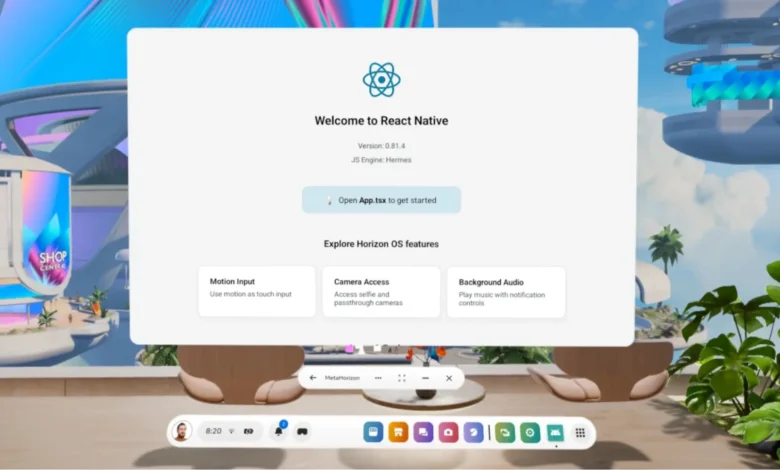
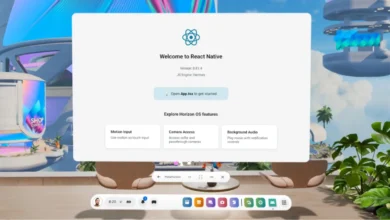
In a move that signals a significant expansion of the spatial computing ecosystem, Meta has officially announced native support for React Native on Meta Quest devices during the React Conf 2025 keynote. This development marks a pivotal milestone in the "Many Platform Vision" first articulated by the React Native team in 2021, which sought to transform the framework from a mobile-centric tool into a universal interface layer capable of powering applications across mobile, desktop, web, and now, virtual and mixed reality environments. By integrating Meta Quest support directly into the React Native core and its surrounding ecosystem, Meta is effectively lowering the barrier to entry for millions of web and mobile developers looking to transition into the burgeoning field of spatial computing.
The announcement comes at a time when the industry is increasingly focused on "universal" development patterns. Since its inception in 2015, React Native has expanded from its initial iOS and Android roots to include community and corporate-supported versions for Windows, macOS, Apple TV, and the web via react-strict-dom. The addition of Meta Quest—which operates on Meta Horizon OS—represents the first major foray into head-mounted displays (HMDs) for the framework, offering a standardized path for developers to build 2D and "2.5D" applications within a 3D immersive environment.
The Evolution of the Many Platform Vision
The journey to Meta Quest support is rooted in a long-term strategic shift within Meta’s engineering departments. In 2021, the React Native team published the "Many Platform Vision," a white paper that outlined a future where the framework would no longer be a collection of disparate forks for different devices. Instead, it would function as a unified abstraction layer. The goal was to allow developers to reuse not just code, but also their mental models of component-based architecture and state management across any screen.
Over the last four years, this vision has been realized through several key technical milestones. The introduction of the "New Architecture" (Fabric and TurboModules) provided the performance necessary for more demanding environments. Simultaneously, the development of react-strict-dom bridged the gap between web standards and native primitives. The official support for Meta Quest is the logical culmination of this chronology, leveraging the fact that Meta Horizon OS is built upon the Android Open Source Project (AOSP). This shared foundation allows React Native to treat the Quest headset as a highly specialized Android device, ensuring that existing tooling, build systems, and debugging workflows remain largely intact for the developer community.
Technical Implementation and the Role of Expo
Central to the rollout of Quest support is the partnership between Meta and Expo, the leading framework and platform for React Native development. To facilitate a seamless "getting started" experience, the teams have released expo-horizon-core, a specialized plugin designed to handle the unique requirements of Meta Horizon OS.
For developers, the workflow is designed to be indistinguishable from standard Android development. By utilizing Expo Go—the sandbox environment for testing React Native apps—developers can deploy code to a Quest headset over a local network almost instantly. However, as applications move toward production, the complexity increases. Meta Quest applications require specific Android manifests, product flavors, and metadata to be recognized by the Horizon Store.
The expo-horizon-core plugin automates these configurations, managing variables such as the horizonAppId, default window dimensions (typically 1024dp by 640dp for VR windows), and device compatibility filters (supporting Quest 2, Quest 3, and the newly released Quest 3S). Furthermore, the plugin allows developers to toggle VR-specific features like head tracking and backup permissions, ensuring that the application adheres to Meta’s strict performance and privacy guidelines.
Navigating the AOSP Landscape Without Google Services
A critical distinction for developers moving from traditional Android mobile development to Meta Quest is the absence of Google Mobile Services (GMS). Because Meta Horizon OS is based on AOSP, it does not include proprietary Google APIs such as the Play Store, Google Maps, or Firebase Cloud Messaging (in its standard GMS-dependent form).
This architectural reality necessitates a shift in how developers handle common tasks. For instance, location services and push notifications, which are typically handled by GMS on most smartphones, require alternative implementations on Quest. Meta and its partner Software Mansion have addressed this by providing drop-in replacements, such as expo-horizon-location and expo-horizon-notifications, which interface directly with Horizon OS’s native systems.

Industry analysts suggest that this "de-Googled" approach is a strategic necessity for Meta as it seeks to build a self-sustaining platform ecosystem that competes directly with Apple’s visionOS. By providing React Native developers with the tools to bypass GMS dependencies, Meta is ensuring that its hardware is not reliant on a competitor’s software infrastructure.
Design and UX: From Touchscreens to Spatial Pointers
While the underlying code of a React Native app on Quest may look familiar, the user experience (UX) requirements are radically different. Meta’s design guidelines for Horizon OS emphasize that interfaces are viewed at a distance and interacted with via controllers or hand tracking rather than direct finger-to-glass contact.
This shift introduces several design imperatives:
- Target Size and Spacing: Hit targets must be significantly larger to accommodate the inherent "jitter" of spatial pointers. While mobile devices often use a 44dp minimum, VR environments often require 68dp or more for comfortable interaction.
- Input Agnostic Interactions: Applications must support a hierarchy of inputs, including Quest Touch controllers, hand-tracking gestures (like the "pinch" to click), and external Bluetooth peripherals like keyboards and mice.
- Legibility and Depth: Typography must be optimized for "screen-door effect" mitigation, and layouts must be responsive to resizable windows that can be positioned anywhere in the user’s physical space.
React Native’s Flexbox-based layout system is uniquely suited to these challenges, as it was originally designed to handle the fluid nature of web and mobile screens. However, developers are now being urged to move away from "touch-only" assumptions, such as onPress events that don’t account for hover states, which are vital for pointer-based navigation in VR.
Market Context and Developer Implications
The timing of this announcement is significant within the broader context of the "spatial computing" war. With the launch of the Apple Vision Pro and the subsequent focus on visionOS, the industry has seen a surge in interest in immersive applications. However, Apple’s ecosystem relies heavily on SwiftUI and RealityKit, which requires a specialized skill set.
By bringing React Native to the Quest, Meta is making a play for the "middle class" of the developer world. There are an estimated 7 million React developers globally. By allowing them to use their existing JavaScript and React skills to build VR apps, Meta is positioned to rapidly expand the library of available software on the Horizon Store.
"The goal isn’t just to make it possible to build for Quest; it’s to make it the default choice for any developer building a multi-platform app," said a representative from the React Native core team during a post-keynote breakout session. "If your app already runs on Android and the web, it should take minimal effort to make it a first-class citizen in the Quest ecosystem."
Chronology of React Native Expansion
- 2015: React Native launched for iOS (March) and Android (September).
- 2016-2018: Expansion into Windows and macOS via Microsoft and community forks.
- 2019: Re-architecture project (Fabric) begins to improve performance for complex UIs.
- 2021: The "Many Platform Vision" is published, prioritizing platform-agnostic core development.
- 2023: Meta begins internal testing of React Native on Quest for system-level apps.
- 2024:
react-strict-domis introduced to unify web and native styling. - 2025: Official Meta Quest support is announced at React Conf, accompanied by Expo integration.
Looking Ahead: The Future of Horizon OS
The introduction of official support is expected to trigger a wave of porting for popular productivity, social media, and utility apps that have previously remained exclusive to mobile devices. As Meta continues to open up Horizon OS to third-party hardware manufacturers—such as ASUS and Lenovo—the demand for a cross-platform framework like React Native will likely grow.
The official documentation and reference projects are now available through the Meta Open Source portal and Software Mansion’s experimental labs. As the ecosystem matures, the focus is expected to shift toward "Volumetric" support, allowing React Native to control not just 2D windows, but 3D objects within the spatial environment. For now, the focus remains on empowering developers to bring the world’s most popular apps into the virtual realm with the tools they already know and trust.