React Native 0.86 Release Strengthens Android 15 Integration and Finalizes Transition to Independent React Foundation

The React Native development team has officially announced the release of version 0.86, a milestone update that introduces comprehensive support for Android 15’s edge-to-edge requirements, significant enhancements to developer tooling, and a historic shift in the project’s governance structure. This version marks the second release in recent history to feature no user-facing breaking changes, signaling a new era of stability for the cross-platform mobile framework. As the industry moves toward more predictable release cycles, React Native 0.86 serves as a critical bridge for developers navigating the evolving requirements of modern mobile operating systems.
A Strategic Shift in Governance: The Move to the React Foundation
Perhaps the most significant non-technical aspect of the 0.86 release is the migration of the React Native repository. Previously housed under the facebook GitHub organization, the repository—along with its core dependencies Metro, Yoga, and the React Native website—has officially moved to the react organization. This transition is not merely a cosmetic change in URL structure; it represents the formalization of the React Foundation.
The React Foundation was established as an independent body dedicated to the long-term stewardship of the React ecosystem. By moving away from a single-vendor organizational structure, the project aims to foster a more neutral environment that encourages contributions from a broader array of corporate partners and individual developers. While Meta (formerly Facebook) remains a primary contributor, the move aligns React Native with other major open-source projects managed by foundations, such as those under the Linux Foundation or the Apache Software Foundation. This shift is expected to increase enterprise confidence in the framework, ensuring that the technology’s roadmap is governed by community-driven standards rather than the specific needs of a single corporation.
GitHub has implemented automatic redirects for all existing issues, pull requests, and documentation links. Consequently, developers do not need to update their remote configurations immediately, although updating local repository origins is recommended for long-term consistency. This administrative milestone coincides with the project’s maturation, as it continues to power some of the world’s most-used applications across social media, e-commerce, and finance.
Full Compatibility with Android 15 Edge-to-Edge Requirements
From a technical standpoint, the centerpiece of React Native 0.86 is its robust support for Android 15’s edge-to-edge display mode. With the release of Android 15, Google has moved toward enforcing an "edge-to-edge" experience by default, where applications are expected to draw content behind the system bars (the status bar at the top and the navigation bar at the bottom). This change is intended to create a more immersive user experience and better utilize the screen real estate of modern devices with rounded corners and pinhole cameras.
Prior to version 0.86, developers often faced challenges when Android 15 enforced these modes on applications that were not explicitly configured for them. This frequently resulted in UI overlaps, where buttons or text were obscured by the system navigation gestures or the status bar. React Native 0.86 addresses these issues by shipping comprehensive fixes that ensure the framework correctly calculates "safe areas" even when the edgeToEdgeEnabled Gradle property is not explicitly set by the developer.
The update includes specific patches for the StatusBar and KeyboardAvoidingView components, which are essential for maintaining layout integrity. By aligning the framework’s rendering engine with Android 15’s new windowing logic, React Native 0.86 allows developers to adopt the latest OS features without the manual overhead of recalculating view offsets for every screen. This is particularly vital for maintaining parity between iOS and Android, as iOS has utilized a similar "safe area" concept since the introduction of the iPhone X.
Enhancements to Developer Productivity and DevTools
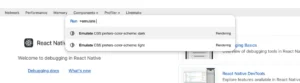
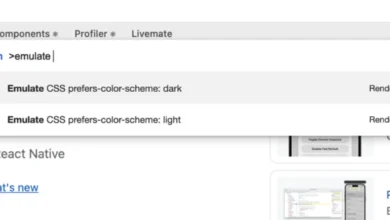
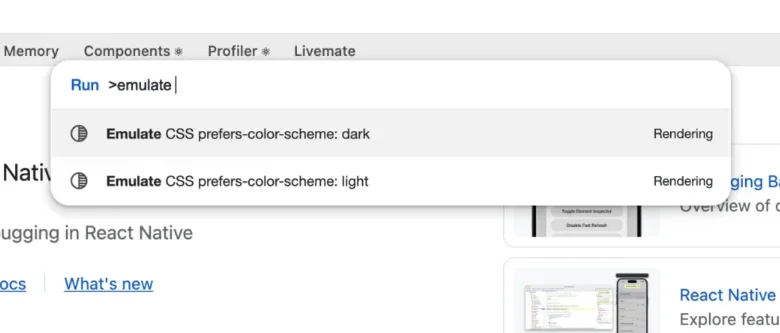
React Native 0.86 introduces significant improvements to its suite of developer tools, focusing on the "developer experience" (DX) to reduce the friction of testing and debugging. A major addition to the React Native DevTools is the support for light and dark mode emulation.
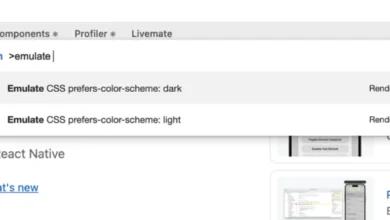
Modern mobile applications are increasingly required to support dynamic theme switching based on system-level settings. Previously, testing an app’s appearance in both light and dark modes required developers to manually toggle settings on a physical device or an emulator—a process that was often slow and disruptive to the coding flow. With the new Emulation.setEmulatedMedia support, developers can now trigger theme changes directly from the DevTools Command Palette (accessible via cmd/ctrl + shift + P).
This emulation is temporary and resets once the DevTools are disconnected, mirroring the behavior found in web-based developer tools. This alignment with web standards is a recurring theme in recent React Native updates, as the community strives to make the transition between web and mobile development as seamless as possible. By providing a unified debugging interface, the team aims to lower the barrier to entry for web developers moving into the mobile space.

The Path to Stability: Zero Breaking Changes
For the second time since version 0.83, a major React Native release contains no user-facing breaking changes. This reflects a deliberate change in the core team’s philosophy toward versioning. In the early years of the framework, updates were often associated with significant "upgrade pain," requiring developers to spend days or weeks refactoring code to accommodate API changes.
The stability of 0.86 means that teams currently running version 0.85 can upgrade their dependencies with high confidence that their existing application logic will remain intact. This predictability is essential for large-scale engineering organizations that must manage complex dependency trees and tight release schedules. The team’s adherence to a strict versioning policy ensures that deprecations are announced well in advance, giving developers ample time to transition to newer APIs before the old ones are removed in future iterations.
Technical Deep Dive: JSI and Runtime Spec Alignment
Under the hood, React Native 0.86 continues to refine the JavaScript Interface (JSI), the C++ layer that allows for direct communication between the JavaScript engine and the native platform. The release adds several new JSI APIs designed to make the interface more capable and performant. These enhancements are part of the ongoing rollout of the "New Architecture," which replaces the legacy bridge with a more efficient, synchronous communication model.
Furthermore, the update brings further alignment with web specifications. This includes improvements to the runtime environment to ensure that JavaScript execution in React Native behaves more like it does in a standard browser environment. Such alignment is critical for the "write once, run anywhere" promise of the React ecosystem, as it allows for better code sharing between React Native for mobile and React for the web.
Key improvements were also noted in rendering and layout. The Yoga layout engine, which handles the flexbox calculations for React Native, received updates to improve performance in complex UI hierarchies. Additionally, accessibility features were bolstered, ensuring that applications built with version 0.86 are more compatible with screen readers and other assistive technologies on both Android and iOS.
Community Contribution and Ecosystem Support
The development of React Native 0.86 was a massive collaborative effort. The release contains over 596 commits from 97 unique contributors. This high level of community involvement is a testament to the project’s health and the success of its open-source model. The contributors range from independent developers to engineers at major tech firms like Microsoft, Software Mansion, and Expo.
Regarding the broader ecosystem, Expo—the popular framework built on top of React Native—has announced that support for version 0.86 will be available through its expo@canary releases. This allows developers using the Expo SDK to begin testing the new features immediately. For those not using Expo, the React Native Upgrade Helper remains the recommended tool for managing the transition between versions, providing a side-by-side diff of the necessary configuration changes.
Support Policy and Future Outlook
With the arrival of 0.86 as the latest stable version, React Native’s support policy dictates that version 0.83.x has officially moved to an "unsupported" status. The core team typically maintains support for the three most recent minor versions. Developers still operating on 0.83 or older are encouraged to begin the upgrade process to benefit from the latest security patches and performance improvements.
The implications of the 0.86 release extend beyond the immediate feature set. By prioritizing Android 15 compatibility and governance independence, the React Native team is positioning the framework to remain the dominant choice for cross-platform development through 2025 and beyond. The focus on stability and developer tools suggests that the framework has reached a state of maturity where the "revolutionary" changes of the past (like the initial introduction of the New Architecture) are now being refined into a "reliable" platform for global enterprise.
As mobile operating systems become more complex and hardware capabilities expand, the role of an intermediary framework like React Native becomes increasingly vital. Version 0.86 demonstrates that the project is capable of keeping pace with OS-level mandates while simultaneously improving the daily workflow of the thousands of developers who rely on it. The transition to the React Foundation ensures that this progress will continue under a governance model that prioritizes the needs of the entire ecosystem, marking a new chapter in the history of mobile software engineering.
Related posts: