React Native 0.85 Debuts with New Animation Backend and Enhanced Developer Experience

The release of React Native 0.85 marks a significant milestone in the evolution of the world’s most popular cross-platform mobile development framework, introducing a suite of architectural refinements designed to streamline performance and modernize the developer workflow. At the center of this update is the debut of a new Shared Animation Backend, a collaborative effort between Meta and Software Mansion that fundamentally alters how animations are processed within the React Native ecosystem. By integrating core animation logic more deeply into the framework’s engine, version 0.85 resolves long-standing limitations regarding layout animations and paves the way for a more unified experience between the standard Animated API and the widely used Reanimated library. Beyond the animation engine, the release addresses critical infrastructure needs, including enhanced security via Metro TLS support, a more modular testing environment through the decoupling of the Jest preset, and a necessary pruning of legacy Node.js versions to ensure the framework remains aligned with modern web standards.
A New Era for Animations: The Shared Backend Architecture
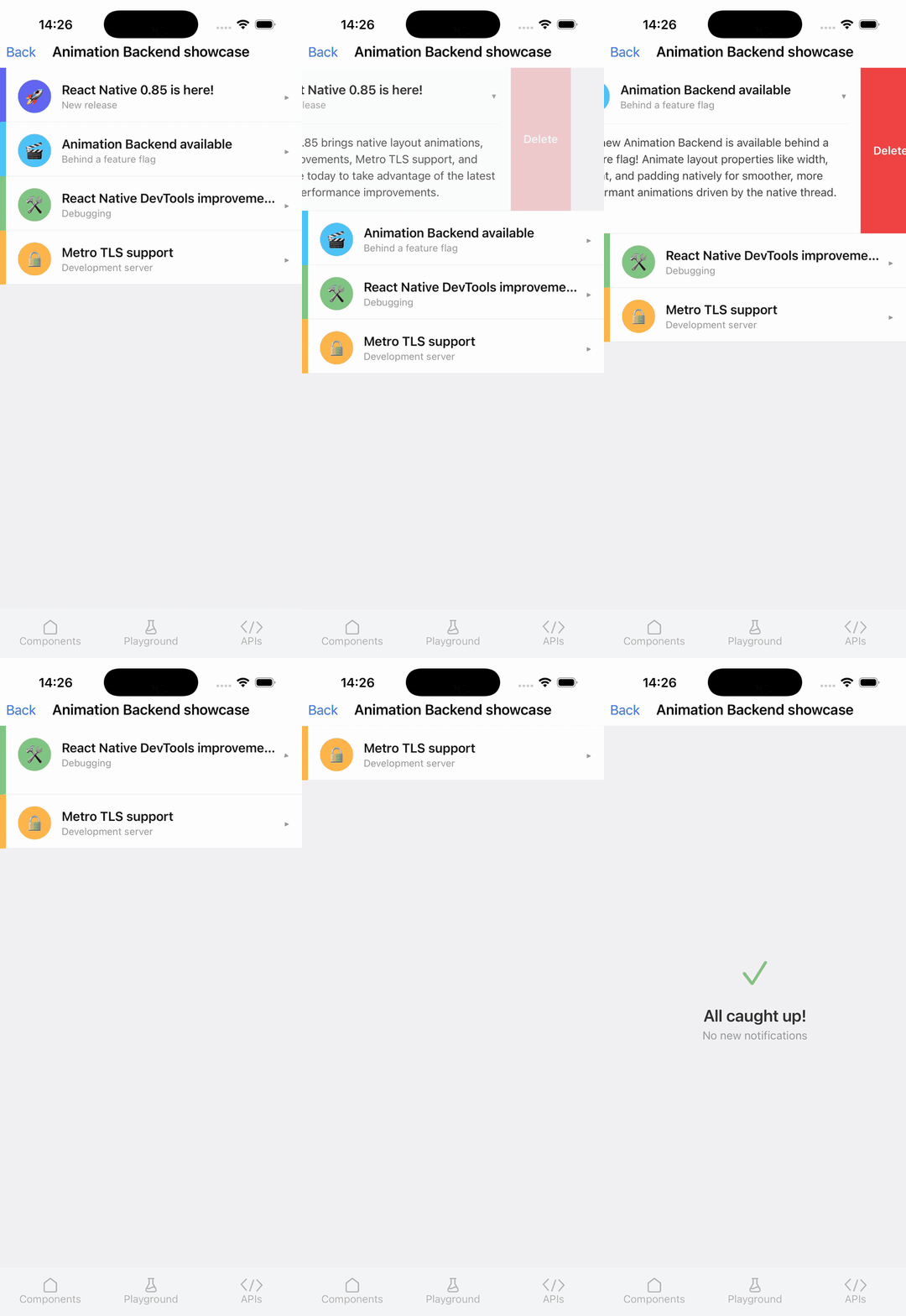
For years, React Native developers have navigated a bifurcated animation landscape. On one side was the built-in Animated API, which provided a stable but sometimes limited interface for driving UI changes. On the other was Reanimated, a powerful third-party library that offered high-performance, worklet-driven animations but operated somewhat independently of the core framework. React Native 0.85 bridges this gap through the New Shared Animation Backend. This internal engine serves as the underlying power source for both Animated and Reanimated, moving the primary update logic into the React Native core.
The technical implications of this shift are profound. By centralizing the reconciliation process, the framework can now ensure that animation updates are synchronized more effectively with the UI thread, reducing the risk of "jank" or dropped frames during complex transitions. For users of the standard Animated API, the most immediate benefit is the ability to animate layout properties—such as width, height, and Flexbox positions—using the native driver. Previously, these properties were restricted to the JavaScript thread, often resulting in performance bottlenecks when the main thread was under heavy load. With version 0.85, the useNativeDriver: true flag can now be applied to layout props, offloading the heavy lifting to the device’s native rendering engine and ensuring smooth, 60-FPS (or higher) animations regardless of JavaScript execution state.
Software Mansion’s involvement in this project highlights the increasingly collaborative nature of React Native’s development. As the creators of Reanimated, their expertise was instrumental in ensuring that the new core backend could support the advanced features required by modern, high-fidelity mobile applications. This collaboration ensures that Reanimated can now land performance improvements that were previously impossible, while also guaranteeing that the animation system remains stable and predictable across future React Native updates.
Metro TLS Support and Security in Development
In an era where security is a primary concern for mobile applications, React Native 0.85 introduces native support for Transport Layer Security (TLS) within the Metro development server. This update allows developers to configure HTTPS and WSS (Secure WebSockets) for their local development environments, a feature that has become increasingly necessary as web APIs and mobile operating systems enforce stricter security protocols.
Many modern browser and mobile APIs, such as the Geolocation API or certain camera functionalities, require a secure context to operate. In the past, developers often had to rely on complex proxy setups or third-party tools to simulate a secure environment during the build process. With the new server.tls configuration object in metro.config.js, developers can now point Metro directly to their Certificate Authority (CA), certificate, and key files. To facilitate this transition, the React Native team recommends the use of tools like mkcert, which allows for the generation of locally-trusted certificates without the persistent "untrusted connection" warnings that can disrupt the development flow. This change not only improves the security posture of the development cycle but also ensures that the development environment more closely mirrors the production environment, reducing the likelihood of "it works on my machine" bugs related to security headers and protocol mismatches.
Streamlining the Infrastructure: Jest and Node.js Requirements
As React Native continues to mature, Meta has focused on "unbundling" the framework to make the core package leaner and more modular. In version 0.85, this philosophy is applied to the testing infrastructure. The Jest preset, which was previously embedded within the main react-native package, has been moved to a dedicated package: @react-native/jest-preset.
This move serves two primary purposes. First, it reduces the size and complexity of the core React Native package, allowing for faster installs and a smaller footprint. Second, it gives the React Native team the flexibility to update the testing environment independently of the main framework releases. For developers, the upgrade path is straightforward, requiring a single-line change in the jest.config.js file. While minor, this change reflects a broader trend in the JavaScript ecosystem toward highly specialized, decoupled packages that allow developers to opt into only the tools they need.
Simultaneously, React Native 0.85 enforces a more modern foundation by dropping support for End-of-Life (EOL) Node.js versions. Specifically, the framework now requires Node.js v20.19.4 or later. This decision aligns with the industry-wide shift toward Node.js 20 "Iron," the current Long Term Support (LTS) version. By mandating a modern Node.js environment, React Native can leverage newer V8 engine optimizations, better memory management, and improved security patches, ensuring that the development tools running on the developer’s machine are as performant as the code running on the mobile device.

Enhancements to React Native DevTools
Developer productivity remains a core focus of the 0.85 release, with several quality-of-life improvements landing in the React Native DevTools suite. One of the most notable visual changes is the introduction of native tabs on macOS, which provides a more seamless integration with the operating system’s design language. This improvement, while aesthetic, contributes to a more cohesive environment for developers who spend hours within these tools.
Furthermore, the DevTools have received under-the-hood optimizations to improve the inspection of the "New Architecture" components. As more teams migrate from the legacy "Bridge" architecture to the new Fabric renderer and TurboModules, the need for robust debugging tools that can inspect the concurrent rendering and synchronous layout features of the New Architecture has become paramount. Version 0.85 continues to refine these tools, making it easier to visualize component hierarchies and track performance bottlenecks in real-time.
Breaking Changes and API Deprecations
Every major React Native release involves a degree of housecleaning, and 0.85 is no exception. A significant breaking change is the removal of the StyleSheet.absoluteFillObject API. This API, which was a shortcut for creating an object with absolute positioning and zeroed-out edges, has been deprecated for several versions in favor of StyleSheet.absoluteFill.
While the change is functionally minor, it represents a commitment to API consistency. Developers are encouraged to perform a global search-and-replace in their codebases to transition to the supported API. Additionally, the release includes various Android and iOS-specific breaking changes aimed at aligning the framework with the latest SDK requirements from Google and Apple. These include updates to Gradle configurations for Android and CocoaPods requirements for iOS, ensuring that React Native apps remain compliant with the latest app store submission guidelines.
Chronology of the Release and Community Impact
The journey to React Native 0.85 involved a massive coordinated effort from the global developer community. The release encompasses over 604 commits from 58 individual contributors, ranging from engineers at Meta and Software Mansion to independent open-source developers. This release follows a strict stabilization period where the experimental animation backend was tested in "canary" and "RC" (Release Candidate) builds to ensure that the integration did not introduce regressions in existing apps.
The community reaction has been overwhelmingly positive, particularly regarding the animation improvements. For years, the inability to natively animate layout properties was cited as a primary reason for developers to choose Flutter or other competing frameworks over React Native for highly visual applications. By addressing this limitation, Meta has significantly strengthened React Native’s competitive position in the cross-platform market.
Broader Implications for the Mobile Development Landscape
React Native 0.85 is more than just a collection of features; it is a statement of intent. It signals that the "New Architecture" is no longer a future concept but the current reality of the framework. The integration of the animation backend into the core engine is a clear indicator that Meta is willing to rebuild fundamental parts of the system to achieve parity with native performance.
For businesses, this release offers a compelling reason to upgrade. The improved performance of animations can lead to better user retention and a more premium "feel" for applications. The security enhancements via Metro TLS simplify compliance and development for enterprise-grade apps. Furthermore, the continued support from Expo—which has announced that SDK 56 will include React Native 0.85—ensures that the vast majority of the React Native ecosystem will have a smooth transition to these new features.
As the mobile landscape continues to evolve, with increasing demands for fluid UI and secure data handling, React Native 0.85 positions itself as a robust, modern, and highly capable framework. It balances the need for cutting-edge features with the stability required by large-scale production applications, maintaining its status as a top-tier choice for developers worldwide. The collaboration with Software Mansion, in particular, sets a precedent for how core framework teams can work with the community to solve complex architectural challenges, ensuring a bright and performant future for the React Native ecosystem.