Indonesian Oil and Gas Issuers Deliver Solid Financial Performance Through First Half of 2026 Amid Global Energy Market Volatility


JAKARTA, CNBC Indonesia — The Indonesian capital market witnessed a resilient performance from companies operating within the oil, gas, and energy support sectors throughout the first half of 2026. Data compiled up to August 6, 2026, reveals that a total of 16 publicly listed entities operating directly within the oil and gas (migas) industry, alongside their upstream and downstream supporting services, have officially released their financial statements for the first six months of the year. This cohort of energy firms has largely navigated ongoing macroeconomic headwinds, demonstrating robust balance sheets and operational efficiency despite fluctuating global commodity prices and evolving domestic regulatory frameworks.
The reporting season, which peaked during the mid-summer months, highlighted the adaptability of Indonesia’s energy sector. While geopolitical tensions and shifting trade policies continued to create volatility in international crude benchmarks such as Brent and West Texas Intermediate (WTI), domestic energy players capitalized on steady local demand, favorable exchange rate adaptations, and strategic cost-optimization initiatives. Market analysts observing the sector have noted that the divergence between upstream producers and oilfield service providers has narrowed significantly compared to previous fiscal years, as infrastructure spending and exploration activities gradually picked up pace across major Indonesian basins.
Main Facts and Sector Overview
The release of financial results by these 16 prominent energy issuers provides a comprehensive snapshot of the sector’s financial health as of mid-2026. The participating companies span a diverse array of sub-sectors, including upstream exploration and production (E&P), liquefied natural gas (LNG) handling, offshore drilling contractors, floating production storage and offloading (FPSO) operators, and specialized oilfield logistical support firms.
Collectively, these firms reported stable aggregate revenues, supported by sustained production quotas mandated by Indonesia’s Special Task Force for Upstream Oil and Gas Business Activities (SKK Migas). Furthermore, prudent capital allocation and disciplined debt management allowed several mid-tier and large-cap issuers to post positive net profit margins, defying earlier bearish projections formulated by institutional equity researchers at the close of 2025.
The reporting milestone underscores a broader commitment to corporate transparency among IDX-listed energy companies. By releasing their semi-annual audits and performance metrics ahead of the statutory deadlines, these firms have provided institutional and retail investors with timely visibility into cash flow generation, capital expenditure (capex) realization, and dividend payout potentials for the remainder of 2026.
Chronology and Reporting Timeline
The journey toward the release of these half-year financial statements began at the close of the second quarter on June 30, 2026, marking the conclusion of the operational period under review.
- Early July 2026: Energy issuers commenced their internal financial closing procedures, auditing inventory valuations, depletion, depreciation, and amortization (DD&A) expenses, as well as foreign exchange exposures stemming from USD-denominated revenues and liabilities.
- Mid-to-Late July 2026: Independent public accounting firms finalized their limited reviews of the semi-annual statements, ensuring compliance with the Indonesian Financial Accounting Standards (SAK) and Indonesia Stock Exchange (IDX) disclosure rules.
- August 6, 2026: A critical threshold was reached as the cumulative number of reporting issuers in the oil, gas, and support sector officially touched 16, providing market analysts with a sufficient statistical sample to evaluate sector-wide trends.
- Late August to Early September 2026: Analysts, brokerage houses, and financial media outlets synthesized the data, leading up to formal broadcast discussions and investor briefings.
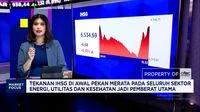
- September 11, 2026: Comprehensive evaluations of the first-half achievements took center stage in dedicated financial programming, notably featured during the Closing Bell broadcast on CNBC Indonesia, analyzing how these results align with macroeconomic indicators heading into the final quarter of the year.
Supporting Data and Financial Performance Breakdown
While individual performances varied based on asset portfolios and operational efficiencies, macroeconomic fundamentals played a pivotal role in shaping the financial outcomes of these 16 issuers. During the first half of 2026, Indonesian crude price (ICP) averages fluctuated within a moderate band, providing a stable baseline for upstream revenue generation.
Key metrics evaluated across the reporting issuers include:
- Revenue Resilience: Upstream producers benefited from steady lifting volumes, particularly from mature blocks undergoing enhanced oil recovery (EOR) programs. Meanwhile, support service providers experienced heightened utilization rates for offshore rigs and support vessels.
- Cost Management: In response to persistent inflationary pressures on raw materials and specialized labor, nearly all 16 issuers implemented rigorous cost-control measures. Operational expenditure (opex) optimization helped cushion the impact of higher maintenance costs associated with aging offshore infrastructure.
- Liquidity and Balance Sheet Strength: Aggregate debt-to-equity ratios (DER) among the reporting cohort showed a downward trend compared to the same period in 2025, indicating that companies are prioritizing debt reduction and retaining earnings to fund future capital-intensive exploration blocks.
- Capital Expenditure Realization: Capex absorption during H1 2026 reflected a cautious yet progressive stance. Issuers focused primarily on sustaining existing production rather than embarking on high-risk greenfield projects, aligning with national energy security objectives while safeguarding shareholder value.
Industry Reactions and Stakeholder Perspectives
The resilient financial showing has drawn positive commentary from market participants, industry associations, and regulatory bodies alike. Representatives from the Indonesian Petroleum Association (IPA) noted that the steady performance reflects improved regulatory certainty and constructive dialogue between contractors and the government regarding production-sharing contract (PSC) terms.
"The ability of our domestic oil and gas issuers to maintain profitability and steady cash flows in a dynamic global environment speaks volumes about their operational discipline," noted an energy sector equity analyst based in Jakarta. "Investors are no longer just looking at top-line revenue growth driven by commodity price spikes; they are closely examining free cash flow generation, ESG compliance, and capital discipline. The H1 2026 numbers indicate that management teams have successfully adapted to this disciplined investment climate."
Furthermore, institutional investors have expressed approval regarding the transparent communication surrounding foreign exchange management. Given that the majority of oil and gas transactions globally are denominated in US dollars while local operational costs often involve Indonesian rupiah (IDR), the ability of these 16 issuers to hedge currency risks effectively has prevented major bottom-line shocks.
Broader Impact and Implications for the Indonesian Economy
The solid performance of oil, gas, and support issuers carries profound implications for the wider Indonesian economy. As Southeast Asia’s largest economy strives to meet its ambitious long-term energy transition targets while simultaneously securing near-term baseload energy supplies, the financial health of the upstream and support sectors remains a critical pillar.
- State Revenue Contribution: Stable financial results translate directly into predictable non-tax state revenues (Penerimaan Negara Bukan Pajak/PNBP) and tax remittances to the state budget, supporting national infrastructure development and public spending initiatives.
- Investment Catalyst: Robust financial statements enhance the attractiveness of the IDX energy sector, potentially drawing fresh institutional capital from foreign and domestic funds seeking stable dividend yields and defensive assets against global equity volatility.
- Supply Chain Stability: The financial viability of the 16 reporting issuers—particularly the supporting service providers—ensures that the domestic oil and gas supply chain remains unbroken. Healthy service providers can continue investing in high-tech marine equipment, safety systems, and specialized engineering talent, which are vital for maintaining safe and efficient operations across Indonesia’s archipelagic oilfields.
- Outlook for the Second Half of 2026: As the industry transitions into the final quarters of the year, market watchers will be keeping a close eye on whether these issuers can sustain their momentum. Key catalysts to watch include the finalization of new PSC awards, the physical realization of slated drilling programs, and potential shifts in global energy demand driven by industrial recovery in major export destination economies.
Ultimately, the first-half financial reports from these 16 energy and support issuers paint a picture of a mature, disciplined sector capable of weathering external storms while continuing to power Indonesia’s economic engine.