Best Buy Accelerates Artificial Intelligence Deployment Across Internal Operations and Customer-Facing Channels in 2026

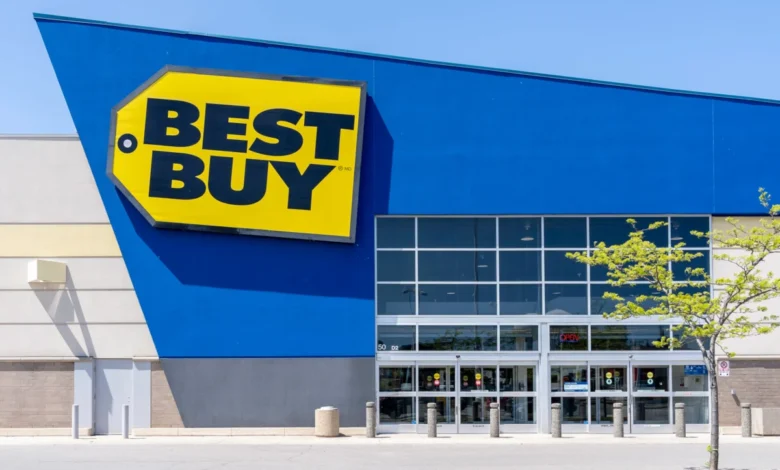
Artificial intelligence has officially transitioned from an experimental initiative to a core operational pillar for Best Buy. Throughout 2026, the major consumer electronics retailer has aggressively integrated machine learning models, large language models (LLMs), and agentic commerce capabilities into both its internal corporate infrastructure and its customer-facing digital ecosystems. Ranked No. 8 in the Top 1000 Database—which tracks North America’s largest online retailers by annual ecommerce sales—and holding the No. 200 position in Digital Commerce 360’s specialized AI Rankings, Best Buy is positioning itself at the leading edge of modern retail technology.
The company’s strategic pivot toward artificial intelligence reflects a broader industry-wide race among legacy brick-and-mortar and digital-first retailers alike. As consumer expectations shift toward hyper-personalized, frictionless digital interactions, Best Buy’s executive leadership has increasingly leaned on automated systems to optimize workforce productivity, refine marketing precision, and streamline online shopping journeys. This comprehensive transformation spans several key developments, beginning with internal workforce enablement and culminating in advanced conversational shopping assistants and direct integrations with generative AI platforms like OpenAI’s ChatGPT.
Internal Operations and Workforce Enablement
Best Buy’s sweeping AI strategy initially took shape through internal applications designed to assist employees with daily operational hurdles. Speaking at the UBS Global Consumer and Retail Conference in March, outgoing CEO Corie Barry championed artificial intelligence as a foundational enabler of corporate growth and a vital tool for cultivating positive employee experiences. Rather than focusing immediately on customer-facing sales funnels, leadership recognized that optimizing internal workflows would yield cascading benefits throughout the organization.
Highlighting the rapid pace of technological iteration within the company, Barry shared an anecdote regarding an internal development milestone achieved by a Best Buy employee. Over the course of a single weekend, an internal team member successfully redesigned and deployed a centralized AI agent capable of managing and answering inquiries related to internal corporate tools. This upgraded agent utilizes advanced web scraping and natural language processing to interpret standard, conversational human queries.
For instance, newly onboarded corporate staff can now ask plain-language questions such as, "I’m new here, what are the forms I need to fill out?" and receive immediate, accurate administrative guidance populated directly by the AI agent. According to leadership, the architecture behind these internal systems is inherently modular, meaning tools initially designed for human resources and administrative support can be seamlessly repurposed to solve external customer service challenges.
Beyond administrative assistance, Best Buy has deployed LLMs to revolutionize its marketing and audience segmentation strategies. By synthesizing disparate data streams—including outside market signals and proprietary internal consumer behavior logs—the retailer’s AI models can construct highly targeted audience profiles. Barry noted that these generative models effectively mash disparate datasets together to dictate precise targeting strategies. For example, when the system identifies demand signals indicating that a previously active consumer has lapsed, it pinpoints the exact moment to re-engage them, yielding measurable improvements in customer retention and brand re-acquisition.
The Evolution of the Customer Experience: Introducing Ask Blue
Building upon the success of its internal AI deployments, Best Buy transitioned its focus toward direct consumer interactions during the second half of 2026. In August, during the retailer’s second-quarter earnings call, Jason Bonfig—then serving as senior executive vice president, chief customer, product, and fulfillment officer—detailed the official rollout of Ask Blue, a conversational AI shopping and support assistant integrated directly into Best Buy’s digital ecosystem.
Ask Blue is designed to aggregate multiple facets of Best Buy’s extensive product catalog, customer support resources, review databases, real-time inventory availability, and dynamic pricing structures into a single, intuitive interface. Bonfig emphasized that the tool acts as a knowledgeable digital advisor, helping shoppers navigate complex technology purchases with confidence.
Rather than forcing users to sift through endless product specifications or generic keyword search results, Ask Blue facilitates sophisticated, multi-turn dialogues. Consumers can utilize the assistant to:
- Compare competing electronic products side-by-side.
- Identify nuanced technical differences between similar models.
- Check hardware and software compatibility across different ecosystems.
- Review aggregated customer feedback and sentiment analysis.
- Receive tailored troubleshooting support or, when necessary, seamlessly transition from the automated bot to a live human support specialist.
By embedding this level of contextual intelligence directly into the online shopping journey, Best Buy aims to reduce shopping cart abandonment, minimize post-purchase returns driven by mismatched expectations, and elevate the overall value proposition of its digital storefront.
Expanding Agentic Commerce Through OpenAI Integration
In tandem with the launch of Ask Blue, Best Buy has actively expanded its presence beyond its owned-and-operated digital properties, forging strategic partnerships with major AI developers to capture consumer demand where it originates. Chief among these initiatives is a strategic commercial integration with OpenAI, which positions Best Buy’s product catalog directly within the ChatGPT ecosystem.
As consumer behavior shifts away from traditional search engines toward conversational generative AI platforms for product discovery and research, Best Buy’s leadership recognized the necessity of meeting tech shoppers in these emerging digital environments. Bonfig noted during the Q2 earnings call that the partnership ensures the brand remains visible in the exact spaces where modern consumers seek technology advice and recommendations.
Through this integration, users interacting with ChatGPT can seamlessly discover Best Buy product listings, receive contextualized recommendations tailored to their specific needs, and complete financial transactions directly within the chat interface without ever navigating away to a traditional browser tab. Retail analysts view this move as a critical milestone in the evolution of "agentic commerce"—a paradigm where autonomous and conversational AI agents execute end-to-end commercial transactions on behalf of consumers. Best Buy has positioned this feature centrally within its strategic roadmap for the critical holiday shopping season, anticipating that discovery-driven AI channels will drive substantial incremental revenue.
Leadership Transition and Strategic Implications
These technological advancements coincide with a significant leadership transition within the organization. Jason Bonfig, who has been instrumental in spearheading Best Buy’s customer, product, and fulfillment initiatives—including the rollout of Ask Blue and the OpenAI integration—is scheduled to succeed Corie Barry as the chief executive officer of Best Buy on November 1.
This impending executive transition underscores the extent to which artificial intelligence and digital commerce execution have become central to Best Buy’s corporate identity and long-term viability. Industry analysts observing Best Buy’s trajectory note that the retailer’s deliberate, dual-pronged approach—simultaneously modernizing internal operational efficiencies while embedding transactional AI capabilities directly into third-party ecosystems—serves as a compelling case study for legacy omnichannel retailers navigating the digital age.
As macroeconomic pressures fluctuate and consumer electronics retail remains fiercely competitive, Best Buy’s early adoption of scalable AI agents and conversational commerce tools provides a measurable competitive moat. By leveraging predictive analytics for customer re-engagement, deploying sophisticated internal assistants to streamline workforce productivity, and pioneering direct-in-chat purchasing via OpenAI, Best Buy is actively redefining how traditional retail giants scale operations and capture consumer intent in an increasingly automated marketplace.