React Native 0.83 Debuts with React 19.2 Support and Enhanced Developer Tools Marking a Milestone in Framework Stability

The Meta-backed React Native team has officially announced the release of version 0.83, a significant update that bridges the gap between web development standards and mobile application performance. In a notable departure from previous major updates, version 0.83 distinguishes itself as the first release in the framework’s decade-long history to feature no user-facing breaking changes, signaling a new era of stability for the cross-platform ecosystem. This release integrates the latest advancements from React 19.2, introduces a comprehensive suite of debugging tools, and continues the aggressive push toward feature parity with standard Web APIs through the inclusion of the Intersection Observer and stable Web Performance interfaces.
The release arrives at a pivotal moment for the mobile development industry, as organizations increasingly prioritize developer velocity and codebase maintainability. By aligning more closely with the React 19 core and the W3C web standards, React Native 0.83 aims to reduce the specialized knowledge required to build high-performance mobile applications, allowing web developers to transition to mobile environments with minimal friction.
A New Standard for Framework Maturity
The announcement of zero user-facing breaking changes is perhaps the most significant logistical highlight of version 0.83. Historically, upgrading React Native versions has been a resource-intensive process for engineering teams, often requiring manual adjustments to native code, dependency reconciliations, and extensive regression testing. By achieving a "drop-in" upgrade path from version 0.82, the core team is addressing one of the primary criticisms of the framework: the high cost of maintenance.
This shift in versioning policy reflects a broader stabilization of the "New Architecture"—the multi-year re-engineering of React Native’s internal internals, including the Fabric renderer and TurboModules. As the framework nears a state where the New Architecture becomes the default for all users, the focus has shifted from fundamental structural changes to incremental performance optimizations and developer experience (DX) refinements.

React 19.2 and the Evolution of State Management
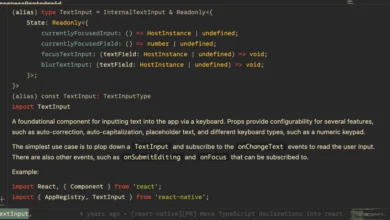
The integration of React 19.2 brings two highly anticipated APIs to the mobile environment: <Activity> and useEffectEvent. These additions are designed to solve long-standing architectural challenges in mobile UI management.
The <Activity> component introduces a primitive for managing the lifecycle of UI "activities" within an application. It allows developers to mark specific component trees as ‘visible’ or ‘hidden’, enabling the framework to prioritize rendering resources accordingly. Crucially, components hidden via <Activity mode='hidden'> preserve their internal state. This is a vital feature for mobile navigation patterns, such as tab bars or nested stacks, where a user expects their scroll position and form inputs to remain intact when navigating back to a previously viewed screen. By handling this at the React core level, the framework reduces the need for complex, third-party state management libraries to handle UI persistence.
Complementing this is the useEffectEvent hook. In previous versions of React, developers frequently struggled with "reactive dependencies" in useEffect. If a function inside an effect depended on a changing value, the entire effect would re-run, often leading to unintended side effects or performance bottlenecks. useEffectEvent allows developers to extract the "event-like" logic from the effect, ensuring the logic has access to the latest state without triggering a re-synchronization of the effect itself. This solves a common pain point in mobile development, such as handling analytics logging or external event listeners that need to read from the current state without restarting.
Security Context and Ecosystem Resilience
The release of React Native 0.83 coincided with the discovery of a critical security vulnerability in React Server Components (RSC). While this caused concern across the broader JavaScript community, the React Native team proactively clarified that the framework is not directly impacted by this vulnerability. React Native does not currently depend on the affected server-side packages in its standard configuration. However, for organizations utilizing monorepo structures where both web and mobile codebases coexist, the team has advised an immediate upgrade of all React dependencies to version 19.2.1, which will be formally bundled in the upcoming React Native 0.83 patch release.
Revolutionizing the Debugging Experience
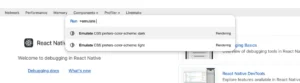
One of the most visible improvements in 0.83 is the overhaul of the React Native DevTools. For years, debugging network requests and performance bottlenecks in React Native required a fragmented approach, often involving a combination of Chrome DevTools, Flipper, and community-driven proxies.
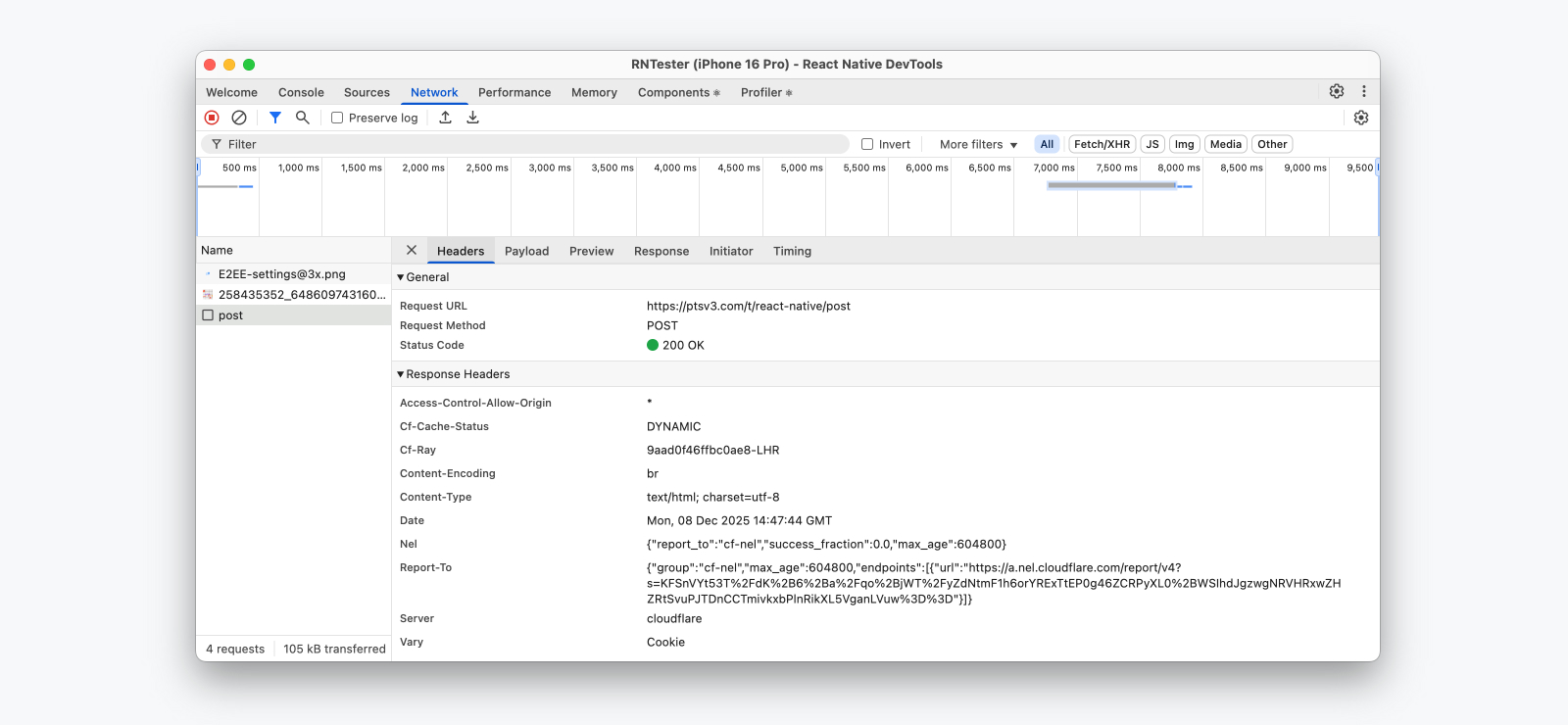
The new version introduces a dedicated desktop application for DevTools, moving away from the previous browser-based implementation. This standalone environment provides a more integrated experience with the operating system and reduces the overhead associated with running heavy browser tabs alongside mobile simulators.
The centerpiece of the new DevTools is the Network Inspection panel. For the first time, developers can view detailed metadata for network requests, including precise timings, headers, and response previews, directly within the tool. A breakthrough feature is the "Initiator" tab, which allows developers to trace a network request back to the specific line of JavaScript code that triggered it. This capability is expected to significantly reduce the time required to debug complex data-fetching logic in large-scale applications.
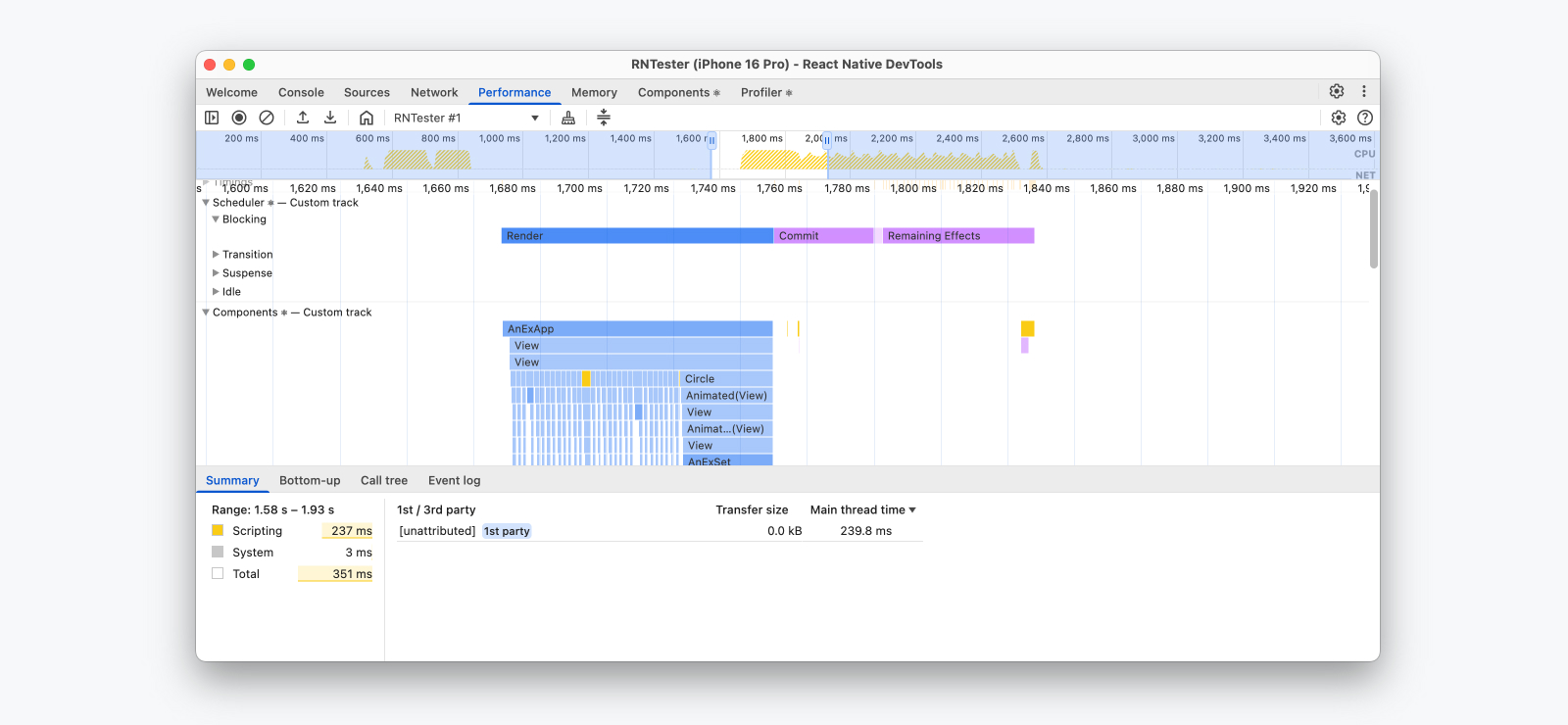
Furthermore, the Performance panel has been upgraded to provide a unified timeline of JavaScript execution, React rendering tracks, and network events. By supporting W3C-standard User Timings, developers can now instrument their code with custom markers that appear alongside framework-level events, providing a granular view of application responsiveness.
Alignment with Web Standards: Intersection Observer and Performance APIs
React Native 0.83 continues its trajectory toward full Web API compatibility. A highlight of this release is the introduction of the IntersectionObserver API in the canary channel. On the web, IntersectionObserver is the standard method for detecting when an element enters or exits the viewport, commonly used for lazy-loading images, triggering animations, or implementing infinite scroll. Bringing this to mobile allows developers to use identical logic for visibility tracking across platforms, replacing platform-specific scroll listeners that were often prone to performance lag.
Additionally, the Web Performance APIs, which were introduced as experimental in version 0.82, have now reached stable status. This includes support for performance.now(), performance.mark(), and PerformanceObserver. These APIs are not only useful for local debugging but also function in production builds. This opens the door for engineering teams to capture real-world performance metrics from their user base, enabling data-driven optimizations based on actual device performance rather than synthetic lab tests.
Under the Hood: Hermes V1 and iOS Optimization
The JavaScript engine, Hermes, continues to evolve within the React Native ecosystem. Version 0.83 includes an experimental opt-in for Hermes V1. This next-generation engine features a redesigned compiler and virtual machine aimed at boosting JavaScript execution speed. While still in the experimental phase and requiring a build-from-source approach, initial benchmarks suggest significant improvements in startup time and memory efficiency, particularly for logic-heavy applications.
On the iOS side, the 0.83 release introduces a new flag, RCT_REMOVE_LEGACY_ARCH, which allows developers to compile out the legacy architecture code entirely. For applications that have fully migrated to the New Architecture, this results in a leaner binary. Internal testing by the Meta team showed that a clean app could see build times reduced from 73 seconds to 58.2 seconds, with a corresponding decrease in app size from 51.2 MB to 48.2 MB. While these gains may seem incremental for a small app, they scale significantly for enterprise-grade applications with hundreds of dependencies.
Chronology and Community Impact
The development of React Native 0.83 involved a collaborative effort between Meta’s core engineers and the global open-source community. The release encompasses 594 commits from 56 individual contributors. This level of community engagement is vital as the framework competes with other cross-platform solutions like Flutter and .NET MAUI.
- October 2024: Development of 0.83 begins with a focus on React 19 alignment.
- November 2024: Experimental features for DevTools enter private beta.
- December 2024: React 19.2 is finalized, and integration into the RN core is completed.
- Early 2025: React Native 0.83 stable is released to the public.
- January 2026 (Projected): Expo SDK 55 is expected to adopt React Native 0.83, bringing these features to the wider managed-workflow community.
Broader Implications for the Mobile Industry
The release of React Native 0.83 reflects a broader trend in software engineering: the convergence of web and mobile development paradigms. By prioritizing W3C standards and React core features, Meta is positioning React Native as a universal UI layer.
The "zero breaking changes" milestone is a strategic move to regain the trust of enterprise developers who may have been frustrated by the rapid pace of change in the early 2020s. As the framework matures, the focus is shifting from "how do we make it work?" to "how do we make it professional, stable, and observable?"

For CTOs and engineering managers, version 0.83 represents a lower total cost of ownership. The ability to upgrade without refactoring code, combined with superior debugging tools and production-grade performance monitoring, makes a compelling case for React Native in the current economic climate where efficiency is paramount.
As the industry looks forward to the full release of the New Architecture as the default in upcoming versions, 0.83 stands as a robust bridge, offering the latest in React innovation without the traditional pains of a major version jump. Developers are encouraged to utilize the React Native Upgrade Helper to transition their projects to this latest stable version, ensuring they can leverage the performance and debugging benefits of the most refined version of the framework to date.
Related posts: