AWS Announces General Availability of Cross-Account Safeguards for Amazon Bedrock Guardrails, Enhancing Centralized AI Safety Management

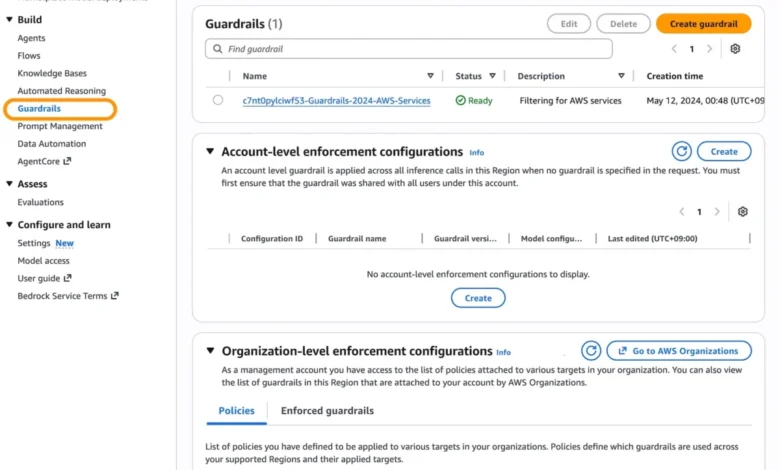
Amazon Web Services (AWS) has officially announced the general availability of cross-account safeguards for Amazon Bedrock Guardrails. This significant enhancement allows organizations to centrally manage and enforce safety controls for their generative artificial intelligence (AI) applications across multiple AWS accounts. The new capability aims to streamline compliance with responsible AI principles, bolster security, and reduce the administrative burden on security teams, marking a pivotal step in enterprise-grade AI governance.
Centralized Control for Generative AI Safety
The core of this announcement lies in Amazon Bedrock Guardrails’ new ability to extend its protective measures across an entire organization. Previously, organizations had to configure and manage guardrails on an individual account or application basis. This approach, while effective for isolated deployments, became increasingly complex and resource-intensive as generative AI adoption scaled across diverse teams and projects within a larger enterprise.

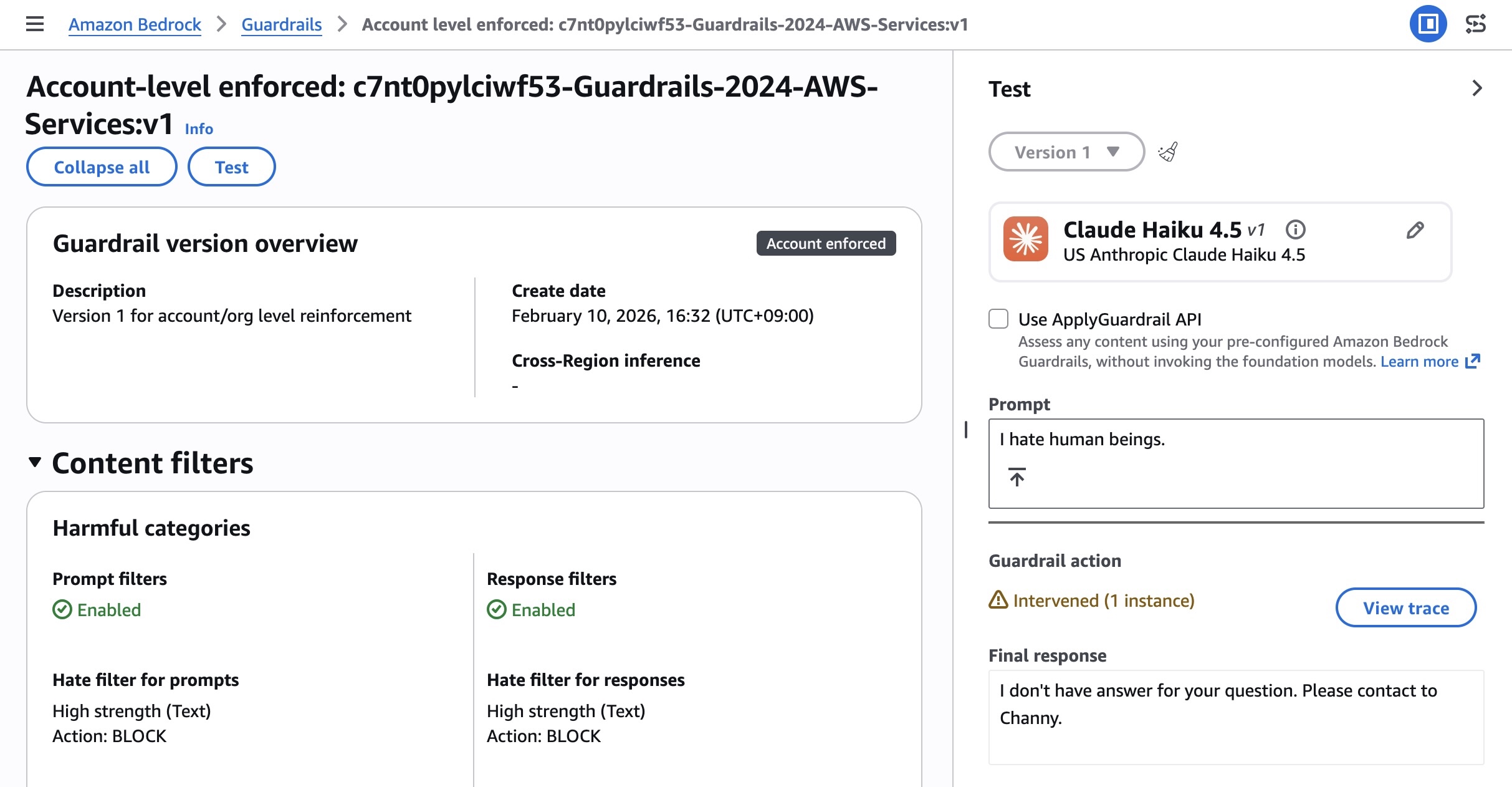
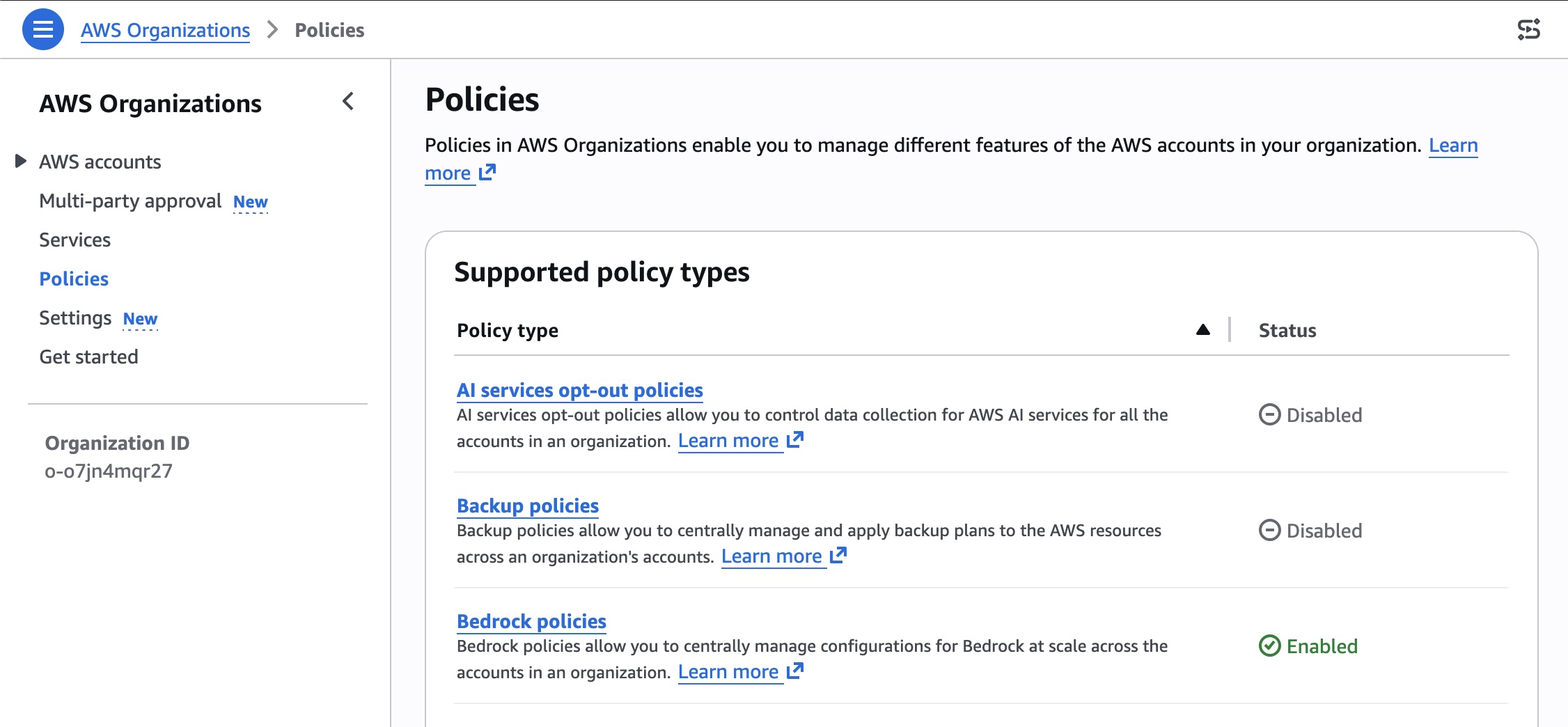
With the introduction of cross-account safeguards, organizations can now establish a unified set of safety policies from their AWS Organizations management account. These policies, implemented through a dedicated Amazon Bedrock policy within AWS Organizations, are automatically enforced for every model invocation across all member accounts. This means that a single configuration can dictate acceptable use, data handling, and content filtering for generative AI models, ensuring a consistent level of safety and compliance throughout the organization.
This centralized approach is particularly beneficial for organizations grappling with the complexities of managing AI governance in distributed environments. It ensures that regardless of which team or application within the organization is utilizing Amazon Bedrock, they are adhering to pre-defined safety standards. This uniformity not only simplifies compliance but also mitigates risks associated with decentralized AI development, where varying interpretations of safety protocols could lead to vulnerabilities or reputational damage.
A Timeline of Enhanced AI Governance
The journey to robust, enterprise-wide AI safety management has been a progressive one. The initial release of Amazon Bedrock Guardrails provided individual account-level controls, allowing developers to define policies for content filtering, topic control, and harmful content prevention. This foundational capability enabled early adopters to experiment with and implement safety measures tailored to specific use cases.

However, as organizations matured in their AI strategies, the need for broader, more scalable governance became apparent. The announcement of cross-account safeguards addresses this critical requirement, building upon the existing framework. The transition from individual account management to organization-wide enforcement represents a significant evolution in AWS’s commitment to providing secure and compliant AI services.
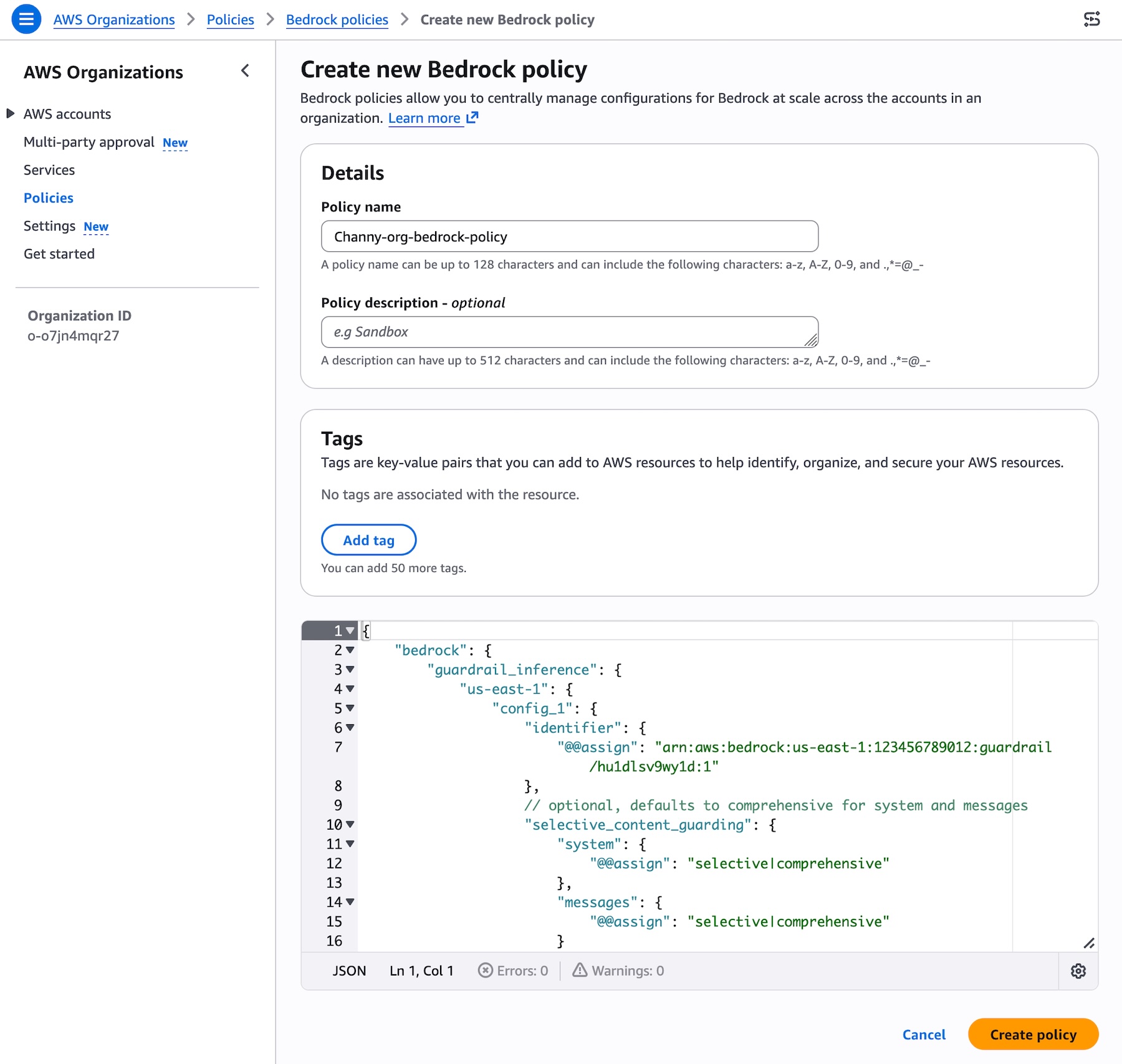
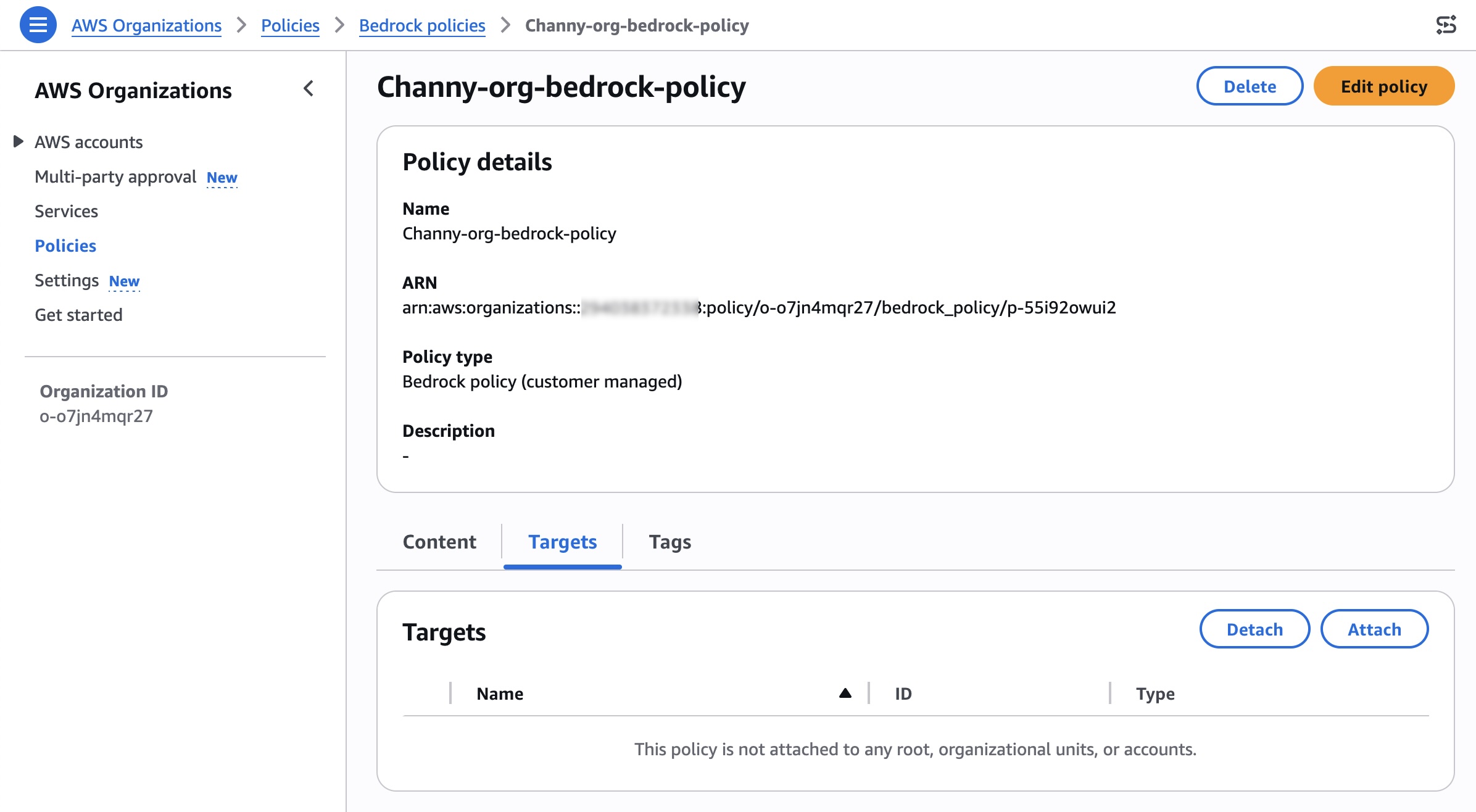
The process now involves establishing a guardrail within the Amazon Bedrock console, ensuring it has a specific, immutable version for consistent application. Subsequently, within AWS Organizations, a new Bedrock policy is created. This policy references the specific guardrail and its version, and can be attached to organizational units (OUs), individual accounts, or the entire organization root. This layered approach provides flexibility, allowing for both broad organizational standards and more granular, targeted policies for specific business units or projects.
Supporting Data and Technical Implementation
The technical implementation of cross-account safeguards leverages AWS Organizations’ policy management capabilities. By creating a Bedrock policy, administrators can define a specific guardrail ARN (Amazon Resource Name) and version. This policy can then be attached to various targets within the AWS Organizations hierarchy.
For instance, an organization might define a broad set of acceptable AI use cases and content restrictions in a primary guardrail. This guardrail can be applied organization-wide. If a specific department, such as marketing, requires a slightly different set of restrictions for a particular campaign, a separate, more specialized guardrail can be created and applied to just the marketing team’s accounts or OUs. This flexibility ensures that safety measures are not only comprehensive but also contextually relevant.
The enforcement mechanism is designed to be seamless. When an application within a member account invokes a generative AI model through Amazon Bedrock, the configured guardrail is automatically applied. The response from the model is then assessed against the guardrail’s rules. If any violations are detected, the request can be blocked, or the output can be modified, as per the guardrail’s configuration. This real-time assessment ensures that AI outputs remain within defined safety parameters.
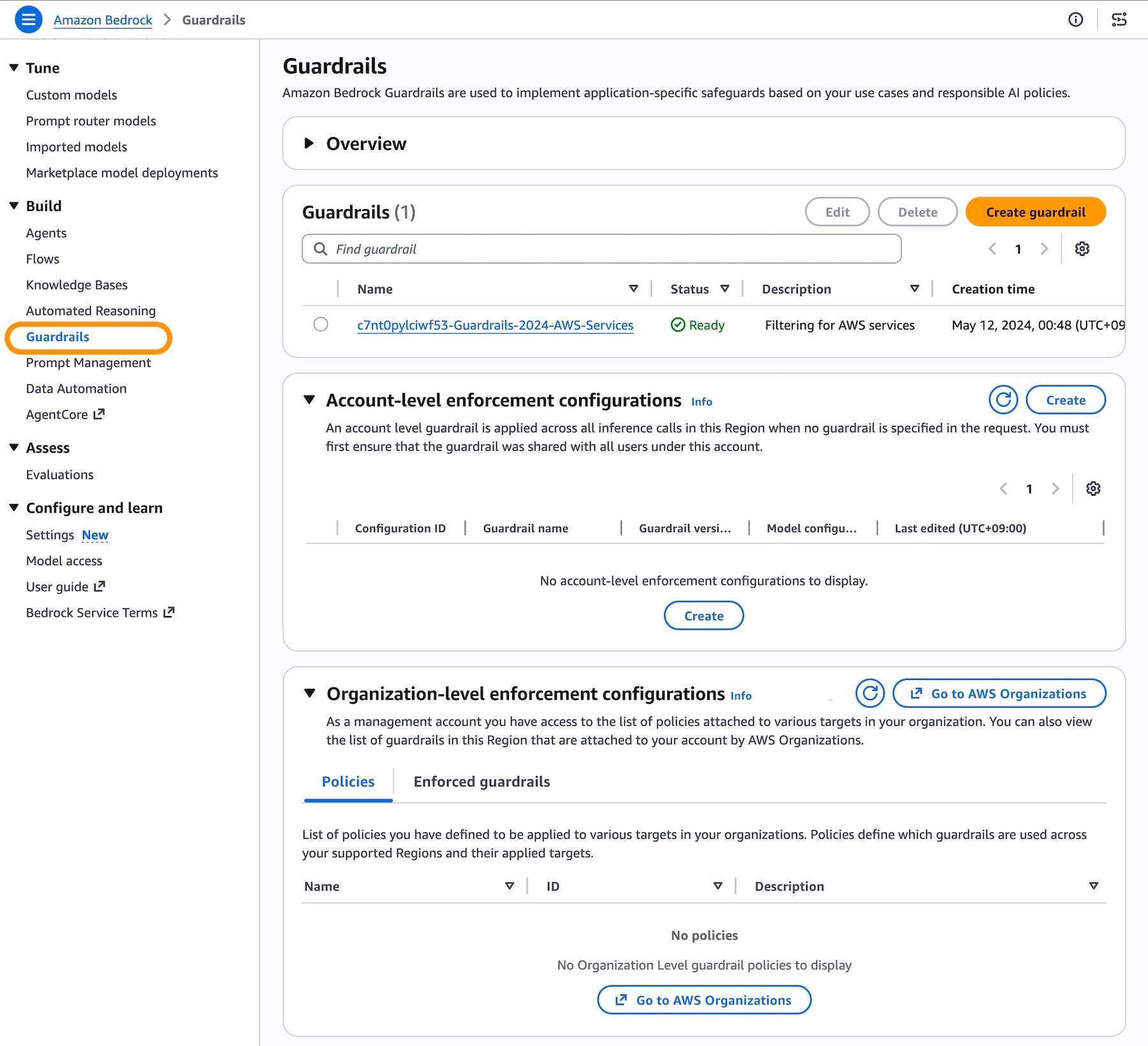
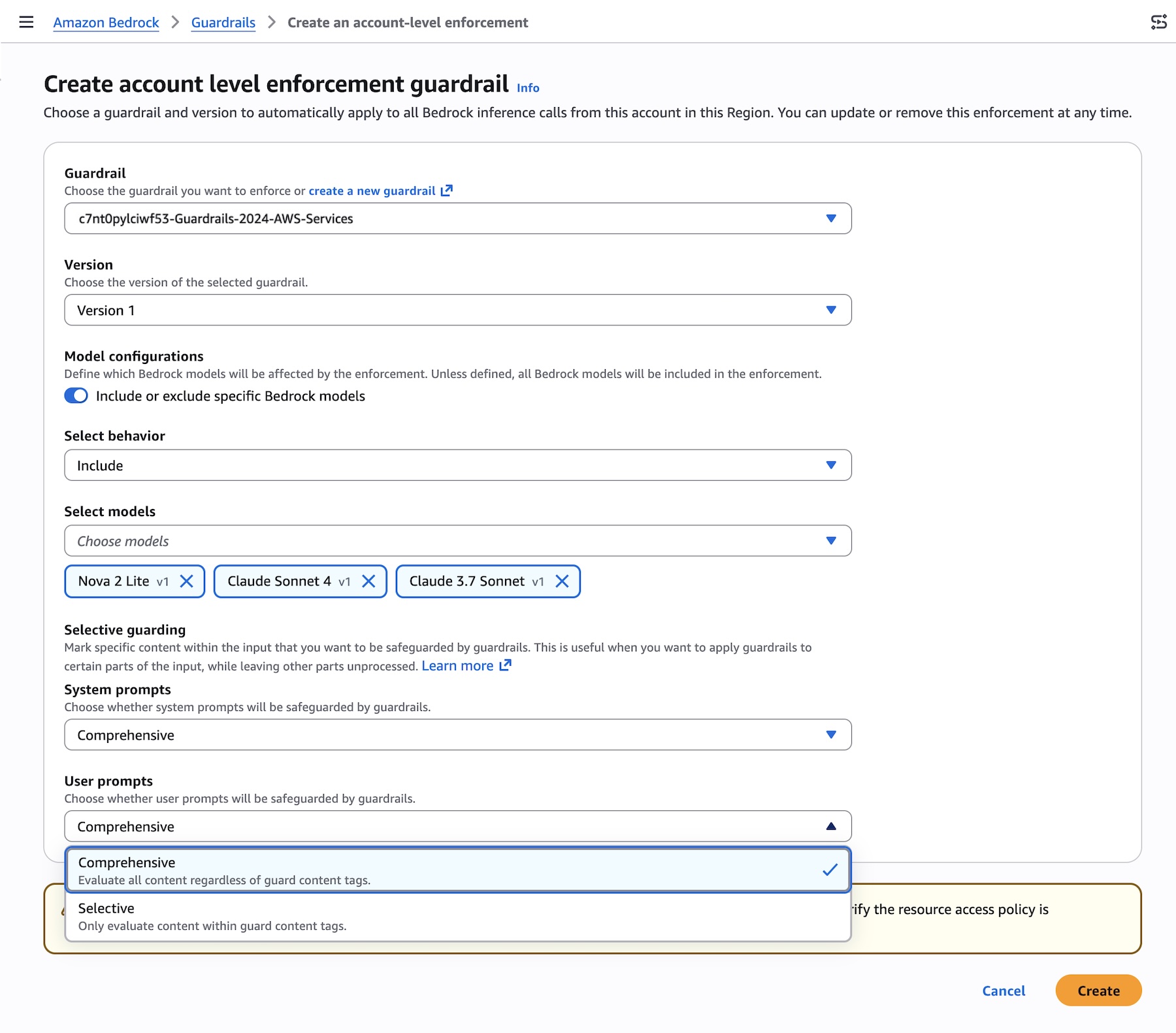
The console interface for setting up these safeguards is designed for ease of use. Within the Amazon Bedrock console, administrators can access "Account-level enforcement configurations" to set up individual account policies. This section allows for the selection of a guardrail and version, and the choice of whether to apply it to all models or specific ones using "Include" or "Exclude" behaviors. Furthermore, options for "Comprehensive" or "Selective" content guarding for system and user prompts provide fine-grained control over the interaction between users and the AI models.
For organization-level enforcement, the AWS Organizations console is the central hub. Here, administrators can navigate to the "Policies" menu, select "Bedrock policies," and create a new policy. This process involves specifying the guardrail ARN and version, and configuring input tags. The subsequent attachment of this policy to the desired organizational units or accounts ensures that the safeguards are universally applied.
Testing and verification are crucial components of this rollout. After configuring enforcement, administrators can test the effectiveness by making model inference calls using APIs like InvokeModel, InvokeModelWithResponseStream, Converse, or ConverseStream. The response from these API calls will contain information about the guardrail assessment, confirming whether the configured safeguards are being applied. In member accounts where organization-level enforcement is active, the console will also display the enforced guardrail under the "Organization-level enforcement configurations" section.
Broader Impact and Implications for Responsible AI
The general availability of cross-account safeguards for Amazon Bedrock Guardrails has profound implications for how organizations approach responsible AI development and deployment.
Reduced Administrative Overhead: Historically, ensuring AI safety across a large enterprise involved significant manual effort. Security teams had to audit configurations across numerous accounts, identify deviations, and enforce corrections. Centralized management dramatically reduces this burden, allowing security professionals to focus on strategic governance rather than operational oversight of individual deployments. This efficiency gain is invaluable as the adoption of generative AI accelerates.
Enhanced Compliance and Risk Mitigation: By establishing a single source of truth for AI safety policies, organizations can more effectively demonstrate compliance with internal ethical guidelines and external regulations. This reduces the risk of unintended consequences, such as the generation of biased, harmful, or inappropriate content, which could lead to reputational damage, legal challenges, and loss of customer trust.
Consistent User Experience and Brand Protection: For customer-facing AI applications, maintaining a consistent and safe user experience is paramount. Centralized guardrails ensure that all AI interactions, regardless of the underlying account or team, adhere to a high standard of safety and professionalism. This protects the organization’s brand image and fosters greater trust among users.
Flexibility for Diverse Needs: While offering centralized control, the feature also accommodates the nuanced requirements of different teams and applications. The ability to create and attach specific policies to different OUs or accounts allows for a balanced approach, where overarching safety standards are maintained while specific use cases can have tailored safeguards. This prevents a one-size-fits-all approach from stifling innovation or hindering specific project goals.
Foundation for Future AI Governance: This advancement lays a strong foundation for more sophisticated AI governance strategies. As generative AI capabilities evolve, so too will the need for advanced control mechanisms. Cross-account safeguards are a significant step towards enabling organizations to build and deploy AI responsibly and at scale.
Official Statements and Developer Feedback
While specific direct quotes from AWS executives were not provided in the original announcement, the language used, such as "enables centralized enforcement and management of safety controls across multiple AWS accounts" and "supports uniform protection across all accounts and generative AI applications with centralized control and management," clearly signals AWS’s strategic focus on providing enterprise-grade governance for AI services. The emphasis on reducing administrative burden and ensuring consistent adherence to responsible AI requirements underscores a commitment to addressing key customer pain points.
Feedback channels, such as AWS re:Post for Amazon Bedrock Guardrails and standard AWS Support contacts, are highlighted as avenues for users to share their experiences and suggestions. This indicates an ongoing commitment to iterating on the service based on real-world usage and customer needs. The prompt encouragement for users to "Give this capability a try" suggests a confidence in the robustness and utility of the new features.
Availability and Pricing
Cross-account safeguards for Amazon Bedrock Guardrails are now generally available in all AWS commercial and GovCloud Regions where Bedrock Guardrails is already supported. This widespread availability ensures that organizations can implement these enhanced safety measures across their global operations.
Pricing for these capabilities is based on the configured safeguards within each enforced guardrail. AWS provides detailed pricing information on its Amazon Bedrock Pricing page, allowing organizations to budget and plan for their AI governance investments. The cost structure is designed to align with the value provided by enhanced safety and compliance, ensuring that organizations only pay for the protective measures they utilize.
Looking Ahead
The introduction of cross-account safeguards for Amazon Bedrock Guardrails represents a significant leap forward in making generative AI more manageable and secure for enterprises. By empowering organizations with centralized control over AI safety policies, AWS is not only addressing immediate governance challenges but also paving the way for more responsible and scalable AI innovation. As organizations continue to integrate AI into their core operations, tools like these will be indispensable in navigating the complex landscape of AI ethics, compliance, and security. The continuous evolution of Amazon Bedrock Guardrails signals AWS’s dedication to providing comprehensive solutions that empower businesses to leverage the full potential of AI while upholding the highest standards of safety and responsibility.