The Evolution of Agentic AI and the Shift Toward Continuous Post-Training to Maximize Intelligence per Dollar

In the rapidly advancing landscape of artificial intelligence, the distinction between a high-performing model and a transformative one is increasingly defined by what occurs after the initial training phase. As the industry moves away from static generative models toward autonomous agentic AI, the traditional "post-training" phase—once considered a final finishing step—is being reimagined as a continuous, perpetual cycle. This shift marks a fundamental change in AI development, prioritizing a new metric known as "intelligence per dollar" over the more traditional "cost per token." Unlike standard large language models (LLMs) that respond to specific prompts, agentic AI is designed to pursue complex goals, requiring it to adapt to shifting environments, navigate unforeseen edge cases, and utilize a fluctuating array of digital tools.
The transition to agentic AI necessitates a more sophisticated approach to compute and model refinement. In this new era, models are no longer expected to simply memorize data; they are expected to solve problems in real-time. This requires a transition from the "predict the next token" paradigm of pre-training to the "reason and recover" paradigm of post-training. By leveraging reinforcement learning (RL) and continuous feedback loops from production environments, developers are now able to build models that grow more intelligent with every deployment, effectively turning AI infrastructure into a dynamic learning factory.
The Paradigm Shift: From Generative Responses to Agentic Goals
The primary differentiator for elite performance in professional sports is the work done between games: the constant refinement of technique and the adjustment to new opponents. NVIDIA suggests that agentic AI operates on the same principle. While a generative model might provide a static answer to a question, an agentic model is given a high-level objective and must determine the best path to achieve it. This involves planning multi-step tasks, selecting the appropriate tools, and, perhaps most importantly, recovering from errors encountered during execution.
Because the digital environments in which these agents operate are in constant flux—software libraries are updated, APIs change, and new security protocols emerge—the post-training phase cannot be a one-time event. Each deployment brings unique codebases and environmental constraints. Consequently, the compute pattern for AI has shifted. The total compute footprint is expanding not necessarily because individual training runs are larger, but because these runs never truly stop. This "looping back" from production to training ensures that the model remains relevant and effective, maximizing the yield of every forward and backward pass in the learning cycle.
Demystifying the Post-Training Process
To understand why post-training has become the central workload of the agentic era, it is necessary to distinguish it from pre-training. Pre-training involves exposing a model to massive datasets to teach it the nuances of language and fluency. However, fluency does not equate to intelligence. Post-training is where the model learns specialized skills such as writing complex code, executing search queries, and reasoning through logical fallacies.
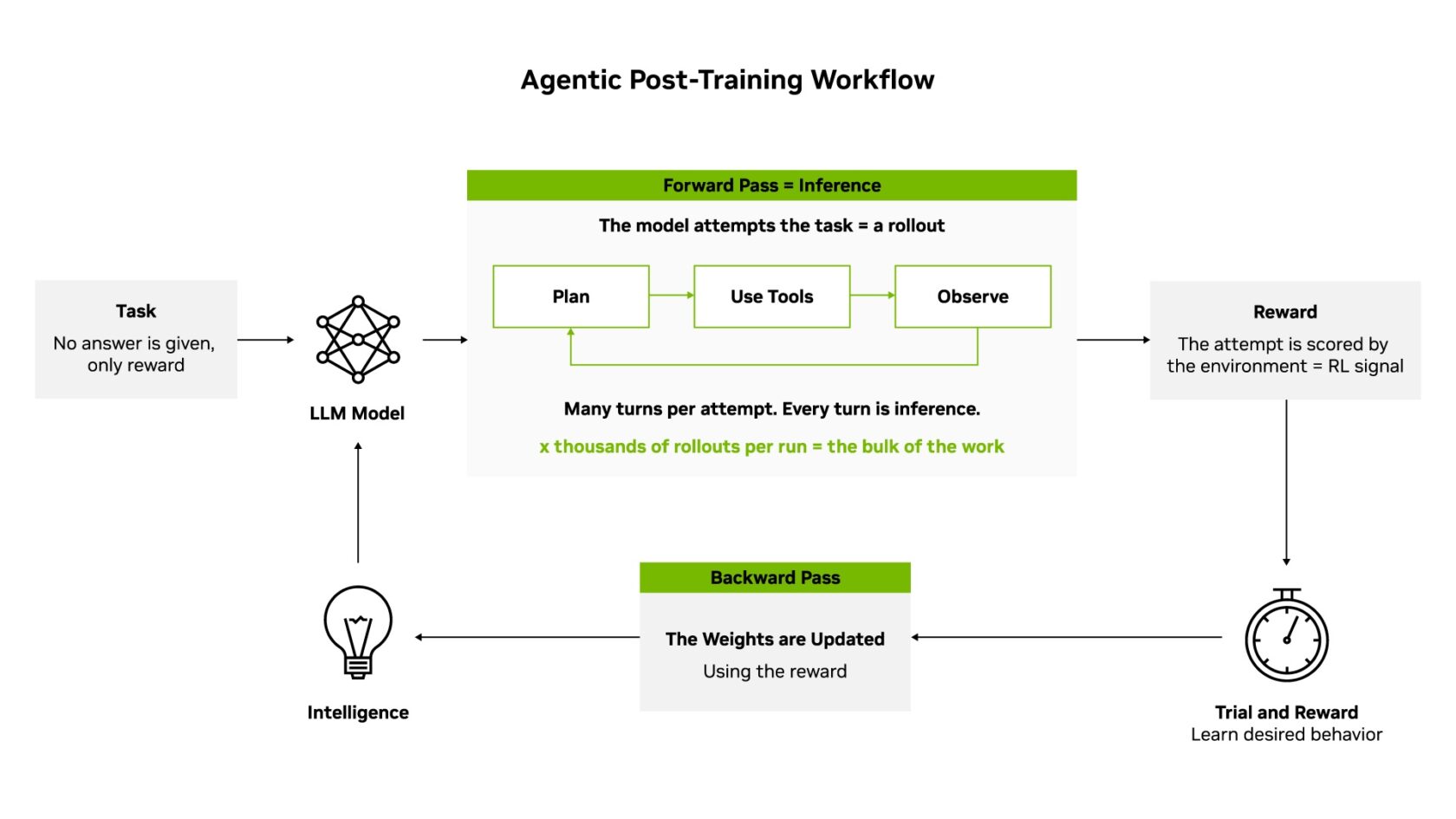
The mechanism driving this intelligence is Reinforcement Learning (RL). In this framework, there is no "answer key" for the model to memorize. Instead, the model is given a task and receives a reward based on the quality of its attempt.
- The Forward Pass (Inference): The model attempts to solve the task, which is the same work it performs when deployed on the job.
- The Scoring Phase: The attempt is evaluated against specific benchmarks or human preferences.
- The Backward Pass (Updating): The lessons learned from the attempt are used to update the model’s weights.
Running this loop at scale presents a massive orchestration challenge. It requires thousands of simulated environments generating parallel "rollouts" (attempts), verifying rewards, and syncing updated weights back to the training cluster without idling the hardware. To streamline this, NVIDIA has introduced open libraries such as NeMo Gym for creating training environments and NeMo RL for distributed post-training. These tools aim to transform what was once bespoke research code into repeatable, industrial-grade infrastructure.
The Economic Equation: Intelligence per Dollar vs. Cost per Token
In the traditional AI economy, "cost per token" has been the gold standard for measuring efficiency. This metric calculates the total cost of delivering one million tokens of output. However, as AI agents take on more critical roles in enterprise workflows, a more comprehensive metric is required: intelligence per dollar.
Intelligence per dollar asks a higher-level question: What does it cost to build and maintain a model that is actually worth serving? While cost per token measures operational yield, intelligence per dollar measures the return on investment for the model’s cognitive capabilities. The two metrics are nested; infrastructure that lowers the cost per token naturally reduces the cost of building intelligence. Conversely, a more intelligent model increases the value of every token it serves. If a model can solve a complex software bug in 1,000 tokens while a less intelligent model fails after 10,000 tokens, the "smarter" model is more economical regardless of its individual token price.
Technical Benchmarks: The Nemotron 3 Ultra Case Study
The practical application of these theories is evidenced in the performance of the NVIDIA Nemotron 3 Ultra. This model is an open-weight, 550-billion-parameter Mixture-of-Experts (MoE) architecture. Unlike dense models, MoE architectures activate only a fraction of their parameters for any given task, allowing for higher intelligence without a linear increase in compute cost.
In recent evaluations using the SWE-bench verified benchmark—a rigorous test involving real-world software bugs from open-source projects—Nemotron 3 Ultra achieved a success rate of 71.7%. This means the model was able to produce a working fix for approximately seven out of ten real-world bugs, with each fix verified against the project’s original test suite. This level of proficiency is a direct result of a disclosed post-training recipe executed on the NeMo RL platform, demonstrating that continuous refinement can produce state-of-the-art reasoning capabilities.
Hardware Evolution: From Blackwell to Vera Rubin
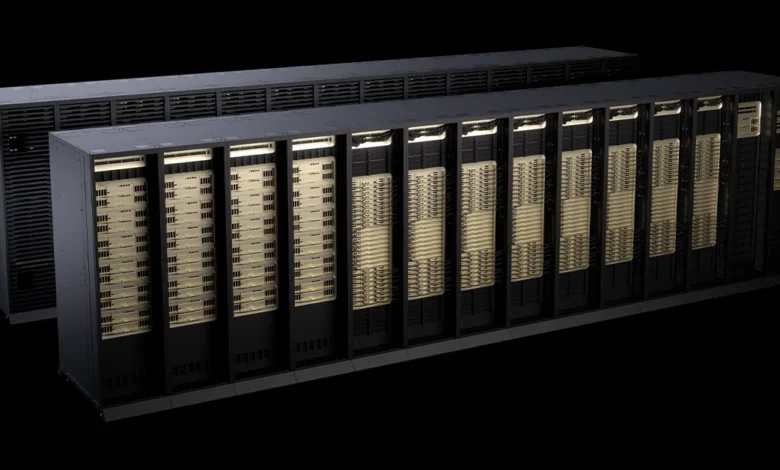
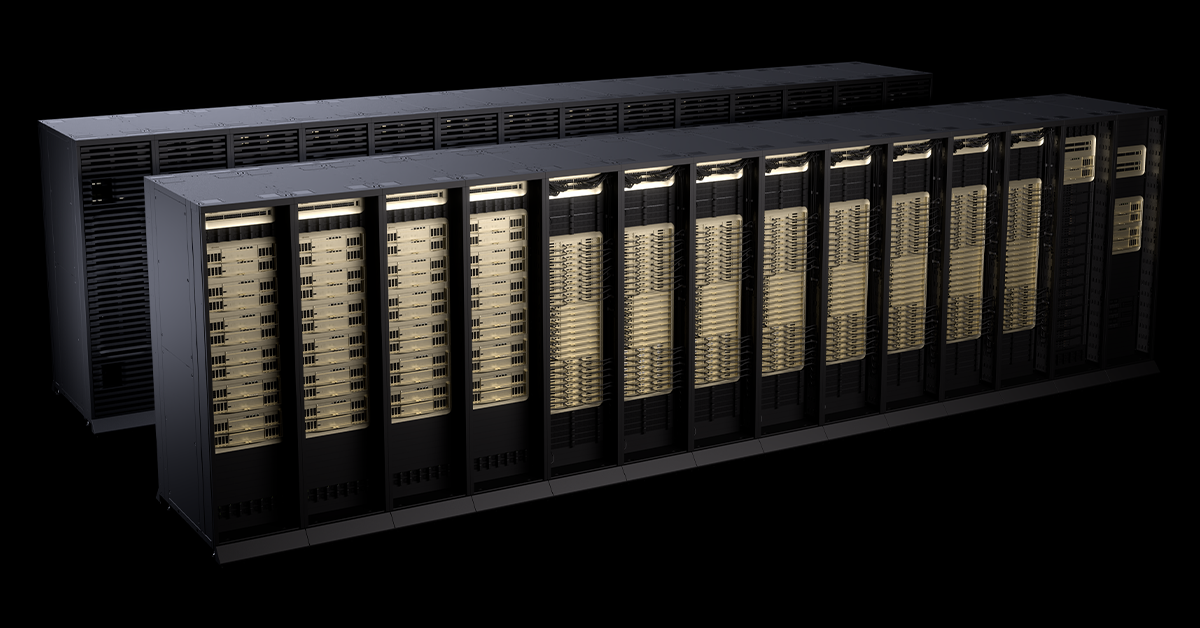
The economic viability of continuous post-training depends heavily on the underlying hardware. The NVIDIA Blackwell platform was designed to lower the cost per training run, making the frequent updates required by agentic AI more affordable. However, the upcoming NVIDIA Vera Rubin platform is expected to push these boundaries even further.
The Vera Rubin platform was co-designed to maximize intelligence per dollar across the entire agentic workload. Early data suggests that the Rubin platform can train the largest frontier models using only one-fourth the GPUs required by the Blackwell generation. This is achieved through several architectural improvements:
- Vera CPUs: These processors are optimized for the high-throughput, low-latency requirements of reinforcement learning environments.
- Enhanced Throughput: In realistic RL sandbox workloads, Vera CPUs have demonstrated a 30% greater throughput compared to alternative x86 architectures.
- Optimized Networking: The platform facilitates faster weight transfers between training and inference nodes, which is critical for the "asynchronous" nature of modern post-training stacks.
Industry Adoption and Real-World Applications
Several AI pioneers are already integrating these continuous post-training workflows into their production stacks. Their experiences provide a roadmap for how the "intelligence per dollar" philosophy is being applied in the field.

Prime Intellect: This organization focuses on continuously post-training frontier open models. By utilizing NVIDIA Blackwell for initial runs and planning a transition to Vera Rubin, Prime Intellect has optimized its sandbox infrastructure to generate more rollouts per run. Their integration with NVIDIA Vera CPUs has allowed them to achieve energy-efficient RL, accelerating the training-to-inference iteration loop that businesses rely on for up-to-date agents.
Perplexity: The AI-powered search engine utilizes an RL post-training stack that runs asynchronously across hundreds of GPUs. To maintain high performance, they use an RDMA-based weight transfer engine capable of syncing trillion-parameter models between training and inference nodes in under two seconds. Their post-trained Qwen3 235B models, served on NVIDIA GB200 systems, represent the cutting edge of how rapid post-training cycles can improve user-facing search and reasoning agents.
Together AI: Providing "post-training as a service," Together AI offers supervised fine-tuning and direct preference optimization via an API. By running on optimized kernel libraries and moving toward the Vera Rubin platform, they are enabling other enterprises to harness agentic capabilities without building the underlying orchestration infrastructure from scratch.
Broader Impact and Strategic Implications
The shift toward agentic AI and continuous post-training represents a maturing of the artificial intelligence industry. We are moving away from the "brute force" era of pre-training—where the goal was simply to ingest the entire internet—toward an era of "surgical" intelligence. In this new phase, the value of AI is found in its ability to operate autonomously within specific, complex domains.
For enterprises, the implications are clear: the competitive advantage will no longer come solely from having the largest model, but from having the most efficient "learning factory." Organizations that can implement continuous feedback loops will possess agents that grow more capable every day, while those relying on static models will find their AI assets quickly depreciating in value as the digital environment evolves.
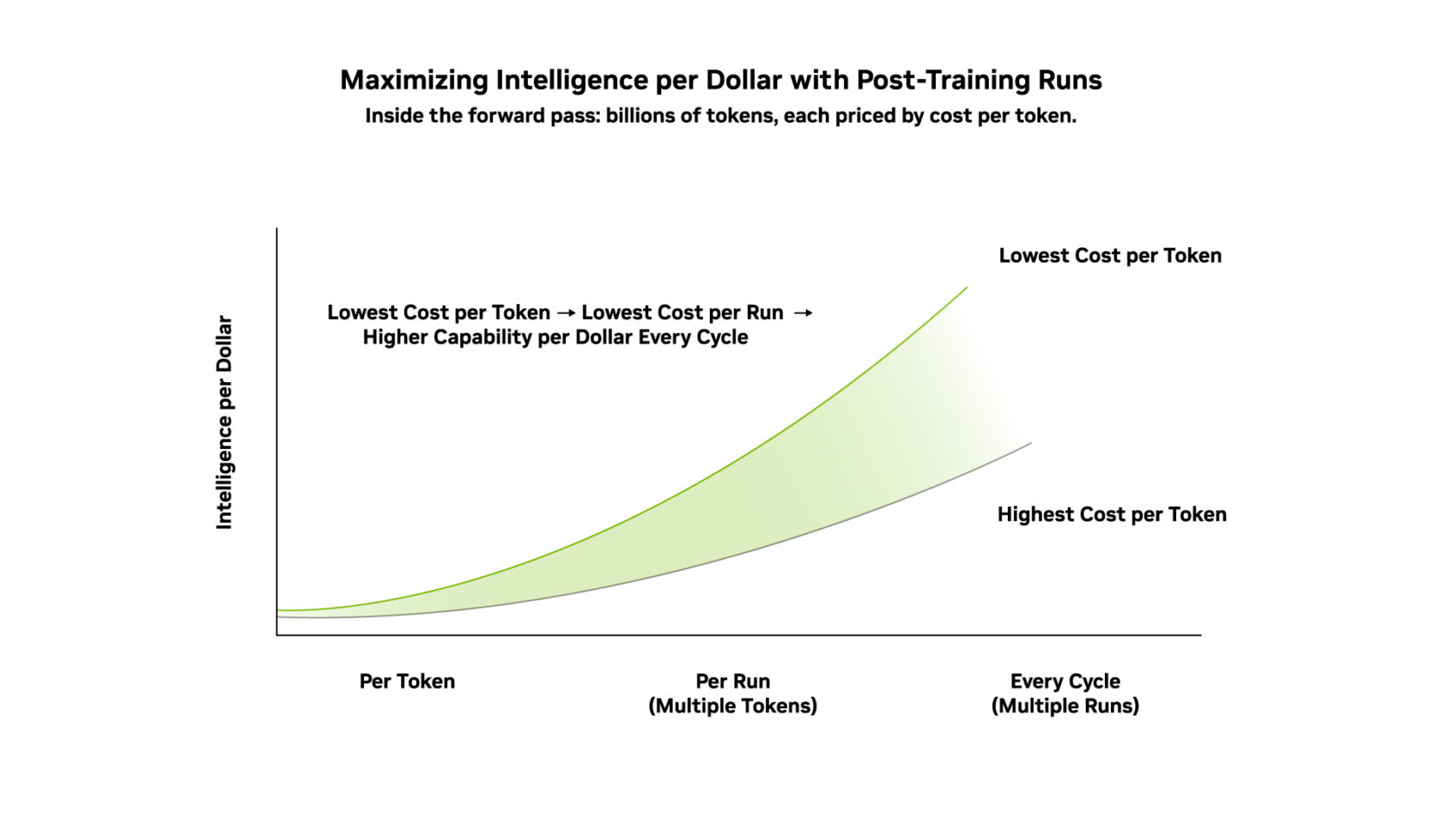
Furthermore, the focus on "intelligence per dollar" will likely drive a new wave of hardware and software innovation. As the compute footprint of post-training surpasses that of initial training, the industry will demand chips and networking protocols specifically tuned for RL rollouts and rapid weight synchronization. The Vera Rubin platform is the first major step in this direction, signaling a future where the distinction between "training" and "inference" becomes increasingly blurred, replaced by a single, continuous cycle of machine intelligence.
Related posts: