New CIGaRS Framework Revolutionizes Dark Energy Research by Leveraging Artificial Intelligence and Supernova Imaging Data

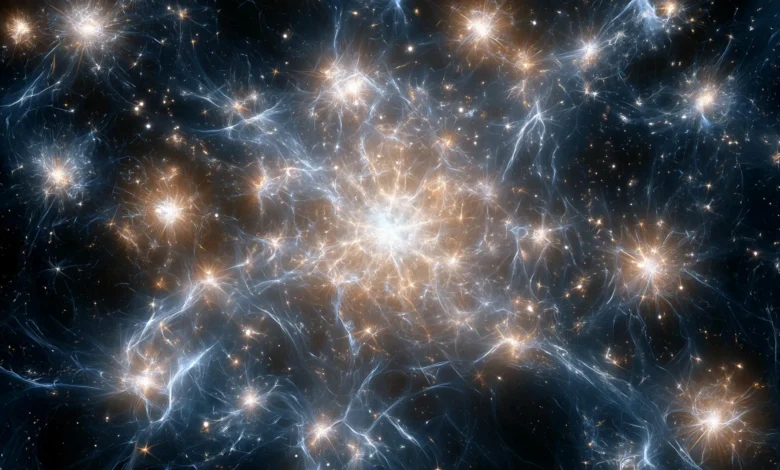
The mystery of the accelerating expansion of the universe has long stood as one of the most daunting challenges in modern physics, but a breakthrough led by the Institute of Cosmos Sciences of the University of Barcelona (ICCUB) promises to sharpen our vision of the cosmos significantly. Researchers have developed a sophisticated new framework known as CIGaRS—Cosmology with Inferential Galaxy and Rate-of-Supernovae Simulations—which utilizes artificial intelligence and advanced statistical modeling to extract unprecedented levels of detail from Type Ia supernovae. Published in the prestigious journal Nature Astronomy, the study outlines a method that could improve the precision of cosmological constraints by as much as a factor of four, potentially solving discrepancies that have puzzled astronomers for decades.
For nearly a quarter-century, Type Ia supernovae have served as the "standard candles" of the universe. These cataclysmic explosions occur in binary star systems where at least one star is a white dwarf. Because these stars explode at a relatively consistent mass—known as the Chandrasekhar limit—their intrinsic brightness is remarkably uniform. By comparing how bright a supernova appears from Earth with its known intrinsic luminosity, astronomers can calculate its distance with high accuracy. This technique was the primary tool used in the late 1990s to discover that the universe is not only expanding but doing so at an accelerating rate, a discovery that earned the 2011 Nobel Prize in Physics.
However, the "standard candle" is not as perfect as once believed. Over the last two decades, researchers have observed that the environment of the supernova—specifically the properties of its host galaxy—can influence its observed brightness. Supernovae occurring in older, more massive galaxies tend to appear slightly brighter than those in younger, less massive ones, even after standard corrections are applied. This phenomenon, often referred to as the "host galaxy bias" or "mass step," introduces systematic uncertainties that can skew measurements of dark energy, the elusive force believed to be driving the universe’s acceleration.
The CIGaRS framework represents a paradigm shift in how these stellar explosions are analyzed. Rather than treating the supernova and its host galaxy as separate entities to be corrected post-observation, the team led by Konstantin Karchev and Raúl Jiménez has built a unified, "ab initio" model. This approach simulates the entire chain of events from the birth of stars to the detection of the explosion, accounting for the age of the stellar population, the presence of cosmic dust, the rate of supernova occurrences throughout cosmic time, and the underlying expansion of space-time itself.
The Technological Leap: Simulation-Based Inference and AI
The primary obstacle to such a comprehensive model has traditionally been the sheer volume of computational power required. Modeling a single supernova with all its environmental variables is complex; modeling tens of thousands simultaneously, as required for modern surveys, was previously considered impossible. To overcome this, the ICCUB team turned to a cutting-edge field of machine learning known as simulation-based inference (SBI).
Unlike traditional statistical methods that require a simplified mathematical "likelihood function," SBI allows researchers to use high-fidelity simulations as the basis for their analysis. The process begins by generating millions of simulated universes, each with slightly different physical laws, galaxy distributions, and supernova behaviors. A neural network—a form of artificial intelligence—is then trained to recognize the patterns within these simulations. Once the AI understands the relationship between the physical parameters (like the density of dark energy) and the resulting observations (like the brightness and color of supernovae), it can analyze real-world data from telescopes in a fraction of the time.
This "likelihood-free" approach is particularly adept at handling "unknown unknowns"—systematic errors that researchers might not even know they are looking for. By varying all parameters simultaneously, the CIGaRS framework can identify hidden correlations between a supernova’s light curve and the dust properties of its host galaxy that simpler models would miss.
Addressing the Spectroscopic Bottleneck
Perhaps the most significant practical advantage of CIGaRS is its ability to function with imaging data alone. Traditionally, to get a precise distance measurement, astronomers require a spectrum—a detailed breakdown of light into its component colors. Spectroscopy provides a highly accurate "redshift," a measurement of how much the light has been stretched by the expansion of the universe. However, obtaining a spectrum is time-consuming and requires expensive time on large telescopes.
As the astronomical community enters the era of "Big Data," spectroscopy has become a bottleneck. The upcoming Vera C. Rubin Observatory in Chile, currently nearing completion, is expected to identify millions of supernovae over the next decade during its Legacy Survey of Space and Time (LSST). It is physically impossible to obtain spectroscopic follow-up for more than a tiny fraction (roughly 1%) of these objects.
The CIGaRS framework bridges this gap. The researchers demonstrated that their AI-driven model could estimate redshifts from multi-color imaging (photometry) with a precision that rivals traditional spectroscopic methods. By extracting the full cosmological information from the light curves and host galaxy images, CIGaRS allows astronomers to utilize the remaining 99% of the Rubin Observatory’s data, which would otherwise be discarded or underutilized in high-precision studies.
Historical Context and the Evolution of Cosmological Surveys
The development of CIGaRS comes at a critical juncture in the history of cosmology. Since the 1998 discovery of dark energy, the scientific community has moved through several generations of surveys. The First Generation (SNLS, ESSENCE) confirmed the acceleration. The Second Generation (SDSS-II, Pan-STARRS) refined the measurements and began to explore the "equation of state" of dark energy, denoted as $w$. The Third Generation, including the Dark Energy Survey (DES), has pushed the limits of our current statistical tools, revealing that systematic errors—rather than a lack of data—are now the primary limitation.
The Fourth Generation, led by the Rubin Observatory, the European Space Agency’s Euclid mission, and NASA’s Nancy Grace Roman Space Telescope, will provide a data deluge. The CIGaRS framework is designed specifically to handle this transition from data-starved to data-saturated science. By reducing the reliance on "analytic simplifications"—the mathematical shortcuts that can lead to bias—the framework ensures that the conclusions drawn from these multi-billion-dollar missions are as robust as possible.
Insights into Supernova Progenitors
Beyond its implications for dark energy, the CIGaRS model is providing new insights into the astrophysics of the supernovae themselves. For decades, a debate has raged over the "progenitor" systems of Type Ia supernovae: is it a single white dwarf stealing matter from a normal star (single degenerate), or two white dwarfs colliding (double degenerate)?
By reconstructing the "delay-time distribution"—the time elapsed between the formation of a star and its eventual explosion as a supernova—CIGaRS helps scientists test these models. The framework’s ability to link supernova rates to the specific ages of stars in host galaxies provides a "cosmic clock" that can distinguish between different progenitor theories. This dual utility makes CIGaRS not just a tool for cosmologists, but a vital asset for stellar astrophysicists as well.
Academic and Professional Reactions
The lead author of the study, Konstantin Karchev, a researcher at ICCUB and SISSA Trieste, emphasized the "no-compromise" nature of the approach. "Unlike other frameworks, which require analytic simplifications, our end-to-end simulation-based inference approach is uniquely capable of extracting the full cosmological and astrophysical information from the Rubin Observatory’s hard-earned data, while avoiding the pitfalls of selection and modelling biases," Karchev stated.
Co-author Raúl Jiménez, an ICREA researcher at ICCUB, highlighted the importance of Bayesian inference in understanding the "unknown unknowns." According to Jiménez, the ability to simulate the universe "ab initio" provides a unique laboratory to test the resilience of our current physical laws. The team’s findings suggest that current models of the universe may be missing critical ingredients related to how light interacts with galactic environments, a gap that CIGaRS is specifically designed to fill.
Broader Implications for the Future of Physics
The stakes for this research are high. Dark energy accounts for approximately 68% of the energy density of the universe, yet its nature remains entirely unknown. Some theories suggest it is a "cosmological constant"—a constant energy density filling space uniformly—while others propose it is a dynamic field that changes over time. Distinguishing between these possibilities requires a precision in distance measurements that has, until now, been out of reach.
If CIGaRS performs as expected when the Rubin Observatory begins its operations, it could help resolve the "Hubble Tension," a current discrepancy in the measured expansion rate of the universe that suggests our standard model of cosmology might be incomplete. By providing a more accurate way to measure distances across the deep reaches of time, the framework acts as a more precise yardstick for the geometry of the cosmos.
As the astronomical community prepares for the first light of the Rubin Observatory, the CIGaRS framework stands as a testament to the power of integrating traditional physics with modern artificial intelligence. It represents a move toward a more holistic understanding of the universe, where the explosion of a single star is seen not as an isolated event, but as a chapter in the 13.8-billion-year history of the galaxy that hosts it. With the potential to quadruple the scientific output of upcoming surveys, CIGaRS may well be the key that finally unlocks the secrets of dark energy and the ultimate fate of the universe.
Related posts: