Northwestern University Engineers Develop Printed Artificial Neurons Capable of Direct Communication with Biological Brain Cells

In a landmark achievement for the fields of bioelectronics and neuromorphic computing, a multidisciplinary team of engineers and neurobiologists at Northwestern University has successfully developed printed artificial neurons that do more than merely simulate neural activity; they can directly communicate with and activate living biological brain tissue. These flexible, low-cost electronic devices produce sophisticated electrical signals that mirror the intricate firing patterns of the human nervous system, bridging a long-standing gap between synthetic hardware and organic life.
The research, scheduled for publication on April 15 in the prestigious journal Nature Nanotechnology, details how these artificial neurons were able to trigger specific responses in mouse brain slices. This breakthrough represents a significant leap forward in the development of brain-machine interfaces (BMIs) and points toward a future where neuroprosthetics can seamlessly integrate with the human body to restore lost sensory or motor functions. Beyond medicine, the technology offers a potential solution to the escalating energy crisis fueled by the global expansion of artificial intelligence (AI).
A New Frontier in Bio-Electronic Compatibility
For decades, scientists have sought to create electronic systems that can interface effectively with the brain. However, the primary obstacle has been the fundamental difference between silicon-based technology and biological matter. While modern computers rely on rigid, two-dimensional silicon chips packed with billions of identical transistors, the brain is a soft, three-dimensional, and highly heterogeneous organ.
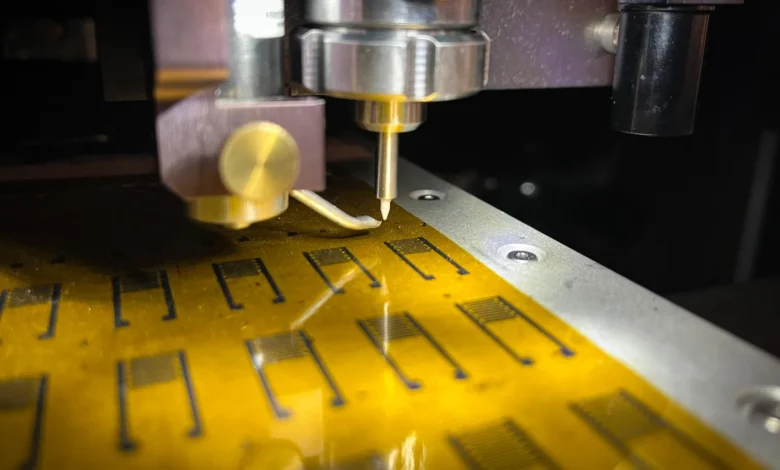
The artificial neurons developed at Northwestern address this discrepancy through the use of advanced material science. Led by Mark C. Hersam, the Walter P. Murphy Professor of Materials Science and Engineering at the McCormick School of Engineering, the team utilized "inkjet-like" printing techniques to create devices on flexible polymer substrates. Unlike traditional silicon components, these printed neurons are pliable and can be manufactured at a fraction of the cost of conventional semiconductors.
The most striking aspect of the study was the successful "handshake" between the synthetic and the biological. In experiments conducted in collaboration with Indira M. Raman, the Bill and Gayle Cook Professor of Neurobiology at Northwestern’s Weinberg College of Arts and Sciences, the artificial signals were applied to slices of a mouse cerebellum. The biological neurons responded to the artificial stimuli with precise timing, demonstrating that the synthetic devices could effectively "speak the language" of the brain.
The Technical Breakthrough: From Flaw to Feature
The core of this innovation lies in the specific materials used to create the artificial neurons. The research team developed specialized electronic inks composed of nanoscale flakes of molybdenum disulfide (MoS2)—a two-dimensional semiconductor—and graphene, which acts as a highly efficient electrical conductor.
Historically, the presence of polymers in such electronic inks was viewed as a hindrance to performance, often requiring aggressive removal processes after printing. However, Hersam’s team discovered that by partially decomposing the polymer rather than removing it entirely, they could induce a unique physical phenomenon. When an electrical current passes through the device, the remaining polymer undergoes further localized decomposition, forming a conductive filament.
This filament constricts the flow of current into a narrow spatial region, creating a "memristive" effect. This physical architecture allows the device to generate complex electrical outputs, including single spikes, continuous firing sequences, and "bursting" patterns. These are the exact types of signals used by biological neurons to encode information.
"Other labs have tried to make artificial neurons with organic materials, and they spiked too slowly," Hersam explained. "Or they used metal oxides, which are too fast. We are within a temporal range that was not previously demonstrated for artificial neurons. You can see the living neurons respond to our artificial neuron. So, we’ve demonstrated signals that are not only the right timescale but also the right spike shape to interact directly with living neurons."
Solving the AI Power Crisis Through Neuromorphic Design
While the medical implications of this research are profound, the team is equally focused on the future of global computing. As artificial intelligence continues to dominate the technological landscape, the energy requirements for training and maintaining large-scale AI models have reached unsustainable levels.
The current trajectory of AI development relies on massive data centers that consume gigawatts of power. Professor Hersam noted that the industry is reaching a point where tech companies are considering dedicated nuclear power plants to meet these demands. Furthermore, the heat generated by these centers requires millions of gallons of water for cooling, placing an additional strain on environmental resources.
"The way you make AI smarter is by training it on more and more data," Hersam said. "This data-intensive training leads to a massive power-consumption problem. Because the brain is five orders of magnitude more energy efficient than a digital computer, it makes sense to look to the brain for inspiration for next-generation computing."
The human brain functions as the world’s most efficient computer, operating on roughly 20 watts of power—barely enough to light a dim bulb—while performing tasks that would require a supercomputer the size of a building. By replicating the brain’s "heterogeneous and dynamic" nature, the Northwestern team believes they can create hardware that handles "Big Data" with a fraction of the energy currently required by silicon-based architectures.
Implications for Neuroprosthetics and Medicine
The ability to print these neurons on flexible surfaces opens the door to a new generation of medical implants. Current neuroprosthetics, such as cochlear implants for hearing or deep-brain stimulators for Parkinson’s disease, often rely on relatively simple electrical pulses. The Northwestern team’s artificial neurons could allow for much more nuanced communication with the nervous system.
Potential applications include:
- Vision Restoration: Implants that can translate visual data into neural-compatible signals for the optic nerve.
- Motor Control: Flexible interfaces that can bypass spinal cord injuries to reconnect the brain with paralyzed limbs.
- Cognitive Support: Advanced BMIs that could eventually assist in treating neurological disorders by "bridging" damaged neural circuits.
Because the manufacturing process uses additive printing—where material is only deposited where needed—the production of these devices is inherently sustainable and scalable. This could eventually lead to personalized neural interfaces tailored to a patient’s specific biological architecture.
A Chronology of Neuromorphic Evolution
The success of this study is the result of years of incremental progress in the field of 2D materials and neuromorphic engineering.
- Early 2010s: Researchers began exploring MoS2 and graphene for their unique electrical properties in thin-film transistors.
- Mid-2010s: The concept of the "memristor" (a resistor with memory) gained traction as a way to mimic synaptic plasticity.
- 2020-2023: Hersam’s lab refined the aerosol jet printing process, moving from simple conductive traces to complex, multi-layered devices.
- April 2024: The publication of the current study confirms that these printed devices can successfully interface with living mammalian brain tissue.
Expert Perspectives and Future Outlook
The study, titled "Multi-order complexity spiking neurons enabled by printed MoS2 memristive nanosheet networks," was supported by the National Science Foundation (NSF). The interdisciplinary nature of the project was critical to its success, combining Hersam’s expertise in materials science with Vinod K. Sangwan’s research in memristive systems and Raman’s deep understanding of neurobiology.
Industry analysts suggest that this research could pivot the direction of the semiconductor industry. While the "Moore’s Law" era of shrinking silicon transistors is reaching its physical limits, the "More than Moore" era—focused on functional diversification and bio-integration—is just beginning.
The next phase of the research will likely involve testing these artificial neurons in living animals (in vivo) rather than just in brain slices (ex vivo). Researchers will also look to scale the complexity of the printed networks, moving from individual neurons to integrated circuits that can perform basic logic tasks using brain-like signaling.
As the world grapples with the environmental costs of the digital age, the marriage of biology and electronics may provide the only viable path forward. By looking to the brain—not just as a model for software, but as a blueprint for hardware—Northwestern University has provided a glimpse into a future where the line between the machine and the mind continues to blur for the benefit of both human health and planetary sustainability.
Related posts: