Motorola Signature Unveiled: A New Era of Ergonomics, Imaging Prowess, and Enduring Power

Jakarta, Indonesia – Motorola has officially unveiled the Motorola Signature, a device meticulously engineered to deliver an unparalleled user experience, emphasizing comfort, cutting-edge photography, and sophisticated design. Positioned as a flagship contender, the Motorola Signature aims to cater to discerning users who prioritize seamless handling, exceptional camera capabilities, and robust performance within a single, elegantly crafted device. The announcement, initially highlighted in Jakarta, underscores Motorola’s strategic focus on the premium segment, particularly within key Asian markets where technological sophistication and design aesthetics hold significant weight among consumers.
A Redefined Premium Experience for the Modern User
The Motorola Signature emerges as a testament to Motorola’s commitment to innovation, blending advanced hardware with a user-centric design philosophy. From its initial presentation, the device immediately garnered attention for its ergonomic form factor, promising "kenyamanan dalam satu genggaman" (comfort in one hand), a critical consideration for extended smartphone use in an increasingly mobile world. This focus on ergonomics is paired with a powerful camera system, dubbed "kamera wow," and an "elegan" design, signaling a comprehensive approach to capturing the high-end market. The device is not merely a collection of impressive specifications but a cohesive ecosystem designed to elevate daily interactions, from capturing life’s moments to navigating demanding applications. This launch marks a significant step for Motorola as it seeks to solidify its position among top-tier smartphone manufacturers, challenging established giants with a blend of innovation and practical usability. The emphasis on a "signature" experience suggests a device that embodies the brand’s highest aspirations for quality and performance.
Exquisite Design and Unparalleled Ergonomics
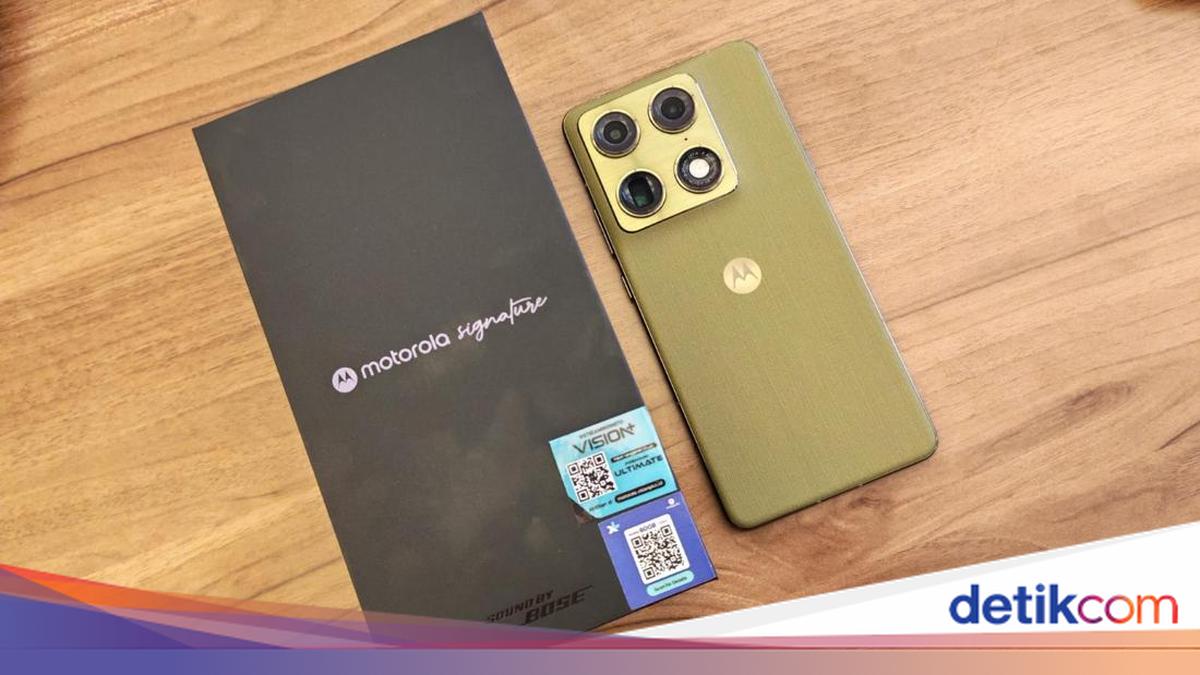
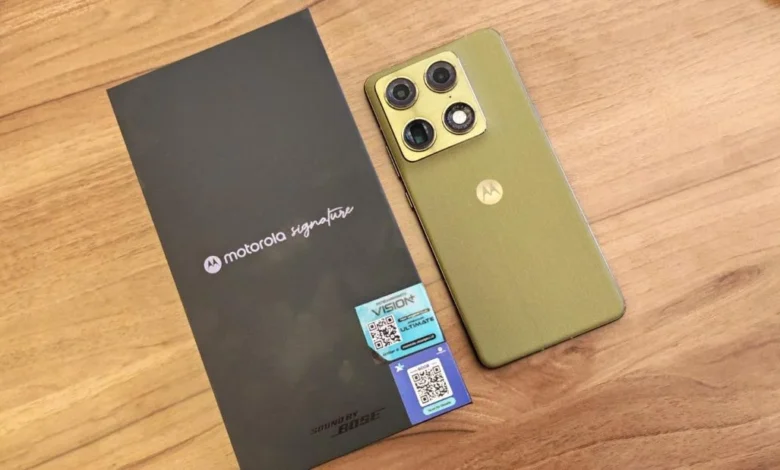
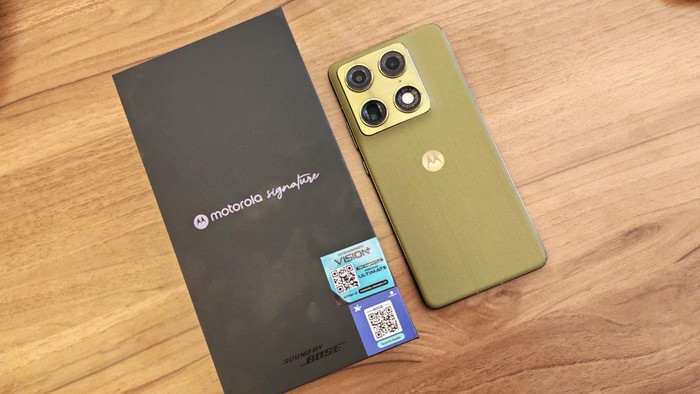
Central to the Motorola Signature’s appeal is its meticulously crafted design. The device is offered in two sophisticated colorways: Pantone Martini Olive and Pantone Carbon, choices that reflect a trend towards more refined and understated aesthetics in premium electronics. These Pantone collaborations are not merely superficial; they signify a deliberate effort to integrate color science into the product’s identity, appealing to users with an appreciation for nuanced visual details. The body of the Motorola Signature is constructed from aircraft-grade aluminium, a material renowned for its exceptional strength-to-weight ratio and premium feel. This choice of material contributes significantly to both the device’s durability and its overall luxurious appeal, placing it firmly in the upper echelon of smartphone build quality.
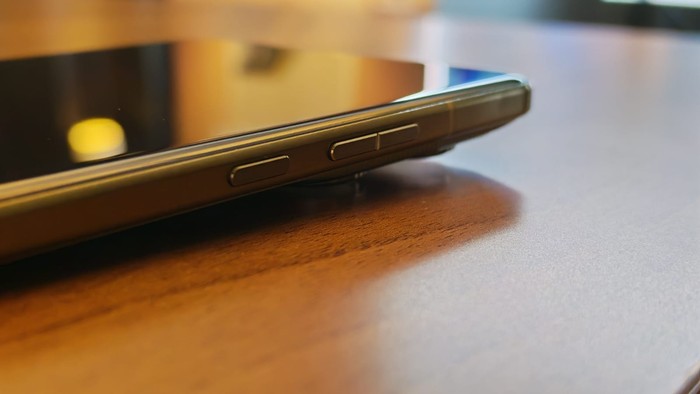
Measuring a sleek 162.1 x 76.4 x 6.99 mm and weighing in at a mere 186 grams, the Motorola Signature embodies a design philosophy that prioritizes slimness and lightness without compromising structural integrity. In an industry where devices often grow larger and heavier with each iteration, Motorola’s commitment to a svelte profile stands out. The dimensions are carefully balanced to ensure that the device fits comfortably in the hand, minimizing strain during prolonged use—a direct response to consumer demand for more manageable smartphone sizes. The physical layout further enhances usability: the left side of the device maintains a clean, unadorned surface, while the right edge thoughtfully houses the power and volume buttons, ensuring intuitive access for single-handed operation. This thoughtful ergonomic consideration is crucial for a device that aims to be a daily companion, facilitating ease of interaction and reducing user fatigue. The overall design language speaks to a sophisticated user base that values both form and function, where every curve and material choice is purposeful.
The "Wow" Factor: A Revolutionary Camera System
The Motorola Signature’s camera system is undoubtedly one of its most compelling features, engineered to deliver professional-grade imaging capabilities. Motorola has integrated a formidable array of sensors and advanced optics, promising a photographic experience that truly stands out in the crowded premium market.
Rear Camera Array: Pushing Photographic Boundaries
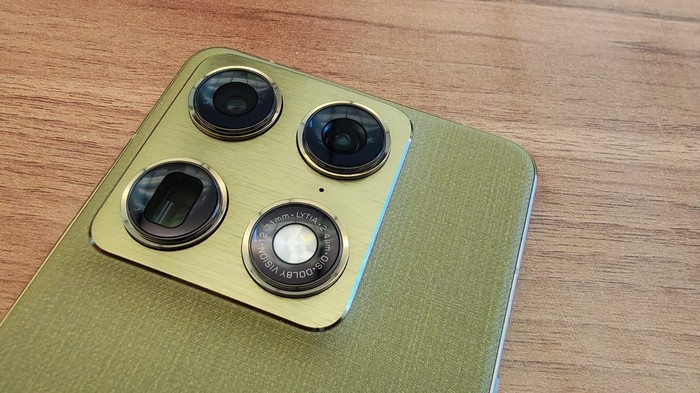
At the heart of the rear camera setup is a stunning 50 MP main sensor, featuring the Sony LYTIA 828. Sony’s LYTIA series sensors are known for their advanced stacked CMOS architecture, which allows for superior light gathering, improved dynamic range, and faster readout speeds compared to traditional sensors. The LYTIA 828, in particular, is expected to leverage next-generation pixel technology to deliver exceptional detail and clarity, even in challenging lighting conditions. This main sensor is complemented by a versatile 50 MP ultrawide lens, enabling users to capture expansive landscapes, group shots, and architectural marvels with a broader field of view without significant distortion.
Further elevating its photographic prowess is a 50 MP Periscope Telephoto lens, offering 3x optical zoom and an astounding 100x Super Zoom Pro. Optical zoom provides lossless magnification, crucial for preserving image quality when bringing distant subjects closer. The 100x Super Zoom Pro, while likely relying on a combination of optical and advanced digital processing, positions the Motorola Signature at the forefront of smartphone zoom capabilities, allowing users to capture intricate details from incredible distances. This feature is particularly beneficial for wildlife photography, sporting events, or simply exploring the world with a new perspective, providing creative flexibility that few competitors can match.
Cinematic Video Capture: 8K Dolby Vision Excellence
Beyond still photography, the Motorola Signature excels in video recording, supporting up to 8K resolution at 30 frames per second with Dolby Vision. 8K video offers four times the resolution of 4K, delivering incredibly sharp and detailed footage, ideal for large displays and professional content creation. The inclusion of Dolby Vision further enhances the video experience by providing superior HDR (High Dynamic Range) capabilities. Dolby Vision optimizes brightness, contrast, and color on a frame-by-frame basis, resulting in more vibrant, lifelike, and immersive video content. This capability positions the Motorola Signature as a powerful tool for filmmakers, vloggers, and anyone who demands the highest quality from their mobile video capture.
Front-Facing Brilliance: The 50MP Sony LYTIA 500
The front-facing camera is equally impressive, featuring a 50 MP Sony LYTIA 500 sensor. This high-resolution front camera ensures that selfies and video calls are captured with exceptional detail and clarity. Motorola specifically highlights the camera’s ability to render colors accurately, even when there’s a strong contrast between foreground and background elements. This means that skin tones, clothing, and environmental details will appear true-to-life, a significant advantage for social media enthusiasts and professionals who rely on high-quality video conferencing. The advanced sensor technology in the front camera also promises excellent performance in various lighting conditions, making sure users look their best, whether indoors or out.
Intelligent Imaging Software and Computational Photography
While the hardware is undoubtedly impressive, the Motorola Signature’s camera experience will also be significantly enhanced by sophisticated computational photography algorithms and artificial intelligence. Motorola is expected to integrate advanced scene recognition, object tracking, and image stabilization technologies to further optimize photo and video quality. Features such as enhanced night mode, portrait mode with realistic bokeh, and smart composition tools will likely leverage the device’s powerful processing capabilities to make professional-looking shots accessible to all users. This combination of top-tier hardware and intelligent software ensures that the "wow" factor of the camera extends beyond raw specifications to deliver a truly intuitive and satisfying photographic journey.
Enduring Power and Blazing-Fast Charging
The Motorola Signature is engineered to keep pace with the demands of modern smartphone users, featuring a robust power system designed for longevity and rapid replenishment.
High-Capacity Silicon-Carbon Battery
The device is equipped with a substantial 5,200 mAh silicon-carbon battery. This high-capacity cell is a significant upgrade from standard lithium-ion batteries, as silicon-carbon technology allows for higher energy density, meaning more power can be packed into a smaller physical volume. This contributes to the device’s sleek profile while delivering exceptional battery life. Motorola claims the Signature can last up to 52 hours of standard usage on a single charge. This impressive figure, if substantiated in real-world scenarios, would place the Motorola Signature among the leaders in smartphone endurance, providing users with the confidence to go through multiple days without needing to recharge, even with heavy usage of its advanced camera and multimedia features. For users who are constantly on the go or engage in power-intensive tasks, this extended battery life is a critical differentiator.
TurboPower and Wireless Charging Innovation
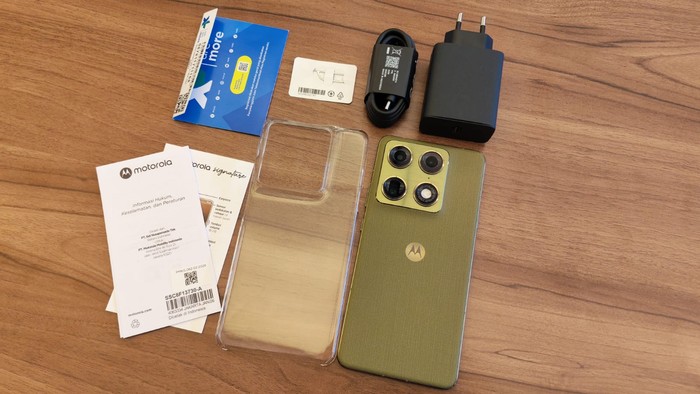
To complement its enduring battery, the Motorola Signature incorporates cutting-edge charging technologies. The device supports 90W TurboPower wired charging, with the necessary charger included directly in the box – a refreshing move in an industry increasingly opting to omit power adapters. This 90W capability allows for incredibly fast charging times, significantly reducing downtime and ensuring the phone is ready to go in minutes rather than hours. For instance, a quick 10-15 minute charge could potentially provide hours of additional usage, a boon for busy professionals and avid gamers.
In addition to wired charging, the Motorola Signature also supports 50W wireless charging, providing a convenient and cable-free alternative for topping up the battery. This high-speed wireless charging is on par with, or even surpasses, the wired charging speeds of many mid-range smartphones, offering a premium experience. The flexibility of both ultra-fast wired and highly efficient wireless charging options ensures that users have multiple convenient ways to keep their device powered throughout the day, adapting to various lifestyles and preferences.
Immersive Audio Powered by Industry Leaders
The audio experience on the Motorola Signature is designed to be as premium as its visual and photographic capabilities. The device integrates dual stereo speakers, enhancing sound separation and overall audio richness. What truly sets it apart is the collaboration with industry giants: Dolby Atmos and Bose.
Dolby Atmos technology delivers an immersive, multi-dimensional audio experience, creating a sense of sound moving around the listener. This is particularly impactful for media consumption, making movies, games, and music more engaging and lifelike. The "Sound by Bose" integration signifies a partnership with one of the most respected names in audio technology. This collaboration suggests that the speakers have been meticulously tuned by Bose audio engineers, aiming for superior clarity, balanced frequencies, and a robust bass response. The combined expertise of Dolby Atmos for spatial audio and Bose for acoustic refinement promises an unparalleled mobile audio experience, whether listening through the device’s speakers or connected headphones via its USB-C port. This focus on high-fidelity audio elevates the Motorola Signature beyond mere communication, transforming it into a portable entertainment powerhouse.
Under the Hood: Flagship Performance and Software Experience
While the original article did not explicitly detail the internal processor, RAM, or storage, a device positioned as a "Signature" flagship with such advanced camera, display, and battery technologies in 2026 would undoubtedly feature the absolute pinnacle of mobile processing power. It is highly anticipated that the Motorola Signature would be powered by a next-generation flagship chipset, such as a hypothetical Qualcomm Snapdragon 8 Gen 5 or an equivalent high-end MediaTek Dimensity processor. These chipsets are designed to deliver extraordinary performance for demanding applications, AI computations, and graphics-intensive gaming, ensuring smooth multitasking and a fluid user experience for years to come.
Accompanying this powerful processor would be ample RAM, likely starting at 12GB and potentially offering configurations up to 16GB, to handle intensive applications and facilitate seamless transitions between tasks. Storage options would also be generous, with base models likely starting at 256GB and extending to 512GB or even 1TB, providing vast space for high-resolution photos, 8K videos, and a large library of applications.
On the software front, the Motorola Signature would almost certainly run the latest version of Android available at its launch, presumed to be Android 16. Motorola is known for its near-stock Android experience, which offers a clean, intuitive interface free from excessive bloatware, ensuring timely updates and a smooth performance. This is typically complemented by Motorola’s proprietary "My UX" features, which add useful gestures, customizations, and productivity enhancements without fundamentally altering the core Android experience. These software optimizations would be crucial in maximizing the performance of the high-end hardware, particularly for camera processing, battery management, and overall system responsiveness. The combination of powerful hardware and optimized software would ensure that the Motorola Signature delivers a consistently fast, efficient, and enjoyable user experience.
Strategic Launch in Jakarta: Motorola’s Vision for the Premium Segment
The decision to highlight the Motorola Signature’s launch in Jakarta, Indonesia, is strategically significant. Indonesia represents one of the largest and most dynamic smartphone markets in Southeast Asia, characterized by a rapidly growing middle class and a strong appetite for advanced technology. A successful launch in such a crucial market can serve as a powerful springboard for broader regional and global availability.
Motorola’s renewed focus on the premium segment with devices like the Signature indicates a clear intent to challenge established market leaders such as Samsung, Apple, and Xiaomi. For a period, Motorola had largely concentrated on the mid-range and budget segments. However, with devices like the Signature, the company is signaling a confident return to high-end innovation, leveraging its heritage of quality and design. The competitive landscape in Indonesia is fierce, with consumers having access to a wide array of premium devices. By offering a phone that excels in ergonomics, camera performance, battery life, and audio, Motorola aims to carve out a distinct niche and attract discerning customers who are looking for a differentiated flagship experience. This launch is not just about a new product; it’s about Motorola reasserting its identity and capabilities at the pinnacle of smartphone technology.
Broader Implications and Market Outlook
The introduction of the Motorola Signature carries significant implications for both Motorola and the broader smartphone industry. For Motorola, it represents a bold statement of intent, reaffirming its position as a serious contender in the premium smartphone market. This move could revitalize the brand’s perception among consumers, associating it once again with cutting-edge technology and sophisticated design. A successful flagship like the Signature can also have a halo effect, boosting sales and interest in Motorola’s other product lines.
For the industry, the Motorola Signature pushes the boundaries in several key areas. Its emphasis on a comfortable, ergonomic design in a world of ever-larger phones could influence future design trends, prompting competitors to reconsider the practicalities of device handling. The advanced camera system, particularly the 100x Super Zoom Pro and 8K Dolby Vision video, sets new benchmarks for mobile imaging, fostering further innovation in computational photography and sensor technology. The combination of a high-capacity silicon-carbon battery with ultra-fast wired and wireless charging also highlights the ongoing race to deliver superior endurance and convenience.
Furthermore, the strategic launch in markets like Indonesia underscores the increasing importance of emerging economies in the global technology landscape. As these markets mature, consumer demand for premium, feature-rich devices grows, making them critical battlegrounds for smartphone manufacturers. Motorola’s aggressive entry into this segment with a compelling offering like the Signature could intensify competition, ultimately benefiting consumers through more innovative products and competitive pricing. The Motorola Signature is not just a new smartphone; it is a declaration of intent, signaling a future where thoughtful design, advanced imaging, and enduring performance converge to define the ultimate mobile experience.