Navigating the Threat of Mythos-Class Cyber Attacks: Why Traditional Vulnerability Management Is Failing Modern Enterprises

The modern cybersecurity landscape is undergoing a profound and potentially dangerous transformation, driven primarily by the rapid weaponization of artificial intelligence. When a new Common Vulnerabilities and Exposures (CVE) identifier is officially published, security operations centers (SOCs) are typically flooded with automated alerts. Vulnerability scanners hum into action, generating exhaustive lists of deficiencies, and severity scores are assigned based on standardized frameworks like the Common Vulnerability Scoring System (CVSS). Yet, beneath the veneer of high-tech efficiency, a critical question frequently goes unanswered until it is too late: Can this specific vulnerability actually be exploited within our unique operational environment?
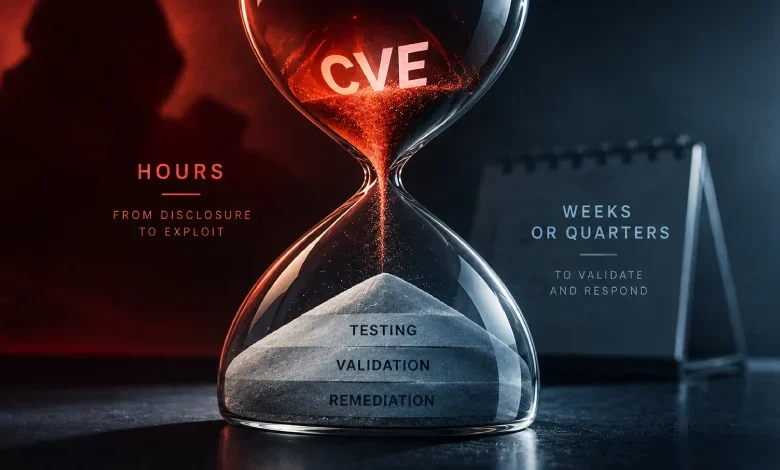
For decades, organizations have relied on traditional vulnerability management lifecycles—cycles that often operate on weekly, monthly, or even quarterly review periods. In stark contrast, the emergence of what industry experts are now designating as "Mythos-class" artificial intelligence has drastically compressed the timeline between the initial public disclosure of a software flaw and the widespread availability of working, automated exploitation code. This widening temporal chasm is no longer merely a technical hurdle; it is a fundamental operational vulnerability. While attackers leverage generative and autonomous AI systems to discover, weaponize, and deploy exploits within minutes of a patch release, many enterprise security programs remain anchored to slow, manual validation workflows.
The Disconnect Between Severity Scores and Real-World Risk
To understand the magnitude of this challenge, security leaders must first recognize the inherent limitations of relying solely on severity scores. A critical CVSS rating—such as a 9.8 or 10.0—indicates that a vulnerability has the potential to cause catastrophic damage if successfully exploited. However, a high score is an abstract metric; it does not constitute proof that an adversary can successfully bridge the gap between an external perimeter and an internal asset. Factors such as network segmentation, specific software configurations, active defensive controls, and the absence of requisite ancillary flaws can entirely neutralize a seemingly catastrophic vulnerability.
Despite this reality, many organizations continue to prioritize their remediation efforts strictly by the numbers. Security teams find themselves trapped in an endless game of whack-a-mole, scrambling to patch thousands of high-severity flaws that may pose zero actual risk to their specific infrastructure, while potentially missing lower-scored vulnerabilities that are actively being chained together in sophisticated, multi-stage attack campaigns.
This dilemma forms the core of an upcoming webinar hosted by industry experts, featuring insights from Ishak Celikkanat, Solutions Architect Lead at Picus Security. Titled "How to Prove You’re Ready for Mythos-Class Attacks," the session aims to address the friction points in modern threat validation and offer practical methodologies for shifting from passive vulnerability tracking to active, continuous security validation.
The Evolution of Threat Validation: Moving Beyond Production Risks
One of the most persistent anxieties plaguing cybersecurity professionals is the inherent danger of executing live exploit code within delicate production environments. Deploying an active proof-of-concept (PoC) exploit to verify whether a database or application is vulnerable carries the tangible risk of causing system crashes, data corruption, or unintended service outages. Consequently, many risk-averse enterprises choose to forgo active testing altogether, opting instead to rely on theoretical assumptions and vendor patches that may take weeks to properly test and deploy.
Modern security architecture, however, is evolving to bypass this traditional dilemma. Advanced breach and attack simulation (BAS) platforms and automated security validation tools are increasingly enabling organizations to map newly disclosed vulnerabilities directly to specific attack techniques—such as those cataloged in the MITRE ATT&CK framework—and validate those behaviors against existing security controls without deploying destructive payloads on live systems.
By simulating the tactics, techniques, and procedures (TTPs) associated with a newly dropped CVE rather than running the raw exploit code itself, security teams can gather empirical, data-driven evidence regarding their defensive posture. This approach bridges the gap between caution and necessity, allowing defenders to answer definitively whether their controls would successfully block or detect an attack chain, even when direct exploitation in a production environment is entirely impractical.
The Chronology of a Zero-Day Crisis: From Disclosure to Weaponization

To fully grasp why traditional validation cycles are failing, it is instructive to examine the modern timeline of a severe vulnerability lifecycle. In the pre-AI era, the discovery of a critical flaw initiated a predictable sequence of events: researchers discovered the bug, coordinated disclosure with the vendor, a patch was developed and tested over several weeks or months, and organizations quietly applied the updates during scheduled maintenance windows.
Today, that timeline has been radically accelerated—and in some phases, completely inverted.
- Discovery and Automation: Advanced threat actors and automated discovery frameworks can identify zero-day vulnerabilities in open-source libraries and commercial software at unprecedented speeds.
- AI-Driven Weaponization: Within hours of a public CVE drop, autonomous systems and large language models tailored for offensive operations can assist in generating functional exploit scripts, drastically lowering the barrier to entry for lower-tier cybercriminal groups.
- The Enterprise Delay: Enterprise vulnerability scanners ingest the new CVE data, but the organization’s internal triage process, false-positive filtering, asset inventory reconciliation, and change-management approval workflows delay action for days or weeks.
- The Exploitation Window: Attackers attempt to leverage the vulnerability at scale before defenders have even determined whether the affected software is reachable from the internet.
This compressed timeline demonstrates why static vulnerability management is no longer fit for purpose. When an environment can undergo significant configuration changes within minutes—through cloud auto-scaling, DevOps deployments, or remote work integrations—but risk validation occurs on a quarterly basis, the resulting security blind spot can prove fatal.
Strategic Implications for Enterprise Security Leadership
The rise of Mythos-class attack methodologies forces a fundamental reckoning for chief information security officers (CISOs) and security architects. Organizations can no longer afford to treat vulnerability management and security control validation as two distinct, siloed functions. Instead, vulnerability intelligence must be instantly paired with continuous security validation to create a closed-loop defense mechanism.
Industry analysts suggest that effective adaptation to this new reality requires three foundational shifts in strategy:
First, enterprises must embrace continuous threat exposure management (CTEM). Rather than treating security assessments as periodic compliance exercises, organizations must continuously scope, discover, prioritize, validate, and mobilize against emerging threats as they happen in real time.
Second, security teams must prioritize validation based on exploitability rather than theoretical severity. Knowing whether a control can block an attack technique provides actionable intelligence that a CVSS score alone can never deliver. Defensible answers built on empirical testing replace guesswork, ensuring that limited engineering resources are directed toward patching vulnerabilities that pose an immediate, verifiable threat to the organization.
Third, organizations must integrate automated validation into their existing continuous integration and continuous deployment (CI/CD) pipelines and security operations workflows. As software delivery accelerates, the verification of defensive controls must keep pace, ensuring that security posture evolves dynamically alongside the enterprise IT landscape.
Looking Ahead: Preparing for the Next Generation of Threats
As artificial intelligence continues to mature, the velocity and sophistication of cyber attacks will only increase. Threat actors will undoubtedly find new ways to automate reconnaissance, bypass perimeter defenses, and exploit zero-day vulnerabilities faster than human teams can manually review logs and patch notes.
In this environment, success will not belong to the organizations that collect the most vulnerability alerts, but to those that can most rapidly validate their risk and prove their readiness. Bridging the time gap between disclosure and validation is no longer an optional optimization; it is the definitive metric of a resilient security program. As industry discussions and live demonstrations continue to highlight innovative approaches to automated threat validation, security leaders are urged to reevaluate their current lifecycles and adopt methodologies capable of meeting the speed and scale of modern, AI-augmented adversaries.