The relentless march of technological advancement over the past decade has delivered astonishing breakthroughs in hardware. From the revolutionary unified memory architectures that have fundamentally reshaped consumer graphics processing units (GPUs) to the sophisticated neural engines now capable of running multi-billion parameter Artificial Intelligence (AI) models on standard laptops, the computational landscape has been transformed. Yet, paradoxically, the software that runs on this cutting-edge hardware often lags behind, exhibiting frustrating inefficiencies. This dichotomy is starkly illustrated by the persistent issue of sluggish cold starts for simple serverless functions, which can take several seconds, and the often hours-long Extract, Transform, Load (ETL) pipelines that perform seemingly basic tasks like converting CSV files into database rows.
This persistent performance gap was first articulated nearly a decade ago by Martin Thompson, a seasoned engineer with a background in high-frequency trading. In a seminal 2011 blog post titled "Why Mechanical Sympathy," Thompson identified a critical deficiency: a lack of what he termed "Mechanical Sympathy." He borrowed this evocative phrase from the legendary Formula 1 champion Sir Jackie Stewart, who famously stated, "You don’t need to be an engineer to be a racing driver, but you do need Mechanical Sympathy." While the context may differ from the high-octane world of motorsport, Thompson argued that this principle is equally, if not more, crucial for software practitioners. By cultivating a deep understanding and empathy for the underlying hardware upon which their software operates, developers can unlock surprising levels of performance, even in complex systems. A prime example of this philosophy in action is the LMAX Architecture, a system renowned for its ability to process millions of events per second on a single Java thread, a feat that stands as a testament to the power of mechanically sympathetic design.
Inspired by Thompson’s groundbreaking work, the author of the original piece embarked on a decade-long journey to build highly performant systems. This endeavor spanned the development of AI inference platforms at Wayfair, which handled millions of product recommendations daily, to the creation of novel binary encoding schemes that demonstrably outperformed established standards like Protocol Buffers. This article delves into the core principles of mechanical sympathy that underpin these achievements, principles that are not only foundational to the author’s daily work but are also universally applicable across diverse applications and at any scale of operation.
Understanding the Machine: Not-So-Random Memory Access
At the heart of mechanical sympathy lies a fundamental understanding of how modern Central Processing Units (CPUs) manage memory. This involves grasping the intricate mechanisms of storage, access, and sharing. Contemporary CPUs, whether from Intel, AMD, or Apple’s own silicon, employ a sophisticated memory hierarchy. This hierarchy typically comprises registers, various levels of caches (L1, L2, and L3), and ultimately, main system memory (RAM). Each tier within this hierarchy possesses distinct access latencies, with registers offering the fastest access and main memory the slowest.
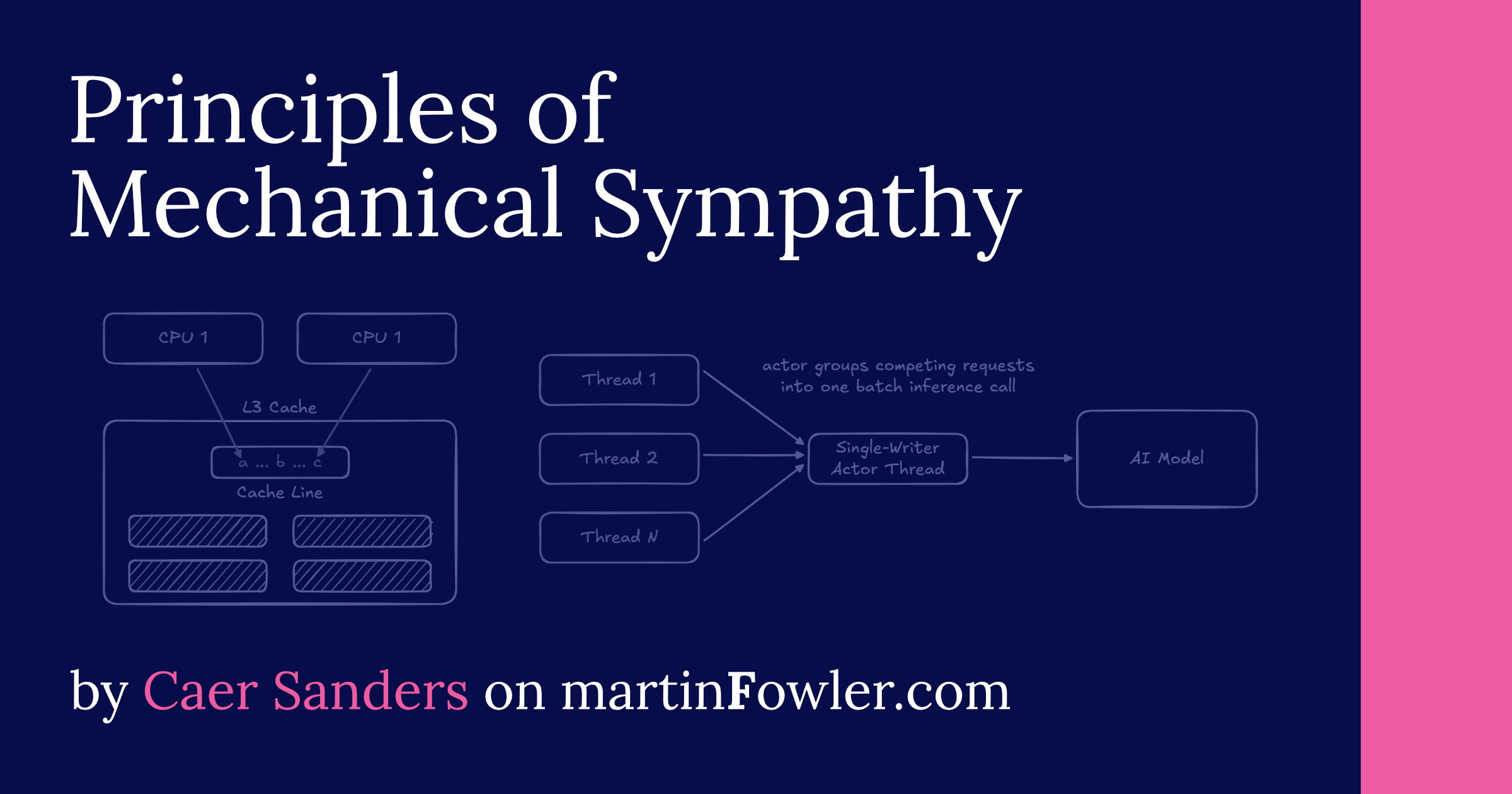
The critical challenge arises from the relatively small size of CPU caches. Because programs frequently require data that resides beyond these fast-access caches, they must often resort to retrieving information from slower memory tiers or main RAM. To mitigate the performance penalty associated with these slower accesses, CPUs engage in a sophisticated predictive strategy. They "bet" on which data will be needed next, pre-fetching it into their caches. This predictive behavior has profound implications for software design. In practice, algorithms and data structures that facilitate linear, sequential data access consistently outperform those that involve random access within the same memory page. Furthermore, random access across different memory pages represents the slowest and most inefficient pattern.
Therefore, a key tenet of mechanically sympathetic programming is to prioritize algorithms and data structures that promote predictable, sequential data access. For instance, when constructing an ETL pipeline, instead of making individual queries for data entries by key, a more efficient approach would be to perform a sequential scan of the entire source database and filter out irrelevant entries in a single pass. This seemingly minor shift in approach can yield significant performance gains by aligning with the CPU’s inherent strengths.
The Perils of Shared Resources: Cache Lines and False Sharing
Within the CPU’s cache hierarchy, memory is not managed as individual bytes but rather in contiguous blocks known as Cache Lines. These cache lines are typically a power of two in size, with 64 bytes being a common standard. CPUs invariably load (read) or store (write) data in multiples of these cache lines. This architectural detail can introduce a subtle but impactful performance bottleneck: False Sharing.
False sharing occurs when two or more CPUs attempt to write to separate variables that happen to reside within the same cache line. Although the CPUs are accessing distinct data elements, the hardware treats the entire cache line as a single unit. Consequently, when one CPU modifies a variable within a cache line, the cache coherency protocol necessitates invalidating or updating that cache line in the caches of other CPUs. This forces the CPUs to serialize their access to that shared cache line, even though they are working on independent data. The result is a performance degradation akin to two individuals fighting over the same physical object, even if they need different parts of it.
The impact of false sharing can be substantial. Studies and real-world implementations have shown performance improvements of several hundred percent by mitigating this issue. For example, applications that have successfully eliminated false sharing have reported performance gains ranging from 2x to as much as 5x compared to their unoptimized counterparts. This dramatic improvement underscores the importance of considering cache line alignment in performance-critical code.
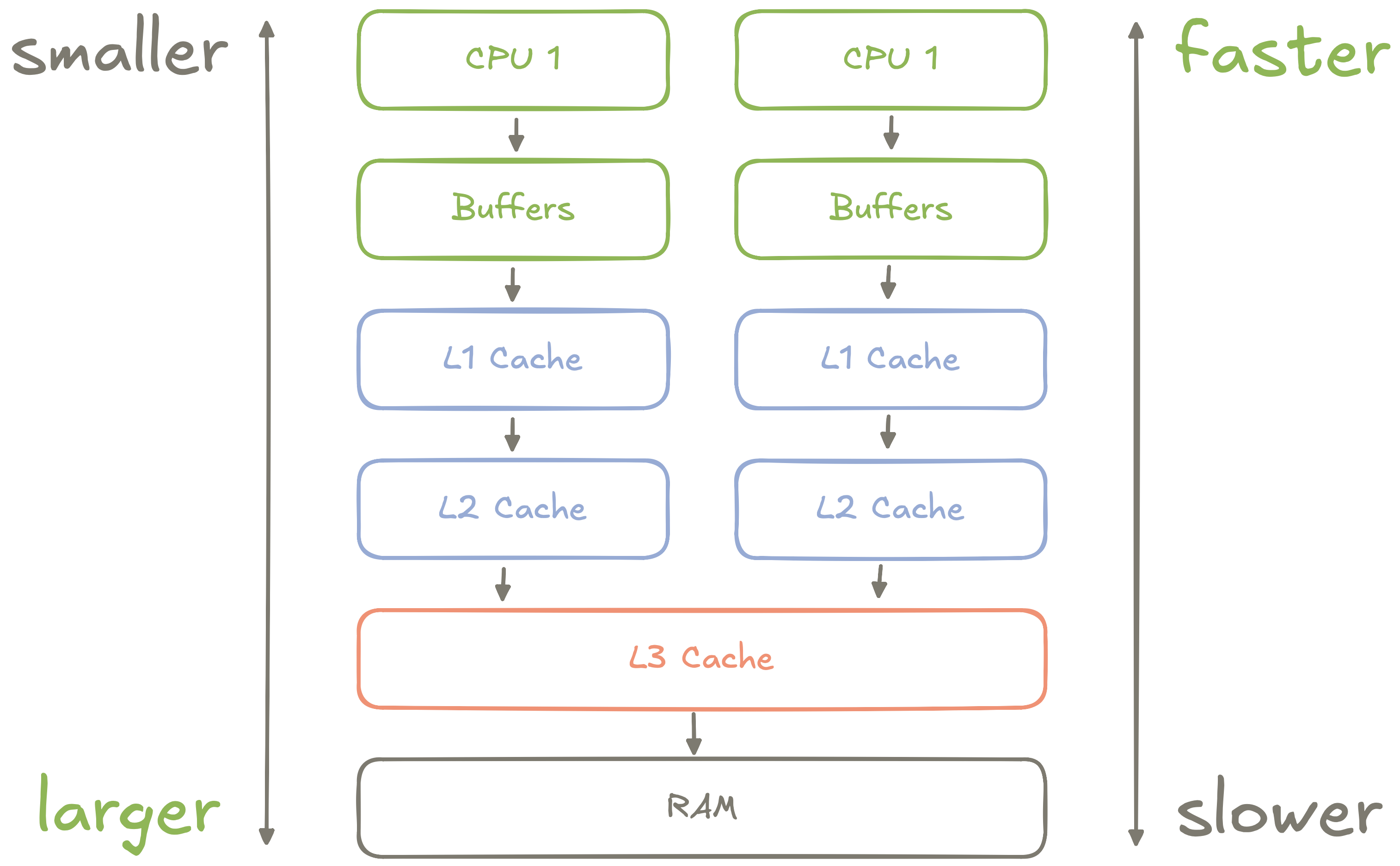
A common strategy to prevent false sharing, particularly in low-latency applications, is to "pad" cache lines. This involves strategically inserting unused data between variables that might be accessed concurrently by different CPUs. The goal is to ensure that each cache line effectively contains only a single variable that is subject to concurrent writes.
It is crucial to note that false sharing is primarily a concern when variables are being written to. When variables are only being read, each CPU can independently copy the cache line into its local caches or buffers without the need for complex synchronization. However, this changes when variables are shared and modified across threads. Atomic variables, which are designed for safe modification across threads, are frequent casualties of false sharing due to their inherent need for inter-thread synchronization. Developers chasing the ultimate bit of performance in multithreaded applications must meticulously examine data structures that are written to by multiple threads and assess their susceptibility to false sharing.
The Cornerstone of Concurrency: The Single Writer Principle
Beyond the intricacies of cache lines, the challenges of building robust multithreaded systems extend to issues of safety and correctness, such as race conditions. Furthermore, the overhead associated with context switching between threads, especially when the number of threads exceeds the available CPU cores, can be significant. The brutal performance cost of mutexes (locks), which are often employed to protect shared resources, further exacerbates these problems.
These observations lead to one of the most powerful and frequently applied mechanically sympathetic principles: the Single Writer Principle. In its essence, this principle dictates that if a piece of data (like an in-memory variable) or a resource (such as a network socket) is to be written to, all such write operations should be consolidated and executed by a single, dedicated thread.
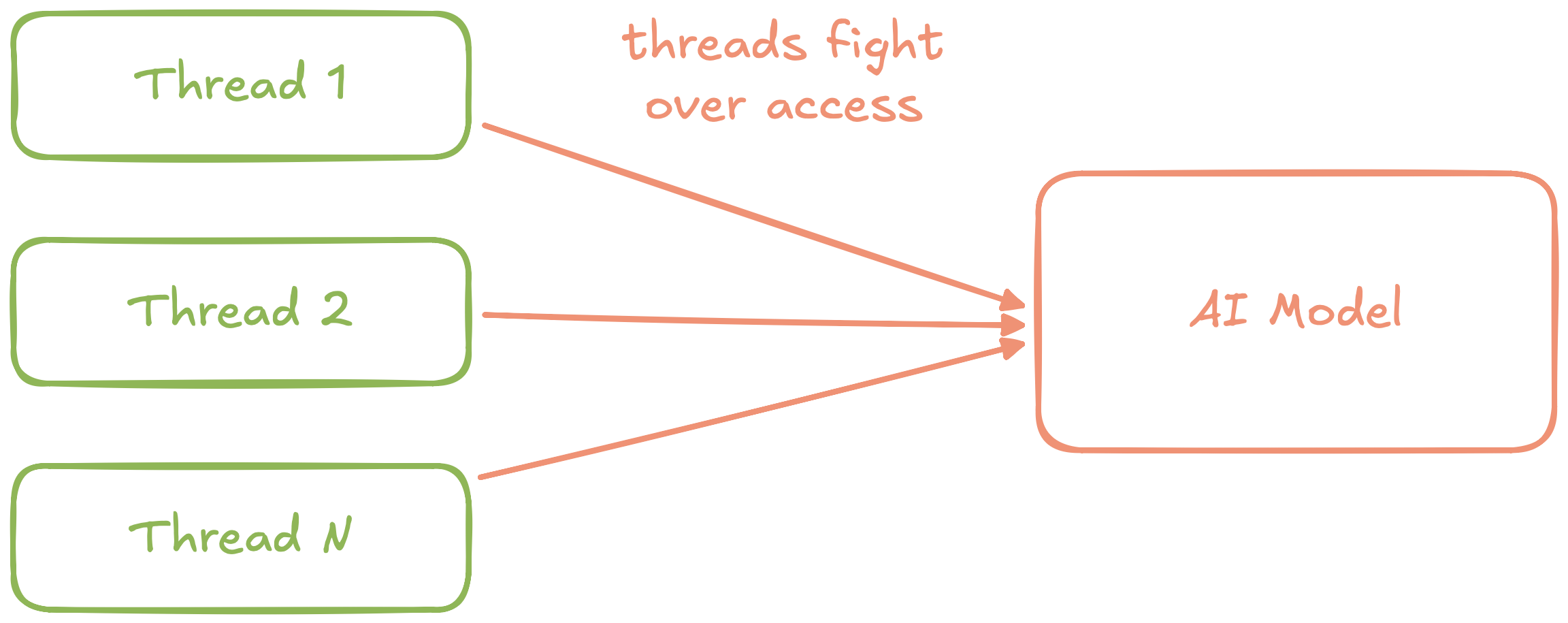
Consider a practical example: an HTTP service designed to process incoming text, generate vector embeddings using an AI model (e.g., an ONNX model), and return these embeddings. Many AI runtimes, due to their underlying computational demands and parallel processing capabilities, can only execute a single inference call at a time. A naive implementation might employ a mutex to serialize requests to the AI model. However, when multiple requests arrive concurrently, they will queue up waiting for the mutex, leading to head-of-line blocking and significantly degraded performance.
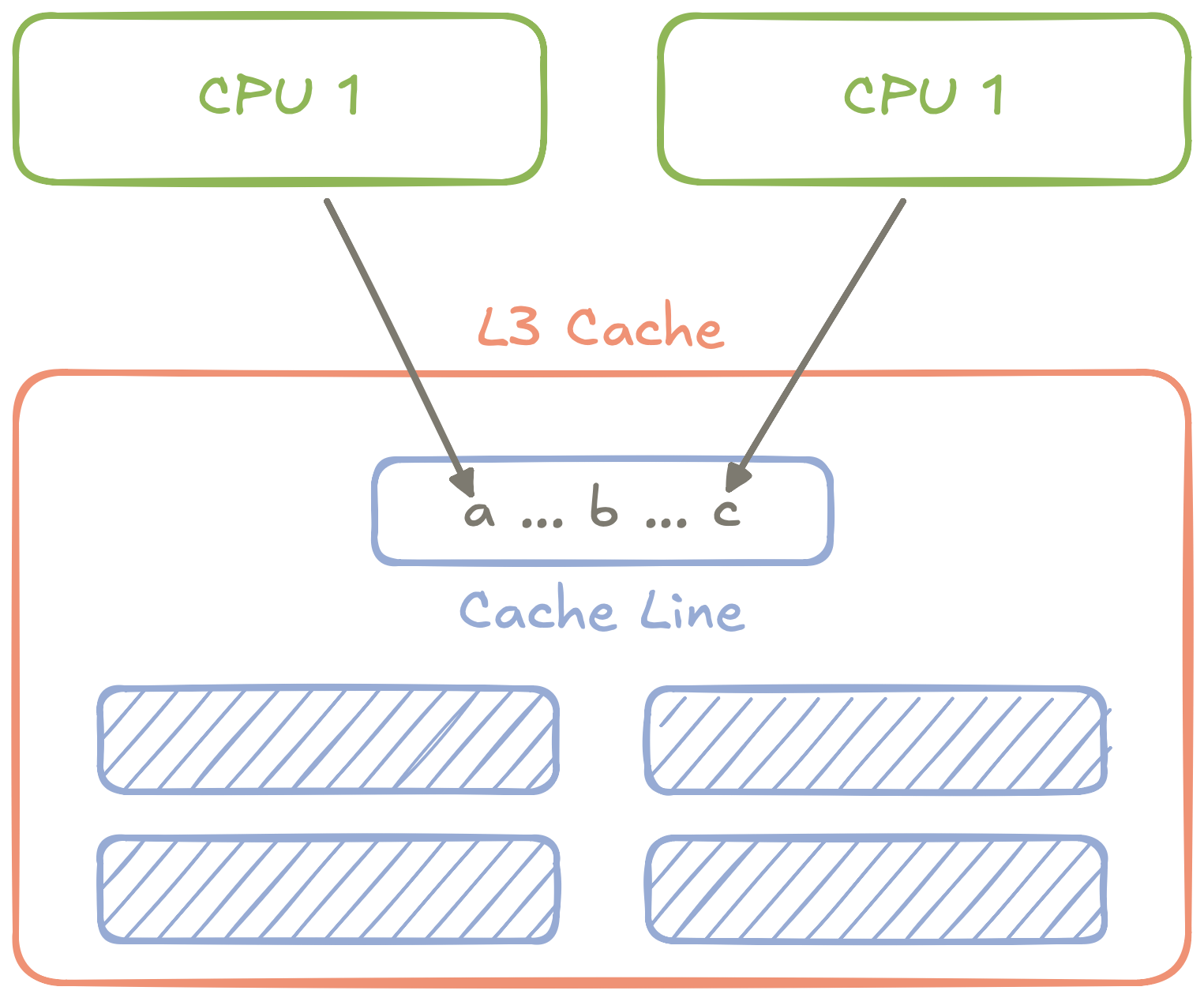
By refactoring with the Single Writer Principle, these issues can be elegantly resolved. The AI model’s access can be encapsulated within a dedicated "actor" thread. Instead of request-handling threads competing for a mutex, they would asynchronously send messages to this actor thread, encapsulating the data requiring inference. As the sole writer to the AI model, the actor thread can then intelligently group independent requests into a single, batched inference call. Once the inference is complete, the results are asynchronously returned to the original request threads. This approach effectively eliminates mutex contention and unlocks the potential for efficient batch processing, significantly improving throughput and reducing latency.
Optimizing Throughput: The Art of Natural Batching
With the Single Writer Principle in place, the AI service has eliminated mutex contention and gained the capacity for batched inference. However, the question of how these batches are formed remains critical. Two common approaches present their own drawbacks. Waiting for a predetermined batch size can lead to unbounded request latency if sufficient requests do not arrive promptly. Alternatively, creating batches at fixed time intervals introduces a bounded but unavoidable latency between each batch.
A more sophisticated and performant solution is Natural Batching. This strategy involves the actor thread initiating the creation of a batch as soon as requests become available in its queue. The batch is then completed either when the maximum batch size is reached or, crucially, when the queue becomes empty. This dynamic approach ensures that batches are formed as efficiently as possible, minimizing idle time and amortizing latency across requests.
Empirical data from early explorations of natural batching illustrate its superiority. In a scenario where each batch inference incurs a fixed latency of 100 microseconds (µs), a timeout-based batching strategy with a 100 µs timeout can result in a best-case latency of 200 µs (100 µs for the inference plus 100 µs waiting for more requests) and a worst-case latency of 400 µs. In stark contrast, natural batching, when all requests arrive simultaneously, achieves a best-case latency of just 100 µs. Even when requests arrive slightly late, the worst-case latency remains a significantly better 200 µs. This demonstrates that natural batching can offer up to twice the performance of a timeout-based approach by more effectively utilizing available processing time.
The principle of natural batching extends beyond individual applications. It can be applied to optimize system-wide throughput, particularly in I/O-intensive scenarios or architectures like Command Query Responsibility Segregation (CQRS).
Broader Implications and the Path Forward
The principles of mechanical sympathy—prioritizing sequential memory access, mitigating false sharing, adhering to the Single Writer Principle, and employing natural batching—offer a powerful framework for building high-performance software systems. These principles are not confined to niche, low-latency domains; they are broadly applicable and can yield substantial benefits across the entire spectrum of software development, from individual components to entire distributed systems.
However, before embarking on any optimization journey, a critical precursor is observability. As the adage goes, "You can’t improve what you can’t measure." Defining clear Service Level Indicators (SLIs), Service Level Objectives (SLOs), and Service Level Agreements (SLAs) is paramount. This foundational step ensures that optimization efforts are focused on the most impactful areas and that developers know when to stop optimizing. Without robust observability, efforts to apply mechanical sympathy can become misguided, leading to wasted resources and diminishing returns.
By embracing mechanical sympathy and grounding optimization efforts in solid observability practices, developers can consistently build software that is not only performant but also robust and efficient, regardless of the scale or complexity of the application. This approach represents a mature and disciplined path towards achieving excellence in modern software engineering.