AIs Job Losses The Inevitable Future
Jobs that will be lost for sure with adoption of artificial intelligence technology is a topic of significant concern. The rapid advancement of AI is transforming industries, and many jobs are at risk of automation. From repetitive tasks to entire roles, the impact of AI on employment is undeniable. We’ll explore the high-risk job roles, analyze the pace of technological advancements, and investigate potential solutions for a future shaped by AI.
This analysis delves into the potential job displacement scenarios, highlighting the specific skills and industries most vulnerable to automation. We’ll also explore emerging employment opportunities and the critical role of human judgment in an AI-driven world. The implications for the workforce and society are profound, and understanding these trends is crucial for navigating the future of work.
Identifying High-Risk Job Roles
The rapid advancement of artificial intelligence (AI) is poised to significantly reshape the job market. While AI promises unprecedented opportunities, it also presents challenges for certain roles, particularly those heavily reliant on repetitive tasks or easily codifiable processes. Understanding which jobs are most vulnerable to automation is crucial for proactive workforce adaptation and strategic planning. This analysis delves into high-risk job roles, examining their characteristics and the implications of AI integration.
Job Roles Susceptible to AI Automation
Numerous job roles are identified as having a high degree of susceptibility to AI automation. These roles often involve tasks that can be broken down into well-defined steps, allowing for the development of algorithms to perform them with accuracy and efficiency. This trend is already observable in sectors like customer service and data entry.
It’s undeniable that some jobs are destined for the AI scrapheap. Think repetitive tasks, data entry, and even some customer service roles. But, to build truly safe and reliable AI systems, we need robust safeguards. That’s where Deploying AI Code Safety Goggles Needed comes in – ensuring the code itself is secure and won’t create unforeseen problems down the line.
Ultimately, focusing on these crucial development practices will help us navigate the inevitable job displacement while creating a future where AI and humans can collaborate effectively.
Examples of High-Risk Job Roles
- Data Entry Clerks: Tasks like inputting data from physical documents or forms are easily automated. AI systems can quickly and accurately extract information from various sources, eliminating the need for human intervention.
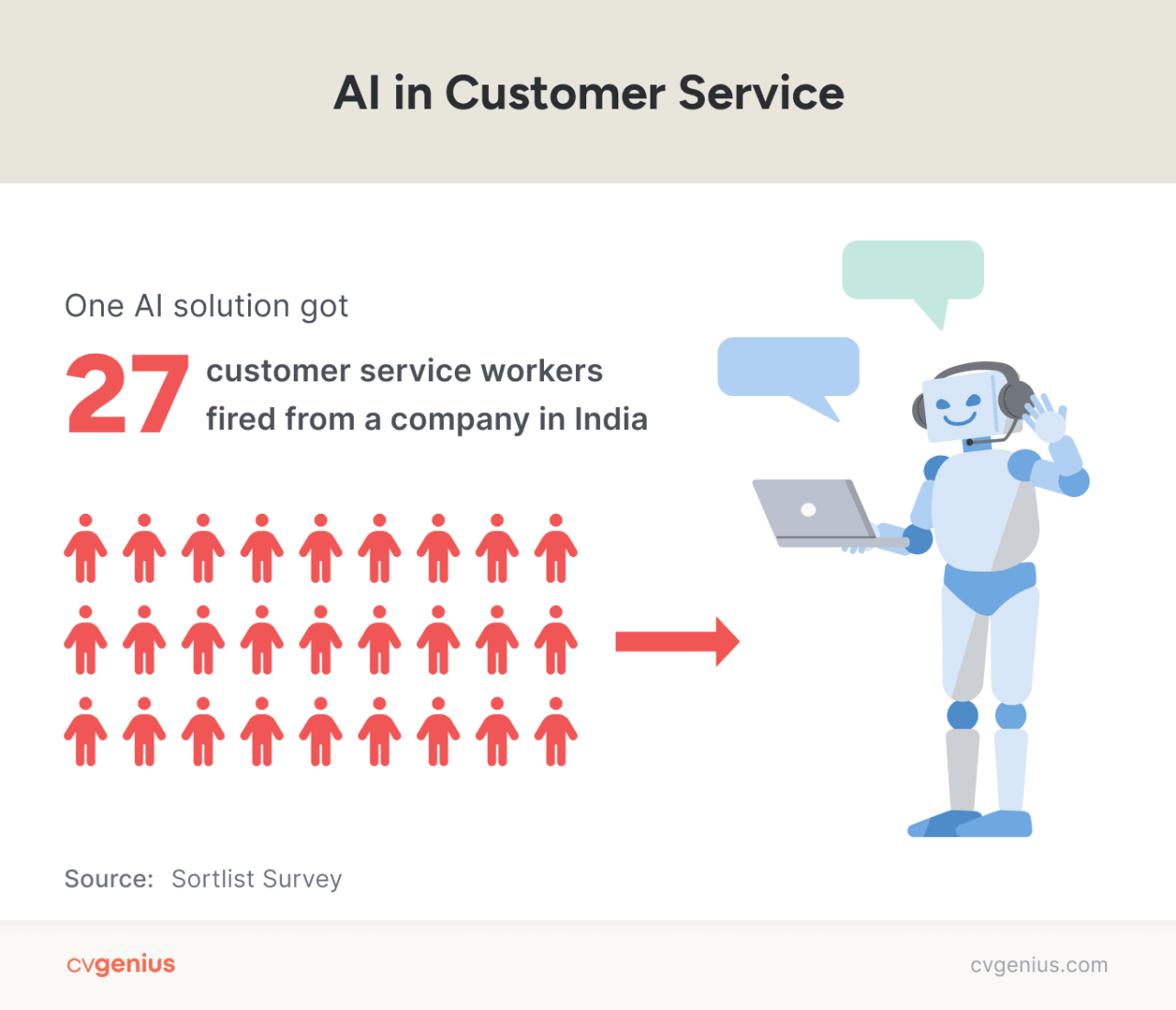
- Customer Service Representatives: Basic customer inquiries and troubleshooting can be handled by AI-powered chatbots and virtual assistants. AI can efficiently answer common questions, provide instant support, and escalate complex issues to human agents.
- Telemarketers: AI-powered systems can generate leads, schedule calls, and even conduct initial conversations with potential customers, reducing the need for human telemarketers.
- Administrative Assistants: Tasks like scheduling appointments, managing emails, and organizing files can be automated through AI-powered tools. Sophisticated AI systems can proactively manage calendars, filter emails, and streamline administrative processes.
- Truck Drivers (long haul): Autonomous vehicles are already being tested and deployed for long-haul transportation tasks, posing a threat to traditional truck drivers. AI can optimize routes, monitor vehicle performance, and handle driving in specific situations.
Key Characteristics of Vulnerable Roles
The susceptibility of a job role to AI automation is largely determined by the nature of the tasks it involves. Roles that exhibit the following characteristics are more likely to be automated:
- Repetitive tasks: Jobs involving routine, repetitive actions are prime targets for automation. AI excels at performing these tasks with speed and precision.
- Data-driven decision making: Roles focused on analyzing large datasets and making decisions based on that data can be partially or entirely automated using AI-powered analytical tools.
- Predictable processes: Jobs that follow established, well-defined processes are ideal for AI implementation. AI can efficiently execute these processes, reducing human error and increasing efficiency.
- Limited need for complex judgment or creativity: Tasks that do not require advanced reasoning or complex problem-solving skills are easily automated. AI can often handle tasks requiring straightforward decision-making.
Skillset Comparison
The skillsets required for human workers in high-risk roles often differ significantly from those needed for AI-powered systems. Humans excel in complex problem-solving, critical thinking, and creativity, whereas AI systems are better at handling large datasets, pattern recognition, and data-driven decision-making.
- Human Skills: Empathy, complex problem-solving, critical thinking, creativity, adaptability, and nuanced communication.
- AI Skills: Data analysis, pattern recognition, prediction, and execution of tasks based on pre-programmed instructions.
Vulnerability Levels of Job Roles
The level of vulnerability to AI automation varies across different job roles. Factors such as the degree of task repetitiveness, the reliance on data analysis, and the need for human judgment contribute to the overall vulnerability.
| Job Role | Specific Tasks | Vulnerability Level |
|---|---|---|
| Data Entry Clerk | Inputting data, transcribing documents | High |
| Customer Service Representative | Answering basic questions, resolving simple issues | Medium-High |
| Telemarketer | Lead generation, scheduling calls, initial customer interaction | Medium |
| Administrative Assistant | Scheduling, email management, filing | Medium-High |
| Truck Driver (long haul) | Driving long distances, route optimization | High |
Evaluating the Impact of Automation
The rapid advancement of artificial intelligence (AI) and automation technologies is poised to reshape the global workforce. Understanding the impact of these technologies on various job roles and industries is crucial for anticipating future workforce needs and developing effective strategies for adaptation. This analysis will delve into how automation affects job responsibilities, predict potential job displacement, and examine the retraining and workforce transition requirements.
Impact on Job Responsibilities and Workflows
Automation is fundamentally changing the nature of work. Tasks previously performed by humans are increasingly being automated, leading to a shift in job responsibilities. For example, in manufacturing, robots now handle repetitive tasks like welding and assembly, freeing human workers to focus on more complex and strategic roles. Similarly, in customer service, AI-powered chatbots are handling routine inquiries, allowing human agents to address more complex and nuanced issues.
This restructuring of responsibilities necessitates a shift in skillsets and training for the workforce.
Potential for Job Displacement in Specific Sectors
Certain sectors are more vulnerable to job displacement due to automation than others. Transportation, particularly trucking and delivery, is experiencing significant automation potential with self-driving vehicles. Data entry and administrative roles are also highly susceptible to automation through AI-powered software and systems. This displacement isn’t a uniform process across all sectors, but rather depends on the specific tasks and processes within each industry.
Predicted Rate of Job Losses Across Occupational Categories, Jobs that will be lost for sure with adoption of artificial intelligence technology
Predicting precise job loss rates is challenging, as it depends on various factors, including the pace of technological advancement, government policies, and the adaptability of the workforce. However, studies suggest that some occupational categories are at higher risk than others. Routine manual and data processing jobs are predicted to be significantly impacted. This is further substantiated by the ongoing trends in companies replacing human customer service agents with AI chatbots.
It’s crucial to understand that job losses are not always a negative outcome. They can create opportunities for workers to transition into new roles and skillsets.
Potential Retraining Needs and Workforce Transition
The workforce needs to adapt to the changing job market by acquiring new skills. Retraining programs and educational initiatives are crucial to equip individuals with the knowledge and abilities needed for emerging roles. For example, upskilling in areas like data science, AI development, and cybersecurity will be essential for a workforce equipped to handle the complexities of the automated future.
Moreover, government policies and industry initiatives must play a key role in supporting this transition.
Predicted Impact of AI on Job Roles Across Different Industries
| Industry | Job Roles Affected | Potential Impact |
|---|---|---|
| Manufacturing | Assembly line workers, machine operators | High potential for automation, requiring retraining for more advanced roles. |
| Transportation | Truck drivers, delivery drivers | Significant potential for automation with self-driving vehicles, demanding a transition to new roles in maintenance, and logistics management. |
| Customer Service | Customer service representatives, call center agents | Increased automation through AI chatbots, leading to a need for human agents to handle more complex issues. |
| Finance | Data entry clerks, investment analysts | High potential for automation in data processing, necessitating upskilling in areas like AI and machine learning. |
| Healthcare | Medical assistants, administrative staff | Automation of administrative tasks and some diagnostic procedures, demanding specialized training for healthcare professionals in interacting with AI-powered systems. |
Analyzing the Pace of Technological Advancements
The relentless march of technological advancement, particularly in artificial intelligence, is reshaping the world around us. Understanding the pace of this progress is crucial for anticipating its impact on employment and proactively adapting to the changes. This analysis delves into the key advancements, the forces driving the acceleration, and the implications for future job markets.The rapid evolution of AI is not a sudden phenomenon.
It’s a culmination of decades of research and development, each step building upon the last. The current pace of innovation is undeniably faster than ever before, demanding a critical examination of its trajectory and the consequences for the workforce.
Timeline of Key AI Advancements Affecting Employment
Understanding the historical context of AI development is essential for appreciating the current rapid pace. Early AI research focused on symbolic reasoning and expert systems, which while impacting specific fields, didn’t broadly alter the employment landscape. The rise of machine learning, particularly deep learning, in the 2010s ushered in a new era. Algorithms began to learn from vast datasets, enabling applications in image recognition, natural language processing, and other areas with significant employment implications.
Factors Driving the Accelerating Pace of AI Development
Several factors contribute to the accelerating pace of AI development. The exponential growth of data, the increasing computational power of hardware, and the availability of sophisticated algorithms are interconnected and mutually reinforcing. More data fuels better algorithms, which in turn require more processing power to handle complex computations. This virtuous cycle leads to faster progress and improved performance.
Comparison of Current AI Adoption with Past Technological Advancements
The current pace of AI adoption is remarkable when compared to other technological revolutions. While the introduction of electricity and the internet transformed industries, the speed of AI’s integration into various sectors is arguably faster. This acceleration is due to the interconnected nature of AI with other technologies, such as cloud computing and the internet of things, leading to a cascading effect.
Emerging Trends in AI Impacting Future Job Markets
Several emerging trends in AI will reshape future job markets. These include the increasing use of AI in automating routine tasks, the rise of personalized AI assistants, and the integration of AI into various sectors like healthcare and finance. The rise of generative AI, capable of creating new content, will also have a significant impact.
Impact of AI on Productivity and Efficiency in Various Sectors
AI is demonstrably increasing productivity and efficiency across diverse sectors. In manufacturing, AI-powered robots automate repetitive tasks, leading to increased output and reduced labor costs. In customer service, AI chatbots handle basic inquiries, freeing human agents to address more complex issues. In healthcare, AI algorithms analyze medical images, aiding in faster and more accurate diagnoses. The examples are numerous and demonstrate the potential for AI to optimize processes across industries.
| Sector | AI Application | Impact on Productivity |
|---|---|---|
| Manufacturing | Automated assembly lines, predictive maintenance | Increased output, reduced downtime |
| Customer Service | AI chatbots, automated ticket routing | Faster response times, reduced operational costs |
| Healthcare | Image analysis, drug discovery | Improved diagnosis accuracy, faster treatment development |
Exploring Alternative Employment Opportunities

The rapid advancement of AI is poised to reshape the job market, creating new opportunities alongside the displacement of traditional roles. Understanding these emerging opportunities and the skills needed to thrive in this evolving landscape is crucial for individuals and organizations alike. This exploration delves into the future of work, focusing on identifying and preparing for the roles that will be in high demand as AI integration continues.The future of work demands a proactive approach to upskilling and reskilling.
Individuals must adapt to the evolving needs of the job market by developing new competencies and embracing lifelong learning. This adaptability will be key to securing employment in a rapidly changing environment.
Emerging Job Roles Flourishing with AI
The integration of AI creates a demand for professionals who can manage, interact with, and optimize AI systems. These roles require a unique blend of technical expertise and human-centered approaches. Crucially, they also demand strong problem-solving and critical thinking abilities.
- AI trainers and developers: These specialists are responsible for designing, training, and deploying AI models. Their roles involve understanding complex algorithms, data analysis, and programming languages. The increasing need for customized AI solutions necessitates skilled professionals who can fine-tune and adapt these models for various applications. A strong foundation in computer science and machine learning is essential. Specialization in specific AI domains, like natural language processing or computer vision, can further enhance career prospects.
- AI ethicists and safety specialists: As AI systems become more sophisticated, ethical considerations become paramount. These professionals ensure responsible AI development and deployment by identifying potential biases, mitigating risks, and establishing ethical guidelines. A background in philosophy, law, or social sciences, combined with a strong understanding of AI technologies, is ideal for these roles. Training programs focused on ethical frameworks and AI safety protocols will become increasingly important.
- AI-assisted healthcare professionals: AI-driven diagnostic tools and treatment plans are transforming healthcare. This necessitates specialists who can integrate these tools into existing workflows. Healthcare professionals with expertise in AI-assisted technologies, such as medical imaging analysis or drug discovery, will be highly sought after. Continuing medical education and training in AI applications in healthcare are crucial for adapting to this change.
Required Skill Sets and Educational Paths
Success in these new roles hinges on a specific set of skills. Adaptability, critical thinking, and problem-solving skills will be highly valuable, along with a strong foundation in STEM disciplines.
- Adaptability and Lifelong Learning: The rapid pace of technological advancements demands a commitment to continuous learning. Individuals must be willing to adapt to new technologies and methodologies throughout their careers.
- Strong Communication and Collaboration Skills: AI systems are designed to assist humans, and effective collaboration is key. The ability to communicate complex information to both technical and non-technical audiences will be crucial.
- Critical Thinking and Problem-Solving: AI can automate many tasks, but humans must remain in control of the decision-making process. Developing critical thinking and problem-solving skills to evaluate AI outputs and address unexpected situations is vital.
Upskilling and Reskilling Programs
Recognizing the need for adaptation, numerous institutions and organizations are developing upskilling and reskilling programs. These programs provide opportunities for individuals to acquire the necessary skills for new roles.
- Government Initiatives: Governments worldwide are actively supporting initiatives to help workers adapt to the changing job market by offering funding for training programs and establishing partnerships with educational institutions.
- Corporate Training Programs: Companies are recognizing the importance of upskilling their employees to remain competitive. They are developing internal training programs and partnerships with external providers to support their workforce in adapting to AI-driven changes.
Comparison of Traditional and AI-Related Roles
| Feature | Traditional Job Roles | AI-Related Roles |
|---|---|---|
| Core Skillset | Specialized knowledge in a particular industry or field | Technical expertise in AI algorithms, data analysis, and programming |
| Job Focus | Executing tasks within a defined process | Developing, implementing, and optimizing AI systems |
| Required Education | Specific degrees related to the industry | Degrees in computer science, data science, or related fields |
| Future Outlook | Potentially displaced or requiring significant adaptation | High demand due to the growing AI market |
Considering the Societal Implications
The rapid advancement of artificial intelligence (AI) presents both exciting opportunities and profound societal challenges. While AI promises to automate tasks, enhance productivity, and unlock new possibilities, its potential for widespread job displacement necessitates careful consideration of its societal implications. Understanding the potential consequences of this transformation is crucial for navigating the future of work and ensuring a just and equitable transition.The societal consequences of widespread job displacement extend far beyond individual economic hardship.
It can lead to a decline in overall economic stability, increased income inequality, and potentially even social unrest. Addressing these issues requires a multifaceted approach that combines proactive policies with a commitment to reskilling and upskilling the workforce.
Potential Consequences of Job Displacement
The automation of tasks previously performed by humans will inevitably lead to job displacement in numerous sectors. This displacement will impact not only specific industries but also the overall economy, potentially causing a ripple effect through various sectors. A decline in consumer spending due to reduced employment opportunities could further dampen economic growth. This effect is not theoretical; historical instances of technological advancements, such as the industrial revolution, demonstrate similar patterns of job displacement and subsequent economic restructuring.
Impact on Income Inequality and Economic Stability
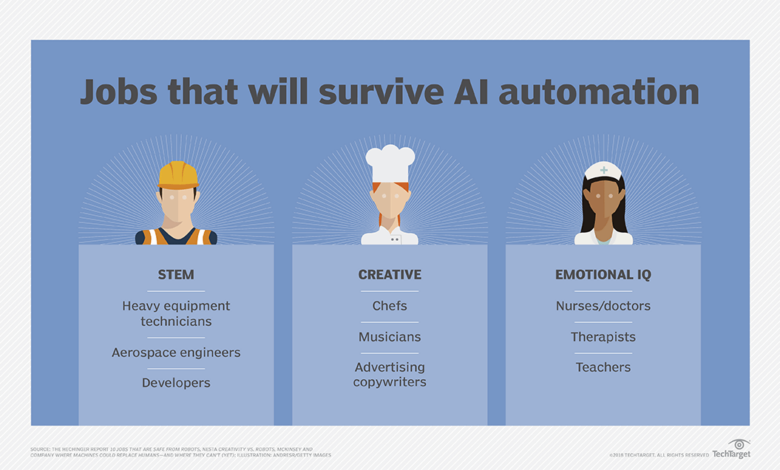
The uneven distribution of benefits from AI-driven automation can exacerbate existing income inequality. Highly skilled workers and those in roles requiring creativity and complex problem-solving are less likely to be displaced by AI. Conversely, workers in routine and manual jobs face a higher risk of displacement, potentially widening the gap between the haves and have-nots. This widening disparity could negatively affect economic stability, as reduced consumer spending and increased social unrest can disrupt market confidence and hinder long-term growth.
Solutions to Mitigate Negative Impacts
Addressing the negative impacts of AI on the workforce requires a comprehensive approach that focuses on proactive policies and targeted interventions. These include investing in education and training programs to equip workers with the skills needed for emerging jobs. Furthermore, policies to support displaced workers through retraining and income support are essential to ease the transition.
Importance of Policies and Strategies to Support Affected Workers
Government policies and initiatives play a critical role in mitigating the negative effects of AI-driven job displacement. These policies should include:
- Investing in education and training programs. These programs should focus on developing skills in high-demand areas such as data analysis, artificial intelligence, and robotics. Furthermore, there should be emphasis on transferable skills that can be applied across different roles.
- Providing financial support for retraining and upskilling. This could include grants, subsidies, or other forms of financial assistance to help workers cover the costs of retraining programs.
- Developing social safety nets. Strengthening unemployment benefits and other social safety nets can help cushion the impact of job losses and provide a safety net for those who are struggling to find new employment.
Potential Changes in the Social Fabric
The rise of AI may lead to significant changes in the social fabric of society. The nature of work will transform, potentially leading to a greater emphasis on creativity, critical thinking, and interpersonal skills. There will be increased demand for roles involving human interaction and emotional intelligence. These changes may necessitate a re-evaluation of traditional social structures and expectations.
Illustrating Potential Displacement Scenarios
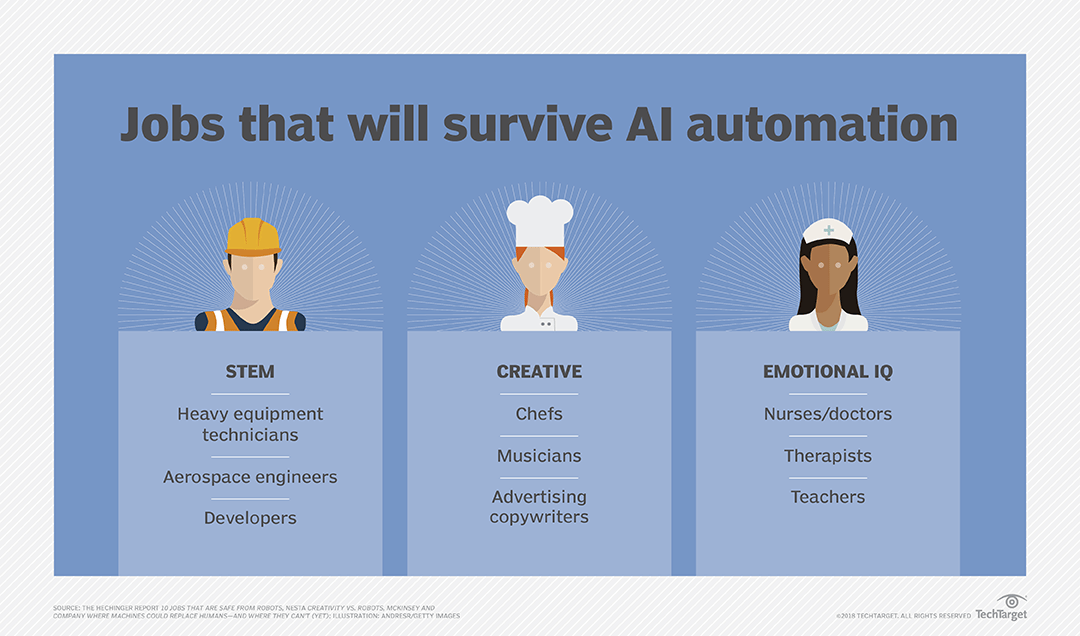
The rapid advancement of AI is poised to reshape the job market, potentially displacing workers in numerous industries. Understanding the specific tasks and processes susceptible to automation is crucial for preparing for this transformation. This involves not only identifying high-risk roles but also recognizing the potential for AI to create entirely new job roles and industries. A critical aspect of this discussion involves the specific scenarios where human workers are replaced by AI systems.This exploration delves into the current and potential future impacts of AI on the job market.
It’s undeniable that AI adoption will inevitably lead to job displacement in certain sectors. Think data entry, basic customer service, and even some forms of technical support. However, the changing landscape of technology, like the recent Azure Cosmos DB Vulnerability Details, highlights the importance of ongoing adaptation. This means that while some jobs are clearly on the chopping block, new opportunities and roles will also emerge, demanding a workforce equipped with adaptable skills.
We examine concrete examples of AI replacing human workers, detailing the specific tasks and processes that are being automated. By analyzing these displacement scenarios, we can better understand the potential for complete automation in certain sectors and the crucial need for adaptation and retraining.
It’s undeniable that many jobs are destined for obsolescence with AI. Think data entry clerks, basic customer service reps, and even some administrative roles. However, the Department of Justice Offers Safe Harbor for MA Transactions ( Department of Justice Offers Safe Harbor for MA Transactions ) highlights a crucial aspect of adapting to these changes. While some roles will be lost, the focus should be on reskilling and retraining to fill new, AI-driven roles.
Ultimately, the future of work demands proactive adjustments to thrive in the age of AI.
Examples of AI Replacing Human Workers
The transition towards automation is already underway in various industries. AI-powered systems are increasingly capable of performing tasks previously reliant on human expertise. For instance, in customer service, chatbots are handling routine inquiries, freeing human agents to address more complex issues. In manufacturing, robots are automating assembly lines, leading to increased efficiency and reduced labor costs.
Specific Tasks and Processes Being Automated
AI’s impact extends beyond simple tasks. Automated systems are capable of performing complex processes previously requiring human judgment and decision-making. For example, AI algorithms can analyze vast datasets to identify patterns and make predictions in fields like finance and healthcare. These systems can also automate tasks like data entry, report generation, and even some forms of legal document review.
This automation significantly impacts jobs previously considered safe from technological displacement.
Potential for Complete Automation in Specific Job Sectors
Certain job sectors are particularly vulnerable to complete automation. Jobs involving repetitive tasks, data entry, and predictable processes are at higher risk. Truck driving, for example, is a field where self-driving trucks are rapidly developing, and their widespread adoption could significantly reduce the need for human drivers. Similarly, jobs in manufacturing and data entry are being affected by robots and automated software.
Potential for AI to Create Entirely New Job Roles and Industries
While AI displaces certain jobs, it also creates new ones. The development and maintenance of AI systems themselves require specialized skills and expertise. The rise of AI has led to a demand for data scientists, AI engineers, and machine learning specialists. Furthermore, entirely new industries focused on AI-related services and products are emerging.
Visual Representation of Job Displacement in Customer Service
| Task | Pre-AI | Post-AI |
|---|---|---|
| Handling routine customer inquiries | Human customer service representatives | AI-powered chatbots |
| Resolving complex issues | Human customer service representatives | Human customer service representatives assisted by AI |
| Providing personalized recommendations | Human agents with limited data | AI algorithms analyzing customer data |
This table illustrates a potential scenario for job displacement in customer service. The increasing sophistication of AI chatbots is leading to their greater adoption for handling routine inquiries. While human agents remain crucial for complex issues and personalized recommendations, the role of human representatives is evolving, requiring new skills to complement AI tools.
Examining the Impact on Specific Skills
The rise of AI is poised to dramatically reshape the job market, impacting not just entire roles but also specific skills within those roles. Understanding which skills are vulnerable to automation is crucial for individuals and organizations to adapt and thrive in this evolving landscape. This examination delves into the specific job skills likely to become obsolete and explores the necessary adaptations for a future where AI plays a significant role.
Job Skills Becoming Obsolete
The automation of routine tasks is a primary driver of skill obsolescence. Skills that involve repetitive data entry, simple calculations, and predictable decision-making are particularly susceptible. Manual data processing, for instance, is already being replaced by automated systems. Further, skills that rely on easily replicated physical actions, such as assembly line work, are increasingly automated by robots and AI-powered systems.
Even in more complex fields, routine aspects of work can be outsourced to AI, diminishing the need for human intervention.
Examples of Affected Jobs
Many jobs currently rely heavily on these easily automatable skills. Data entry clerks, accounting clerks, and some customer service representatives are prime examples. Even roles that seem less susceptible, like paralegals or financial analysts, may see portions of their tasks automated. These roles frequently involve the analysis of large datasets, identifying patterns, and making decisions based on established criteria – all of which AI can effectively replicate.
For instance, automated legal research tools are becoming increasingly sophisticated, potentially reducing the need for human paralegals in some cases.
Skills Needed to Thrive in the Evolving Job Market
Adapting to the changing job market necessitates a shift towards skills that complement and augment AI capabilities. This includes:
- Critical thinking and problem-solving: AI excels at identifying patterns but struggles with complex, nuanced situations. The ability to analyze information, identify unique problems, and generate creative solutions is essential for roles that require innovation and adaptability.
- Creativity and innovation: AI can assist in generating ideas, but true innovation often arises from human creativity. Skills in design, art, and writing are examples of areas where human creativity is still highly valued.
- Emotional intelligence and communication: AI struggles with understanding and responding to human emotions and complex communication needs. Roles involving empathy, persuasion, and negotiation will remain crucial.
- Adaptability and continuous learning: The rapidly evolving nature of the job market demands a commitment to lifelong learning. Individuals who can adapt to new technologies and quickly learn new skills will be better positioned to succeed.
Detailed Description of Impact on Specific Skills
AI’s impact varies across skill sets. For example, consider the impact on analytical skills. While AI can analyze large datasets and identify trends, it often lacks the contextual understanding and critical thinking required for truly insightful analysis. AI excels at tasks involving structured data, but human analysts bring crucial skills in interpreting nuances, identifying outliers, and drawing conclusions based on subjective judgment.
This suggests that while AI can assist in data analysis, human analytical skills are needed to extract meaning and provide strategic insights.Consider also the skill of customer service. AI-powered chatbots can handle basic inquiries and provide instant support. However, customers often require complex or emotionally sensitive interactions. Human agents, with their ability to understand emotional context, empathy, and problem-solving capabilities, will remain crucial in these cases.
This implies a shift towards customer service roles that demand advanced communication and emotional intelligence.
Analyzing the Role of Human Judgment: Jobs That Will Be Lost For Sure With Adoption Of Artificial Intelligence Technology
The relentless march of artificial intelligence (AI) often casts a shadow on the future of human work. While AI excels at tasks requiring pattern recognition and data processing, the unique qualities of human judgment and critical thinking remain irreplaceable in many contexts. This analysis explores the enduring value of human intervention in an AI-driven world.AI systems, though powerful, lack the contextual understanding and nuanced judgment that humans possess.
They operate within predefined parameters and struggle with ambiguity and unforeseen circumstances. This limitation highlights the critical need for human oversight in ensuring AI systems function effectively and ethically.
Human Judgment in an AI-Powered World
Human judgment is essential in scenarios demanding contextual understanding, ethical considerations, and creative problem-solving. AI can provide valuable insights, but the final decision-making authority often rests with humans. For instance, in medical diagnoses, AI algorithms can identify potential risks, but the ultimate diagnosis and treatment plan remain the responsibility of doctors. The ability to consider the unique patient history and circumstances is a crucial component of human judgment that cannot be replicated by AI.
Crucial Areas for Human Intervention
AI systems, while capable of processing vast datasets, frequently lack the emotional intelligence and nuanced understanding of human needs that are essential in many fields.
- Complex Problem Solving: AI excels at identifying patterns in data, but it often struggles with complex problems that require holistic thinking and creative solutions. Human judgment is critical in crafting innovative approaches and navigating ambiguous situations.
- Ethical Decision-Making: AI algorithms can be programmed to follow rules, but ethical dilemmas often require a deeper understanding of values and consequences. Human judgment is crucial in ensuring AI systems are used responsibly and ethically.
- Adaptability and Learning: AI systems rely on the data they are trained on. When confronted with unforeseen circumstances or novel situations, human judgment allows for adaptability and learning, leading to more effective responses.
Importance of Human Oversight
The development and implementation of AI systems require a human touch. Human oversight is vital for ensuring accuracy, preventing bias, and mitigating potential risks. A well-structured system of human oversight, including regular review and validation of AI outputs, can maintain the integrity and safety of AI-powered systems.
- Bias Detection and Mitigation: AI algorithms are trained on data, and if that data reflects existing societal biases, the AI system will perpetuate them. Human intervention is necessary to identify and mitigate these biases, ensuring fairness and equity in AI applications.
- Error Correction and Validation: AI systems, while highly accurate, are not infallible. Human oversight ensures that errors are identified and corrected promptly, maintaining the reliability and safety of the system.
- Contextual Understanding and Adaptability: AI algorithms may struggle with situations outside their training data. Human oversight is essential in ensuring that AI systems can adapt to new situations and remain effective in diverse contexts.
Skills and Attributes to Complement AI
The future of work demands a shift in skills towards areas that complement AI capabilities.
- Critical Thinking and Problem Solving: The ability to analyze complex situations, identify underlying problems, and devise creative solutions is crucial.
- Emotional Intelligence and Communication: Effective collaboration and communication with AI systems, and understanding the human needs behind the data, are vital.
- Adaptability and Continuous Learning: The ability to adapt to new technologies and continually update skills is critical for success in an AI-driven world.
Integrating Human Judgment into AI Systems
Integrating human judgment into AI systems requires a multifaceted approach.
- Human-in-the-loop Systems: AI systems should be designed to incorporate human feedback and judgment at critical decision points. This allows for the incorporation of human expertise and real-time adjustments.
- Explainable AI (XAI): Making AI systems transparent and understandable to humans enhances trust and allows for better oversight and control.
- Collaborative Design: Humans and AI should work together, with humans guiding the AI system and using its output to inform their own decisions.
End of Discussion
The integration of AI into the workforce presents both challenges and opportunities. While some jobs are undeniably at risk, new roles and industries will emerge. Adaptability, upskilling, and a proactive approach to retraining will be essential for navigating this transition. Ultimately, the future of work demands a thoughtful and comprehensive approach that balances technological advancement with human needs.
Q&A
What types of jobs are most at risk of AI automation?
Jobs involving repetitive tasks, data entry, customer service, and basic analysis are often cited as high-risk. Specific examples include data entry clerks, some manufacturing roles, and certain customer service representatives.
How quickly is AI adoption progressing?
AI adoption is accelerating at an unprecedented pace, driven by factors such as increased computing power, readily available data, and improved algorithms. This rapid advancement has significant implications for job markets across various industries.
What are the potential solutions to mitigate job losses due to AI?
Upskilling and reskilling programs, government policies supporting workforce transition, and investments in education are potential solutions. Additionally, fostering innovation and the creation of new industries can also help to address job displacement.
Will AI completely replace human workers in all industries?
While AI can automate many tasks, human judgment, creativity, and complex problem-solving skills remain crucial. Therefore, a complete replacement of human workers is unlikely. The future will likely see a shift in the nature of work, with AI and humans working collaboratively.