Cybersecurity Job Market Demand & Salary Outlook
Demand and salary prospects for cyber security jobs are booming. This in-depth look at the current and future landscape reveals the exciting opportunities and challenges within this crucial field. We’ll explore everything from the overall job market trends to specific roles and salary expectations, along with essential skills and certifications.
The cyber security industry is experiencing unprecedented growth, fueled by increasing cyber threats and the rising need for skilled professionals. This analysis delves into the current and future demand, outlining salary expectations for various roles and highlighting the key skills needed to thrive in this dynamic sector. We’ll examine the regional variations in demand and salary, providing valuable insights for aspiring professionals and those already in the field.
Job Market Overview
The cybersecurity job market is experiencing robust growth, driven by the increasing sophistication of cyber threats and the growing reliance on digital infrastructure. Businesses across sectors are recognizing the critical need for skilled professionals to defend against malicious actors, leading to a significant demand for cybersecurity experts. This demand is not limited to large corporations; small and medium-sized enterprises (SMEs) are also increasingly investing in cybersecurity measures.The market is characterized by a shortage of qualified professionals, creating a competitive landscape for aspiring cybersecurity experts.
This gap between demand and supply is expected to persist in the foreseeable future, creating excellent career opportunities for those with the right skills and qualifications.
Current State of the Cybersecurity Job Market
The cybersecurity job market is currently thriving, with numerous open positions and a high demand for skilled professionals. This is largely due to the rising frequency and complexity of cyberattacks, forcing organizations to prioritize cybersecurity investments. The growing digital landscape, including cloud computing, IoT devices, and mobile applications, contributes significantly to the complexity and the need for robust cybersecurity measures.
Growth Projections for Cybersecurity Roles
Projections for the next five years indicate continued growth in cybersecurity roles. Several factors are contributing to this, including the increasing sophistication of cyber threats and the rising importance of data protection. For example, the increasing use of artificial intelligence (AI) in cybersecurity is creating new roles and opportunities for professionals with expertise in this area. Furthermore, the growing adoption of cloud computing and other digital technologies is leading to a greater need for security specialists to protect these systems.
Factors Influencing Demand for Cybersecurity Professionals
Several key factors are influencing the growing demand for cybersecurity professionals. These include the rising frequency and sophistication of cyberattacks, the increasing reliance on digital infrastructure, the growing need for data protection, and the emergence of new technologies like cloud computing and IoT. Furthermore, regulatory compliance requirements, such as GDPR and CCPA, are driving the demand for cybersecurity expertise.
Regional Job Market Trends
| Region | Job Growth Rate | Average Salary | Skills in Demand |
|---|---|---|---|
| North America | 15-20% | $100,000-$150,000 USD | Penetration testing, cloud security, incident response, threat intelligence |
| Europe | 12-18% | €70,000-€120,000 | Network security, data protection, ethical hacking, compliance |
| Asia | 10-15% | $60,000-$100,000 USD | Application security, security operations, vulnerability management, cloud security |
These figures represent general trends and can vary based on specific roles, experience levels, and location within each region. It’s important to note that the skills in demand often reflect the unique cybersecurity challenges and regulatory landscape within each region.
Salary Trends in Cybersecurity
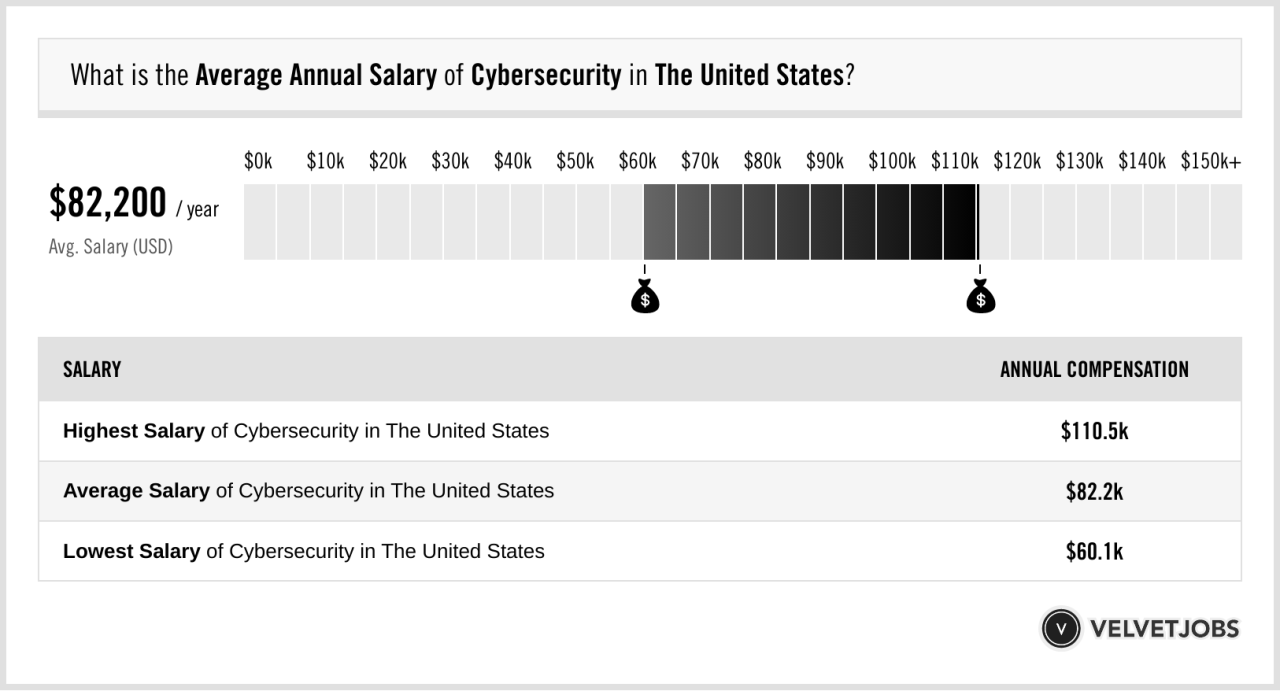
Cybersecurity professionals are in high demand, driving up salaries across various roles. Understanding these trends is crucial for individuals seeking careers in this field and for organizations looking to attract and retain top talent. The evolving threat landscape and increasing reliance on technology contribute to the competitive salary market.
Cybersecurity jobs are hot right now, with great demand and excellent salary prospects. Knowing about vulnerabilities like those in Microsoft Azure Cosmos DB is crucial for staying ahead of the curve. For example, checking out the Azure Cosmos DB Vulnerability Details helps understand the real-world threats and the skills needed to protect against them. This heightened awareness only reinforces the growing need for skilled cybersecurity professionals, and the attractive compensation packages that come with it.
Average Salary Ranges for Different Roles
Various factors influence cybersecurity salaries, including experience, skills, location, and employer. Entry-level positions often start at lower points but rapidly increase with experience and skill development.
- Security Analyst: Security analysts typically focus on monitoring systems and networks for threats. Entry-level salaries often fall within a range of $60,000 to $80,000 annually. Mid-level analysts with 3-5 years of experience can earn between $80,000 and $120,000. Senior analysts, often leading teams or specializing in specific areas, command salaries exceeding $120,000 annually.
- Penetration Tester: Penetration testers, also known as ethical hackers, assess system vulnerabilities. Entry-level positions usually start between $70,000 and $90,000. Mid-level penetration testers with 5-7 years of experience may earn $90,000 to $150,000. Senior penetration testers, often leading projects or possessing advanced certifications, may earn over $150,000.
- Cybersecurity Engineer: Cybersecurity engineers often work on designing and implementing security systems. Entry-level salaries typically range from $75,000 to $100,000. Mid-level engineers with 5-8 years of experience can earn $100,000 to $160,000. Senior cybersecurity engineers with specialized knowledge and significant experience can command salaries exceeding $160,000.
Salary Variations by Experience Level
Experience is a significant factor in salary determination. New graduates or recent graduates with relevant certifications often find themselves at the lower end of the spectrum, but their salaries increase substantially with acquired experience and expertise. This demonstrates the importance of continuous learning and skill development in this field.
Factors Influencing Salary Variations
Several factors contribute to the difference in salaries across various roles and experience levels. Location plays a substantial role, with major tech hubs often offering higher salaries due to the competitive job market. Specific skills and certifications, such as Certified Information Systems Security Professional (CISSP) or CompTIA Security+, can significantly influence salary negotiations.
Salary Growth Over Time
The table below illustrates potential salary growth for selected cybersecurity roles over time, considering factors like experience and skill development.
| Role | Entry-Level Salary | Mid-Level Salary | Senior-Level Salary |
|---|---|---|---|
| Security Analyst | $70,000 | $100,000 | $140,000 |
| Penetration Tester | $80,000 | $120,000 | $180,000 |
| Cybersecurity Engineer | $90,000 | $140,000 | $200,000 |
Note: These figures are approximate and can vary based on specific skills, certifications, and geographic location.
Skill Sets and Requirements
The cybersecurity landscape is constantly evolving, demanding professionals with a diverse skill set. Beyond technical expertise, soft skills and relevant certifications play a crucial role in navigating this dynamic field. Success in this domain hinges on a combination of technical proficiencies, interpersonal abilities, and continuous learning.
Essential Technical Skills
Cybersecurity roles necessitate a strong foundation in technical skills. These skills encompass a wide range of areas, from network security and cryptography to incident response and vulnerability assessment. A crucial component is the ability to analyze security threats and implement effective countermeasures. Proficiency in programming languages like Python and scripting languages, knowledge of operating systems, and understanding of various network protocols are paramount.
Cybersecurity jobs are hot right now, with excellent demand and salary prospects. The Department of Justice recently issued a new policy, the Department of Justice Offers Safe Harbor for MA Transactions , which could significantly impact certain aspects of the industry. This development likely will further boost the need for skilled professionals in this field, potentially driving up salaries even more in the coming years.
Importance of Soft Skills
Beyond technical proficiency, soft skills are essential for success in cybersecurity. These skills include communication, problem-solving, critical thinking, and teamwork. Effective communication is vital for conveying security concerns to stakeholders, explaining technical concepts to non-technical audiences, and collaborating with colleagues on incident response. Strong analytical and problem-solving skills allow professionals to quickly identify and address security vulnerabilities.
Furthermore, teamwork is critical for incident response and collaboration across teams.
Certifications and Educational Qualifications
Formal education and relevant certifications significantly enhance career prospects in cybersecurity. A bachelor’s degree in computer science, information security, or a related field provides a strong foundation. Moreover, obtaining industry-recognized certifications validates expertise and demonstrates a commitment to professional development. Continuous learning is key in this ever-changing field.
Common Cybersecurity Certifications
Numerous certifications validate expertise in various cybersecurity domains. These certifications often provide specialized knowledge and practical skills.
- CompTIA Security+: This certification is a globally recognized entry-level credential, providing a broad understanding of cybersecurity principles. It covers essential topics like network security, risk management, and incident response. This certification is often a prerequisite for more advanced certifications.
- Certified Ethical Hacker (CEH): This certification focuses on the techniques used by malicious hackers, enabling professionals to identify and address vulnerabilities. It emphasizes practical skills in penetration testing and ethical hacking. CEH certifications are highly valued for roles involving vulnerability assessments and penetration testing.
- Certified Information Systems Security Professional (CISSP): This is a widely recognized and respected advanced-level certification. It covers a broad range of security domains, including risk management, security architecture, and cryptography. CISSP certification signifies a deep understanding of cybersecurity principles and is often required for senior-level positions.
- GIAC Security Essentials (GSEC): This certification is a valuable credential that demonstrates expertise in core security concepts and practical implementation. It’s a good alternative or supplement to CompTIA Security+ and a good starting point for further GIAC certifications.
Specific Roles and Demand
The cybersecurity landscape is dynamic, with specific roles experiencing varying demand and salary expectations. Understanding the nuances of each position, including required skill sets and industry variations, is crucial for aspiring professionals and current practitioners. This section delves into the specifics of popular cybersecurity roles, highlighting their unique demands and the factors influencing their respective salary ranges.
Cloud Security Engineer
Cloud security engineers are in high demand as organizations increasingly rely on cloud platforms. Their responsibilities encompass securing cloud infrastructure, configuring security controls, and implementing policies to protect sensitive data. They need a strong understanding of cloud technologies like AWS, Azure, or GCP, and a solid foundation in security principles.
- Essential Skill Sets: Expertise in cloud security best practices, knowledge of various cloud platforms (AWS, Azure, GCP), proficiency in scripting languages (Python, PowerShell), understanding of security architecture principles, and experience with security tools and monitoring.
- Demand: Cloud security engineers are highly sought after, particularly in tech companies, financial institutions, and government agencies leveraging cloud services.
- Salary Expectations: Salaries for cloud security engineers vary significantly based on experience, certifications, and the specific cloud platform expertise. Entry-level positions typically start in the mid-$60,000 range, while senior engineers with substantial experience and industry certifications can command salaries exceeding $150,000.
Security Architect
Security architects play a crucial role in designing and implementing robust security strategies. They are responsible for the overall security posture of an organization, aligning security policies with business objectives. Their work encompasses risk assessment, vulnerability management, and incident response planning. Strong communication and leadership skills are essential.
- Key Responsibilities: Developing security policies, creating security architecture diagrams, overseeing the implementation of security controls, and performing security audits.
- Skill Requirements: A deep understanding of security concepts, extensive experience with various security technologies, and strong analytical skills to assess risks and vulnerabilities.
- Industry Variations: Demand for security architects is consistently high across various industries, including finance, healthcare, and technology, but the specific requirements and challenges can differ significantly.
Incident Responder
Incident responders are critical for handling security breaches and cyberattacks. Their role involves identifying, containing, and recovering from security incidents. Strong analytical and problem-solving skills are paramount. Experience with incident response tools and methodologies is highly beneficial.
- Responsibilities: Investigating security incidents, containing the impact of attacks, restoring systems to normal operation, and documenting the entire incident response process.
- Skill Sets: Proficiency in security tools and technologies, understanding of incident response methodologies, strong analytical skills to determine the root cause of incidents, and excellent communication skills to coordinate with internal teams and stakeholders.
- Salary Considerations: Salaries for incident responders often depend on experience, certifications (e.g., SANS GIAC), and the specific industry. Entry-level positions might start in the mid-$60,000 range, while experienced incident responders with advanced certifications and a proven track record can earn significantly more.
Future Trends and Predictions
The cybersecurity landscape is constantly evolving, driven by advancements in technology and the increasing sophistication of cyber threats. Predicting the future is challenging, but understanding emerging trends allows us to anticipate the skills and roles that will be in high demand. This section explores future trends, their impact on job markets, and potential salary adjustments.
Emerging Trends in Cybersecurity
The field is moving beyond traditional defenses towards proactive strategies. Cloud security, IoT security, and the growing interconnectedness of systems are driving innovation. Zero-trust architectures are becoming more prevalent, requiring professionals skilled in identity and access management. AI-powered threat detection and response systems are automating critical tasks, but require human oversight. Emphasis is shifting towards understanding and mitigating the risks of emerging technologies.
Impact of Automation and AI on Cybersecurity Jobs
Automation is poised to transform many cybersecurity tasks, from vulnerability scanning to incident response. AI algorithms can analyze vast datasets to identify anomalies and potential threats more efficiently than humans alone. This doesn’t mean a decrease in human roles, but rather a shift in the types of skills needed. Cybersecurity professionals will need to focus on developing critical thinking skills for threat analysis, developing and training AI models, and managing the complex interactions between humans and automated systems.
For example, companies like Google and Microsoft already employ AI for threat detection, reducing the workload for security analysts.
Future Demand for Cybersecurity Professionals
The demand for cybersecurity professionals is projected to remain high and potentially grow even more rapidly. The increasing reliance on digital infrastructure and the escalating frequency and sophistication of cyberattacks are key factors. The need for skilled professionals in areas like cloud security, AI-driven security, and threat intelligence will be substantial. The shift towards automation and AI necessitates professionals who can bridge the gap between technology and human expertise.
The need for ethical hackers, security architects, and incident response specialists will also continue to be vital.
Cybersecurity jobs are hot right now, with excellent demand and salary prospects. But, as we move towards a more automated world, ensuring code safety is paramount. That’s why deploying AI Code Safety Goggles Needed here is crucial. This proactive approach to code security will likely be a key differentiator for companies looking to attract and retain top cybersecurity talent, thus further bolstering the already impressive demand and salary prospects for these roles.
Potential Salary Adjustments Based on Future Technology Advancements
Salary adjustments will likely reflect the evolving skillset demands. Professionals with expertise in emerging technologies like AI, machine learning, and cloud security will likely command higher salaries. The ability to leverage these technologies to solve real-world problems will be crucial. This is already happening, with experienced cloud security engineers and AI specialists in cybersecurity commanding premium salaries.
Anticipated Roles in High Demand
- AI-driven Security Analysts: These professionals will be responsible for designing, implementing, and maintaining AI-powered security systems. They will require expertise in both cybersecurity and AI/ML technologies. An example would be a security analyst who develops an algorithm to detect phishing emails.
- Cloud Security Engineers: With the increasing reliance on cloud infrastructure, these specialists will play a critical role in securing cloud environments. This includes expertise in cloud platforms, security protocols, and compliance requirements. A real-world example is a cloud security engineer working for a major e-commerce platform, securing their cloud infrastructure.
- Cybersecurity Architects: These professionals will design and implement comprehensive security strategies for organizations. They will need a deep understanding of various security technologies and the ability to integrate them into a cohesive security architecture. An example is a cybersecurity architect who develops a zero-trust security architecture for a financial institution.
Career Paths and Advancement: Demand And Salary Prospects For Cyber Security Jobs
Cybersecurity is a dynamic field with diverse career paths. Professionals can advance through various specializations, taking on increasing responsibilities and earning higher salaries. Understanding the potential career progression within cybersecurity is crucial for individuals seeking to build successful and fulfilling careers in this ever-evolving domain.A well-defined career path, coupled with continuous learning and skill development, allows cybersecurity professionals to excel in their chosen areas of expertise and contribute meaningfully to organizations’ security posture.
This structured approach ensures they are equipped to handle the challenges and opportunities presented by the rapidly evolving threat landscape.
Different Career Paths in Cybersecurity
Cybersecurity encompasses a wide range of roles, each with its unique skill sets and responsibilities. Entry-level roles often focus on fundamental security tasks, while advanced roles require specialized knowledge and experience. From security analysts to cybersecurity architects, the career paths are diverse and offer opportunities for specialization and growth.
- Security Analyst: This role involves monitoring systems, identifying vulnerabilities, and responding to security incidents. Security analysts are the first line of defense, ensuring the safety and integrity of digital assets.
- Incident Responder: These professionals investigate and mitigate security breaches, often working with affected systems and networks to restore operations.
- Security Engineer: Security engineers focus on designing and implementing security solutions, integrating security measures into the organization’s infrastructure.
- Penetration Tester: Penetration testers simulate cyberattacks to identify weaknesses in systems and networks. Their findings are crucial for enhancing security posture.
- Security Architect: Security architects design and oversee the overall security strategy for an organization, encompassing policies, technologies, and procedures.
- Cloud Security Engineer: Specializing in cloud environments, this role focuses on implementing security measures for cloud-based systems and data. This role is increasingly important with the growth of cloud computing.
- Cybersecurity Consultant: Consultants advise organizations on their security needs, offering expertise and guidance to improve their security posture. They are often hired for specific projects or to provide ongoing support.
Career Advancement in Cybersecurity
Continuous learning and skill development are paramount for career advancement in cybersecurity. Certifications, practical experience, and a commitment to staying updated with the latest industry trends are crucial. Building a strong network of professionals can also provide mentorship and networking opportunities, fostering career growth.
- Continuous Learning: Staying current with emerging technologies and threats is vital for advancement. Cybersecurity professionals must adapt to the evolving landscape by actively seeking out training and educational opportunities. This includes attending conferences, workshops, and pursuing advanced certifications.
- Specialization: Focusing on a specific area of cybersecurity, such as cloud security or incident response, allows professionals to develop specialized skills and expertise. This specialization can lead to higher-level roles and increased earning potential.
- Networking: Building relationships with other cybersecurity professionals through industry events and online platforms is crucial for career advancement. Networking can provide mentorship, job opportunities, and valuable insights.
- Practical Experience: Hands-on experience is essential. Gaining practical experience through internships, volunteer work, or projects demonstrates practical skills and a commitment to the field.
Career Progression Path for Security Analyst, Demand and salary prospects for cyber security jobs
A security analyst can progress through various specializations.
| Career Stage | Specialization | Description | Estimated Salary Increase (USD) |
|---|---|---|---|
| Entry-level Security Analyst | General Security | Monitoring systems, identifying vulnerabilities, and responding to security incidents | $60,000 – $80,000 |
| Mid-level Security Analyst | Incident Response | Investigating and mitigating security breaches | $80,000 – $100,000 |
| Senior Security Analyst | Cloud Security | Implementing and maintaining security measures in cloud environments | $100,000 – $120,000 |
| Security Engineer | Cloud Security/Incident Response | Designing and implementing security solutions, focusing on specific areas | $120,000 – $150,000 |
Note: Salary ranges are estimates and can vary based on experience, location, and specific skills.
Closing Summary
In conclusion, the cyber security job market presents a compelling opportunity for professionals with the right skills and qualifications. The high demand, competitive salaries, and exciting career paths make it a rewarding field to pursue. By understanding the current trends, future projections, and essential skills, individuals can position themselves for success in this ever-evolving landscape. The future of cyber security is bright, and those who prepare now will be well-positioned to thrive in the years to come.
FAQ Corner
What are the most in-demand cyber security skills right now?
In-demand skills include cloud security, threat intelligence, incident response, and network security. Proficiency in programming languages like Python and knowledge of security tools are also highly sought after.
How can I improve my chances of getting a higher salary in cyber security?
Certifications, practical experience, and specialization in high-demand areas like cloud security or incident response will boost your earning potential. Demonstrating soft skills like communication and teamwork is also crucial.
What is the projected growth rate for cyber security jobs over the next 5 years?
The growth projections vary by region and specific role. However, the overall trend points to significant growth across most cyber security job categories.
What are the differences in salary expectations between North America, Europe, and Asia?
Regional differences in salaries exist. Data in the detailed report will show the specific salary ranges and how they compare. Factors such as cost of living and local market demand play a significant role.