IBMs Multi-Cloud Security Tool
IBM offers cybersecurity tool for multi and hybrid cloud environments, providing a comprehensive solution for organizations navigating the complexities of today’s dynamic cloud landscapes. This innovative tool addresses the unique security challenges inherent in multi-cloud and hybrid deployments, ensuring robust protection across diverse environments. The tool boasts a suite of features tailored to various industries and company sizes, enabling seamless integration with existing security infrastructures.
Expect a deep dive into its key functionalities, target audience, and the security enhancements it offers.
From detailed security protocols and standards to deployment strategies and integration with other IBM products, this comprehensive analysis unpacks every facet of this powerful cybersecurity solution. This exploration will empower readers with a thorough understanding of the tool’s benefits, advantages, and potential future implications in the ever-evolving cloud security landscape.
Introduction to IBM’s Cybersecurity Tool for Multi and Hybrid Cloud Environments
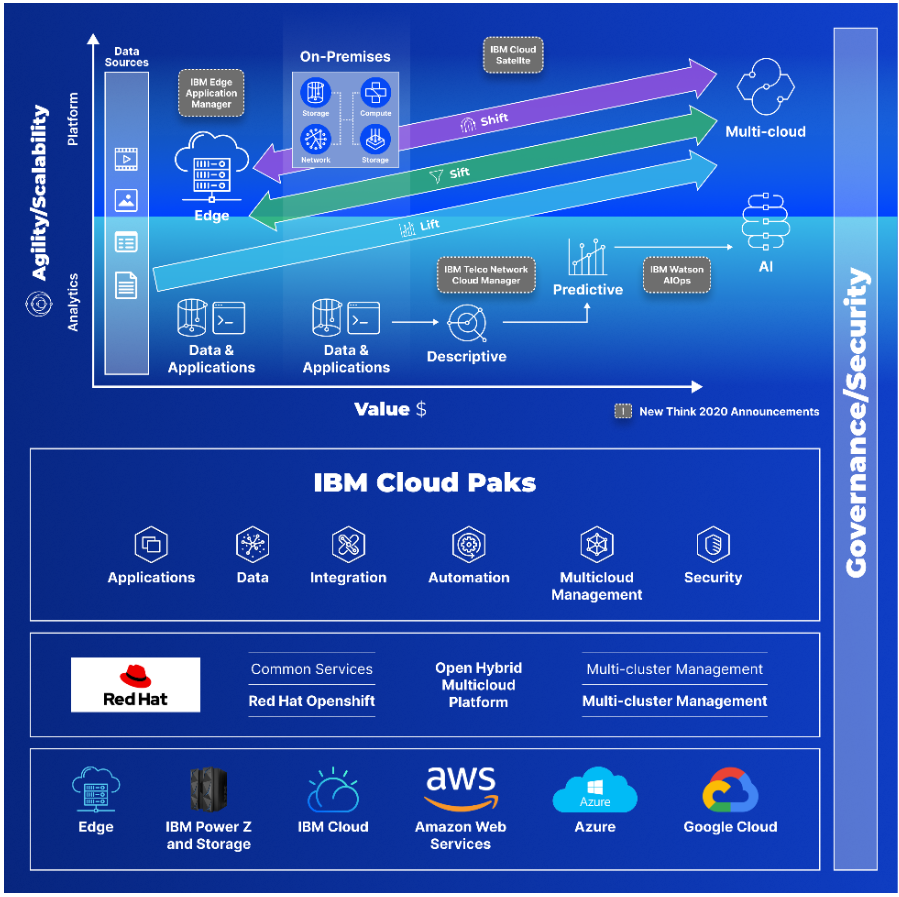
IBM’s new cybersecurity tool addresses the growing complexities of securing multi and hybrid cloud environments. This innovative solution provides a comprehensive approach to protect sensitive data and critical infrastructure across diverse cloud platforms, offering a centralized management console for enhanced visibility and control. This tool empowers organizations to proactively identify and mitigate potential threats, significantly improving overall security posture.This tool distinguishes itself by offering a unified platform for managing security across various cloud environments, eliminating the need for disparate tools and siloed security practices.
It focuses on automation, real-time threat detection, and proactive security measures, enabling organizations to respond swiftly and effectively to emerging threats.
Key Features and Functionalities
This tool boasts a range of powerful features, designed to bolster security in a multi-cloud environment. It includes advanced threat detection capabilities, automated security patching, and comprehensive vulnerability management across all cloud platforms. Crucially, it also provides a centralized dashboard for security teams to monitor and manage security across their entire infrastructure, offering valuable insights and actionable intelligence.
Target Audience
The target audience for this tool spans various industries and company sizes. Financial institutions, healthcare providers, and government agencies are likely to find this tool particularly valuable, given the sensitive data they handle. Medium to large enterprises, with complex multi-cloud infrastructures, will also benefit significantly from this tool’s centralized management capabilities.
Components of the Tool
This tool’s components are designed to work cohesively, creating a comprehensive security solution. They include:
- Cloud Security Posture Management (CSPM): This component assesses and monitors the security configuration of cloud resources, identifying misconfigurations and vulnerabilities in real-time. It also provides automated remediation recommendations to strengthen security posture.
- Security Information and Event Management (SIEM): This component collects and analyzes security logs from various cloud platforms and on-premises systems. It allows for the detection of suspicious activities and potential threats through correlation of events and provides real-time threat alerts.
- Vulnerability Management: This component identifies and prioritizes vulnerabilities across cloud resources, automating the patching process and providing a clear remediation roadmap.
- Threat Intelligence Integration: This component integrates with external threat intelligence feeds, enabling the tool to proactively detect and respond to emerging threats.
- Centralized Security Dashboard: A user-friendly dashboard provides a consolidated view of security posture across all cloud environments, enabling quick identification of potential risks and proactive mitigation.
Comparison with Competitors’ Tools
The following table compares IBM’s cybersecurity tool with similar offerings from competitors, highlighting key differentiators:
| Feature | IBM Tool | Competitor A | Competitor B |
|---|---|---|---|
| Cloud Coverage | Supports multiple cloud providers (AWS, Azure, GCP) and on-premises environments. | Primarily focused on AWS. | Limited support for cloud providers, mainly Azure. |
| Threat Detection | Advanced threat detection engine with machine learning capabilities. | Relies on signature-based detection. | Offers basic threat detection capabilities. |
| Automation | Extensive automation capabilities for patching and remediation. | Limited automation features. | Manual processes for many tasks. |
| Centralized Management | Unified dashboard for managing security across all environments. | Requires multiple dashboards for different cloud providers. | Limited centralized management capabilities. |
| Cost | Pricing model available upon request. | Pricing varies depending on features and usage. | Pricing based on subscription model. |
Security Enhancements in Multi and Hybrid Cloud

Navigating the complexities of multi and hybrid cloud environments requires a robust security strategy. These environments, blending public, private, and on-premises resources, introduce unique challenges that demand specialized tools and protocols. IBM’s cybersecurity tool addresses these challenges head-on, offering a comprehensive approach to protecting data and applications across diverse cloud landscapes.This tool provides a unified security posture by consolidating disparate security controls into a single platform.
This approach significantly reduces the operational overhead associated with managing security across multiple environments, improving efficiency and reducing the risk of human error. Furthermore, it facilitates real-time threat detection and response, enabling organizations to proactively mitigate potential breaches.
Unique Security Challenges in Multi and Hybrid Cloud
Multi and hybrid cloud environments present a multitude of security challenges stemming from the varied nature of the underlying infrastructure. These environments often involve a mix of cloud providers, each with its own security protocols and policies, creating potential vulnerabilities. Maintaining consistent security across these diverse components is crucial. In addition, managing access and permissions across multiple environments can be complex, especially when considering user access across different cloud platforms and on-premises systems.
Data sovereignty regulations and compliance requirements also differ across regions and jurisdictions, demanding specific security measures for each deployment.
Addressing Challenges with IBM’s Cybersecurity Tool
The IBM cybersecurity tool proactively addresses these challenges by offering a centralized management console for security policies across all environments. It automates security tasks, including vulnerability scanning, access control, and threat detection, minimizing the risks associated with manual configuration and oversight. By unifying security controls, the tool simplifies policy enforcement, ensures consistency, and reduces the possibility of configuration errors across the various cloud deployments.
This also allows for better compliance with industry standards and regulations, reducing legal risks.
Security Protocols and Standards
The tool adheres to industry-standard security protocols and frameworks, ensuring data protection and regulatory compliance. These protocols include encryption standards (like AES-256), secure authentication mechanisms, and intrusion detection/prevention systems (IDS/IPS). Specific compliance standards, like HIPAA, GDPR, and PCI DSS, are also integrated, enabling organizations to meet their specific regulatory requirements. This ensures that sensitive data is handled according to the highest security standards and avoids costly compliance breaches.
Security Features for Different Cloud Types
The tool differentiates its security features to cater to the unique characteristics of each cloud type. For example, security protocols for public cloud deployments often focus on access control and data encryption, whereas private cloud deployments might prioritize internal threat detection and compliance with specific industry regulations. Hybrid cloud environments necessitate a balanced approach, integrating the security controls of both public and private clouds.
The tool dynamically adjusts its security posture based on the specific cloud environment to ensure the optimal level of protection.
Integration with Existing Security Infrastructure
A key advantage of this tool is its ability to seamlessly integrate with existing security infrastructure. This integration allows for the consolidation of existing security tools and processes, minimizing disruption during implementation. The tool’s APIs and interfaces facilitate the exchange of security information with existing systems, allowing for a unified view of the entire security landscape. This eliminates data silos and promotes a collaborative security approach.
Deployment and Implementation Strategies
Deploying IBM’s cybersecurity tool across multi and hybrid cloud environments requires a strategic approach that considers various factors. A well-defined deployment plan ensures smooth integration, minimal disruption, and optimal security posture. Careful planning and execution are crucial to leveraging the tool’s full potential.
Deployment Options
Different deployment options cater to diverse organizational needs and infrastructure setups. The choice between on-premises, cloud-based, or a hybrid approach depends on factors like existing infrastructure, budget constraints, security requirements, and regulatory compliance.
- On-premises deployment involves installing the tool directly on servers within the organization’s data center. This provides complete control and allows for fine-grained customization, but it necessitates significant upfront investment in hardware and maintenance. It is often the best choice for organizations with stringent security regulations requiring data residency within their own control.
- Cloud-based deployment leverages cloud providers’ infrastructure. This offers scalability, ease of management, and reduced upfront costs. It’s ideal for organizations with limited IT resources or those prioritizing agility and rapid scalability.
- Hybrid deployment combines elements of both on-premises and cloud-based deployments. This approach allows organizations to maintain control over sensitive data while benefiting from the scalability and flexibility of cloud services. It is often a suitable option for businesses seeking to gradually migrate workloads to the cloud while retaining control of critical infrastructure.
Prerequisites for Successful Deployment
Several prerequisites must be met to ensure a smooth and successful deployment. These include:
- Comprehensive Assessment: A thorough assessment of the existing infrastructure and security posture is essential to identify potential compatibility issues and tailor the deployment strategy accordingly. This involves inventorying existing security tools, identifying data flow patterns, and evaluating current security controls.
- Network Connectivity: Establishing robust network connectivity between the tool and the target systems is vital for seamless data exchange. This includes considering network latency, bandwidth limitations, and security protocols.
- Resource Allocation: Adequate resources, including personnel, time, and budget, need to be allocated to support the deployment process. This is critical for timely execution and successful implementation.
- Training and Documentation: Comprehensive training programs for personnel who will manage and operate the tool are necessary to ensure effective utilization. Detailed documentation should also be prepared to assist with ongoing maintenance and support.
Integration Issues and Resolutions
Integration with existing security infrastructure may present challenges. Identifying and resolving these issues proactively is crucial.
- Data format inconsistencies between the tool and existing systems can lead to compatibility problems. Solutions involve data transformation or adaptation to ensure seamless integration.
- API mismatches may occur, requiring modifications to existing APIs or the creation of custom integrations. This could involve API documentation review, API testing, and implementation of necessary modifications.
- Security misconfigurations can expose vulnerabilities. Thorough security assessments of the integrated systems are essential to identify and remediate potential vulnerabilities.
Deployment Scenarios and Security Implications
Different deployment scenarios carry varying security implications.
| Deployment Scenario | Security Implications |
|---|---|
| On-premises deployment | High control over data, but potential security risks if on-premises infrastructure is compromised. |
| Cloud-based deployment | Enhanced scalability and reduced maintenance, but reliance on cloud provider security. |
| Hybrid deployment | Balanced control and scalability, but potential complexity in managing security across both environments. |
Benefits and Advantages of the Tool
IBM’s cybersecurity tool for multi and hybrid cloud environments offers a range of significant advantages for organizations navigating the complexities of modern IT landscapes. It provides a robust framework for bolstering security posture across diverse cloud deployments, addressing vulnerabilities inherent in managing multiple cloud platforms. This comprehensive approach streamlines security management, reduces operational overhead, and ultimately, strengthens overall business resilience.
Key Advantages for Organizations
This tool delivers a unified security platform, offering centralized visibility and control across on-premises, public, and private cloud environments. This unified approach simplifies security management, enabling organizations to effectively monitor and respond to threats across all their cloud deployments. The tool’s modular design allows for flexibility in deployment, enabling organizations to tailor security measures to specific needs and budgetary constraints.
- Enhanced Security Posture: Centralized management and automated threat detection significantly reduce vulnerabilities and strengthen overall security across the entire infrastructure. This is particularly crucial in multi-cloud environments where disparate security tools can lead to blind spots and gaps in protection.
- Reduced Operational Costs: By automating security tasks and providing a streamlined approach to threat detection and response, the tool can reduce the need for significant manual intervention. This translates to a more efficient allocation of resources and ultimately, lower operational expenses.
- Improved Compliance: The tool facilitates compliance with various industry regulations and standards, reducing the risk of penalties and ensuring regulatory adherence across different cloud platforms.
- Increased Agility and Scalability: The tool’s modular architecture enables organizations to adapt quickly to evolving security threats and business needs. This flexibility allows for efficient scaling of security resources as the organization grows and expands its cloud footprint.
Cost-Effectiveness Analysis
The tool’s cost-effectiveness is multifaceted. While initial investment might be substantial, the long-term benefits often outweigh the upfront costs. Reduced operational expenses, fewer security breaches, and minimized downtime contribute to significant savings over time. By automating security tasks and providing a comprehensive view of the entire security landscape, the tool ultimately lowers the overall cost of security management.
Impact on Operational Efficiency
The tool’s impact on operational efficiency is substantial. Automation of key security tasks frees up IT staff to focus on strategic initiatives, improving overall efficiency. Real-time threat detection and rapid response capabilities minimize downtime and ensure business continuity. A streamlined security management approach reduces the time and resources spent on manual tasks, improving productivity and allowing for a more focused approach to security issues.
Successful Implementations and Industry Examples, Ibm offers cybersecurity tool for multi and hybrid cloud environments
Several organizations across various industries have successfully implemented this tool. For instance, financial institutions have leveraged the tool’s robust security features to meet stringent compliance requirements and protect sensitive data. Retailers have used it to enhance their e-commerce security, safeguarding customer data and preventing fraudulent activities. Healthcare organizations have benefited from improved data protection, aligning with HIPAA regulations.
IBM’s new cybersecurity tools for multi and hybrid cloud environments are definitely a game-changer. While securing these complex setups is crucial, understanding vulnerabilities like those in Azure Cosmos DB is equally important. For example, checking out the Azure Cosmos DB Vulnerability Details will help you see how these tools can be proactively used to mitigate risks.
Ultimately, IBM’s tools are a great step forward in bolstering cloud security.
These examples demonstrate the broad applicability of the tool across different sectors.
Comparison with Similar Tools
Compared to other similar security tools, this IBM solution stands out through its comprehensive multi-cloud approach and integrated security capabilities. While some tools focus on specific cloud platforms, this tool provides a unified platform for managing security across various cloud environments. Its modularity, automation capabilities, and focus on operational efficiency offer significant advantages over more fragmented solutions.
Integration with Other IBM Products
IBM’s cybersecurity tool for multi and hybrid cloud environments isn’t an isolated solution. Its strength lies in its ability to seamlessly integrate with other IBM security products and services, creating a comprehensive defense strategy. This integration enhances the overall security posture by leveraging the strengths of each component, providing a unified view of threats and vulnerabilities across the entire environment.The integration process leverages common security protocols and APIs, enabling the tool to exchange critical information with other IBM security products.
This allows for a unified threat detection and response mechanism, streamlining security operations and reducing the risk of blind spots. This collaborative approach empowers security teams to react faster to threats and mitigate potential damage.
Integration with IBM Security QRadar
The tool integrates seamlessly with IBM Security QRadar, a leading SIEM (Security Information and Event Management) platform. This integration allows for real-time threat intelligence sharing. QRadar’s extensive threat data feeds, coupled with the cloud security tool’s ability to identify anomalies within the multi-cloud environment, enables a more complete picture of security events. The tool can automatically correlate cloud-specific events with traditional security logs from QRadar, improving the accuracy of threat detection and response.
This integration significantly reduces false positives and enables faster threat containment.
Integration with IBM Cloud Pak for Security
The integration with IBM Cloud Pak for Security provides a centralized platform for managing security across the entire hybrid and multi-cloud landscape. This integration allows for automated security tasks, such as vulnerability scanning and compliance checks. The tool can automatically report identified vulnerabilities to IBM Cloud Pak for Security, facilitating prioritized remediation efforts. This synergy allows security teams to automate critical tasks, freeing up resources for more strategic initiatives.
Integration Process Diagram
A visual representation of the integration process involves a series of interconnected boxes representing IBM Security QRadar, IBM Cloud Pak for Security, and the cloud security tool. Arrows depicting data flow highlight how events are captured, analyzed, and shared between the components. The central box represents the cloud security tool, which receives data from the other two components.
Arrows would indicate the direction of information flow. The arrows would be labeled to clearly show the type of data being exchanged (e.g., security events, threat intelligence). The visual aids clearly show how the tool collects and shares information from various IBM security products.
Potential Limitations of Integration
While the integrations offer significant benefits, potential limitations exist. Compatibility issues between different versions of IBM products can hinder the smooth flow of data. Furthermore, the sheer volume of data exchanged between various systems can sometimes overwhelm the system’s processing capacity. Ensuring adequate infrastructure and resources to handle this data exchange is crucial for maintaining performance and efficiency.
Proper configuration and testing are vital to address these limitations proactively. Regular updates and maintenance of the integration components are also essential for continued functionality.
Future Trends and Predictions: Ibm Offers Cybersecurity Tool For Multi And Hybrid Cloud Environments
The cybersecurity landscape is constantly evolving, and IBM’s multi-hybrid cloud security tool needs to adapt to remain effective. This section explores potential future developments, emerging threats, and anticipated advancements in cloud security, as well as predicted changes in the multi-cloud environment. Predicting precise adoption rates across sectors is challenging, but general trends can be Artikeld.The future of cloud security relies on proactive measures and adaptive tools that can respond to ever-changing threats.
Anticipating these changes and preparing for them will be crucial for businesses to maintain data integrity and operational efficiency.
Potential Future Developments for the Tool
The tool will likely evolve to incorporate machine learning and artificial intelligence (AI) for enhanced threat detection and automated response. AI algorithms can analyze vast amounts of security data to identify anomalies and potential threats more quickly and accurately than traditional methods. This will allow for faster incident response and minimize downtime. Moreover, integration with other emerging technologies like blockchain for enhanced security and transparency will be a significant feature in the future.
Emerging Security Threats and Tool Mitigation
Emerging threats like advanced persistent threats (APTs) and ransomware attacks targeting cloud environments will become more sophisticated. The tool will need to adapt to these threats by incorporating more sophisticated threat intelligence feeds, allowing it to identify and respond to zero-day exploits. Cloud-native attacks are also a concern. The tool will need to be adaptable to these cloud-native attacks.
Anticipated Advancements in Cloud Security
Zero Trust security models will gain significant traction. The tool will need to support these models by allowing granular access control and continuous verification of identities and devices. Serverless computing, while promising in terms of efficiency, introduces new security concerns that the tool will need to address. Security will need to be embedded directly into the serverless architecture, with the tool offering specific support for this.
IBM’s new cybersecurity tool for multi and hybrid cloud environments is a great step forward, but robust security also demands proactive measures like those discussed in Deploying AI Code Safety Goggles Needed. Thinking about the potential vulnerabilities in code, especially when dealing with AI, is crucial. Ultimately, IBM’s tool complements these proactive steps, helping ensure comprehensive security in today’s complex cloud landscapes.
Anticipated Changes in the Multi-Cloud Security Landscape
The multi-cloud environment will continue to grow in complexity, with organizations deploying applications and data across multiple cloud providers. The tool must support a wider range of cloud platforms, including emerging cloud providers. This will necessitate greater interoperability and automation to manage security across these diverse environments. Security will be increasingly decentralized, with organizations needing to implement security policies and controls at the individual cloud environment level.
IBM’s new cybersecurity tool for multi and hybrid cloud environments is a game-changer. It’s crucial for businesses navigating the complexities of modern cloud deployments. Meanwhile, the Department of Justice Offers Safe Harbor for MA Transactions ( Department of Justice Offers Safe Harbor for MA Transactions ) is a significant development in legal frameworks. Ultimately, this demonstrates the importance of comprehensive security measures, and IBM’s tool is a key piece of that puzzle for businesses leveraging the versatility of multi and hybrid cloud architectures.
Predicted Future Adoption Rates
| Sector | Initial Adoption Rate (2024-2025) | Projected Adoption Rate (2026-2028) | Rationale |
|---|---|---|---|
| Financial Services | High | Very High | High regulatory compliance and sensitive data necessitate robust security measures. |
| Healthcare | Moderate | High | Growing need for HIPAA compliance and patient data protection. |
| Retail | Low | Moderate | Initially, lower priority compared to other sectors. However, increasing need for data protection and fraud prevention. |
| Manufacturing | Low | Moderate | Security concerns growing, but initially slow adoption due to legacy systems. |
| Government | Very High | Very High | Critical infrastructure and data security are top priorities. |
The table above provides a general overview of potential adoption rates. Factors like specific regulatory requirements, security budgets, and the pace of technological adoption will influence the actual adoption rates in individual sectors. Data from market research reports and industry surveys will be crucial in confirming these predictions.
Ending Remarks
In conclusion, IBM’s new cybersecurity tool for multi and hybrid cloud environments represents a significant advancement in cloud security. Its comprehensive features, robust security protocols, and seamless integration potential position it as a valuable asset for organizations seeking to protect their data and operations in today’s complex cloud environments. The tool’s future-forward design and potential for continued development in the evolving cloud landscape further solidify its position as a critical component for securing a modern digital infrastructure.
Expert Answers
What specific industries does this tool target?
The tool is designed to be versatile and applicable to a broad range of industries, from financial services to healthcare and beyond. The specific features and integrations can be tailored to the unique security needs of each industry, making it suitable for companies of all sizes.
How does this tool compare to similar tools from competitors?
A detailed comparison table is included in the full article to directly address this question. This table will highlight the key features, functionalities, and competitive advantages of IBM’s tool.
What are the prerequisites for successful deployment?
The deployment section will Artikel the necessary prerequisites, including specific technical requirements, existing infrastructure compatibility, and personnel expertise. A checklist or step-by-step guide will be provided for a smooth deployment.
What are the potential limitations of integrating this tool with other IBM products?
The integration section will address potential limitations, focusing on compatibility issues, integration complexities, and any specific scenarios where the integration might not be fully seamless. Workarounds and solutions to these potential limitations will also be explored.