What is the future of mainframe technology will it ever go away?
What is the future of mainframe technology will it ever go away? That’s the million-dollar question, isn’t it? For decades, mainframes have been the workhorses of the corporate world, quietly powering critical systems behind the scenes. But with the rise of cloud computing and other distributed systems, many wonder if these behemoths are on their way out.
This post dives deep into the current state of mainframes, exploring their enduring strengths, the modernization efforts underway, and what the future might hold for this often-overlooked technology.
We’ll examine the compelling reasons why many organizations still rely on mainframes for their core operations, despite the allure of newer technologies. We’ll also explore the various modernization strategies being employed to extend the lifespan of these systems, balancing the need for innovation with the considerable investment already made. Finally, we’ll look ahead to the future, considering the impact of emerging technologies like AI and quantum computing, and whether the mainframe will truly become a relic of the past or continue to play a vital role in the digital landscape.
Mainframe Evolution and Current Capabilities
Mainframes, often perceived as relics of the past, have undergone a remarkable evolution, adapting and thriving in the modern technological landscape. Their longevity is a testament to their inherent power, reliability, and the critical role they play in many industries. This discussion will explore the historical journey of mainframes, their current capabilities, and their continued importance in today’s world.Mainframe Architectural Advancements and Current CapabilitiesThe history of mainframes begins with behemoths filling entire rooms, their processing power dwarfed by today’s standards.
So, will mainframes ever disappear? Probably not anytime soon, given their reliability and the sheer amount of critical data they hold. However, the way we interact with that data is changing rapidly. Check out this article on domino app dev the low code and pro code future to see how modern development approaches are bridging the gap.
Ultimately, the future of mainframes might involve less direct interaction and more sophisticated integration with newer systems.
Early systems, like the IBM System/360 introduced in 1964, laid the groundwork for the architecture that continues to evolve. Key advancements include the transition from discrete components to integrated circuits, leading to increased processing power and reduced physical size. The development of virtualization, allowing multiple operating systems to run concurrently on a single mainframe, significantly enhanced efficiency and resource utilization.
More recent advancements focus on improved scalability, enhanced security features, and seamless integration with modern technologies like cloud computing and mobile applications. Today’s mainframes are sophisticated, powerful systems, often capable of handling trillions of transactions daily.Current Mainframe CapabilitiesModern mainframes boast impressive processing power, capable of handling complex computations and massive data volumes with exceptional speed and efficiency. Their inherent security features, including robust encryption and access control mechanisms, make them highly resilient against cyber threats.
This robust security is crucial in industries handling sensitive data. Furthermore, their legendary reliability ensures continuous operation, minimizing downtime and maximizing productivity. The availability of extensive support and maintenance resources from vendors like IBM contributes to this reliability.Industries Reliant on Mainframes and Reasons for RelianceSeveral industries rely heavily on mainframe systems, often due to their ability to handle critical, high-volume transactions with unparalleled reliability and security.
The financial services sector, for example, uses mainframes for processing billions of transactions daily, including ATM withdrawals, credit card payments, and stock trades. The telecommunications industry relies on mainframes for managing vast networks and handling massive call volumes. Government agencies frequently utilize mainframes for managing citizen data and delivering essential services. These industries choose mainframes because of their proven track record, high availability, and ability to manage extremely large datasets and transaction volumes securely.
The cost of migrating away from these systems, considering the complexity and potential disruptions, is also a major factor.Comparison of Mainframes and Cloud Computing
| Feature | Mainframe | Cloud Computing |
|---|---|---|
| Processing Power | Extremely high, capable of handling massive workloads | Highly scalable, can be adjusted based on demand |
| Scalability | Scalable, but typically involves significant upfront investment | Highly scalable, resources can be easily added or removed |
| Cost | High initial investment, but potentially lower operational costs over time | Pay-as-you-go model, can be more cost-effective for fluctuating workloads |
| Security | Robust security features built-in, long history of secure operation | Security relies on robust configurations and provider’s security measures |
| Maintenance | Requires specialized expertise and ongoing maintenance | Maintenance largely handled by the cloud provider |
Mainframe Modernization Efforts: What Is The Future Of Mainframe Technology Will It Ever Go Away
The seemingly immortal mainframe, a cornerstone of enterprise computing for decades, faces the constant pressure to adapt to modern demands. Modernization isn’t about discarding these powerful systems; it’s about strategically evolving them to leverage new technologies and improve efficiency, scalability, and agility. This involves carefully considering various approaches, each with its own set of advantages and disadvantages.Mainframe modernization strategies are diverse, catering to different business needs and technical landscapes.
The choice depends heavily on factors such as the application’s complexity, the level of integration with other systems, and the organization’s budget and timeline. Effective modernization requires a thorough assessment of the existing system and a clear understanding of the desired outcomes.
Refactoring Mainframe Applications
Refactoring focuses on improving the internal structure of the mainframe application without changing its external behavior. This is often done to enhance maintainability, reduce complexity, and improve performance. It involves restructuring code, eliminating redundancies, and improving the overall design. The process can be iterative, focusing on specific modules or functions at a time. A key benefit is that refactoring minimizes the risk of introducing new bugs while improving the long-term health of the application.
However, it requires deep expertise in mainframe programming languages like COBOL and Assembler and can be a time-consuming process. A successful refactoring project might involve replacing complex nested loops with more efficient algorithms, leading to a significant performance boost without changing the application’s functionality.
Rehosting Mainframe Applications
Rehosting, also known as “lift and shift,” involves migrating the mainframe application to a different platform, such as a cloud environment or a distributed system, without making significant changes to the application code. This approach is often the quickest and least expensive option, particularly for applications that are not critical or require immediate updates. However, it doesn’t address underlying code inefficiencies and may limit the ability to take advantage of new technologies or architectural patterns.
A typical example might involve moving a COBOL application from a z/OS mainframe to a Linux-based server running a COBOL emulator. The application remains largely unchanged, but the underlying infrastructure is modernized. Challenges include potential compatibility issues and the need for appropriate emulation or translation tools.
Replatforming Mainframe Applications
Replatforming involves migrating the mainframe application to a new platform while making some modifications to the code to take advantage of the new environment’s capabilities. This is a middle ground between rehosting and refactoring, offering a balance between speed and modernization benefits. It allows for some improvements in functionality, performance, and scalability, but avoids the extensive code changes associated with refactoring.
For instance, a company might replatform a mainframe application to a Java-based system, rewriting some critical components while retaining much of the existing COBOL code through wrappers or interfaces. This approach allows for gradual modernization, reducing risk and enabling a phased transition. The challenge lies in balancing the need for code changes with the desire for a relatively quick migration.
Example: Modernization of a Legacy Payroll System
Let’s consider a hypothetical modernization plan for a legacy mainframe-based payroll system. The system, written in COBOL and running on a z/OS mainframe, is showing its age and struggling to keep up with the demands of a growing workforce and regulatory changes.This modernization would be a multi-phased approach. Phase 1 would involve a thorough assessment of the system, identifying critical modules and dependencies.
Phase 2 would focus on rehosting the less critical modules to a cloud-based platform using a COBOL emulator, allowing for faster processing and improved scalability. Phase 3 would involve replatforming the core payroll calculation module to a modern Java-based system, leveraging cloud-native services for improved security and automation. Finally, Phase 4 would involve refactoring key parts of the Java-based system to enhance maintainability and performance.
This phased approach allows for continuous monitoring, adaptation, and incremental improvements throughout the modernization journey. The technologies involved would include COBOL emulators, cloud platforms (like AWS or Azure), Java frameworks (like Spring Boot), and potentially containerization technologies like Docker and Kubernetes for deployment and management. The successful outcome would be a more agile, scalable, and maintainable payroll system that can better support the organization’s growth and evolving needs.
Competition and Alternatives
The mainframe’s dominance in enterprise computing is increasingly being challenged by a variety of technologies. While mainframes remain crucial for high-transaction volume applications, the rise of cloud computing, distributed systems, and other architectures presents compelling alternatives, each with its own strengths and weaknesses. Understanding these competitive landscapes is crucial for assessing the future trajectory of mainframe technology.The main competitors to mainframe technology span various sectors, from transaction processing and data warehousing to batch processing and critical infrastructure management.
These alternatives offer different approaches to scaling, cost management, and application development, forcing organizations to carefully evaluate their needs before making a technology shift.
Cloud Computing as a Competitor
Cloud computing, with its pay-as-you-go model and scalability, presents a significant challenge to mainframes, particularly for new applications. Many businesses find the agility and cost-effectiveness of cloud platforms appealing, especially for projects that don’t require the extreme transaction processing power of a mainframe. However, migrating large legacy systems to the cloud can be complex and expensive.
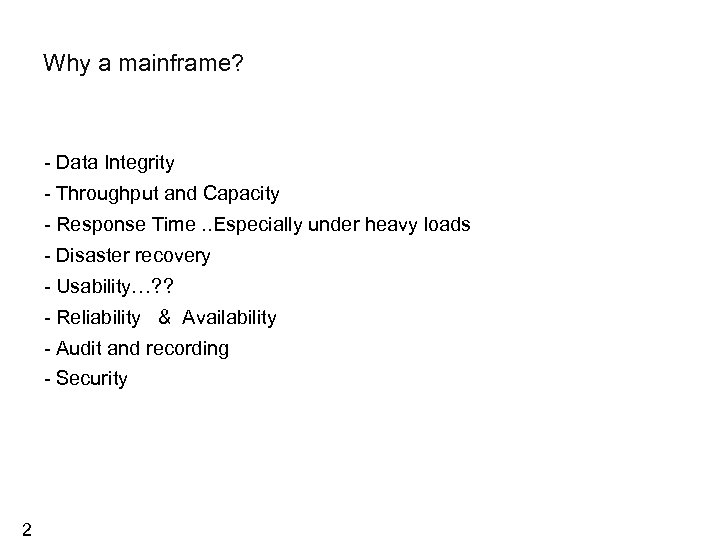
- Mainframes: Strengths include unparalleled transaction processing power and proven reliability for mission-critical applications. Weaknesses include high initial investment costs, specialized skills requirements, and potential difficulties in scaling for certain types of workloads.
- Cloud Computing: Strengths include scalability, pay-as-you-go pricing, agility, and ease of deployment for new applications. Weaknesses include potential security concerns, vendor lock-in, and challenges in migrating large legacy systems.
Distributed Systems and Their Role
Distributed systems, where applications are spread across multiple servers, offer a different approach to scalability and fault tolerance. This architecture is well-suited for applications requiring high availability and geographical distribution. While distributed systems may not match the raw processing power of a mainframe for certain tasks, they provide flexibility and redundancy.
- Mainframes: Strengths lie in centralized control, simplified management for highly integrated systems, and superior performance for specific high-throughput applications. Weaknesses include limitations in scaling for certain types of distributed applications and potential single point of failure concerns if not properly designed.
- Distributed Systems: Strengths include scalability, high availability through redundancy, and adaptability to diverse application needs. Weaknesses can include increased complexity in management and coordination across multiple servers, and potential performance bottlenecks if not properly designed and optimized.
Other Alternatives and Considerations
Beyond cloud computing and distributed systems, other technologies, such as containerization (Docker, Kubernetes), serverless computing, and specialized hardware accelerators, also compete with mainframes in specific niches. These alternatives often offer advantages in terms of speed, efficiency, or cost for particular types of workloads. For example, a company like Netflix relies heavily on a distributed microservices architecture running on cloud infrastructure, showcasing a successful alternative to a mainframe-centric approach for streaming services.
Conversely, large banks often maintain mainframes for their core transaction processing systems, highlighting the continued relevance of mainframes in specific high-transaction environments.
Future Trends and Predictions
The future of mainframe technology is not simply a question of survival; it’s a story of adaptation and evolution. While the monolithic image of the mainframe might conjure images of a bygone era, the reality is far more nuanced. Emerging technologies are reshaping the mainframe landscape, pushing its capabilities and influencing its role in the digital world. This section explores potential scenarios for the next 5, 10, and 20 years, examining the impact of these changes.
Mainframe Integration with Emerging Technologies
The convergence of mainframes with cutting-edge technologies like AI and quantum computing presents exciting possibilities. AI can enhance mainframe operations through automated diagnostics, predictive maintenance, and optimized resource allocation. Imagine AI algorithms analyzing vast mainframe logs in real-time, identifying potential bottlenecks before they impact performance, or predicting hardware failures with sufficient lead time for preventative maintenance. This proactive approach significantly reduces downtime and improves operational efficiency.
Quantum computing, while still in its nascent stages, holds the potential to revolutionize certain mainframe tasks. For instance, complex simulations and cryptographic operations could be exponentially accelerated, opening doors to previously intractable problems in finance, scientific research, and other data-intensive fields. The integration of these technologies will not replace the mainframe but will rather augment its power and capabilities.
Potential Scenarios for Mainframe Technology
Five-Year Outlook (2024-2029): Expect to see continued investment in mainframe modernization initiatives. Hybrid cloud deployments will become increasingly common, with mainframes seamlessly integrated into broader IT landscapes. AI-driven automation will be widely adopted for operational efficiency gains. This period will also see a focus on enhanced security measures to protect sensitive data residing on these critical systems.
Ten-Year Outlook (2024-2034): The mainframe will likely solidify its position as a crucial component of hybrid cloud environments. Quantum computing’s impact will start to become more visible, especially in niche applications demanding high computational power. We can anticipate more sophisticated AI integration, possibly involving machine learning for self-healing systems and advanced predictive analytics.
Twenty-Year Outlook (2024-2044): While the physical form of the mainframe might evolve, its core functionality—reliable, high-throughput processing of massive datasets—will remain essential. Quantum computing will likely play a significant role, accelerating specific workloads. AI will be deeply embedded in mainframe operations, leading to largely autonomous management and maintenance. The mainframe’s role might shift towards specialized tasks requiring exceptional processing power and security, rather than serving as the sole central processing unit of an organization.
Mainframe’s Role in Specific Industries
The financial services sector will continue to heavily rely on mainframes for transaction processing, risk management, and regulatory compliance. Government agencies will utilize mainframes for managing sensitive data and critical infrastructure. Healthcare will leverage mainframes for storing and processing patient data, supporting medical research, and managing complex healthcare systems. In each of these sectors, the mainframe’s reliability, security, and scalability remain invaluable assets.
However, the integration of AI and other technologies will likely reshape the specific tasks performed by these systems, optimizing operations and unlocking new insights.
Impact of a Significant Shift Away from Mainframes
A rapid and complete shift away from mainframes would have profound economic and social consequences. The immediate impact would be felt in the IT sector, with significant job losses for specialists with mainframe expertise. Organizations heavily reliant on mainframes would face considerable challenges in migrating their systems, potentially resulting in costly disruptions and data loss. The long-term consequences could include a decline in the availability of reliable and secure systems for critical applications, potentially affecting various sectors, including finance, healthcare, and government services.
The potential for data breaches and system failures would increase significantly. Such a shift would require massive investments in new infrastructure and retraining, resulting in substantial economic costs. The social impact could manifest in reduced employment opportunities and potential instability in critical sectors. This scenario highlights the importance of a gradual and well-planned transition, rather than a sudden abandonment of mainframe technology.
The Skill Gap and Workforce
The mainframe world faces a significant challenge: a dwindling pool of skilled professionals. This isn’t just about a lack of numbers; it’s about a critical shortage of individuals possessing the specialized knowledge and experience necessary to maintain and evolve these complex systems. The consequences of this skills gap are far-reaching, impacting businesses’ ability to innovate, modernize, and ultimately, survive in a rapidly changing technological landscape.The unique skill set required for mainframe work encompasses a broad spectrum of technical expertise.
Beyond basic programming skills in languages like COBOL, Assembler, and PL/I, professionals need a deep understanding of mainframe operating systems like z/OS, database management systems like DB2, and related middleware technologies. Furthermore, strong problem-solving abilities, a systematic approach to troubleshooting complex issues, and a capacity for continuous learning are crucial. Many experienced mainframe professionals also possess a detailed understanding of business processes and the specific applications running on the mainframes they support, making them invaluable assets within their organizations.
Mainframe Skills and Expertise
Mainframe professionals require a diverse skill set extending beyond core programming languages. They need expertise in areas such as system administration, security, performance tuning, and database management. A strong understanding of the underlying architecture of mainframe systems, including hardware and software components, is essential. Moreover, the ability to work effectively within large, complex IT environments, collaborating with colleagues from various departments, is crucial for success in this field.
For instance, a mainframe developer might need to collaborate with database administrators to optimize query performance or with security specialists to implement robust access controls. The intricate nature of mainframe systems demands a high level of both technical proficiency and collaborative skills.
Challenges of an Aging Workforce and Shortages
The mainframe skills gap is exacerbated by the aging workforce. Many experienced mainframe professionals are nearing retirement, taking with them decades of accumulated knowledge and expertise. This knowledge transfer is not easily replicated, leading to a significant loss of institutional memory and expertise within organizations. The lack of readily available replacements poses a substantial risk to businesses heavily reliant on mainframe systems, potentially leading to increased operational costs, project delays, and even system outages.
For example, a sudden retirement of a key mainframe specialist without adequate succession planning could cause significant disruption to critical business operations.
Initiatives to Address the Mainframe Skills Gap
Several initiatives are underway to address the mainframe skills gap. Educational institutions are increasingly incorporating mainframe technologies into their curricula, offering specialized courses and degree programs to train the next generation of mainframe professionals. Industry partnerships are also playing a vital role, with companies collaborating with universities and training providers to develop tailored training programs that meet the specific needs of the industry.
Furthermore, many organizations are investing in internal training programs and mentorship initiatives to upskill existing employees and transfer knowledge from experienced professionals to younger generations. IBM, a major player in the mainframe market, offers numerous training resources and certifications to help bridge the skills gap.
Strategies for Attracting and Retaining Mainframe Talent, What is the future of mainframe technology will it ever go away
Attracting and retaining talented mainframe professionals requires a multifaceted approach.
- Offer competitive salaries and benefits packages to make mainframe careers more attractive to potential candidates.
- Invest in robust training and development programs to equip employees with the latest skills and technologies.
- Create a positive and supportive work environment that fosters collaboration and innovation.
- Promote career advancement opportunities within the mainframe sector, showcasing clear paths for growth and development.
- Highlight the importance and relevance of mainframe technology in today’s digital landscape, emphasizing its continued importance in various industries.
- Partner with educational institutions to sponsor scholarships and internships for students interested in mainframe careers.
- Develop innovative recruitment strategies to target potential candidates from diverse backgrounds.
Cost and Return on Investment
Mainframes, despite their age, remain a significant player in enterprise IT. Understanding their cost and return on investment (ROI) is crucial for businesses deciding whether to maintain, modernize, or replace their mainframe infrastructure. The total cost of ownership (TCO) is complex, encompassing hardware, software, maintenance, and personnel. However, a careful analysis often reveals a surprisingly competitive ROI, especially when considering the critical workloads they support.The TCO of mainframes can be substantial.
Hardware costs include the mainframe itself, peripherals like tape drives and storage arrays, and ongoing maintenance contracts. Software licenses, often covering decades-old applications, represent another major expense. Finally, a skilled workforce is essential for operation and maintenance, driving up personnel costs. These costs can be substantial and are often spread across a large number of transactions.
Mainframe Total Cost of Ownership (TCO) Analysis
Calculating the TCO accurately requires a granular approach. It involves assessing the cost of hardware acquisition and upgrades, software licensing fees (including maintenance and support), personnel costs (salaries, benefits, and training), and operational expenses (power, cooling, and security). It’s important to account for both upfront and ongoing costs over the mainframe’s lifecycle, which can span decades. Often, legacy applications are heavily intertwined with existing hardware and software configurations, leading to increased complexity and costs in migration or modernization efforts.
Mainframe ROI Compared to Alternatives
Direct comparison of mainframe ROI with cloud or distributed systems is challenging due to the varying nature of workloads and business requirements. However, for mission-critical applications requiring high availability, security, and performance at scale – such as transaction processing in finance or large-scale data processing in government – mainframes often demonstrate a superior ROI. While cloud solutions might offer lower upfront costs, the ongoing operational costs, potential security vulnerabilities, and the complexity of migrating legacy applications can offset these initial savings.
For example, a large financial institution processing millions of transactions daily might find the reliability and security of a mainframe outweigh the perceived cost savings of a cloud-based alternative.
Optimizing Mainframe TCO Through Modernization
Modernization strategies, such as refactoring applications to be more cloud-friendly, implementing DevOps practices, and using virtualization to improve resource utilization, can significantly optimize mainframe TCO. These strategies often involve gradual transitions rather than complete overhauls, minimizing disruption and risk. For instance, migrating non-critical workloads to cloud environments can reduce the burden on the mainframe, lowering hardware and maintenance costs.
Automating operational tasks can also free up personnel, reducing labor expenses. The investment in modernization pays off in long-term cost savings and improved efficiency.
Cost-Effectiveness Comparison: Mainframes vs. Cloud
| Application Type | Mainframe | Cloud |
|---|---|---|
| High-volume transaction processing (e.g., banking) | High upfront cost, but low long-term operational cost per transaction due to high efficiency and reliability. | Potentially lower upfront cost, but higher operational cost per transaction due to scalability needs and potential security/reliability concerns. |
| Batch processing (e.g., payroll) | Cost-effective for large-scale batch jobs due to processing power. | Can be cost-effective for smaller batch jobs, offering scalability based on demand. |
| Data warehousing and analytics | Suitable for very large datasets, offering robust data management capabilities. | Highly scalable for data warehousing, offering flexibility in choosing storage and processing resources. Cost can vary significantly based on data volume and processing requirements. |
Final Review
So, will mainframes ever go away? The answer, it seems, is a resounding “not anytime soon.” While the landscape is changing, and cloud computing is undeniably gaining traction, mainframes are adapting and evolving. Their unmatched reliability, security, and processing power for specific applications ensure their continued relevance. The key lies in modernization – embracing new technologies to enhance capabilities while leveraging the existing infrastructure’s strengths.
The future of mainframes isn’t about extinction, but rather a strategic transformation, ensuring these powerful systems remain a crucial component of our technological infrastructure for years to come.
FAQs
What are the biggest challenges in mainframe modernization?
The biggest challenges often include the high cost of migration, the complexity of legacy code, and the shortage of skilled professionals experienced in both legacy and modern technologies.
Are mainframes more secure than cloud systems?
Security is a complex issue, and both mainframes and cloud systems have their strengths and weaknesses. Mainframes often boast robust security features built into their architecture, but cloud security depends heavily on proper configuration and management.
What is the average lifespan of a mainframe?
Mainframes can have exceptionally long lifespans, often lasting for decades with proper maintenance and modernization. This is a key factor in their overall cost-effectiveness.
What skills are in high demand for mainframe professionals?
High demand skills include COBOL, Assembler, DB2, and other mainframe-specific languages and technologies, along with expertise in system administration and modernization strategies.