Global Tensions Ignite Financial Uncertainty: Robert Kiyosaki Advocates Gold, Silver, and Bitcoin as Ultimate Safe Havens


Jakarta, CNBC Indonesia – As the specter of a global conflict looms amid persistent tensions between the United States and Iran, individuals and institutions worldwide are re-evaluating their financial strategies. In times of profound crisis and economic volatility, the imperative to secure one’s financial future becomes paramount. Renowned investor and best-selling author of "Rich Dad Poor Dad," Robert Kiyosaki, has issued a stark warning of an impending market collapse and a potential "Great Depression," advocating for three specific assets as the cornerstone of financial resilience: gold, silver, and Bitcoin.
Kiyosaki’s latest admonition underscores a long-held conviction that conventional financial instruments offer false security. He identifies what he terms the "three stooges" – the White House, the U.S. Treasury, and the Federal Reserve – as key indicators of an approaching crisis. According to Kiyosaki, their combined actions, or inactions, are paving the way for unprecedented economic hardship. "Because of the White House, the U.S. Treasury, and the Fed, the next Great Depression is likely to happen. Perhaps war. For millions, tough times are coming," Kiyosaki stated, emphasizing the urgency for preparedness. However, he also offers a contrasting outlook for those who are adequately positioned: "For those with the right mindset and who are prepared, the next Great Depression will be the best time of their lives. Please prepare. Take care of yourselves. Buy gold, silver, Bitcoin." This dual perspective highlights his belief in strategic foresight as a differentiator between financial ruin and unprecedented opportunity.
The Historical Role of Safe Havens Amid Geopolitical Turmoil
Historically, periods of heightened geopolitical tension, such as the current standoff between the U.S. and Iran, invariably trigger a flight to safety in financial markets. Investors typically seek assets perceived as stable and reliable, capable of preserving wealth when traditional markets falter. Gold, often dubbed the "ultimate safe haven," has maintained this status for centuries. Its intrinsic value, limited supply, and universal acceptance as a store of value have made it a preferred asset during wars, economic downturns, and periods of hyperinflation. Central banks globally hold significant gold reserves as a hedge against currency devaluation and systemic risk. The ongoing tensions in the Middle East, particularly concerning the Strait of Hormuz, a critical chokepoint for global oil supplies, amplify the appeal of such assets. Any disruption in this region has the potential to send shockwaves through energy markets, triggering broader economic instability and further cementing gold’s role as a protective asset.
Silver, while sharing many characteristics with gold as a precious metal, also serves a dual role. It is both a monetary asset and an industrial commodity, with significant demand in electronics, solar panels, and medical applications. This industrial demand can introduce greater price volatility compared to gold, yet its safe-haven properties often emerge strongly during crises. The recent performance of silver, as observed in mid-April 2026, exemplifies this dynamic. Its price movements demonstrated significant volatility, directly correlating with the escalation of geopolitical events in the Middle East.
Bitcoin, a relative newcomer to the investment landscape, has increasingly been touted as "digital gold." Its decentralized nature, limited supply cap (21 million coins), and independence from government or central bank control are the primary arguments for its safe-haven status. Proponents argue that in an era of unprecedented fiat currency printing and potential government overreach, Bitcoin offers a censorship-resistant and globally accessible alternative for wealth preservation. However, its nascent history and higher price volatility compared to traditional safe havens still lead some analysts to question its long-term reliability in extreme crises.
Market Performance in Mid-April 2026: A Snapshot
The financial markets in the third week of April 2026 provided a clear illustration of investor behavior under duress. Continuing geopolitical uncertainty, particularly the unresolved negotiations between the United States and Iran, significantly influenced short-term capital flows towards digital assets and precious metals.
Bitcoin (BTC) managed to hold above the US$75,000 threshold during this period, indicating strong investor confidence despite broader market jitters. This resilience suggests a growing acceptance of Bitcoin as a legitimate hedge against traditional market instability, though analysts caution that its price movements must be continuously evaluated against global macroeconomic indicators. The digital asset’s ability to maintain such a high valuation amidst a backdrop of potential global conflict highlights a paradigm shift in how investors perceive value and security in the 21st century. Its performance reflects a broader trend of capital moving out of speculative instruments and into assets perceived as having inherent scarcity and decentralized control.
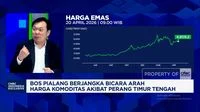
Gold, the quintessential safe haven, saw a robust performance, rising 1.7% in a single week and extending its gains for a remarkable four consecutive weeks. This consistent upward trajectory underscores its enduring appeal as a bulwark against inflation and geopolitical risk. The market’s focus was also keenly set on the U.S. Senate confirmation hearing for Kevin Warsh as the new Federal Reserve Chair, scheduled for the Tuesday of that week. Expectations of Warsh adopting a dovish stance on monetary policy easing further bolstered gold prices, as such policies typically lead to a weaker dollar and increased attractiveness of non-yielding assets like gold.
Silver (XAG) experienced a particularly volatile week in mid-April 2026, mirroring the escalating geopolitical tensions in the Middle East. The week commenced on Monday, April 13, with silver consolidating at US$75.57. However, market sentiment shifted dramatically on Tuesday, April 14, as prices surged, hitting an intra-day high of US$79.53. This aggressive rally reflected market participants’ analytical reaction to the perceived breakdown in U.S.-Iran diplomatic negotiations, triggering a rapid rotation of capital into safe-haven instruments. The accumulation trend persisted despite minor technical corrections, with prices stabilizing between US$78.40 and US$79.05 in subsequent days. Towards the end of the trading week, fundamental sentiment deteriorated further following confirmation of the cancellation of a potential ceasefire agreement. This development prompted investors to maximize their hedging strategies, pushing silver prices on Friday, April 17, past a critical psychological level to close at a weekly peak of US$80.78.
The Underlying Geopolitical Dynamics: US-Iran Standoff
The current tensions between the United States and Iran are rooted in decades of complex historical grievances, regional power struggles, and disagreements over Iran’s nuclear program. Following the U.S. withdrawal from the Joint Comprehensive Plan of Action (JCPOA) in 2018 and the re-imposition of sanctions, the relationship has been characterized by escalating rhetoric, proxy conflicts in the Middle East, and occasional direct confrontations. Key points of contention include:
- Nuclear Program: Iran’s continued enrichment of uranium, exceeding the limits set by the original JCPOA, raises concerns about its potential to develop nuclear weapons, despite Iran’s assertions that its program is for peaceful purposes.
- Regional Influence: Both nations are deeply involved in proxy conflicts across the Middle East, including in Yemen, Syria, Iraq, and Lebanon. These regional rivalries often spill over, creating flashpoints and increasing the risk of miscalculation.
- Strait of Hormuz: This narrow waterway, through which a significant portion of the world’s oil supply passes, remains a critical strategic choke point. Incidents involving naval forces in this area have repeatedly heightened tensions and threatened global energy security.
- Sanctions and Economic Pressure: The U.S. policy of "maximum pressure" through economic sanctions has severely impacted Iran’s economy, leading to internal unrest and further hardening Tehran’s stance.
The lack of a diplomatic breakthrough, as noted in mid-April 2026, implies a continued state of uncertainty, forcing investors to adopt defensive postures and seek assets that can weather potential geopolitical storms. The risk of unintended escalation, cyber warfare, or direct military confrontation remains a tangible threat, driving capital towards perceived havens.
Central Bank Policies and the Search for Value
The role of central banks, particularly the U.S. Federal Reserve, is critical in shaping market sentiment during crises. Kiyosaki’s criticism of the Fed stems from its historical role in monetary policy, including quantitative easing and interest rate manipulations, which he argues devalue fiat currencies and create asset bubbles. The anticipation of Kevin Warsh’s potential dovish stance as the new Fed Chair, implying a willingness to ease monetary policy, is a double-edged sword for markets. While it might provide short-term liquidity, it also fuels concerns about inflation and the long-term stability of the dollar, making assets like gold and silver more attractive.
Moreover, in an environment where central banks globally have expanded their balance sheets significantly in response to various crises (e.g., the 2008 financial crisis, the COVID-19 pandemic), there is growing apprehension about the sustainability of such policies. This concern contributes to the narrative that traditional, government-backed assets are inherently risky, pushing investors towards decentralized and limited-supply alternatives.
Broader Implications of a "Great Depression" and Kiyosaki’s Financial Philosophy
Kiyosaki’s repeated warnings of a "Great Depression" are not merely speculative; they are rooted in his analysis of macroeconomic trends, government debt, and central bank actions. He argues that the global financial system is fundamentally flawed, creating a widening gap between the rich and the poor. His "Rich Dad Poor Dad" philosophy centers on financial education, advocating for individuals to become financially literate and to invest in income-generating assets rather than relying solely on traditional employment and conventional investments.
He is a vocal critic of conventional financial wisdom, particularly the accumulation of what he deems "worthless" investment products. This category, in his view, includes fiat currency, stocks, bonds, mutual funds, and exchange-traded funds (ETFs). Kiyosaki contends that these are the investments frequently pursued by the poor and middle class, who diligently work in jobs that provide "fake," taxable income and consistent paychecks, yet offer no genuine job security or wealth accumulation. He emphasizes that true wealth is built by understanding how money works, acquiring assets that appreciate and generate cash flow, and ultimately achieving financial independence from traditional employment structures.
His latest advice is consistent with his broader philosophy of financial intelligence and strategic investment, which has consistently championed these three asset classes. For Kiyosaki, the impending crisis is not just an economic downturn but a systemic reset, demanding a radical shift in how individuals approach their finances.
Navigating Uncertainty: A Call for Strategic Preparedness
In conclusion, the escalating geopolitical tensions between the U.S. and Iran have injected a profound sense of uncertainty into global financial markets. Robert Kiyosaki’s urgent call to action – to invest in gold, silver, and Bitcoin – resonates with a segment of investors seeking robust hedges against potential financial turmoil. The market data from mid-April 2026, showing the resilience of Bitcoin and the upward trajectory of gold and silver, lends credence to the idea that these assets are increasingly perceived as critical components of a crisis-proof portfolio.
Beyond Kiyosaki’s specific recommendations, the broader message for individuals is one of proactive financial preparedness. This involves not only diversifying investments but also fostering financial literacy, maintaining emergency funds, managing debt prudently, and exploring multiple income streams. While not all financial experts fully endorse Kiyosaki’s extreme views on traditional assets, the underlying principle of strategic planning and independent thinking in the face of systemic risks remains invaluable. As capital continues to flow from speculative instruments to digitized real assets in search of true security, the ability to discern and act upon sound financial advice will be crucial for navigating the challenging economic landscape ahead.