Oil Market Turmoil as US-Iran Tensions Escalate Dramatically in the Strait of Hormuz

Global oil markets experienced a significant surge on Monday, April 20, 2026, as geopolitical tensions between the United States and Iran escalated sharply in the critical maritime choke point of the Strait of Hormuz. The renewed volatility follows a series of military confrontations and diplomatic breakdowns that have sent shockwaves through the global energy sector, raising fears of supply disruptions and broader regional conflict.
West Texas Intermediate (WTI) crude for May delivery climbed by a robust 5.6%, settling at US$88.54 per barrel by 06:09 local time. Concurrently, the international benchmark, Brent crude for June delivery, saw a substantial increase of 4.3%, reaching US$94.18 per barrel. This abrupt price jump underscores the market’s acute sensitivity to instability in the Middle East, particularly concerning the Strait of Hormuz, through which approximately one-fifth of the world’s total petroleum liquids and liquefied natural gas (LNG) transits daily.
A Weekend of Escalation: Naval Engagements and Allegations
The immediate catalyst for the market’s frenzied reaction was a series of alarming incidents reported over the preceding weekend. On Sunday, April 19, President Donald Trump confirmed that the U.S. Navy had engaged an Iranian container ship in the Gulf of Oman, firing upon it before U.S. Marines boarded and seized the vessel. President Trump asserted that the Iranian ship was attempting to breach a U.S. naval blockade enforced against Iranian ports, a measure the U.S. has maintained as part of its broader sanctions regime.
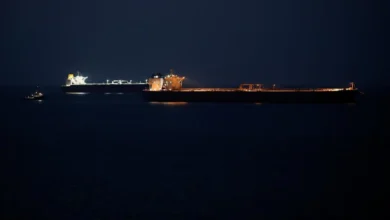
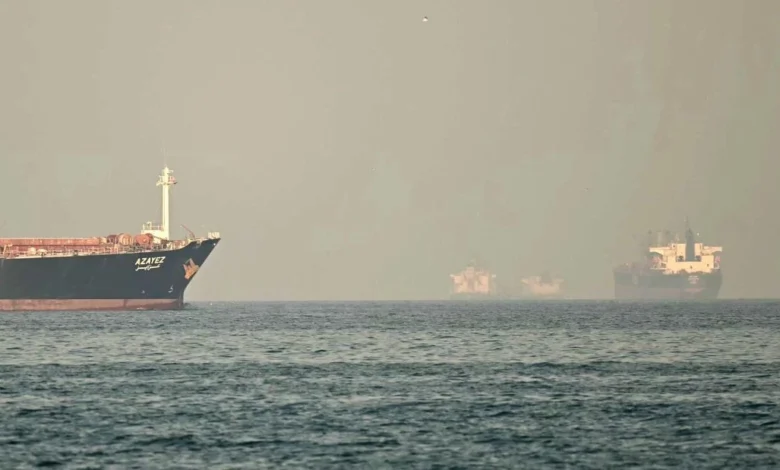
This confrontation came on the heels of another critical event reported on Saturday, April 18, in the Strait of Hormuz. Iranian Revolutionary Guard Corps (IRGC) fast boats were alleged to have fired upon a commercial oil tanker navigating the strategic waterway. Separately, another container ship transiting the area was reportedly struck by an unidentified projectile, further muddying the waters and intensifying the sense of a rapidly deteriorating security situation. These incidents mark a dangerous escalation from what had, just days prior, appeared to be a period of tentative de-escalation.
Expert Analysis: Geopolitical Risk Premiums Return
Market analysts were quick to attribute the sudden price hike to the re-emergence of a substantial geopolitical risk premium. Warren Patterson, head of commodities strategy at ING, encapsulated the sentiment, stating, "Oil prices are once again in turmoil due to developments in the Middle East, where a situation that briefly appeared to be de-escalating has rapidly flared up again." Patterson’s remarks highlight the inherent fragility of the region’s stability and its outsized influence on global energy markets.
The Strait of Hormuz, a narrow passage between the Persian Gulf and the Gulf of Oman, is undeniably one of the world’s most vital energy arteries. Its geographical significance means that any perceived threat to shipping within or near its confines automatically triggers a heightened risk assessment by traders and investors, leading to upward pressure on crude oil prices. The fear is not merely of direct supply disruption from a conflict, but also of increased shipping costs due to higher insurance premiums and potential rerouting, which can add significant overheads to crude transportation.
The Precarious Path of Diplomacy: A Chronology of Collapse
The recent flare-up is particularly concerning given that it follows a period where both nations had reportedly been inching closer to a diplomatic breakthrough. The previous weekend saw glimmers of hope, with initial reports suggesting progress towards a potential agreement to de-escalate tensions.
Timeline of Key Events (Leading up to April 20, 2026):
- Mid-April (Pre-Weekend): Unspecified diplomatic overtures between the U.S. and Iran, reportedly brokered through intermediaries. Discussions focused on easing tensions, potentially leading to a resumption of formal talks.
- Friday, April 17, 2026: Iran issues a statement declaring the Strait of Hormuz fully open for commercial traffic, signaling a willingness to reduce maritime friction. This announcement initially led to a slight dip in global oil prices as market participants priced in reduced geopolitical risk.
- Late Friday – Early Saturday, April 18, 2026: President Trump publicly rejects the notion of lifting the U.S. naval blockade against Iranian ports, stating that sanctions and pressure would remain until a comprehensive agreement was reached. This stance effectively undermined Iran’s gesture.
- Saturday, April 18, 2026: In response to Trump’s refusal, Iran reverses its earlier position, declaring that the Strait of Hormuz would remain closed to international shipping until the U.S. naval blockade was completely lifted. This diplomatic impasse quickly translated into military action.
- Saturday, April 18, 2026 (Later): Reports emerge of IRGC fast boats firing upon a commercial oil tanker in the Strait of Hormuz. Concurrently, a separate container ship is hit by an unknown projectile in the same vicinity, confirming Iran’s intent to enforce its threat.
- Sunday, April 19, 2026: The U.S. Navy intercepts an Iranian container ship in the Gulf of Oman, leading to an exchange of fire and the subsequent seizure of the vessel by U.S. Marines. President Trump confirms the incident and reiterates his administration’s firm stance.
- Monday, April 20, 2026: Global oil prices surge in response to the weekend’s events. President Trump issues renewed threats against Iran, and the prospect of a second round of peace talks hangs in the balance.
Renewed Threats and Diplomatic Impasse
President Trump’s rhetoric intensified following the weekend’s incidents. He explicitly threatened to "destroy vital Iranian infrastructure," including power plants and bridges, should Iran’s leadership fail to accept a comprehensive agreement with the United States. He characterized Iran’s attacks on commercial vessels over the weekend as a "total violation of the ceasefire," suggesting that the tentative period of de-escalation had definitively ended.
The prospects for a "second round of peace talks" in Islamabad, Pakistan, which had been tentatively scheduled for Monday, April 20, now appear highly uncertain. While President Trump mentioned the talks, Iran quickly countered, stating it would not attend. The Iranian government cited the ongoing U.S. naval blockade as a primary reason for its non-participation, alongside "a number of other objections." This refusal underscores the deep chasm that remains between the two nations, despite intermittent diplomatic efforts.
International reactions, though not explicitly quoted in the immediate aftermath, were broadly expected to reflect deep concern. The United Nations Secretary-General, along with leaders from the European Union, China, and Russia, would likely issue calls for immediate de-escalation, urging both Washington and Tehran to exercise maximum restraint and return to the negotiating table. The potential for miscalculation in such a volatile environment is exceptionally high, threatening to draw in regional allies and adversaries alike.
Broader Implications: Economic, Geopolitical, and Regional Stability
The escalating tensions carry profound implications that extend far beyond the immediate increase in oil prices.
- Global Economic Impact: A sustained period of high oil prices, particularly nearing the US$100 per barrel mark, could significantly impede global economic recovery from ongoing challenges. Higher energy costs would translate into increased inflation, impacting consumer purchasing power, industrial production, and transportation costs worldwide. Businesses reliant on fuel, from airlines to logistics companies, would face severe financial strain, potentially leading to reduced investment and employment.
- Shipping and Trade Disruptions: The Strait of Hormuz is not just for oil; it’s a conduit for vast quantities of global trade. Increased military activity and the threat of attacks would inevitably lead to skyrocketing insurance premiums for vessels transiting the area. Shipping companies might opt for longer, more expensive alternative routes, adding significant delays and costs to supply chains. This could lead to shortages of goods and further inflationary pressures globally.
- Regional Stability: The Persian Gulf region is already a geopolitical tinderbox. Escalation between the U.S. and Iran directly threatens the stability of neighboring states, including Saudi Arabia, the UAE, Qatar, and Kuwait, all of whom are critical energy producers and major U.S. allies. Any direct military confrontation could rapidly engulf the entire region, with devastating consequences for human lives and infrastructure, further destabilizing global energy supplies.
- US Foreign Policy Challenges: For the Trump administration, the renewed crisis presents a complex foreign policy challenge. Balancing the "maximum pressure" campaign against Iran with the imperative to avoid a full-blown military conflict requires delicate diplomatic maneuvering. The effectiveness of sanctions is directly tied to their enforcement, but aggressive enforcement carries inherent risks of direct confrontation.
- Iran’s Strategic Calculus: Iran’s actions, particularly its threats to close the Strait of Hormuz, are part of a long-standing strategy to exert leverage against crippling U.S. sanctions. By demonstrating its capacity to disrupt global oil flows, Iran seeks to force a concession, primarily the lifting of economic penalties. However, this strategy is inherently risky, as it could provoke a stronger international response than anticipated.
- Impact on Energy Transition: While not an immediate concern, persistent instability in major oil-producing regions could indirectly accelerate the global push towards renewable energy sources. Nations might seek to reduce their reliance on volatile fossil fuel markets by investing more heavily in domestic clean energy production, although this is a long-term shift.
Historical Context and Future Outlook
The current crisis echoes previous periods of intense U.S.-Iran confrontation, particularly in the 1980s during the "Tanker War" phase of the Iran-Iraq War, and more recently in 2019-2020 following the U.S. withdrawal from the Joint Comprehensive Plan of Action (JCPOA), or Iran nuclear deal. Each time, the Strait of Hormuz became a flashpoint, demonstrating its perennial strategic importance.
Looking ahead, the immediate future appears fraught with uncertainty. The non-attendance of Iran at the proposed Islamabad talks signifies a significant setback for diplomatic efforts. The market will be closely watching for any further military movements, official statements from Washington or Tehran, and any indication of third-party mediation. The risk of miscalculation remains exceptionally high, and without a clear path to de-escalation, global oil markets are likely to remain highly volatile, reflecting the precarious geopolitical tightrope walked by two powerful nations on the brink. The international community, grappling with economic uncertainties, now faces the added burden of a potentially explosive situation in the heart of global energy supply.
Related posts: