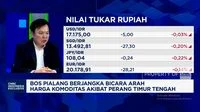
Jakarta, CNBC Indonesia – Gunawan Herman, the President Director of Dupoin Futures Indonesia, issued a critical assessment on Monday, April 20, 2026, detailing how escalating geopolitical turmoil in the Middle East has significantly amplified volatility across global futures markets. His remarks, made during an exclusive interview on CNBC Indonesia’s Power Lunch with Syarifah Rahma, underscored the urgent need for traders and investors to fortify their analytical frameworks to navigate the current climate of pronounced market uncertainty. Herman emphasized that a robust combination of fundamental and technical analysis is no longer merely advantageous but an essential prerequisite for identifying optimal entry and exit points that can yield profitable opportunities in these turbulent times.
The confluence of ongoing conflicts, diplomatic stalemates, and the ever-present threat of regional escalation in the Middle East has sent ripples throughout the global financial system. These geopolitical tremors are particularly felt in commodity futures, where supply chain disruptions, shifts in demand, and speculative trading can lead to rapid and unpredictable price movements. Herman’s insights come at a time when market participants are grappling with an increasingly complex array of factors influencing asset valuations and trading decisions. The inherent leverage in futures contracts means that even minor price fluctuations, when exacerbated by high volatility, can result in significant gains or losses, thereby demanding an even greater degree of precision in market forecasting and risk management.
Understanding the Geopolitical Undercurrents
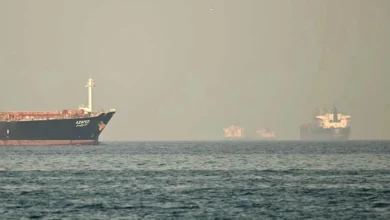
The Middle East, a region pivotal to global energy supplies and international trade routes, has been a perennial source of geopolitical tension. The current period is marked by several interconnected conflicts and rivalries that contribute to market instability. These include, but are not limited to, the protracted Israel-Hamas conflict, which has broader implications for regional stability; proxy confrontations involving major powers; and recurring incidents of maritime disruptions, particularly in critical chokepoints like the Red Sea. The Red Sea incidents, for instance, have directly impacted global shipping, leading to increased transit times, higher freight costs, and concerns about the reliability of supply chains, especially for crude oil and liquefied natural gas (LNG). Such disruptions inevitably feed into commodity markets, creating upward pressure on energy prices and prompting a flight to perceived safe-haven assets.
Historically, geopolitical crises in the Middle East have a documented tendency to ignite market volatility. The 1973 oil crisis, the Gulf Wars of 1990-91 and 2003, and more recent flare-ups have consistently demonstrated how regional instability can translate into global economic shocks. These events often trigger sharp increases in oil prices, affecting inflation worldwide and influencing central bank policies. Furthermore, they can lead to shifts in investor sentiment, prompting a reallocation of capital from riskier assets to those traditionally considered safer, such as gold, specific government bonds, and certain currencies. The current landscape is distinguished by the multi-faceted nature of the threats, which complicates predictive modeling for investors.
The Dynamics of Volatility in Futures Markets
Futures markets, by their very nature, are designed for speculating on future price movements and hedging against price risk. This makes them highly sensitive to information, especially news related to supply-demand imbalances, economic data, and geopolitical events. When geopolitical tensions escalate, the flow of information becomes erratic and often contradictory, leading to heightened uncertainty. This uncertainty manifests as increased volatility, characterized by wider price swings, higher trading volumes, and sometimes reduced market depth as participants become more cautious.
In such an environment, the risk of "gap openings" (where the market opens significantly higher or lower than its previous close) increases, posing challenges for traders reliant on continuous price action. Margin requirements for futures contracts can also be adjusted upwards by exchanges during periods of extreme volatility to mitigate systemic risk, potentially leading to margin calls for traders who are not adequately capitalized. This interconnectedness means that a crisis in one part of the world, especially in a region as strategically important as the Middle East, can have a cascading effect across various futures contracts, from crude oil and natural gas to agricultural commodities and financial instruments.
Gold: A Bellwether in Times of Crisis
For gold, a commodity traditionally viewed as the ultimate safe-haven asset, the current geopolitical climate, combined with broader macroeconomic factors, creates a particularly complex trading environment. Gunawan Herman specifically highlighted three critical factors that investors must meticulously monitor when trading gold futures: the direction of the U.S. Federal Reserve’s interest rate policy, the movement of the U.S. Dollar (USD) exchange rate, and the ongoing escalation of geopolitical tensions. Maximizing returns in gold futures hinges on a sophisticated understanding of how these elements interact.
-
The Federal Reserve’s Interest Rate Policy: Gold, as a non-yielding asset, typically faces headwinds when interest rates rise. Higher interest rates increase the opportunity cost of holding gold compared to interest-bearing assets like bonds or savings accounts. Conversely, a dovish stance from the Fed, characterized by stable or declining interest rates, tends to make gold more attractive. The market’s perception of inflation also plays a crucial role; if inflation is expected to persist or accelerate, gold often gains appeal as a hedge against the erosion of purchasing power, irrespective of nominal interest rates. The Fed’s forward guidance and actual policy decisions thus become critical determinants for gold’s trajectory. Recent statements from Fed officials, for example, indicating a cautious approach to rate cuts due to persistent inflationary pressures, have created a nuanced environment for gold, balancing its safe-haven appeal against the strength of the dollar and bond yields.
-
U.S. Dollar Exchange Rate: There is an inverse relationship between the U.S. Dollar and gold prices. Since gold is predominantly priced in USD on international markets, a stronger dollar makes gold more expensive for holders of other currencies, dampening demand. Conversely, a weaker dollar makes gold more affordable, often leading to increased demand and higher prices. This dynamic means that any economic data or central bank actions that influence the dollar’s strength – such as inflation reports, employment figures, or shifts in global trade balances – will concurrently impact gold futures. Geopolitical events themselves can sometimes trigger a "flight to safety" into the dollar, which can temporarily exert downward pressure on gold, even as other aspects of the crisis might suggest gold’s appeal.
-
Geopolitical Escalation: This is perhaps the most direct and immediate driver of gold’s safe-haven demand. When conflicts intensify, or new threats emerge, investors often rush to gold to preserve capital amidst heightened uncertainty. This phenomenon was evident during the initial phases of the Russia-Ukraine conflict in early 2022, which saw gold prices surge to near-record highs. Similarly, each significant escalation in the Middle East – from missile strikes to maritime attacks – tends to trigger an immediate upward reaction in gold prices as investors seek refuge from perceived market risks. The duration and intensity of these price spikes depend on the perceived longevity and severity of the geopolitical crisis. Data from the World Gold Council consistently shows a correlation between geopolitical risk indices and gold price performance over the past decades.
Strategic Imperatives for Traders and Investors
In light of these multifaceted challenges, Gunawan Herman’s call for strengthening analytical capabilities is paramount. He outlined a two-pronged approach involving both fundamental and technical analysis, complemented by rigorous risk management.
-
Reinforcing Fundamental Analysis: For futures traders, fundamental analysis extends beyond traditional corporate financial statements to encompass macroeconomic indicators, geopolitical developments, and supply-demand dynamics specific to each commodity. For gold, this means diligently tracking central bank policies (especially the Fed), global inflation rates, currency movements, global economic growth forecasts, and, critically, geopolitical headlines. Traders must develop an acute awareness of political developments in key regions, understanding how potential shifts in power, conflicts, or diplomatic breakthroughs could impact market sentiment and commodity flows. This involves staying updated through reputable news sources, economic reports, and geopolitical intelligence briefings, rather than relying on fragmented information.
-
Mastering Technical Analysis: While fundamental analysis provides the ‘why’ behind market movements, technical analysis offers insights into the ‘when’ and ‘how much.’ By studying historical price charts, trading volumes, and various indicators, traders can identify patterns, trends, and key support and resistance levels. In volatile markets, technical indicators such as Bollinger Bands, Relative Strength Index (RSI), and Moving Average Convergence Divergence (MACD) can help gauge momentum, overbought/oversold conditions, and potential trend reversals. Combining technical entry and exit signals with a sound fundamental understanding allows traders to time their trades more effectively, capitalize on short-term opportunities, and mitigate risks during abrupt market shifts. For instance, a technical breakout above a key resistance level for gold, supported by escalating geopolitical news, would be a strong signal for a long position, provided risk parameters are in place.
-
Prudent Risk Management: The emphasis on risk management cannot be overstated in a volatile environment. Herman implicitly stressed the importance of strategies such as setting clear stop-loss orders to limit potential losses on adverse price movements. Position sizing, which involves determining the appropriate amount of capital to allocate to a single trade, becomes crucial to avoid overexposure. Diversification, where appropriate, across different asset classes or commodities can help spread risk. Furthermore, understanding and managing leverage is vital in futures trading, as high leverage can magnify both gains and losses. Traders must be prepared for increased margin calls and ensure they have sufficient capital to withstand significant market swings without being forced to liquidate positions at unfavorable prices. Emotional discipline, avoiding impulsive decisions driven by fear or greed, is also a cornerstone of effective risk management.
Broader Economic Implications and Expert Perspectives
Beyond individual trading strategies, the persistent geopolitical instability in the Middle East carries significant broader economic implications. Elevated energy prices, a common byproduct of regional tensions, can fuel global inflation, forcing central banks worldwide to confront difficult policy choices. Higher input costs for businesses can dampen economic growth, potentially leading to stagflationary pressures. Global trade flows are also at risk, with disruptions to shipping lanes and increased insurance premiums translating into higher costs for consumers and reduced corporate profits.
Many economists and financial institutions echo Herman’s cautious stance. Analysts at major investment banks have highlighted that geopolitical risk premiums are now a more permanent feature of commodity markets, particularly for oil and gas. They advise institutional investors to stress-test their portfolios against various geopolitical scenarios, including prolonged conflicts and wider regional contagion. International bodies like the IMF and World Bank have also consistently warned about the adverse impact of geopolitical fragmentation on global economic stability and growth prospects, urging international cooperation to de-escalate tensions and secure critical trade routes.
The Path Forward: Vigilance and Adaptability
As the global financial landscape continues to evolve under the shadow of geopolitical uncertainty, the insights from leaders like Gunawan Herman serve as a critical reminder of the imperative for continuous learning and adaptation among market participants. The date of his remarks, April 20, 2026, highlights the ongoing nature of these challenges and the need for a forward-looking perspective. The interplay of monetary policy, currency valuations, and geopolitical flashpoints will continue to define the risk-reward matrix in futures trading, particularly for sensitive commodities like gold.
Ultimately, successful navigation of these turbulent waters will depend on an investor’s capacity to integrate diverse analytical tools, exercise stringent risk management, and maintain an unwavering focus on the underlying fundamentals driving market dynamics. The call for strengthening fundamental analysis, combined with strategic technical insights, is a blueprint for resilience in an era where market stability is increasingly elusive, and vigilance is the ultimate currency for informed decision-making. The future of futures trading will belong to those who are not only prepared for volatility but also equipped to master its complexities.
Related posts: