Microsoft’s Patch Tuesday Unleashes Record-Breaking Update with Over 570 Vulnerabilities Addressed, Fueled by AI Discoveries

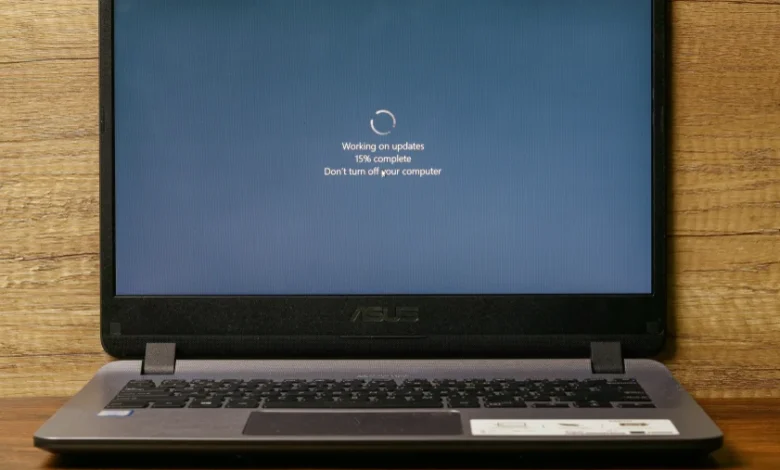
Microsoft Corp. today released software updates to plug at least 570 security holes in its Windows operating systems and other software, almost triple the number of vulnerabilities the software giant fixed in its record-smashing Patch Tuesday release last month. Microsoft attributed the burgeoning patch counts to vulnerability discoveries aided by artificial intelligence.
The sheer volume of security patches deployed by Microsoft this month signals a significant shift in the cybersecurity landscape, directly correlating with the accelerating pace of vulnerability discovery, a phenomenon largely attributed to advancements in artificial intelligence. This July Patch Tuesday update not only dwarfs previous records but also highlights a critical inflection point in how software vulnerabilities are identified and subsequently addressed, with profound implications for both defenders and attackers.
A Torrent of Patches: Unpacking the July Security Update
Microsoft’s latest Patch Tuesday, released on the second Tuesday of July, stands as a landmark event in the company’s history of software maintenance and security. The release addresses a staggering 570 security vulnerabilities across its extensive product portfolio, a figure that nearly triples the previous record set in June. This surge in patch counts is not a random anomaly but a direct consequence, as Microsoft itself has stated, of the enhanced capabilities offered by artificial intelligence (AI) in uncovering security flaws.
Of the 570 vulnerabilities patched, nearly 60 have been classified with a "critical" severity rating. This classification means that these flaws represent the most significant risks, enabling malicious actors or malware to potentially gain remote control over a Windows device with minimal or no user interaction. The ease with which such vulnerabilities can be exploited makes them prime targets for cybercriminals seeking to compromise systems for data theft, espionage, or disruption.
Adding to the urgency of this release, Microsoft also addressed three zero-day vulnerabilities. Zero-day flaws are particularly dangerous because they are unknown to the vendor and often to the cybersecurity community, meaning no patches or defenses are readily available when they are first exploited. The fact that two of these zero-day flaws were already being actively exploited in the wild underscores the immediate threat they posed to users before this update.
Critical Vulnerabilities and Zero-Day Exploits
The July Patch Tuesday update tackles a diverse range of critical vulnerabilities, with a particular focus on those that allow for privilege escalation. Two of the zero-day weaknesses patched this month fall into this category, enabling attackers to elevate their user rights on a Windows system. This means a compromised user account with limited privileges could be leveraged to gain administrative control over the system.
Alongside these zero-day exploits, Microsoft has also remediated approximately 250 other "elevation of privilege" flaws. Among these are two specific vulnerabilities: CVE-2026-56155, an issue within Active Directory Federation Services (AD FS), and CVE-2026-56164, a vulnerability affecting Microsoft SharePoint. These specific flaws, while not zero-days, represent significant risks within enterprise environments that heavily rely on these Microsoft services for identity management and collaboration. Exploiting these could allow an attacker to gain deeper access within a corporate network.
Another notable vulnerability addressed is CVE-2026-50661, a security feature bypass affecting Windows BitLocker. BitLocker is a full-disk encryption feature designed to protect data on Windows devices. This particular flaw, if exploited, could allow attackers with physical access to a device to bypass encryption and gain access to sensitive data. While Microsoft has indicated that this bug has been publicly disclosed, they are not aware of any active exploitation attempts at present. However, the potential for data breaches makes this a critical fix for users who rely on BitLocker for data security.
The AI Factor: Accelerating Discovery and Defense
The unprecedented volume of patches released this month has been directly linked by Microsoft to the growing influence of artificial intelligence in cybersecurity. Pavan Davuluri, Executive Vice President at Microsoft, articulated this shift in a blog post on July 9th. He stated that Windows users can expect to see "a higher volume of security updates included in each security release" moving forward.
Davuluri explained that "the pace of vulnerability discovery is changing with advances in AI making it possible to find more issues, faster, across more code, with new mechanisms that can accelerate both discovery and analysis." This statement underscores a fundamental change: AI is not just a tool for finding bugs; it’s becoming an indispensable partner in the ongoing battle for digital security. AI algorithms can sift through vast amounts of code, identify patterns indicative of vulnerabilities, and even simulate potential attack vectors far more efficiently than human analysts alone.
This acceleration in discovery is a double-edged sword. While it empowers Microsoft and other software vendors to identify and fix flaws more rapidly, it also means that vulnerabilities, once found, can be weaponized by malicious actors with greater speed. The cybersecurity arms race is intensifying, with AI playing an increasingly central role on both sides.
New Frontiers in Exploitation: Microsoft Copilot and the Exploitability Index
The July Patch Tuesday also highlighted a critical vulnerability related to Microsoft Copilot, the AI-powered assistant integrated into Windows. Jack Bicer, director of vulnerability research at Action1, drew attention to CVE-2026-48561, a remote code execution flaw in Microsoft Copilot with a high CVSS threat score of 9.6. This vulnerability could allow an unauthorized attacker to execute code remotely over a network.
The attack vector described is particularly insidious: an attacker could host a malicious website. When a user visits this site using Microsoft Edge for Android, their browser could be tricked into automatically sending crafted prompts to Copilot. This interaction could then be leveraged to execute malicious code on the user’s device. This example illustrates how AI-powered tools themselves can become targets or vectors for exploitation.
Microsoft utilizes an "exploitability index" to assess the likelihood of a given vulnerability being exploited by attackers. This index is based on their assessment of how easily a reliable exploit can be developed. However, the rapid advancements in AI-driven exploit development are challenging the efficacy of such human-centric assessment models.
Satnam Narang, senior staff research engineer at Tenable, voiced concerns that Microsoft’s exploitability index needs to adapt more quickly to the "machine speed" of AI-driven discovery. He pointed to the SharePoint zero-day (CVE-2026-56164) as a case in point. Microsoft initially assigned this flaw an "less likely" exploitability rating, yet it was subsequently added to CISA’s Known Exploited Vulnerabilities catalog on July 1st.
Narang further cited findings from Anthropic’s Red Team, which demonstrated that their AI model, Mythos Preview, could generate proof-of-concept exploits for 13 out of 14 vulnerabilities that were initially rated as "Exploitation Less Likely" or "Exploitation Unlikely." This suggests that traditional methods of assessing exploitability are becoming increasingly outdated. "What this means is that our way of looking at Patch Tuesday has changed, because the exploitability index is centered around humans, not AI tools, and as these tools continue to improve, defense needs to improve alongside it," Narang commented.
A Broader Industry Trend: The Shifting Cadence of Security Updates
Microsoft’s record-breaking update is not an isolated event but part of a larger trend within the software industry. Chris Goettl, an analyst at Ivanti, observed that many major software vendors are increasing their patch cadence. For instance, Adobe announced its move to twice-monthly security bulletins, scheduled for the second and fourth Tuesdays of each month, also citing AI as a catalyst for accelerating their patch cycles.
Companies like Cisco, Mozilla, and Oracle are also shipping security updates more frequently. Furthermore, Google’s patch batches in June 2026 reportedly totaled over 900 security fixes, indicating a substantial increase in the volume of vulnerabilities being addressed across the tech ecosystem. This collective shift towards more frequent and comprehensive patching reflects the growing recognition of the escalating threat landscape and the need for proactive security measures.
Implications for Users: Caution Advised Amidst the Flood of Fixes
The sheer magnitude of the July Patch Tuesday update necessitates careful consideration for end-users. While prompt application of security patches is crucial for maintaining system integrity, the sheer volume of fixes released today could introduce unforeseen complications.
It is often advisable to back up Windows systems and data before applying significant operating system updates. Given the unprecedented number of patches deployed this month, end-users may want to consider waiting a few days before installing these updates. It is not uncommon for security patches to introduce system stability issues, and the likelihood of such problems may increase proportionally with the size and complexity of the patch bundle.
The evolving nature of cybersecurity, driven by AI, demands a continuous reassessment of our defense strategies. As Microsoft and its peers navigate this new era of accelerated vulnerability discovery and exploitation, users must remain vigilant and informed, adapting their own security practices to match the pace of innovation and the ever-present threats in the digital realm. The July Patch Tuesday serves as a stark reminder that the frontline of cybersecurity is constantly shifting, and adaptability is the ultimate defense.