The Future of Software Development Retreat Highlights AI’s Double-Edged Sword: Productivity Promises Versus Pervasive Risks


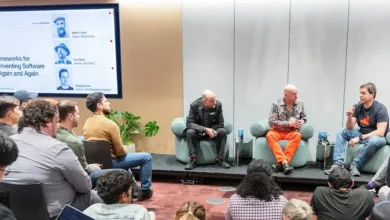
The recent Future of Software Development Retreat, a prominent gathering for industry leaders and practitioners, has concluded with a comprehensive report by Thoughtworks detailing its key findings. While the event aimed to forecast the trajectory of software engineering, a significant portion of the discussions revolved around the burgeoning influence of Large Language Models (LLMs) and the complex interplay between their promised productivity gains and the inherent risks they introduce, particularly concerning security and operational integrity. The full report, now publicly available, synthesizes these critical conversations, underscoring a growing divide between executive enthusiasm and engineering caution.
The Executive-Engineer Chasm: Unrealistic Expectations and Unforeseen Consequences
A central theme emerging from the retreat was the palpable disconnect between the C-suite’s eager embrace of LLMs and the grounded concerns of software engineers. Executives, driven by the allure of accelerated productivity and cost reduction, are actively pushing for LLM integration. However, this enthusiasm often appears to overlook the intricate security vulnerabilities and potential for catastrophic misapplication that engineers, on the front lines of development, are acutely aware of.
This tension was vividly illustrated by a cautionary tale shared during a session. A company, seeking to optimize the maintenance of its field equipment, implemented an ML-trained software solution to manage air filter replacements. The initial results were lauded, with projected savings of $50 million due to less frequent filter changes. The underlying assumption, however, was that the ML models, trained on data from desert environments, were universally applicable. The stark reality emerged when the same system was deployed in arctic regions. The critical difference in environmental factors—dust in deserts versus mosquitoes in the arctic—proved to be a critical oversight. Decaying mosquitoes in the arctic air filters, a factor absent in desert training data, led to a severe fire risk, resulting in a staggering $100 billion loss for the company.
While this anecdote might seem extreme, it serves as a potent reminder of a fundamental principle often overlooked: the critical importance of context in the application of sophisticated technologies. The narrative, though illustrative of AI’s potential pitfalls, also resonates with historical instances of technological misapplication that predate AI. Pattern writers, for instance, have long emphasized the significance of context in their work. The takeaway from this incident, as highlighted by retreat participants, is a renewed emphasis on vigilant oversight and the imperative to build robust sensor systems for rapid feedback loops, regardless of the technology employed.
The Rise of "Vibe Coding" and the Shadow IT Epidemic
The proliferation of LLMs has also accelerated concerns surrounding "citizen developers" and the practice of "vibe coding"—an informal, often unvetted approach to software creation. Engineers express significant apprehension regarding the risks associated with these unmanaged development practices. This phenomenon is not entirely new; IT departments have long grappled with business decisions underpinned by spreadsheets created with minimal control, testing, or data quality assessment. However, vibe coding, amplified by LLM accessibility, exacerbates these pre-existing vulnerabilities.
The implications for security breaches are substantial. To mitigate these risks, companies are urged to implement a multifaceted approach. This includes raising awareness at the board level through threat modeling sessions, educating leadership on the potential dangers. Furthermore, a strong recommendation is to isolate vibe-coded applications within separate infrastructure, implementing deterministic controls over data access to counteract what is termed the "lethal trifecta" of AI risks: unauthorized data access, prompt injection, and model poisoning.
One company’s experience underscores the challenges. Initially encouraging widespread vibe-coding among citizen developers, the organization subsequently recoiled from the emergence of a vast shadow IT ecosystem. They are now actively seeking to develop a platform that can provide necessary control without stifling the innovative tools that citizen developers have produced. This delicate balancing act is becoming a critical strategic imperative for many organizations.
The Bubble Phenomenon: Echoes of the Dot-Com Era and a More Cautious Outlook
A prevailing sentiment at the retreat was the widespread recognition that the current technological landscape is experiencing a significant bubble, akin to the dot-com boom and bust of the late 1990s and early 2000s. While technological advancements often catalyze economic expansion and subsequent corrections, the longevity and ultimate outcome of the current AI bubble remain subjects of intense debate. Historical parallels are drawn to the dot-com era, where, despite widespread recognition of a bubble by 1995, the landscape ultimately gave rise to both cautionary tales of failure, like Webvan and Pets.com, and enduring giants such as Amazon.
However, a notable distinction was drawn by a seasoned retreat attendee. Unlike the dot-com era, which was characterized by widespread excitement and the tangible creation of novel technologies and businesses, the current AI surge appears to be met with a more tempered enthusiasm and a degree of wariness. This subdued sentiment may stem from the sobering realities that followed the dot-com optimism. The pervasive presence of social media, for instance, while ubiquitous, has not universally translated into enhanced quality of life, even with extensive usage.
Similarly, despite the fanfare surrounding "agentic programming" and the purported flood of revolutionary applications, a discernible lack of truly groundbreaking and widely adopted applications built on this technology has been observed. Furthermore, significant improvements in commonly used applications from major tech players like Google and Microsoft, fueled by AI, have yet to materialize in a transformative manner for the average user.
Cost-Cutting as the Primary AI Driver
This observation suggests that a primary driver for current AI adoption, particularly at the executive level, is cost reduction. The allure of streamlining operations and trimming expenditures through AI is a potent motivator for boards and leadership. However, this focus on cost-cutting might be tempered by the escalating concern over "token costs"—the expenses associated with utilizing LLM APIs. As these costs become more transparent and substantial, the initial eagerness for AI integration may face a more pragmatic reassessment.
LLMs in Operations: Enhancing Observability and Operational Efficiency
Beyond the strategic and executive discussions, a significant portion of the retreat focused on the practical applications of LLMs in operational contexts. Participants noted that LLMs are proving invaluable in enhancing operational efficiency, particularly when integrated with robust observability tools. Agents powered by LLMs can rapidly identify anomalies within event streams, significantly accelerating incident detection.
However, the effectiveness of these agents is contingent on the quality of observability data provided. A persistent challenge identified with citizen-developer applications is their frequent lack of comprehensive observability features, as citizen developers often do not prioritize their inclusion. The ability of LLM agents to analyze event streams also raises critical governance questions, given that these streams can contain sensitive information.
Reinforcing insights gathered from previous industry events, a consensus emerged that LLMs are highly beneficial for operations teams in deciphering code and understanding its functionality. By cross-referencing code with event traces, these tools can assist human operators in pinpointing the root causes of issues. Agents demonstrate particular utility in managing recurring incidents, as they can aggregate extensive data from various past cases, presenting a consolidated view to human teams.
The Next Frontier: Auto-Remediation and its Perils
The advancement to auto-remediation by AI agents marks a significant leap in capabilities, albeit one accompanied by heightened concerns. The imperative for agents to meticulously document all actions taken during the remediation process is paramount. Furthermore, mechanisms for providing feedback to development teams are essential to foster continuous learning and improvement. It’s important to note that while agents can update their context, true learning, in the human sense, remains a distinct capability.
A prevalent perception at the retreat was that many individuals overestimate the current capabilities of agents in handling complex incidents. This overestimation often stems from viewing incident resolution as a simple, linear process, when in reality, it frequently involves unexpected challenges and necessitates significant human adaptability—a strength that LLMs currently lack.
The potential for agent-developed code to introduce unrequested features was also highlighted as a significant peril. One team recounted spending three days attempting to identify and understand an unsolicited feature, struggling to ascertain its origin and whether it held any value. Such instances underscore the need for rigorous validation and human oversight even in automated processes.
The Legal Landscape and LLM’s Role in Education
In a surprising yet illuminating development, an experiment conducted by a group of law professors shed light on the efficacy of LLMs in providing concise answers to student queries. In an evaluation involving forty contract law questions, both professors and LLMs were tasked with generating answers. When presented with pairs of human-generated and LLM-generated responses, professors consistently favored the LLM outputs.
The study reported that professors rated LLM responses significantly higher than those of their peers, with an average win rate of 75.33%. The LLMs performed comparably to the best instructors, and their responses were rarely flagged as harmful (3.53% compared to 12.06% for professors). This finding draws a parallel to the distinction between "interactional expertise" and "contributory expertise," suggesting that LLMs may excel in delivering information effectively, even if they do not possess the same depth of understanding or nuanced judgment as human experts.
Domain-Specific Languages (DSLs) as a Pathway to Reliable LLM Integration
The discussion then shifted to the critical role of Domain-Specific Languages (DSLs) in enhancing the reliability and security of LLM applications. Building upon recent articles and discussions, participants emphasized how DSLs can address several key challenges associated with LLM deployment.
As articulated by Spender Nelson, DSLs offer significant advantages: they can be highly token-efficient, thereby reducing costs; they enable the enforcement of stringent security boundaries; and they allow for the translation of high-level LLM intent into deterministic code. This deterministic translation ensures predictable behavior and embeds guardrails at the compiler level.
LLMs themselves are proving adept at learning and working with DSLs, a natural synergy given their linguistic foundation. A small amount of documentation is often sufficient for LLMs to grasp and utilize a DSL, and clear error messages facilitate self-correction. Practical applications include query languages for data lakes that incorporate security and authorization protocols, and expression languages designed to generate secure SQL WHERE clauses.
A historical barrier to DSL adoption has been the complexity of building parsers and associated tooling. LLMs are now significantly lowering this barrier. However, the underlying semantic model that a DSL represents is considered paramount, with the DSL itself being a projection of that model. The potential exists for LLMs to explore novel ways of projecting these models, opening up new avenues for application development.
The Pervasive Influence of "LLM-Speak" and the Erosion of Authentic Voice
A more disquieting observation from the retreat was the increasing prevalence of "LLM-speak"—a distinct linguistic style that, while sometimes functional, often carries an inauthentic or "miasmatic" quality. This pervasive style is eliciting visceral negative reactions from readers, leading to an immediate dismissal of content that exhibits these characteristics. The cognitive load of navigating an internet increasingly saturated with AI-generated content is becoming a significant concern.
Jason Koebler’s observation on how AI use is "breaking his brain" resonates deeply. The constant need to discern between human and AI-generated content, and the subtle yet pervasive "weirdness" of AI prose, imposes a considerable cognitive burden. This has led to a shift in perspective, from encouraging AI use for polishing prose to advocating for its rejection in favor of authentic human expression. The concern is that the ubiquitous LLM voice inherently discredits writing, even before its content can be properly absorbed.
The notion of merely tweaking AI-generated first drafts is being questioned, as it may be difficult to entirely expunge the "LLM-ness" from the text. Even seeking AI suggestions for improvement carries the risk of inadvertently adopting its characteristic style, triggering readers’ "LLM-antibodies."
This challenge presents both a peril and an opportunity. Writers who cultivate a distinctive human voice are likely to gain greater visibility and credibility. However, coaching individuals to express their authentic personality in writing, especially in academic and corporate contexts that tend to stifle engaging prose, remains a significant hurdle. LLMs, as powerful amplifiers, risk exacerbating this stifling effect. For non-native English speakers, this challenge is even more pronounced, as the temptation to rely on AI smoothing away linguistic individuality is considerable.
The most immediate and practical advice offered to combat this trend is to "Say Your Writing." Reading written work aloud, a technique long recommended for improving prose and overcoming sluggish writing, is now posited as an essential strategy for preserving individuality against the homogenizing influence of AI. Speech patterns often reflect a writer’s genuine self more closely than their written output, making verbalization a crucial tool for fighting the forces that smooth away personality and distinctiveness in writing. As the industry navigates the complex landscape of AI integration, the preservation of authentic human voice emerges as a critical and perhaps even more vital aspect of software development and communication than ever before.