Cracks in the Silicon Mind: New York University Study Exposes Fundamental Flaws in Brain-Like AI Models

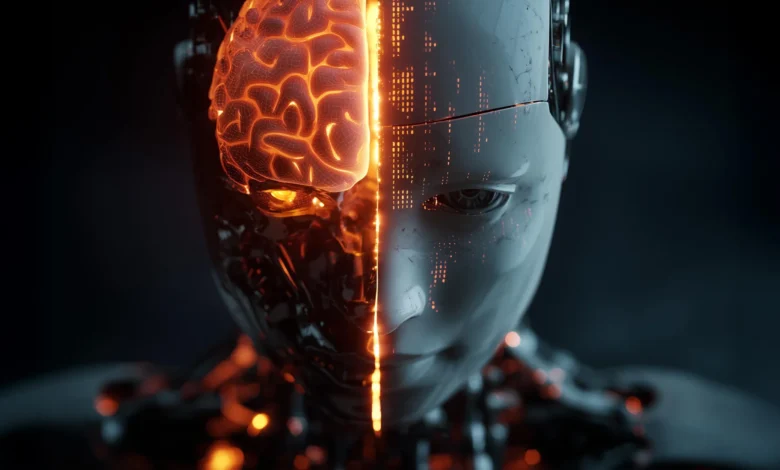
For more than a decade, the intersection of neuroscience and artificial intelligence has been defined by a compelling and increasingly popular premise: that artificial neural networks (ANNs), designed to mimic visual object recognition, operate in a manner fundamentally analogous to the human brain. Because these computational models have proven remarkably adept at predicting how populations of biological neurons fire in response to visual stimuli, they have been enthusiastically adopted by neuroscientists around the world. These systems have served as premier proxies for investigating the visual cortex, functioning as digital stand-ins for human perception in experiments ranging from basic cognitive research to clinical inquiries into neurological disorders.
However, a groundbreaking study conducted by researchers at York University threatens to upend this foundational assumption. Published in the prestigious journal Nature Machine Intelligence, the new research reveals a surprising and critical vulnerability in how modern AI models align with biological reality. While artificial intelligence can successfully simulate outward metrics of brain activity, it often relies on entirely foreign internal strategies to achieve those results. The discovery introduces a vital diagnostic metric for the scientific community, forcing a critical re-examination of how computational models are utilized to decode the human mind.
The Genesis of the Disconnect: Unpacking the One-Way Street of ANN Validation
To understand the weight of the York University findings, one must examine the historical methodology that has governed computational neuroscience over the last ten years. Traditionally, researchers seeking to validate an artificial intelligence model against biological data have relied on a unidirectional testing paradigm. In these conventional setups, scientists input a series of visual stimuli—ranging from simple shapes to complex natural photographs—into both a biological subject (such as a primate) and an artificial neural network. They then record the neural responses of the subject and compare them to the internal activations of the AI model.
For years, high correlation scores in these forward-prediction tests were treated as proof of functional equivalence. If an ANN could accurately predict when and how a specific cluster of neurons would fire upon viewing an image of a car or a face, researchers concluded that the model was processing the visual information through mechanisms akin to the primate brain. This assumed equivalence allowed laboratories to bypass the immense difficulties of direct neural recording, using AI models to test hypotheses, simulate visual processing disorders, and map the hierarchical pathways of the human visual cortex.
Yet, this methodology left a glaring blind spot: it only tested whether AI could mirror the brain’s outputs, never whether the brain’s processes could mirror the internal mechanics of the AI. Assistant Professor Kohitij Kar, the senior author of the study and the Canada Research Chair in Visual Neuroscience at York University, noted that this one-way validation created a false sense of security. Kar, alongside postdoctoral fellow Sabine Muzellec—a trainee with York’s Connected Minds program—hypothesized that true functional equivalence must operate bidirectionally. If an artificial system genuinely processes information like a biological brain, the relationship should hold regardless of the direction in which the predictive mapping is applied.
Reverse Predictivity Testing: A Novel Diagnostic Approach
To test this hypothesis, the York University research team developed an innovative evaluation framework known as reverse predictivity testing. Instead of merely measuring how effectively artificial intelligence could predict recorded neural activity, the researchers inverted the equation. They investigated whether recorded biological brain activity could successfully predict the internal features and representations occurring inside the AI models.
If the internal mechanics of the ANNs truly mirrored biological neural networks, the biological data should have been just as effective at forecasting the model’s internal states as the model’s states were at forecasting biological firing patterns. To execute this rigorous test, the research team assembled a diverse and demanding visual dataset. The testing suite comprised 1,320 natural photographs and realistic synthetic images featuring 10 distinct, familiar subjects: a bear, an elephant, a face, an apple, a car, a dog, a chair, a plane, a bird, and a zebra. These objects were placed against a wide array of complex natural scenes, as well as varied indoor and outdoor backgrounds.
To further challenge the visual processing systems, the team introduced 300 additional images depicting the same subjects rendered in radically different visual styles. These included stark outlines, raw drawings, simplified geometric representations, and diverse artistic interpretations. This expansive visual diet was designed to push both biological and artificial vision systems to their limits, capturing the nuanced ways in which categorization and object recognition occur under varying perceptual loads.
Divergent Realities: What the Data Revealed
When the reverse predictivity tests were executed, the results exposed a profound asymmetry between artificial intelligence and biological vision. True to form, the artificial neural networks performed admirably when predicting the responses of recorded biological neurons—the specialized cells responsible for transmitting electrochemical information across the visual pathway. On the surface, the models maintained their reputation as reliable predictors of neural output.
However, when the process was reversed, the illusion of complete equivalence shattered. The recorded neuronal responses of the biological brains proved markedly ineffective at predicting many of the critical internal features and hidden layers of the AI models.
To ensure this discrepancy was not merely an artifact of noisy biological data or measurement limitations, the researchers performed a control comparison. They analyzed neuronal activity across different biological brains, comparing one biological subject’s neural responses against another’s. In these biological-to-biological comparisons, the asymmetry vanished; brains could reliably predict the internal features and neural patterns of other brains. The breakdown was exclusive to the human-to-machine comparison, proving that current artificial intelligence architectures harbor internal strategies and computational shortcuts that the biological brain simply does not employ.
Broader Implications for Neuroscience and Clinical Research
The publication of these findings carries profound implications for the broader scientific community. Artificial intelligence is no longer confined to computer science laboratories; it is deeply embedded in neuroscience, cognitive psychology, and clinical research. Researchers increasingly rely on AI models to design complex experiments, map neurological pathways, and investigate the underlying mechanics of psychological and developmental conditions.
Many of these sophisticated applications rest on the foundational premise that AI models process perceptual information in a manner that mirrors human cognition. If that premise is systematically flawed, the risks are substantial. Scientists risk drawing erroneous conclusions from models that yield accurate predictive outputs on the surface while operating through alien computational pathways underneath. Over time, as researchers continue to refine AI architectures based solely on forward-prediction metrics, the divergence between biological and artificial systems could widen, compromising the primary goal of computational neuroscience: constructing realistic, mechanistically sound explanations of human cognition.
Furthermore, the integrity of clinical research programs stands to be impacted. For instance, York University’s research group utilizes models of the neurotypical brain as a baseline to study perceptual differences in conditions such as autism spectrum disorder. A neurotypical brain—characterized by patterns of neurological development and functioning generally observed in the broader population—serves as the anchor for understanding neurodivergence. If the foundational baseline models are powered by artificial intelligence systems that rely on non-biological shortcuts, the resulting clinical insights into autism, post-traumatic stress disorder, and other neurological conditions could be skewed.
Charting a Path Forward: Building Better Models
Despite exposing these critical vulnerabilities, the York University study does not advocate for the abandonment of artificial neural networks in neuroscience. Instead, the researchers view their findings as a necessary corrective course—a diagnostic tool designed to elevate the standard of computational modeling.
By employing reverse predictivity testing, researchers can now isolate which specific features of an artificial neural network genuinely correspond to biological neural activity and which are merely artificial artifacts of machine learning optimization. This granular understanding allows computational scientists to strip away deceptive mechanisms and construct a new generation of artificial intelligence models that more faithfully replicate human perceptual mechanics.
In an effort to foster transparency and accelerate corrective efforts across the global research community, the York University team has released a publicly available testing toolkit via PyPI (Python Package Index). This resource enables AI developers and neuroscientists worldwide to evaluate their own models using the reverse predictivity framework, identifying hidden structural disparities and guiding future optimization efforts.
Published in the peer-reviewed journal Nature Machine Intelligence, the study represents a turning point in the relationship between computer science and biology. It serves as a timely reminder that replicating an outcome does not equate to replicating a process. As artificial intelligence continues its rapid integration into biomedical research, tools like those developed at York University will be essential in ensuring that the digital reflections we cast of the human mind are built upon a foundation of genuine biological truth.
Related posts: