Mastering Python Descriptors to Build Advanced Controlled Attributes in Object-Oriented Programming

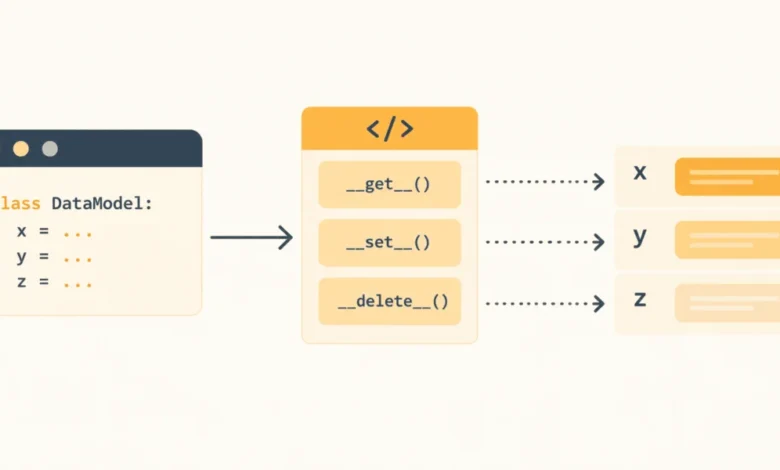
In the sophisticated landscape of Python software engineering, the management of object state and attribute access remains a cornerstone of clean, maintainable code. While many developers rely on conventional methods like getters, setters, or the @property decorator to encapsulate logic, a more powerful and granular mechanism exists within the language: the descriptor protocol. By implementing specialized methods such as get, set, and delete, descriptors allow developers to intercept attribute access, enabling the creation of robust, validated, and high-performance data structures. This article explores the mechanics of Python descriptors, detailing how they serve as the backbone for three critical programming patterns: validated attributes, computed attributes, and lazily loaded resources.
The Architectural Significance of the Descriptor Protocol
The descriptor protocol is not merely a utility but a fundamental element of Python’s object model. When an attribute access occurs on an instance, Python’s lookup chain first checks for the existence of a descriptor on the class. This mechanism is how built-in features such as methods, classmethods, and staticmethods function. Beyond these built-in features, custom descriptors empower developers to move beyond the limitations of simple variable assignment.
By offloading logic to a dedicated descriptor class, developers can eliminate the boilerplate code often associated with manual validation or transformation. This separation of concerns ensures that the parent class remains focused on its primary business logic, while the descriptor handles the intricacies of data integrity, currency conversion, or resource management. This architectural pattern is widely observed in large-scale frameworks like Django, which utilizes descriptors for its Object-Relational Mapping (ORM) fields, and SQLAlchemy, which relies on them to map database columns to Python attributes.
1. Enforcing Data Integrity Through Validated Attributes
Data validation is a recurring challenge in application development. Without proper safeguards, objects can enter invalid states, leading to unpredictable runtime errors. A validated attribute descriptor acts as a gatekeeper, intercepting any attempt to set a value and verifying it against predefined constraints—such as type, range, or format—before permitting the assignment.
Consider a scenario involving a travel management system where a rating system is employed. By utilizing the set method, a descriptor can enforce that any input provided for a "rating" attribute is not only a numeric type but also falls within a strict range, such as 1.0 to 5.0. This prevents the downstream contamination of data that might occur if an invalid value were stored.
class ValidatedRating:
    def __init__(self, min_val=1.0, max_val=5.0):
        self.min_val = min_val
        self.max_val = max_val

    def __set_name__(self, owner, name):
        self.public_name = name
        self.private_name = f"_name"

    def __get__(self, obj, objtype=None):
        if obj is None: return self
        return getattr(obj, self.private_name)

    def __set__(self, obj, value):
        if not isinstance(value, (int, float)):
            raise TypeError(f"self.public_name must be a number.")
        if not (self.min_val <= value <= self.max_val):
            raise ValueError(f"self.public_name must be between self.min_val and self.max_val.")
        setattr(obj, self.private_name, float(value))
The inclusion of the __set_name__ method, introduced in Python 3.6, is a critical advancement. It allows the descriptor to automatically capture the name of the attribute it is assigned to, facilitating the creation of a private storage location (e.g., _rating) within the instance’s dictionary. This eliminates the risk of name collisions and makes the descriptor reusable across different classes.
2. Streamlining Dynamic Logic with Computed Attributes
Computed attributes serve as a powerful tool for maintaining consistency in datasets that rely on derived information. In many financial or analytical systems, displaying the same data in multiple formats or units is a requirement. Rather than manually updating multiple fields whenever an underlying value changes, a computed descriptor calculates the result on-demand.
For instance, in a travel platform that tracks costs in local currencies, a "price_usd" attribute can be dynamically computed from a base "price_jpy" attribute. By implementing a get method that performs the conversion logic at the moment of access, the system ensures that the displayed value is always current, even if the exchange rate or the base price is updated. Because this is a read-only computed field, any attempt to set the attribute can be explicitly blocked, raising an AttributeError to prevent accidental data corruption. This pattern significantly reduces the risk of "stale data" bugs that occur when cached values are not properly synchronized.
3. Optimizing Performance with Lazily Loaded Attributes
One of the most impactful applications of the descriptor pattern is the implementation of lazy loading. In enterprise software, particularly when dealing with microservices or distributed databases, retrieving data can be an expensive operation involving significant network latency or high computational costs. If a specific piece of data, such as a detailed itinerary or a long-form description, is not always required for every object interaction, loading it at instantiation is inefficient.
A lazy descriptor postpones the data retrieval until the first time the attribute is actually accessed. Once the computation occurs, the result is cached directly into the instance’s dict. Subsequent accesses to the attribute will find the data in the local dictionary, bypassing the descriptor’s logic entirely. This "compute-once-and-cache" strategy is an essential optimization for high-performance applications, as it drastically reduces I/O wait times and minimizes memory consumption during the initial object creation phase.
Practical Implementation: The JapanTour Integration
To appreciate the synergy between these three patterns, consider an integrated class, JapanTour. By defining these descriptors as class-level attributes, we create a unified interface where validation, derivation, and lazy loading are handled automatically.
class JapanTour:
    rating = ValidatedRating(min_val=1.0, max_val=5.0)
    price_usd = ComputedUSDPrice()
    itinerary = LazyItinerary()

    def __init__(self, destination, price_jpy, rating):
        self.destination = destination
        self.price_jpy = price_jpy
        self.rating = rating
When an instance of JapanTour is initialized, the rating attribute immediately passes through the ValidatedRating logic, ensuring the object starts in a valid state. When the application later requests tour.price_usd, the descriptor performs the real-time currency conversion. Finally, the first access of tour.itinerary triggers the simulated database query, which is then cached for the remainder of the object’s lifecycle.
Broader Implications and Industry Adoption
The use of descriptors has profound implications for the design of large-scale Python systems. By abstracting away repetitive logic, developers can create more declarative APIs. This shifts the focus from "how to manage an attribute" to "what the attribute represents." In terms of maintenance, this approach is superior to scattered setter/getter methods; if the business rules for currency conversion or data validation change, the developer only needs to modify the descriptor class once rather than updating every occurrence in the codebase.
Furthermore, as Python continues to gain traction in data science and machine learning, the demand for efficient data management patterns is increasing. The ability to handle large, complex objects without overloading the system memory or sacrificing data integrity is a major advantage. While descriptors carry a slight overhead in terms of initial code complexity, the long-term benefits in code readability, reusability, and architectural robustness make them an indispensable skill for senior software engineers.
In conclusion, Python descriptors represent a sophisticated middle ground between simple attribute access and complex property management. Whether by ensuring that user-provided inputs meet rigorous standards, automating complex calculations, or optimizing resource-heavy operations through lazy loading, descriptors provide a cleaner, more modular way to define the behavior of data within a system. As software projects grow in complexity, mastering these advanced object-oriented features is essential for building systems that are not only functional but also resilient and highly performant. The transition from basic property management to the descriptor protocol marks a significant milestone in a developer’s journey toward writing professional-grade, scalable Python applications.