The Evolution of Agentic AI Architecture and the Rise of Multi-Agent Swarms in 2026

The landscape of artificial intelligence has undergone a fundamental transformation by mid-2026, moving away from the monolithic, brute-force orchestration that defined the early era of generative AI. Just eighteen months ago, developers were primarily concerned with "prompt engineering" and the construction of brittle, manual reasoning loops. Today, the industry has pivoted toward a decentralized architecture characterized by native model reasoning, standardized communication protocols, and specialized agentic swarms. This shift represents the maturation of AI from a conversational tool into a robust enterprise infrastructure capable of autonomous, high-stakes operational execution.
The Obsolescence of Brute-Force Orchestration
In the 2024-2025 period, the dominant paradigm for agentic AI was external orchestration. Engineers utilized frameworks like LangChain or LlamaIndex to force models into "Reasoning and Acting" (ReAct) loops. This required the model to output its thoughts, observe an environment, and then reflect on its own output in a continuous, token-heavy cycle. While groundbreaking at the time, these "System 1" models—named after Daniel Kahneman’s framework for fast, instinctive thinking—were not natively designed for complex planning.
By mid-2026, foundation model providers have integrated "System 2" thinking directly into the model architecture. Modern models now utilize hidden reasoning tokens and internal test-time compute to explore multiple solution branches before generating a single visible word. This native capability has rendered many external reflection loops redundant. According to recent industry benchmarks, systems utilizing native reasoning models have seen a 40% reduction in latency and a 35% decrease in token overhead compared to the forced orchestration patterns of 2025.
For the AI engineer, this means a shift in responsibilities. The task is no longer about forcing a model to "think step-by-step" through prompting; instead, the focus has moved to designing the "sandbox" or environment in which these naturally intelligent agents operate. The orchestration layer is now primarily concerned with routing, state management, and the enforcement of operational boundaries.
The Rise of the Agentic Swarm: A Microservices Revolution
As models became more capable of internal reasoning, the limitation shifted from cognitive ability to tool management. In the previous era, developers attempted to attach dozens of tools to a single "God Model," which often led to context window saturation, increased error rates, and "tool confusion."
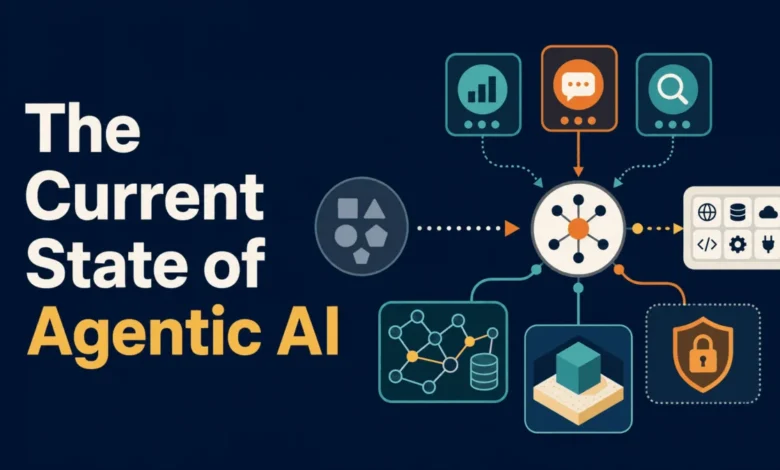
The industry response in 2026 is the "Agentic Swarm"—a multi-agent architecture that mirrors the transition from monolithic software to microservices. In a swarm, a complex task is decomposed into smaller, highly specialized units. A typical enterprise swarm now consists of:
- The Triage Agent: Acts as the entry point, analyzing user intent and routing the request to the most appropriate specialist.
- Specialist Agents: Narrowly focused models equipped with specific tools. For example, a "SQL Agent" might only have read-only access to a PostgreSQL database, while a "Data Analyst Agent" possesses a Python sandbox for processing CSV files.
- The Synthesis Agent: Collects the outputs from various specialists and compiles them into a coherent final response for the user.
This modular approach ensures that each agent operates with a lean context window, reducing the likelihood of hallucinations. Furthermore, it allows organizations to mix and match models. A swarm might use a high-parameter "frontier" model for the Triage and Synthesis roles, while utilizing smaller, faster, and cheaper models—such as the 2026 iterations of Llama or Qwen—for the specialized execution tasks.
Chronology of Agentic Evolution: 2023 to 2026
To understand the current state of the market, it is necessary to view the rapid progression of agentic capabilities over the last three years:
- Late 2023: The emergence of "AutoGPT" and "BabyAGI." These were experimental proofs-of-concept that demonstrated the potential for autonomous loops but suffered from infinite loops and high failure rates.
- 2024: The "Year of RAG" (Retrieval-Augmented Generation). The focus was on giving models access to external data, but agents remained largely reactive rather than proactive.
- 2025: Standardization of Tool Calling. Major providers introduced native tool-calling schemas, making it easier for models to interact with APIs. However, orchestration remained manual and code-heavy.
- Mid-2026: The Age of the Swarm and MCP. The introduction of the Model Context Protocol (MCP) and native System 2 reasoning allowed for the deployment of autonomous, self-correcting multi-agent systems at scale.
The Model Context Protocol (MCP): A Universal Interface
One of the most significant technical hurdles in 2025 was the "integration tax." Connecting an AI agent to a new data source, such as Slack, GitHub, or a proprietary database, required writing custom JSON schemas and handling complex authentication for every unique instance.
The standardization of the Model Context Protocol (MCP) has effectively solved this problem. Acting as a "USB port for AI," MCP provides a universal adapter between models and data. Instead of hardcoding API keys and custom wrappers into the agent’s environment, engineers now deploy MCP servers. These servers automatically expose available tools and resources to any agent that connects to them.
Industry analysts at Gartner suggest that the adoption of MCP has accelerated AI deployment timelines by nearly 60%. By separating the execution of the tool (which happens on the MCP server) from the reasoning (which happens in the model), organizations have achieved a level of security and modularity that was previously impossible. This separation of concerns allows IT departments to manage permissions at the server level, ensuring that an agent cannot exceed its authorized scope regardless of its reasoning capabilities.
Persistent Intelligence through Memory Graphs
A persistent criticism of early AI agents was their "amnesia." Every new session was a blank slate, requiring users to re-upload documents or re-explain preferences. While RAG provided a partial solution, it lacked the ability to understand evolving relationships between data points.
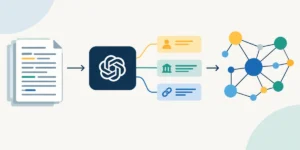
In 2026, production-grade swarms utilize "Memory Graphs." Unlike traditional vector databases that store isolated chunks of text, memory graphs (often built on Neo4j or similar graph databases) map the relationships between entities, events, and user preferences.
When a swarm executes a task, a specialized "Memory Agent" operates asynchronously in the background. Its sole function is to observe the swarm’s trajectory, extract relevant facts, and update the graph. If a user mentions a preference for "Q2 financial data over Q1" in a previous session, the Memory Agent records this relationship. In future sessions, the Triage Agent queries the Memory Graph to inject this context into the prompt, creating a system that truly "learns" from its history without requiring expensive model fine-tuning.
Security and the Threat of "AIjacking"
The shift to multi-agent swarms has introduced a new and complex attack surface. Security researchers have identified "AIjacking"—a form of indirect prompt injection—as a primary concern for the 2026 enterprise.
In a swarm architecture, the danger lies in "lateral movement." If an Agent A (which has the ability to read external emails) is compromised by a malicious instruction hidden in a message, it can use the standard handoff protocols to transfer that malicious context to Agent B (which has database access). Because the handoff is a legitimate architectural feature, traditional firewalls often fail to detect the intrusion.
To combat this, the industry is converging on three defensive layers:
- Dual-LLM Verification: Every high-stakes action proposed by a specialist agent must be reviewed by a separate, "clean" model that checks for injection patterns.
- The "Human-in-the-Loop" (HITL) Gate: Critical actions, such as executing a wire transfer or deleting database records, require a cryptographic signature from a human operator.
- Ephemeral Sandboxing: Every specialist agent operates in a containerized environment that is destroyed immediately after the task is completed, preventing the persistence of malicious state.
Broader Impact and Economic Implications
The transition to agentic swarms is fundamentally altering the software development lifecycle. The role of the "Full Stack Developer" is increasingly being supplemented by the "AI Architect," whose primary skill is not writing code, but designing the communication protocols and oversight mechanisms for autonomous agents.
Economically, the efficiency gains are substantial. Large-scale customer support, data analysis, and software testing are now being handled by swarms that operate 24/7 with minimal human intervention. However, this has prompted a renewed debate regarding labor displacement. A recent report by the World Economic Forum indicates that while agentic AI has automated 30% of routine knowledge-work tasks, it has simultaneously created a massive demand for "AI Oversight Officers" and "Protocol Engineers."
As we look toward the remainder of 2026, the trajectory is clear. The era of the "chatbot" is over. We have entered the era of the "autonomous system"—a world where specialized, reasoning-capable swarms navigate the complexities of the real world with increasing autonomy, efficiency, and scale. The remaining challenge for the industry is not making these agents "smarter," but making them more resilient, transparent, and secure.
Related posts: