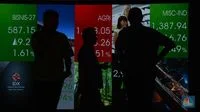
Indonesian Equities Retreat from Green Zone, IHSG Closes Session I Down 0.16% Amidst Rupiah’s Modest Strengthening to Rp 17,180 per US Dollar

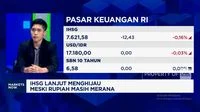
The composite stock price index, IHSG, concluded the first trading session on Monday, April 20, 2026, in negative territory, registering a 0.16% decline to settle at 7,621, a reversal from its earlier position in the green zone. This dip in the benchmark equity index contrasted with a slight appreciation of the Indonesian Rupiah, which firmed up marginally against the US Dollar to trade at Rp 17,180. The mixed performance underscores a complex interplay of domestic and international factors influencing investor sentiment in Southeast Asia’s largest economy, prompting market observers to closely scrutinize underlying drivers and anticipate potential shifts in the coming trading periods.
The Day’s Trading Chronicle: A Reversal of Fortunes
The morning began with an optimistic tone as the IHSG opened in the green, mirroring some positive momentum observed in other Asian markets following a relatively stable close on Wall Street last Friday. Initial buying interest was notable across several key sectors, particularly in the financial and basic materials segments, as investors appeared to factor in robust corporate earnings expectations and stable commodity prices. The index briefly touched an intraday high, signaling strong early confidence. However, this initial enthusiasm proved fleeting. As the trading session progressed towards midday, profit-taking activities began to mount, particularly in stocks that had seen significant gains in previous sessions. Analysts suggested that some investors opted to lock in profits ahead of what is anticipated to be a busy week for economic data releases and central bank commentaries globally.
The shift from positive to negative territory was gradual but persistent. Around mid-morning, selling pressure intensified, leading the IHSG to breach minor support levels. This downturn was exacerbated by a lack of fresh positive catalysts and a cautious sentiment permeating global markets, especially concerning lingering geopolitical uncertainties and the trajectory of global interest rates. By the time the midday break approached, the index had firmly settled into the red, with the selling pressure broadening across various market segments. The final print of 7,621 for the first session represented a loss of 0.16% from the previous close, a modest but significant indicator of prevailing market caution.
Divergent Paths: Equities vs. Currency
The contrasting performance between the IHSG and the Rupiah on April 20, 2026, highlights the distinct drivers influencing Indonesia’s equity and currency markets. While the stock market faced headwinds, the Rupiah demonstrated a degree of resilience, strengthening slightly against the US Dollar.
IHSG’s Pullback: A Closer Look
The 0.16% decline of the IHSG to 7,621 was primarily driven by profit-taking and a cautious approach by institutional investors. An analysis of sectoral performance reveals that certain segments bore the brunt of the selling pressure. The technology sector, often sensitive to global risk sentiment and interest rate expectations, saw notable declines. Similarly, some consumer discretionary stocks, which had rallied on improving domestic consumption outlooks, experienced a correction. Conversely, sectors like healthcare and utilities showed relative stability, often considered defensive plays during periods of uncertainty.
Trading volume during the first session, while robust, indicated a balanced tug-of-war between buyers and sellers, ultimately tilting towards the latter. Foreign investors were observed to be net sellers on the equity market for this session, a common occurrence during profit-taking phases, suggesting a reallocation of capital or a shift towards less risky assets. This outflow, albeit modest, contributed to the downward pressure on the index. Technically, the IHSG found some support around the 7,600 level, preventing a steeper decline, but the break below its intraday high suggests a weakening of immediate bullish momentum. Market participants are now keenly watching whether the 7,600 level will hold as a psychological and technical support in the subsequent trading sessions.
Rupiah’s Resilience: Underlying Strengths
In contrast to the equity market, the Indonesian Rupiah managed to eke out a gain, firming to Rp 17,180 per US Dollar. This slight appreciation can be attributed to several factors. Firstly, Bank Indonesia (BI) has maintained a proactive stance on currency stability, often intervening in the spot and forward markets to manage excessive volatility. This commitment provides a degree of assurance to foreign exchange traders. Secondly, the global US Dollar Index (DXY) exhibited a modest weakening during the Asian trading hours, which generally provides breathing room for emerging market currencies like the Rupiah.
Furthermore, capital inflows into Indonesia’s fixed-income market, particularly government bonds (Surat Berharga Negara/SBN), may have provided underlying support for the Rupiah. Despite the equity market’s dip, foreign appetite for Indonesian sovereign debt remains robust, driven by attractive real yields and improving macroeconomic fundamentals. Indonesia’s healthy trade balance, bolstered by strong commodity exports in recent months, also contributes positively to the country’s current account, thereby supporting the Rupiah. The slight strengthening of the Rupiah, even amidst a falling stock market, underscores the relative stability and attractiveness of Indonesia’s macroeconomic landscape for certain types of foreign capital.
Global and Domestic Backdrop: Shaping Investor Sentiment
The market’s performance on April 20, 2026, cannot be viewed in isolation. It is a product of a complex interplay of global economic trends, geopolitical developments, and domestic policy considerations.
International Influences
Globally, investor sentiment remains highly sensitive to the outlook for US interest rates. While the Federal Reserve has indicated a data-dependent approach, any shifts in inflation expectations or labor market data in the US can trigger significant market reactions worldwide. Geopolitical tensions, particularly in the Middle East and ongoing conflicts in Eastern Europe, continue to cast a shadow of uncertainty, prompting a risk-off sentiment among some investors who seek safe-haven assets. The performance of major global indices, such as Wall Street’s S&P 500 and Nasdaq, as well as key European and other Asian markets, often sets the tone for regional trading. A mixed bag of international closes and cautious futures trading likely contributed to the profit-taking seen in Jakarta.
Commodity prices also play a crucial role for Indonesia, a major exporter of palm oil, coal, and other raw materials. While crude oil prices remained relatively stable, any significant fluctuations in key commodity markets can influence Indonesia’s trade balance and government revenues, indirectly impacting investor confidence and currency strength.
Local Economic Fundamentals
Domestically, Indonesia’s economy continues to demonstrate resilience. Recent inflation data, while managed, is closely watched by Bank Indonesia for any signs of overheating. The central bank’s commitment to maintaining price stability, alongside supporting sustainable economic growth, remains a cornerstone of its monetary policy. GDP growth projections for 2026 are generally positive, underpinned by robust domestic consumption and government infrastructure spending.
The fiscal health of the nation, characterized by a manageable budget deficit and prudent debt management, provides a stable environment for investors. Upcoming corporate earnings reports for the first quarter of 2026 are also a significant factor. While the overall outlook is generally positive, any earnings misses or cautious guidance from major corporations can weigh on investor sentiment and trigger sector-specific adjustments.
Expert Perspectives and Market Sentiment
The day’s trading action has naturally drawn commentary from market experts. As noted, FX Analyst Elvan Chandra Widyatama and Syarifah Rahma of CNBC Indonesia were slated to provide a deeper analysis of these market movements during their Power Lunch segment, focusing on the underlying sentiments and factors at play.
Analysts from various brokerage houses suggested that the IHSG’s dip was a healthy correction rather than a sign of fundamental weakness. "The market has seen significant gains recently, and a degree of profit-taking is natural, especially when global cues are ambiguous," stated an analyst from a prominent Jakarta-based investment firm, speaking on condition of anonymity due to internal media policies. "Investors are likely rebalancing their portfolios, and we might see some capital rotation into sectors that have lagged or into fixed-income assets, which offer stability."
Economists, while acknowledging the equity market’s short-term fluctuations, generally maintained a positive outlook on Indonesia’s long-term economic trajectory. They reiterated that the strengthening Rupiah, even if modest, reflects confidence in Indonesia’s external balance and Bank Indonesia’s effective monetary management. Bank Indonesia officials, while not commenting directly on daily market movements, have consistently emphasized their commitment to maintaining Rupiah stability and controlling inflation, vital for fostering a conducive investment climate. The Ministry of Finance has also periodically highlighted the government’s efforts to attract foreign direct investment and maintain fiscal discipline, aiming to bolster overall economic resilience.
Implications for Investors and the Economy
The market’s performance on April 20, 2026, carries several implications for various stakeholders. For short-term investors and traders, the IHSG’s reversal serves as a reminder of market volatility and the importance of risk management. The shift from green to red, particularly after an optimistic open, underscores the need for agile strategies and prompt responses to changing market dynamics. Profit-taking, a natural market phenomenon, indicates that investors are sensitive to valuations and willing to realize gains.
For long-term investors, the slight dip might present opportunities to accumulate quality stocks at slightly lower prices, especially if their conviction in Indonesia’s growth story remains strong. The relative stability of the Rupiah provides a cushion against currency risk for foreign investors, making Indonesian assets, particularly fixed income, an attractive proposition.
From a broader economic perspective, the mixed market signals reflect the ongoing balance between domestic strengths and global uncertainties. The resilient Rupiah is a positive indicator for managing import costs and inflationary pressures, which benefits consumers and businesses alike. However, a declining equity market, if prolonged, could impact consumer and business confidence, potentially affecting investment and consumption patterns. The government and central bank will continue to monitor these trends closely, ready to deploy policy tools to ensure macroeconomic stability and support sustainable growth.
Looking Ahead: Key Indicators and Events
Market participants will be closely watching several key indicators and events in the coming days and weeks to gauge the future direction of the IHSG and the Rupiah. Domestically, upcoming releases of inflation data, manufacturing purchasing managers’ index (PMI), and consumer confidence surveys will provide crucial insights into the health of the Indonesian economy. Any surprises in these data points could trigger significant market reactions.
Globally, the trajectory of US monetary policy, central bank meetings in other major economies, and any developments on the geopolitical front will continue to shape risk sentiment. Corporate earnings season, which is likely ongoing or nearing its peak, will also be a major focus. Strong earnings reports and positive guidance could provide the necessary catalyst for the IHSG to regain momentum, while weaker-than-expected results could prolong the cautious sentiment. The interplay of these domestic and international factors will determine whether the IHSG can break out of its current range and whether the Rupiah can maintain its newfound strength against the US Dollar. The analysis provided by experts like Elvan Chandra Widyatama will be vital for investors navigating this intricate market landscape.
Related posts: