In a landmark development for the field of neuroradiology, researchers at the University of Michigan have introduced a pioneering artificial intelligence system named Prima, which demonstrates the ability to analyze brain MRI scans and provide highly accurate diagnoses within seconds. According to a comprehensive study published in the journal Nature Biomedical Engineering, this vision language model (VLM) achieved a diagnostic accuracy rate of 97.5% across a wide spectrum of neurological conditions. Beyond its diagnostic precision, the system is uniquely designed to prioritize cases based on medical urgency, potentially revolutionizing the workflow of health systems that are currently grappling with an unprecedented surge in imaging demand and a global shortage of specialized radiologists.
The emergence of Prima marks a significant shift from traditional medical AI, which has historically been limited to narrow, task-specific functions. While previous iterations of artificial intelligence in healthcare were often designed to perform singular duties—such as measuring the volume of a specific lesion or identifying early markers of Alzheimer’s disease—Prima is a generalist model. It was trained on an expansive dataset comprising the entirety of the University of Michigan Health’s digitized radiology archives, encompassing more than 200,000 MRI studies and 5.6 million individual imaging sequences. This broad foundation allows the system to identify over 50 different radiologic diagnoses, ranging from common occurrences to rare neurological disorders.
The Growing Crisis in Global Medical Imaging
The development of the Prima system comes at a critical juncture for global healthcare. Magnetic Resonance Imaging (MRI) has become a cornerstone of modern diagnostics, yet the infrastructure required to interpret these complex scans is under immense pressure. Annually, tens of millions of brain MRIs are performed worldwide. However, the volume of scans is increasing at a rate that far outpaces the growth of the neuroradiologist workforce. This discrepancy has led to a "bottleneck" effect, where patients may wait days or even weeks for a final report, even in high-income countries.
In rural or underserved areas, the problem is even more acute. Many community hospitals lack on-site neuroradiologists, forcing them to rely on teleradiology services that may not offer the immediate turnaround required for acute neurological events. Dr. Todd Hollon, a neurosurgeon at University of Michigan Health and the senior author of the study, emphasized that the rising demand for MRI is placing a significant strain on physicians. "As the global demand for MRI rises and places significant strain on our physicians and health systems, our AI model has potential to reduce burden by improving diagnosis and treatment with fast, accurate information," Hollon stated.
The human cost of these delays can be substantial. In cases of acute ischemic stroke or intracranial hemorrhage, every minute of delay in diagnosis correlates with the loss of millions of neurons. By providing a preliminary diagnosis and an urgency assessment in a matter of seconds, Prima aims to ensure that the most critical cases are flagged for immediate physician review.
Technological Framework: The Power of Vision Language Models
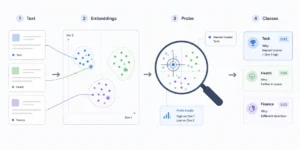
The technical architecture of Prima represents a departure from the convolutional neural networks (CNNs) that have dominated medical imaging AI for the last decade. Prima is classified as a Vision Language Model (VLM), a subset of generative AI that possesses the capability to process and integrate diverse data types—specifically images and text—in real time.
What sets Prima apart is its "holistic" approach to diagnosis. When a human radiologist interprets a scan, they do not look at the images in a vacuum; they consider the patient’s clinical history, symptoms, and the specific reason the physician ordered the test. Prima replicates this workflow by incorporating the patient’s electronic clinical history alongside the imaging data. For example, if a patient presents with sudden-onset speech difficulty, Prima analyzes the MRI sequences while simultaneously "understanding" the clinical context of a suspected stroke.
Samir Harake, a data scientist in Hollon’s Machine Learning in Neurosurgery Lab and co-first author of the study, explained that this integration is key to the system’s success. "Prima works like a radiologist by integrating information regarding the patient’s medical history and imaging data to produce a comprehensive understanding of their health," Harake noted. This multimodal capability allows the AI to differentiate between conditions that might look similar on an image but have vastly different clinical implications.
Methodology and Rigorous Clinical Testing
The University of Michigan team subjected Prima to a rigorous evaluation process to ensure its reliability in a real-world clinical setting. Over a one-year testing period, the researchers utilized more than 30,000 MRI studies to validate the system’s performance. The results were compared against the gold standard: the final reports generated by board-certified neuroradiologists.
The study found that Prima not only matched but often exceeded the performance of other state-of-the-art AI models. Its 97.5% accuracy rate held steady across a diverse array of major neurological disorders, including primary brain tumors, metastatic disease, inflammatory conditions like multiple sclerosis, and vascular events.
One of the most significant features tested was the system’s "triage" capability. The researchers designed Prima to act as an automated alert system. When the AI identifies a life-threatening condition, such as a large-scale hemorrhage or a brain herniation, it can immediately notify the relevant subspecialist—such as a stroke neurologist or a neurosurgeon—bypassing the traditional chronological queue. This "fast-track" mechanism ensures that the most time-sensitive cases receive attention the moment the imaging is complete.
Streamlining Clinical Workflows and Reducing Burnout
The integration of AI into the clinical workflow is often met with concerns regarding accuracy and the potential for increased "alert fatigue" among doctors. However, the University of Michigan researchers designed Prima with the goal of "streamlining" rather than complicating the diagnostic process.
Yiwei Lyu, a postdoctoral fellow of Computer Science and Engineering at U-M and co-first author, highlighted that quick turnaround times are as essential as accuracy for improving patient outcomes. "At key steps in the process, our results show how Prima can improve workflows and streamline clinical care without abandoning accuracy," Lyu said.
By handling the preliminary "screening" of scans, Prima can provide radiologists with a drafted summary of findings, which the physician can then verify and sign off on. This "co-pilot" approach is intended to reduce the cognitive load on radiologists, who are often required to interpret hundreds of images per shift. By automating the routine aspects of image interpretation and prioritizing the critical ones, the system allows physicians to focus their expertise where it is most needed.
Institutional Collaboration and Future Implications
The development of Prima was a multidisciplinary effort, involving experts from neurosurgery, radiology, computer science, and engineering. This collaborative environment at the University of Michigan allowed the team to leverage a massive repository of data that had been digitized and curated over several years.
Dr. Vikas Gulani, chair of the Department of Radiology at U-M Health and a co-author of the study, pointed out the scalable potential of the technology. "Whether you are receiving a scan at a larger health system that is facing increasing volume or a rural hospital with limited resources, innovative technologies are needed to improve access to radiology services," Gulani said.
While the current study focused on brain MRIs, the researchers believe the underlying VLM technology is highly adaptable. Dr. Hollon described Prima as "ChatGPT for medical imaging," suggesting that the same framework could be retrained to interpret mammograms, chest X-rays, ultrasounds, and CT scans. This suggests a future where a single, unified AI infrastructure could support various departments within a hospital system, providing a consistent second opinion across all imaging modalities.
Limitations and the Path to Implementation
Despite the impressive results, the research team emphasizes that Prima is currently in an early evaluation phase. Before it can be widely deployed in hospitals, it must undergo further validation in prospective clinical trials and receive regulatory clearance from bodies such as the U.S. Food and Drug Administration (FDA).
Future research will focus on even deeper integration with electronic medical records (EMRs). By accessing laboratory results, genetic data, and longitudinal patient records, future versions of Prima could potentially predict disease progression or suggest personalized treatment plans based on how similar patients have responded to therapy.
The study also acknowledges that AI is intended to assist, not replace, human judgment. The researchers maintain a "human-in-the-loop" philosophy, where the AI serves as a sophisticated tool that enhances the capabilities of the medical professional. "Like the way AI tools can help draft an email or provide recommendations, Prima aims to be a co-pilot for interpreting medical imaging studies," Hollon added.
Funding and Acknowledgments
The research was supported by a wide range of prestigious institutions, reflecting the high level of interest in AI-driven medical innovation. Primary funding was provided by the National Institute of Neurological Disorders and Stroke (NINDS) of the National Institutes of Health (NIH). Additional support came from the Chan Zuckerberg Initiative (CZI), the Frankel Institute for Heart and Brain Health, the Mark Trauner Brain Research Fund, the Zenkel Family Foundation, Ian’s Friends Foundation, and the UM Precision Health Investigators Awards.
The multidisciplinary team included a long list of contributors from across the University of Michigan, including Asadur Chowdury, Soumyanil Banerjee, Rachel Gologorsky, and Honglak Lee, among others. Their collective work represents a significant step forward in the quest to use artificial intelligence to solve some of the most pressing challenges in modern medicine. As health systems continue to evolve, technologies like Prima may soon become the standard of care, ensuring that every patient, regardless of their location, has access to rapid and accurate diagnostic expertise.
Related posts: