
What is Advanced Persistent Cyber Threat Hunting and Why is it Important? Camelot Secure
What is advanced persistent cyber threat hunting and why is it important Camelot Secure? That’s the burning question for any organization serious about cybersecurity in today’s digital landscape. Imagine a highly skilled, incredibly patient adversary silently infiltrating your systems, lurking for months, even years, before striking. That’s the chilling reality of Advanced Persistent Threats (APTs). This isn’t your average ransomware attack; APTs are sophisticated, targeted campaigns designed to steal sensitive data, intellectual property, or disrupt operations.
Understanding how to hunt these threats is crucial for survival.
This post dives deep into the world of APT hunting, exploring what APTs are, how they work, and, most importantly, how to defend against them. We’ll explore the proactive nature of threat hunting, comparing it to the reactive approach of simply waiting for an attack to happen. We’ll even use a fictional cybersecurity firm, Camelot Secure, as a case study to illustrate effective APT hunting strategies, highlighting the crucial role of threat intelligence, specialized skills, and cutting-edge technology.
Get ready to level up your cybersecurity knowledge!
Defining Advanced Persistent Threats (APTs)
Advanced Persistent Threats (APTs) represent a significant and evolving challenge in the cybersecurity landscape. Unlike opportunistic attacks that aim for quick gains, APTs are characterized by their sophisticated nature, long-term goals, and highly targeted approach. Understanding their characteristics and lifecycle is crucial for effective defense.
Advanced persistent threat (APT) hunting is crucial for Camelot Secure’s clients; it’s about proactively identifying and neutralizing long-term cyber threats. Understanding the evolving landscape of application development, as highlighted in this insightful article on domino app dev, the low-code and pro-code future , helps us anticipate new attack vectors. Ultimately, staying ahead of the curve in both app security and threat hunting ensures robust protection for our clients.
APT attacks are stealthy, designed to remain undetected for extended periods. This allows attackers to achieve their objectives without triggering immediate alarms. The longevity of an APT campaign is a key differentiator; attackers maintain persistent access to a target’s systems for months, even years, gradually exfiltrating data or installing further malware. Finally, APTs are highly targeted, focusing on specific organizations or individuals with valuable information, intellectual property, or strategic importance.
The attackers meticulously research their targets, exploiting vulnerabilities and using customized tools to achieve their goals.
Real-world APT Campaigns and Their Impact, What is advanced persistent cyber threat hunting and why is it important camelot secure
Several high-profile APT campaigns have demonstrated the devastating consequences of these attacks. For example, the “Stuxnet” worm, believed to be a joint US-Israeli operation, targeted Iranian nuclear facilities, causing significant damage to their centrifuge program. The impact was not only the immediate disruption but also the long-term setback to Iran’s nuclear ambitions. Another notable example is the “SolarWinds” attack, where malicious code was inserted into the SolarWinds Orion software update, compromising thousands of organizations worldwide.
This attack highlighted the potential for widespread damage through supply chain compromises. The theft of intellectual property, sensitive data, and the disruption of critical infrastructure are common outcomes of successful APT campaigns.
Stages of a Typical APT Attack Lifecycle
The APT attack lifecycle typically involves several distinct phases. First is the reconnaissance phase, where attackers gather intelligence about their target, identifying vulnerabilities and potential entry points. Next comes the initial compromise, often achieved through phishing emails, exploiting software vulnerabilities, or using social engineering techniques. Once access is gained, the attackers establish persistence, ensuring continued access even if initial entry points are detected and secured.
The next stage involves escalation of privileges, gaining broader access within the target’s network. Data exfiltration follows, where sensitive information is stolen and transferred to the attackers’ control. Finally, the attackers may maintain their access for future operations or completely erase their tracks, making attribution and remediation extremely difficult.
Comparison of APTs with Other Cyberattacks
Understanding the differences between APTs and other cyberattacks helps in developing appropriate security strategies. The following table compares APTs with ransomware and phishing attacks.
| Characteristic | APT | Ransomware | Phishing |
|---|---|---|---|
| Goal | Long-term data exfiltration, espionage, sabotage | Data encryption and ransom demand | Credential theft, malware delivery |
| Target | Highly specific organizations or individuals | Broader range of targets, often opportunistic | Broad range of targets, often opportunistic |
| Stealth | High; designed to remain undetected for extended periods | Moderate; may leave traces but aims for rapid encryption | Low; relies on deception and user interaction |
| Duration | Months or years | Days or weeks | Minutes or hours |
The Role of Threat Hunting in APT Detection
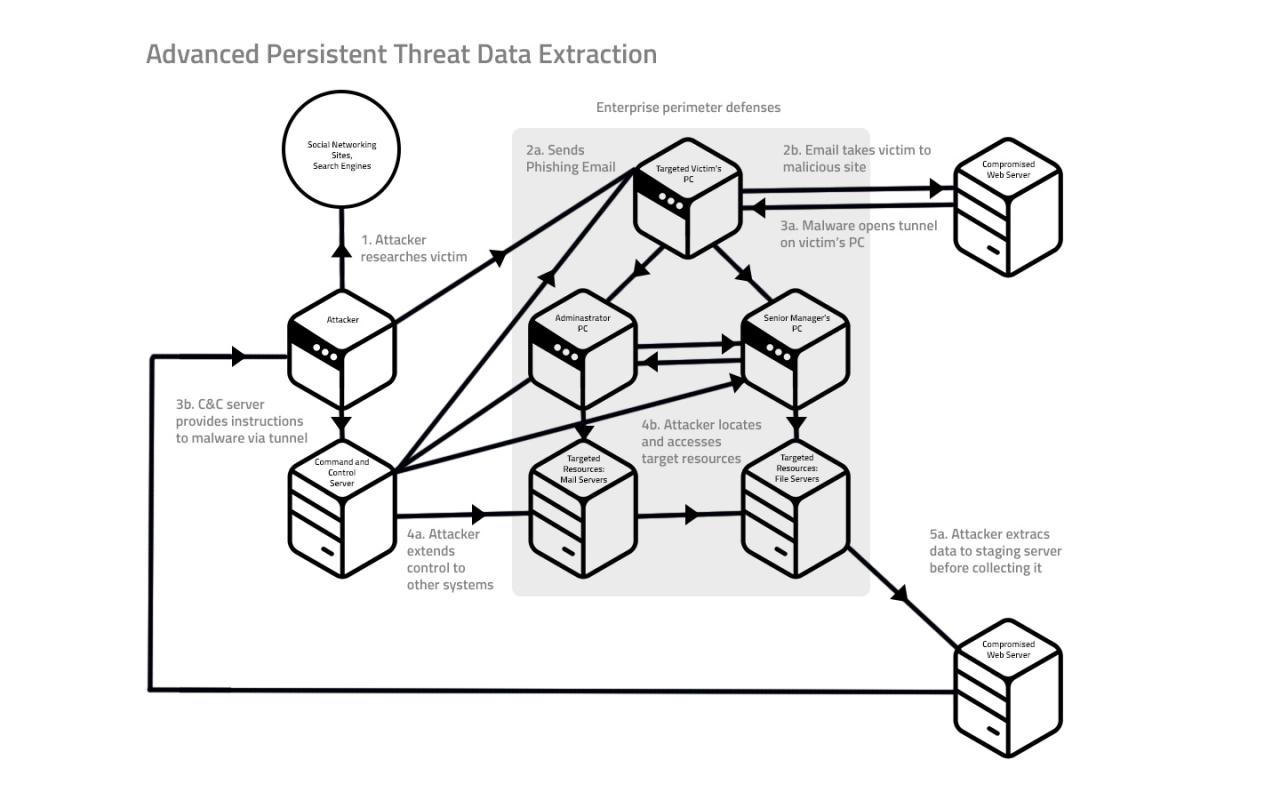
Threat hunting plays a crucial role in detecting Advanced Persistent Threats (APTs), going beyond the limitations of traditional security measures that primarily react to known threats. Unlike reactive security, which relies on alerts triggered by existing signatures or anomalies, threat hunting is a proactive approach that actively searches for malicious activity, even if it hasn’t yet triggered an alarm.
This proactive stance is critical because APTs are often designed to evade traditional security controls.Threat hunting leverages a combination of techniques and data sources to identify and analyze suspicious behavior indicative of APT campaigns. This proactive approach is vital for organizations seeking to identify and mitigate threats before they can cause significant damage.
Advanced Threat Hunting Techniques
Effective threat hunting relies on a diverse set of techniques. These techniques are not mutually exclusive and often complement each other in a comprehensive security strategy. For example, analyzing network traffic for unusual communication patterns can be combined with endpoint detection and response (EDR) data to identify malicious processes.
- Log analysis: Examining security logs from various sources (firewalls, servers, endpoints) to identify unusual activity, such as unauthorized access attempts, unusual login times, or data exfiltration attempts.
- Network traffic analysis: Monitoring network traffic for suspicious connections, unusual data transfers, or communication with known malicious IP addresses or domains.
- Endpoint detection and response (EDR): Using EDR solutions to monitor endpoint activity, detect malicious processes, and investigate suspicious behaviors on individual devices.
- Security information and event management (SIEM): Correlating security events from multiple sources to identify patterns and anomalies indicative of APT activity.
- Threat intelligence: Leveraging threat intelligence feeds to identify known APT tactics, techniques, and procedures (TTPs) and look for their presence in the organization’s environment.
The Importance of Diverse Data Sources
The effectiveness of threat hunting hinges on the integration and analysis of data from various sources. A holistic approach, combining network, endpoint, and log data, provides a more complete picture of the organization’s security posture and allows for more accurate detection of APT activity. For instance, a suspicious connection identified in network traffic analysis can be further investigated by examining endpoint logs to determine if a malicious process was running on the affected machine.
Similarly, unusual login activity in system logs might be linked to unusual network activity, revealing a compromised account. This comprehensive approach significantly increases the likelihood of detecting stealthy APT campaigns.
Hypothetical Threat Hunting Scenario
Let’s imagine a scenario where an organization suspects an APT compromise. The initial indicator might be an unusual spike in outbound network traffic during off-peak hours, detected through network monitoring. This triggers a threat hunt investigation.
- Initial Discovery: The security team notices a significant increase in outbound network traffic to an unfamiliar IP address range during the night. This initial observation is deemed suspicious.
- Data Correlation: The team then correlates this network traffic with endpoint data from EDR systems. This reveals that several workstations were actively communicating with the suspicious IP addresses, transferring large amounts of data.
- Log Analysis: Detailed log analysis from the affected workstations reveals unusual process activity, including the execution of unknown executables and attempts to disable security software. These logs are examined closely for any indicators of compromise (IOCs).
- Threat Intelligence: The suspicious IP addresses and the observed TTPs are cross-referenced against threat intelligence databases. This reveals that the IP addresses are associated with a known APT group specializing in intellectual property theft.
- Containment and Remediation: Based on the findings, the security team isolates the affected workstations from the network to prevent further data exfiltration. They then initiate a thorough remediation process, including malware removal, system patching, and password resets.
Camelot Secure’s Approach to APT Hunting (Hypothetical): What Is Advanced Persistent Cyber Threat Hunting And Why Is It Important Camelot Secure
Camelot Secure employs a multi-layered, proactive approach to Advanced Persistent Threat (APT) hunting, combining cutting-edge technology with highly skilled analysts to identify and neutralize sophisticated cyberattacks. Our methodology prioritizes early detection, rapid response, and continuous improvement, leveraging threat intelligence to stay ahead of evolving adversary tactics.Camelot Secure’s methodology blends proactive threat hunting with reactive incident response. We don’t simply wait for alerts; we actively seek out malicious activity within our clients’ networks.
This proactive approach allows for earlier detection and mitigation of threats before they can cause significant damage. Our approach is iterative, constantly refining our techniques and tools based on the latest threat intelligence and lessons learned from past engagements.
Threat Intelligence Integration
Camelot Secure leverages a variety of threat intelligence sources, including open-source intelligence (OSINT), commercial threat feeds, and private partnerships with other security organizations. This intelligence is crucial for prioritizing targets for investigation, identifying emerging threats, and understanding adversary tactics, techniques, and procedures (TTPs). For instance, if a new zero-day exploit is identified affecting a specific type of software, Camelot Secure immediately integrates this intelligence into its hunting operations, focusing on clients using that software.
This proactive use of intelligence significantly reduces the time it takes to identify and respond to threats.
Key Skills and Expertise
Effective APT hunting requires a unique blend of technical skills and investigative acumen. Camelot Secure’s team comprises seasoned security professionals with deep expertise in areas such as network security, reverse engineering, malware analysis, and digital forensics. Analysts possess strong analytical and problem-solving skills, capable of piecing together complex attack chains from fragmented data. Experience with scripting languages (Python, PowerShell) is essential for automation and data analysis, alongside strong knowledge of operating systems (Windows, Linux) and network protocols.
Furthermore, a keen understanding of attacker motivations and geopolitical context is crucial for contextualizing findings and predicting future attacks. For example, analysts may leverage knowledge of specific geopolitical tensions to anticipate potential state-sponsored attacks targeting certain industries.
Security Technologies Employed
Camelot Secure utilizes a diverse range of security technologies to support its APT hunting strategy. These tools are carefully selected and integrated to provide a comprehensive view of the client’s network and security posture.
- Security Information and Event Management (SIEM) systems: For centralized log management and threat detection.
- Endpoint Detection and Response (EDR) solutions: To monitor endpoint activity and detect malicious behavior on individual devices.
- Network Traffic Analysis (NTA) tools: To analyze network flows and identify suspicious patterns.
- Sandboxing environments: To safely analyze suspicious files and malware without risking the client’s network.
- Threat intelligence platforms: To aggregate and analyze threat intelligence from various sources.
- Vulnerability scanners: To identify and prioritize vulnerabilities that could be exploited by attackers.
- Deception technologies: To lure attackers and gain insights into their tactics.
The Importance of Proactive APT Defense
Advanced Persistent Threats (APTs) are not just theoretical risks; they represent a significant and growing danger to organizations of all sizes. The insidious nature of these attacks, often remaining undetected for extended periods, makes proactive defense absolutely crucial. Failing to adopt a proactive strategy can lead to devastating consequences, far exceeding the costs of implementing robust threat hunting capabilities.The financial and reputational damage inflicted by successful APT attacks can be catastrophic.
Consider the NotPetya ransomware attack in 2017, which caused billions of dollars in damage globally, impacting major corporations and disrupting critical infrastructure. Beyond the direct financial losses from data breaches, system downtime, and remediation efforts, companies also face substantial reputational harm, including loss of customer trust, decreased investor confidence, and potential legal repercussions. The long-term effects of a successful APT attack can cripple a business, making recovery a protracted and expensive process.
Financial and Reputational Impacts of Successful APT Attacks
A successful APT attack can lead to a multitude of financial losses. These include direct costs such as incident response, legal fees, regulatory fines, and the cost of restoring systems and data. Indirect costs, such as lost revenue due to business disruption, diminished productivity, and damage to brand reputation, can be even more significant and harder to quantify.
For example, a compromised company might face declining sales, difficulty attracting new clients, and increased insurance premiums. The reputational damage can be particularly long-lasting, affecting the company’s ability to attract and retain talent. The loss of sensitive intellectual property or customer data can also lead to significant legal and regulatory consequences.
Minimizing APT Impact Through Early Detection
Threat hunting, a proactive approach to cybersecurity, significantly minimizes the impact of APT compromises. Unlike reactive incident response, which addresses breaches
- after* they occur, threat hunting actively seeks out malicious activity
- before* it causes significant damage. Early detection through threat hunting allows organizations to identify and neutralize threats at their nascent stages, limiting their potential to spread laterally and inflict widespread damage. This early intervention significantly reduces the time and resources needed for remediation, minimizing financial losses and reputational harm. For instance, identifying a compromised account before data exfiltration can prevent a major data breach and the associated costs.
Cost Comparison: Reactive Response vs. Proactive Threat Hunting
The costs associated with reactive incident response far outweigh those of proactive threat hunting. Reactive measures typically involve extensive forensic investigations, data recovery, legal consultations, and regulatory compliance efforts. These costs can easily run into millions of dollars, depending on the severity and scope of the breach. Proactive threat hunting, while requiring an initial investment in skilled personnel and tools, offers a significantly lower total cost of ownership over time by preventing costly breaches.
The cost of a single major data breach can easily exceed the annual budget for a dedicated threat hunting team.
Visual Representation of Early vs. Late APT Detection
Imagine two graphs representing the damage caused by an APT attack. The first graph, representing
- late* detection, shows a steep, almost vertical upward trend. The curve begins low, representing the initial intrusion, then rapidly climbs to a high peak, signifying the extensive damage caused by the undetected attack before discovery. The graph then shows a slow, gradual decline, reflecting the lengthy and expensive process of remediation and recovery. The second graph, representing
- early* detection, shows a much shallower curve. The initial upward trend is minimal, reflecting the limited damage caused before the threat is identified. The curve quickly levels off, indicating a swift and relatively inexpensive containment and remediation process. The area under the first curve (late detection) is vastly larger than the area under the second curve (early detection), visually representing the significant difference in overall damage.
Building a Comprehensive APT Defense Strategy
A robust defense against Advanced Persistent Threats (APTs) requires a multi-layered approach that integrates prevention, detection, and response capabilities. This strategy must be proactive, adaptable, and continuously refined to counter the ever-evolving tactics, techniques, and procedures (TTPs) employed by APT actors. Ignoring any one layer weakens the overall defense, making a successful breach significantly more likely.
Prevention Measures
Preventing APT attacks begins with strengthening the organization’s overall security posture. This involves implementing strong network security controls, such as firewalls, intrusion detection/prevention systems (IDS/IPS), and data loss prevention (DLP) tools. Regular security assessments and penetration testing identify vulnerabilities before attackers can exploit them. Furthermore, employing robust access control mechanisms, including multi-factor authentication (MFA) and least privilege access, significantly reduces the attack surface.
Restricting access to sensitive data based on the principle of need-to-know further minimizes potential damage from a successful compromise. Finally, the regular patching and updating of software and operating systems is crucial in mitigating known vulnerabilities.
Detection Capabilities
Effective detection relies on a combination of security information and event management (SIEM) systems, threat intelligence platforms, and specialized security tools designed to detect malicious activity. SIEM systems collect and analyze logs from various sources to identify suspicious patterns. Threat intelligence platforms provide insights into emerging threats and APT tactics, enabling proactive defense measures. Sophisticated endpoint detection and response (EDR) solutions monitor system activity for signs of compromise and can automatically respond to detected threats.
These systems must be carefully configured and tuned to minimize false positives while maximizing the detection of truly malicious activity. Regular security audits and vulnerability scans are also important components of a strong detection strategy.
Incident Response Planning
A well-defined incident response plan is crucial for minimizing the impact of a successful APT attack. This plan should detail the steps to be taken in the event of a security breach, including containment, eradication, recovery, and post-incident activity. The plan must include clearly defined roles and responsibilities, communication protocols, and escalation procedures. Regular drills and simulations are essential to ensure the plan’s effectiveness and to train personnel on how to respond to various scenarios.
This preparedness is critical in minimizing the damage and recovery time in the event of a successful APT attack. Post-incident analysis is equally important, allowing for improvements in the overall security posture.
Collaboration and Information Sharing
Combating APTs effectively requires collaboration and information sharing among organizations, government agencies, and cybersecurity researchers. Sharing threat intelligence and best practices allows for a more coordinated and effective response to emerging threats. Participation in information sharing platforms and initiatives provides access to valuable insights and allows organizations to learn from each other’s experiences. This collective approach significantly strengthens the overall security posture of the entire ecosystem.
For example, sharing indicators of compromise (IOCs) related to a specific APT campaign can help other organizations proactively defend against similar attacks.
Securing Critical Infrastructure
Securing critical infrastructure against APT attacks necessitates a multi-faceted approach. This includes implementing robust physical security measures, such as access controls and surveillance systems, in addition to strong cybersecurity controls. Regular security assessments and penetration testing are vital to identify vulnerabilities. Furthermore, the implementation of advanced threat detection and response capabilities, such as network traffic analysis and intrusion detection systems, is essential.
The use of secure communication protocols and encryption techniques is critical for protecting sensitive data. Regular employee training and awareness programs reinforce the importance of security best practices. For example, power grids, financial institutions, and healthcare systems need to implement highly robust, redundant systems to prevent catastrophic failure from APT-related disruptions.
Employee Training and Awareness
Employees are often the weakest link in an organization’s security chain. Comprehensive employee training and awareness programs are essential for mitigating APT risks. Training should cover topics such as phishing awareness, safe browsing practices, password security, and social engineering tactics. Regular security awareness campaigns reinforce the importance of these practices and keep employees updated on the latest threats.
Simulated phishing attacks can effectively assess employee awareness and identify areas needing improvement. By empowering employees with the knowledge and skills to identify and report suspicious activity, organizations significantly reduce their vulnerability to APT attacks. For example, training employees to recognize and avoid phishing emails can significantly reduce the success rate of spear-phishing campaigns targeting specific individuals within the organization.
Ending Remarks
So, what have we learned? Advanced Persistent Threats are a serious and ever-evolving challenge, demanding a proactive and multi-layered defense. Reactive measures simply aren’t enough. By understanding the APT lifecycle, embracing threat hunting techniques, and leveraging advanced technologies, organizations can significantly reduce their risk. Remember, early detection is key to minimizing damage and maintaining a strong security posture.
Think of threat hunting as your cybersecurity’s early warning system – it’s an investment that pays off handsomely in the long run, protecting your data, your reputation, and your bottom line. Stay vigilant, stay informed, and stay secure!
Answers to Common Questions
What specific tools might Camelot Secure use for APT hunting?
Camelot Secure might utilize a combination of tools like SIEM (Security Information and Event Management) systems, endpoint detection and response (EDR) solutions, network traffic analysis tools, and threat intelligence platforms.
How often should threat hunting be performed?
The frequency depends on the organization’s risk tolerance and resources, but regular, proactive hunting is essential. It could range from daily hunts for critical systems to weekly or monthly scans for less sensitive areas.
What is the role of human analysts in APT hunting?
Human analysts are critical. While tools automate some tasks, human expertise is needed to interpret data, identify anomalies, and develop effective hunting strategies. Machines find the needles, humans determine if they are dangerous.
What are the ethical considerations of APT hunting?
Ethical considerations are paramount. APT hunting should be conducted within legal and ethical boundaries, respecting privacy and data protection regulations. False positives must be minimized, and actions should be justified and documented.