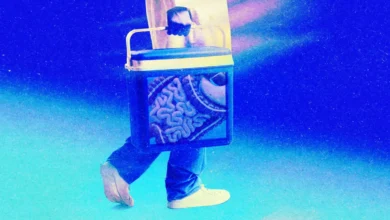
The Download: Murderous Mirror Bacteria and Chinese Workers Fighting AI Doubles.


The intersection of synthetic biology and global technological policy has reached a critical juncture, as researchers warn of existential biological threats while tech workers and world governments grapple with the rapid encroachment of artificial intelligence. From the development of "mirror" microbes that could potentially dismantle the Earth’s ecosystem to the political maneuvering between the White House and leading AI firms, the current landscape reflects a period of unprecedented risk and transformative potential.
The Existential Risk of Synthetic Mirror Life
In early 2019, a group of prominent synthetic biologists proposed a project of immense scientific ambition: the creation of "mirror" bacteria. This concept involves engineering microbes with a biological structure that is the exact inverse of life as it has existed for billions of years. In nature, biological molecules such as amino acids and sugars exhibit "chirality," or handedness. Virtually all known life uses "left-handed" amino acids and "right-handed" sugars. Mirror life would utilize the opposite configuration.
The initial motivation for this research was driven by scientific curiosity and potential utility. Mirror-image cells would theoretically be immune to all known viruses and enzymes, as natural pathogens would lack the biochemical "keys" to unlock and infect mirror-image structures. This could revolutionize drug manufacturing, creating biological factories that are impervious to contamination. However, the scientific community is now sounding an urgent alarm.
The primary concern, as detailed by researchers like Stephen Ornes, is the "Shadow Biosphere" hypothesis. If mirror-image bacteria were to escape the laboratory, they could potentially outcompete natural life. Because mirror organisms would be indigestible to natural predators and decomposers, they would exist outside the natural food web. If these synthetic microbes were capable of consuming the same basic nutrients as natural life—such as nitrogen, carbon, and phosphorus—they could systematically deplete the planet’s resources while remaining untouchable by the natural mechanisms that maintain ecological balance. This "metabolic dominance" could lead to a slow-motion collapse of the global ecosystem, a scenario scientists now fear may outweigh the benefits of the research.
Labor Resistance and the Automation of Professional Identity
While biological threats loom in the future, the immediate socio-economic landscape is being reshaped by the automation of white-collar labor. In China’s tech sector, a new wave of resistance is forming as workers face pressure to "distill" their professional expertise into artificial intelligence models.
The tension reached a boiling point following the release of a GitHub project titled "Colleague Skill." Although the project was eventually revealed to be a spoof, it touched on a deep-seated anxiety among developers and engineers. The project claimed to replicate a worker’s specific problem-solving style and personality into an AI agent, effectively creating a digital "double" that could perform their duties.
Reports from tech hubs in Beijing and Hangzhou indicate that companies are increasingly utilizing tools like OpenClaw to mandate that employees document every step of their workflow. The objective is clear: to create a comprehensive dataset that can train automation systems to replace the human element. In response, a segment of the workforce has begun utilizing "sabotage" tools designed to introduce noise or errors into these documentation processes, effectively "poisoning" the data to ensure that the AI cannot accurately replicate their nuanced skills. This struggle highlights a shift in the AI narrative from one of "augmentation" to one of "identity flattening," where the worker’s unique value is reduced to a set of executable code.
Geopolitical Maneuvering: Anthropic and the White House
The relationship between the United States government and the private AI sector remains volatile. Recent reports indicate that the White House and Anthropic, one of the primary competitors to OpenAI, are attempting to reach a compromise following a period of heightened friction.
Earlier this year, the Trump administration issued orders for federal agencies to phase out the use of Anthropic’s technology, citing concerns over the company’s internal safety protocols and its alignment with national interests. However, this blacklist has met with internal resistance within the intelligence community. The National Security Agency (NSA) has reportedly continued to utilize Anthropic’s new "Mythos" model, citing its superior analytical capabilities for defense purposes.
Following a "productive meeting" between CEO Dario Amodei and administration officials, there are signs of a strategic pivot. The government appears to be balancing its desire for strict regulatory oversight with the pragmatic necessity of utilizing the world’s most advanced AI tools to maintain a competitive edge against foreign adversaries. This compromise suggests that "national interest" may eventually override political blacklists in the race for AI supremacy.
Palantir and the Call for a "Technological Republic"
Parallel to these regulatory discussions, Palantir Technologies has sparked controversy with the release of a "mini-manifesto" that advocates for a radical restructuring of American civic life. The document, which serves as a summary of CEO Alex Karp’s new book, The Technological Republic, calls for the implementation of universal national service and a rejection of what Karp describes as "regressive" and "harmful" corporate cultures.

Karp’s vision posits that for the United States to remain a global leader, it must integrate its technological prowess with a disciplined, service-oriented populace. Critics, however, have labeled the manifesto as "corporate sales material" designed to align Palantir’s data-mining products with government infrastructure. The push for national service is seen by some as a move toward a more militarized or surveillance-heavy social contract, further blurring the lines between private enterprise and state power.
European Fractures Over AI Regulation
In Europe, the consensus on AI regulation is beginning to fracture. German Chancellor Friedrich Merz has recently called for "regulatory freedom" for industrial AI, arguing that the European Union’s stringent rules are stifling innovation. This sentiment is echoed by Siemens, Germany’s largest industrial firm, which has threatened to shift its AI investments to the United States if the EU does not relax its oversight.
The tension illustrates a growing divide between the "precautionary principle" favored by Brussels and the "pro-growth" stance demanded by industrial giants. As the US moves toward a more deregulated environment under the current administration, European leaders fear a "brain drain" and a flight of capital that could leave the continent technologically dependent on foreign powers.
The Economic and Environmental Fallout of the AI Boom
The rapid expansion of AI is also creating significant ripples in the hardware market and environmental sectors. Nvidia, long the darling of the gaming community, is facing a backlash as it pivots its focus almost entirely toward enterprise AI hardware. Consumer graphics cards (GPUs), once the company’s flagship product, have become a secondary priority, leading to supply shortages and price hikes for gamers.
Furthermore, the "AI gold rush" is exacerbating a global e-waste crisis. The lifespan of AI-specialized hardware is significantly shorter than traditional computing equipment due to the rapid pace of generational improvements. Reports from "Rest of World" suggest that the majority of this toxic waste is being diverted to non-Western countries, creating an environmental debt that the global south is ill-equipped to handle.
Simultaneously, the insurance industry is moving to insulate itself from AI-related risks. Major insurers are drafting new exclusion clauses to avoid liability for damages caused by AI errors, ranging from medical misdiagnoses to autonomous vehicle accidents. This leaves a "liability gap" that could slow the adoption of AI in high-stakes industries.
Identity Verification and Social Manipulation
The quest to distinguish humans from AI has led to unusual partnerships. Sam Altman’s Worldcoin—a project that scans irises to provide a "proof of humanity" digital ID—has recently partnered with Tinder and Zoom. These platforms aim to use the "Orb" scanning technology to offer verification badges, ensuring that users are interacting with real humans rather than sophisticated AI bots.
However, the technology that verifies identity is being outpaced by technology that mimics it. In the political sphere, hundreds of AI-generated influencers have flooded social media platforms. These "fake" influencers, designed to look and speak like real supporters of Donald Trump, are being used to target conservative voters with hyper-personalized messaging. This represents a new frontier in digital propaganda, where the "grassroots" support for a candidate can be entirely manufactured by an algorithm.
Robotics and the Commercialization of Space
The boundaries of physical performance and infrastructure are also being pushed. In Beijing, a humanoid robot developed by the tech firm Honor recently broke the human record for a half-marathon. Despite a minor collision with a railing near the finish line, the robot’s performance demonstrated a leap in bipedal locomotion and battery efficiency. This follows a trend where, only a year prior, human athletes easily outpaced their robotic counterparts, marking a rapid rate of mechanical evolution.
Finally, as the International Space Station (ISS) nears its scheduled decommissioning in 2030, NASA is transitioning its role in Low Earth Orbit (LEO). The agency is moving from being an owner-operator to a customer, partnering with private firms like Axiom Space to build commercial space stations. This "commercial takeover" of LEO is intended to free NASA’s budget for deep-space exploration, such as missions to Mars, while turning the space just above Earth into a hub for private manufacturing, research, and tourism.
Conclusion: A Landscape of Calculated Risk
The developments across synthetic biology, artificial intelligence, and aerospace signify a world moving at a speed that often outpaces its regulatory and ethical frameworks. Whether it is the biological threat of mirror life or the socio-economic displacement caused by AI "doubles," the common thread is a shift toward systems that operate beyond traditional human control. As these technologies mature, the challenge for global leaders will be to harness their immense potential without triggering the catastrophic outcomes that scientists and workers alike are now beginning to forecast.