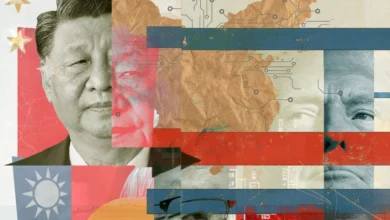
The Download Murderous Mirror Bacteria and Chinese Workers Fighting AI Doubles


Technological advancement in the mid-2020s has reached a critical inflection point, where the boundaries between biological engineering, artificial intelligence, and geopolitical sovereignty are becoming increasingly blurred. From the creation of synthetic life forms that could theoretically dismantle the global ecosystem to the systemic replacement of human labor with digital twins, the current landscape of innovation is fraught with both unprecedented opportunity and existential peril. As governments and private corporations navigate this new era, the decisions made today regarding regulation, ethics, and infrastructure will likely define the trajectory of the human species for the remainder of the century.
The Existential Risk of Synthetic Mirror Life
In early 2019, a group of prominent synthetic biologists submitted a proposal to the National Science Foundation (NSF) that seemed like the plot of a science fiction novel: the creation of "mirror" bacteria. This concept relies on the principle of chirality, or molecular handedness. In nature, almost all living organisms use "left-handed" amino acids and "right-handed" sugars. A mirror organism would be constructed using the opposite—right-handed amino acids and left-handed sugars—creating a "shadow biosphere" that is functionally identical to known life but chemically incompatible.
Initially, the scientific community viewed mirror life as a revolutionary tool for drug discovery and a window into the origins of life on Earth. Because mirror proteins would be resistant to natural enzymes, they could lead to medications that do not break down in the body, potentially curing previously untreatable diseases. However, the enthusiasm has recently shifted toward profound alarm.
The primary concern, now being voiced by many of the original proponents, is the "ecological dominance" scenario. If mirror bacteria were to escape the lab, they would be virtually indestructible in the wild. No existing virus, predator, or enzyme could decompose or consume them. Conversely, mirror bacteria could potentially consume natural resources, outcompeting native species and leading to a "biological grey goo" event. In such a scenario, the mirror life could systematically replace the Earth’s biomass, leading to a total collapse of the existing food chain and the extinction of all "natural" life. This realization has led to calls for an immediate moratorium on mirror life research until global biosafety protocols can be established.
Labor Resistance and the Rise of AI Doubles in China
While biologists grapple with the physical foundations of life, tech workers in China are facing a more immediate threat to their professional existence: the "distillation" of their skills into artificial intelligence. This trend reached a boiling point in early April 2026 with the viral emergence of a GitHub project titled "Colleague Skill."
Though the project was eventually revealed to be a satirical critique, its premise—that a worker’s unique professional insights and personality could be harvested and replicated by an AI agent—resonated deeply across the Chinese tech sector. Many employees at major firms have reported that management is increasingly mandating the use of tools like OpenClaw, which document every keystroke, decision-making process, and workflow pattern. The stated goal is efficiency and automation, but the workers perceive a more cynical motive: the creation of "AI doubles" that can perform their roles at a fraction of the cost.
This has sparked a new form of digital labor activism. Some developers are now creating "poisoning" tools designed to subtly sabotage the training data being collected by these automation platforms. By introducing non-obvious errors or inefficient logic into their documented workflows, they hope to make their AI replicas unreliable, thereby preserving the necessity of human oversight. This conflict represents a significant shift in the "996" work culture (9 a.m. to 9 p.m., six days a week), as workers transition from fighting for better hours to fighting for the right to own their professional identity.
Geopolitical Maneuvering and the Regulation of Frontier Models
The tension between innovation and safety is also playing out in the halls of government. In the United States, the Trump administration has engaged in a complex dance with Anthropic, one of the world’s leading AI safety and research companies. Following an initial executive order to phase out Anthropic’s technology within federal agencies due to concerns over its "constitutional AI" frameworks, a potential compromise appears to be in the works.
Recent high-level meetings between the White House and Anthropic CEO Dario Amodei suggest a shift toward a "productive" partnership. This development is underscored by the revelation that the National Security Agency (NSA) has quietly begun utilizing Anthropic’s newest "Mythos" model for intelligence analysis, despite the official blacklist. This highlights a recurring theme in modern governance: the tactical necessity of advanced AI often overrides ideological or regulatory concerns.

Simultaneously, international fractures are widening. In Germany, Chancellor Friedrich Merz and industrial giant Siemens have publicly lobbied for a relaxation of the European Union’s AI Act. Siemens has gone as far as to threaten a shift in investment to the United States if the EU does not provide "regulatory freedom" for industrial AI applications. This corporate pressure suggests that the global race for AI dominance may lead to a "race to the bottom" in terms of safety and ethical oversight, as nations compete to attract the most lucrative tech investments.
The Corporate Manifesto and the Future of National Service
The intersection of technology and the state has taken a more philosophical turn with the release of Palantir’s "mini-manifesto." Drawing from CEO Alex Karp’s book, The Technological Republic, the document calls for a return to universal national service and a denunciation of "regressive" corporate cultures that prioritize inclusivity over national interest.
Palantir’s stance reflects a growing movement among "defense tech" firms that advocate for a more militant and nationalistic approach to technology development. Critics, however, have dismissed the manifesto as a sophisticated sales pitch aimed at securing more government contracts. The debate centers on whether private tech companies should serve as neutral platforms or as active instruments of national power. Karp’s vision suggests the latter, arguing that in an era of global instability, the survival of Western democracy depends on the seamless integration of private sector innovation and state-led military and civil service.
Hardware Transitions and Environmental Consequences
As AI continues its rapid expansion, the physical infrastructure supporting it is undergoing a radical shift. Nvidia, long the darling of the gaming community, has faced a significant backlash as it prioritizes data-center GPUs over consumer graphics cards. The shortage of affordable high-end hardware for gamers is a symptom of a larger economic reality: the demand for generative AI training capacity is so high that traditional consumer markets have become an afterthought.
This hardware boom has a dark side: a burgeoning global e-waste crisis. Research indicates that the rapid turnover of AI-specialized chips and the massive energy requirements of data centers are generating unprecedented levels of electronic waste. Much of this hazardous material is being exported to non-Western countries, where it poses severe health and environmental risks. The "AI revolution," while digital in nature, is leaving a tangible and toxic footprint on the physical world, particularly in the Global South.
Security, Surveillance, and the "Proof of Humanity"
In the social sphere, the rise of deepfakes and AI-generated content has created an "identity crisis." Sam Altman’s Worldcoin project (now rebranded as World) has recently partnered with platforms like Tinder and Zoom to provide "proof of humanity" badges. By using iris-scanning technology, the firm aims to create a definitive way to distinguish humans from AI bots in digital spaces.
While the utility of such a system is clear in an era of AI-driven scams and "fake influencers"—such as the hundreds of pro-Trump AI personas currently flooding social media—the privacy implications are immense. The centralization of biometric data by a private corporation raises questions about who will ultimately control the "gateways" to digital human interaction.
Robotics and the Commercialization of Space
Finally, the physical capabilities of robotics and the expansion of the human footprint in space continue to advance. In Beijing, a humanoid robot developed by the tech firm Honor recently made headlines by breaking the human record for a half-marathon. Despite a minor collision with a railing near the finish line, the robot’s performance demonstrated that the gap between human and machine physical endurance is closing faster than anticipated.
Looking upward, the decommissioning of the International Space Station (ISS) in 2030 will mark the end of an era and the beginning of a new, more commercialized chapter in low Earth orbit (LEO). NASA is increasingly moving toward a model where it serves as a customer rather than an operator, partnering with private firms like Axiom Space to build the next generation of orbital laboratories and tourist destinations. This transition is intended to free NASA’s budget for "deep space" missions to the Moon and Mars, but it also signals the "land grab" of LEO by private interests.
Conclusion: A Multi-Frontier Transformation
The events of 2026 illustrate that technology is no longer a separate sector of the economy; it is the fundamental substrate of biological, social, and political life. Whether it is the terrifying potential of mirror bacteria to overwrite the biosphere, the struggle of Chinese tech workers to maintain their humanity in the face of automation, or the commercialization of the stars, the common thread is a loss of traditional boundaries. As these "frontier" technologies mature, the challenge for humanity will be to harness their power without sacrificing the ecological and social stability that allows civilization to thrive. The "Download" of today’s technology news is more than a list of updates; it is a map of a world in the midst of a profound and irreversible metamorphosis.
Related posts: