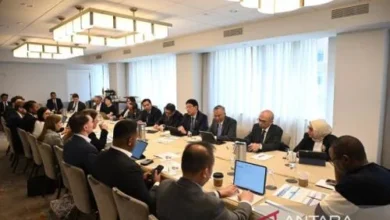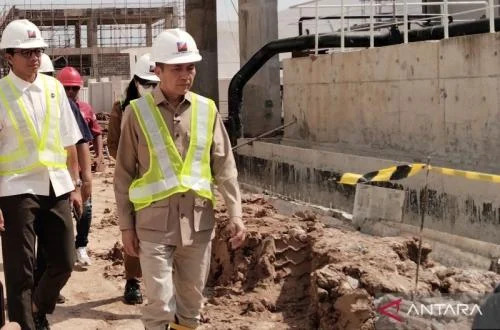
The Agency for Investment Management of Daya Anagata Nusantara (Danantara) has concluded a comprehensive readiness assessment of the Waste-to-Energy (PSEL) project in Palembang, South Sumatra, a critical step following a direct directive from President Prabowo to address the nation’s burgeoning urban waste crisis. This high-level inspection underscores the Indonesian government’s accelerated commitment to transforming waste management infrastructure across major cities, leveraging advanced technology to convert municipal solid waste into renewable energy. The Palembang PSEL facility is envisioned not only as a solution to local environmental challenges but also as a national benchmark for sustainable development and circular economy principles.
The visit, spearheaded by Fadli Rahman, Director of Investment at Danantara Investment Management, also serves as a foundational move towards the comprehensive implementation of Peraturan Presiden (Presidential Regulation) Number 109 of 2025. This forthcoming regulation is designed to standardize and accelerate the handling of urban waste through environmentally friendly technologies capable of generating renewable energy. Rahman emphasized that Palembang, with its strategic location and proactive local government, has met the stringent criteria required for the successful deployment of such a transformative project. He lauded the project’s development progress, describing it as "very promising" and expressing optimism that it will deliver a sustainable solution to waste management, yielding significant positive impacts on environmental cleanliness and the local economy.
Indonesia’s Mounting Waste Challenge and Policy Response
Indonesia, an archipelago nation with a rapidly growing population and increasing urbanization, faces an acute waste management crisis. National statistics indicate that the country generates approximately 67.8 million tons of waste annually, with urban centers like Palembang contributing significantly to this figure. The vast majority of this waste, often a mix of organic and inorganic materials, ends up in landfills, many of which are nearing or have exceeded their operational capacity. This over-reliance on landfills leads to severe environmental degradation, including groundwater contamination, soil pollution, and the release of potent greenhouse gases such as methane, exacerbating climate change. Furthermore, inadequate waste collection and processing systems contribute to widespread plastic pollution in rivers and oceans, posing a grave threat to marine ecosystems and human health.
Recognizing the urgency of this situation, the Indonesian government has intensified its efforts to shift from traditional landfill-centric waste management to more sustainable and integrated approaches. The National Waste Management Strategy outlines ambitious targets for waste reduction and improved handling, aiming for 100% waste management by 2025, with a significant portion to be handled through recycling, composting, and energy recovery. The development of PSEL facilities is a cornerstone of this strategy, aligning with national commitments to reduce greenhouse gas emissions and increase the share of renewable energy in the national grid. Previous attempts at implementing Waste-to-Energy projects in Indonesia have faced various hurdles, including funding issues, technological complexities, and public acceptance. However, lessons learned from these experiences have informed a more robust and streamlined approach, particularly through legislative frameworks like the anticipated Perpres 109/2025, which seeks to provide clear regulatory guidance, financial incentives, and a more predictable investment environment for such capital-intensive projects.
The Palembang PSEL Project: A Blueprint for Urban Sustainability
The Palembang PSEL facility is strategically located to serve the metropolitan area, which currently grapples with daily waste generation exceeding 1,200 tons. Once fully operational, the plant is designed to process an impressive 1,000 tons of municipal solid waste per day, significantly alleviating the burden on existing landfills. While specific technological details of the Palembang plant were not fully disclosed, PSEL projects typically employ advanced thermal treatment technologies such as incineration with energy recovery, gasification, or pyrolysis. These processes are engineered to convert waste into electricity and/or heat while minimizing environmental impact through stringent emission controls.
The anticipated benefits of the Palembang PSEL extend far beyond mere waste disposal. Environmentally, the project is expected to drastically reduce the volume of waste sent to landfills, thereby conserving land resources and mitigating methane emissions. The adoption of state-of-the-art flue gas treatment systems will ensure that emissions meet national and international air quality standards, safeguarding public health. Economically, the facility will generate a consistent supply of renewable electricity, contributing to energy security and reducing reliance on fossil fuels. This energy output can be fed directly into the local grid, providing a stable revenue stream for the project and contributing to the region’s energy mix. Socially, the project is poised to create a substantial number of direct and indirect employment opportunities, from construction and plant operation to waste collection and ancillary services. Furthermore, it aims to foster a cleaner urban environment, enhancing the quality of life for Palembang’s residents and promoting a positive image for the city.
Progress, Milestones, and Local Integration
During the recent inspection, Fadli Rahman was accompanied by Palembang Mayor Ratu Dewa, who provided a detailed update on the project’s construction status. Mayor Dewa reported that as of March 2026, the PSEL project had achieved an impressive 81.94 percent completion rate. This substantial progress indicates that the civil works, installation of major machinery, and critical infrastructure development are largely finalized. The project is firmly on track to commence operations by October 2026, a timeline that underscores the accelerated pace of its development and the commitment of all stakeholders.
Mayor Ratu Dewa further emphasized that the Palembang PSEL project is being developed with a strong emphasis on incorporating local wisdom and maximizing local benefits. He highlighted the project’s potential to become a significant catalyst for job creation, not only in the technical and operational aspects of the plant but also across various support sectors. Beyond employment, the Mayor envisions the facility serving as a crucial educational hub for students, offering invaluable insights into modern waste management techniques, renewable energy generation, and environmental stewardship. This educational component aims to cultivate a new generation of environmentally conscious citizens and professionals. Moreover, the project is committed to fostering the growth of local Micro, Small, and Medium Enterprises (UMKM) by integrating them into the project’s supply chain and operational needs, thereby boosting the local economy and promoting inclusive growth. "We hope this project will run smoothly and become a national example," Mayor Dewa remarked, articulating the city’s aspiration for the Palembang PSEL to serve as a model for other urban centers grappling with similar waste challenges.
Danantara’s Strategic Investment and Due Diligence
Danantara’s involvement in the Palembang PSEL project signifies its mandate to manage state investments in strategic sectors that align with national development goals. As a key player in channeling public funds towards impactful infrastructure projects, Danantara conducts rigorous due diligence, evaluating the project’s technical feasibility, financial viability, environmental impact, and social implications. The decision to invest in PSEL projects like Palembang reflects a broader strategy to de-risk and attract further private sector participation in critical infrastructure development. Danantara’s assessment includes reviewing funding mechanisms, which often involve a mix of state budget allocations, public-private partnerships (PPP), and potentially international financing, ensuring long-term financial sustainability. Their oversight helps guarantee that projects adhere to international best practices in engineering, environmental management, and social responsibility. The agency’s commitment to the Palembang PSEL underscores the strategic importance of Waste-to-Energy as a viable, scalable solution for Indonesia’s urban waste woes.
Official Responses and Broader Implications
The Palembang PSEL project has garnered attention from various national and local stakeholders, highlighting its multifaceted importance.
From the Ministry of Environment and Forestry (KLHK): Officials at KLHK would likely view the Palembang PSEL as a tangible step towards achieving national waste management targets and reducing greenhouse gas emissions. They would emphasize the importance of strict adherence to environmental impact assessments (AMDAL) and continuous monitoring of emissions to ensure the facility operates within permissible limits. The Ministry would also underscore the need for effective ash management, as the residual ash from incineration can contain heavy metals and requires proper handling and disposal, potentially exploring its use in construction materials if safe.
From Energy Sector Experts: Experts in renewable energy would highlight the PSEL’s contribution to Indonesia’s energy diversification goals. They would note that while the energy output from a single PSEL might be modest compared to large-scale power plants, the combined effect of multiple such facilities across the archipelago could significantly bolster the national grid’s renewable energy capacity, enhancing energy security and reducing reliance on fossil fuels. Discussions would also revolve around grid integration challenges and opportunities.
From Local Communities and Environmental NGOs: While the project promises environmental benefits, local communities and environmental organizations often express concerns regarding potential air pollution, the handling of hazardous waste (such as bottom ash and fly ash), and the siting of such facilities. Proactive engagement, transparent communication, and robust environmental monitoring by the project developers and local authorities are crucial to build public trust and ensure the project’s long-term acceptance and success. Mayor Ratu Dewa’s emphasis on local wisdom and community engagement is a positive step in addressing these concerns.
The broader implications of the Palembang PSEL project are significant. Environmentally, it serves as a critical intervention in combating the adverse effects of unchecked waste accumulation, offering a viable pathway towards cleaner cities and reduced ecological footprints. Economically, it represents a substantial investment in green infrastructure, creating jobs, stimulating local commerce through UMKM integration, and generating revenue from energy sales. Socially, it has the potential to transform public attitudes towards waste, fostering a culture of responsibility and sustainability through educational programs. Technologically, the project positions Palembang and Indonesia at the forefront of adopting advanced waste treatment solutions, potentially leading to knowledge transfer and capacity building that can benefit other regions.
Challenges and Mitigation Strategies
Despite its immense promise, the Palembang PSEL project, like any large-scale infrastructure initiative, faces potential challenges. Public perception and potential "Not In My Backyard" (NIMBY) sentiments regarding industrial facilities, even those with environmental benefits, require continuous community outreach and transparent communication. The consistency and quality of waste feedstock—a critical factor for the efficient operation of any WTE plant—can be variable, necessitating robust waste segregation programs at the source. Technological risks, maintenance requirements, and the long-term financial sustainability of operations are also ongoing considerations.
To mitigate these challenges, comprehensive strategies are being implemented. Extensive public awareness campaigns and community consultations are vital to educate residents about the project’s benefits and address any concerns. Implementing strong municipal waste collection and segregation systems will ensure a consistent and high-quality feedstock for the plant. Furthermore, employing experienced operators, adhering to stringent maintenance schedules, and establishing clear regulatory frameworks for tariffs and energy purchase agreements are crucial for the project’s financial and operational longevity. Danantara’s rigorous oversight aims to ensure these mitigation measures are effectively in place.
In conclusion, the readiness check of the Palembang PSEL project by Danantara marks a pivotal moment in Indonesia’s journey towards sustainable urban waste management. With its advanced technology, significant processing capacity, and strong commitment to local integration and environmental stewardship, the Palembang PSEL is poised to become a transformative force for the city. It exemplifies the national drive to convert environmental challenges into opportunities for renewable energy generation and economic growth, setting a compelling precedent for other cities across the archipelago and underscoring Indonesia’s dedication to a cleaner, greener future under the guidance of forward-looking policies like Perpres 109/2025. The successful launch and operation of this facility in October 2026 will undoubtedly serve as a national benchmark, inspiring similar initiatives and contributing significantly to the nation’s sustainable development agenda.
Related posts: