Hybrid Neuro-Symbolic AI Systems Offer Path to 100-Fold Energy Reduction and Enhanced Robotic Precision

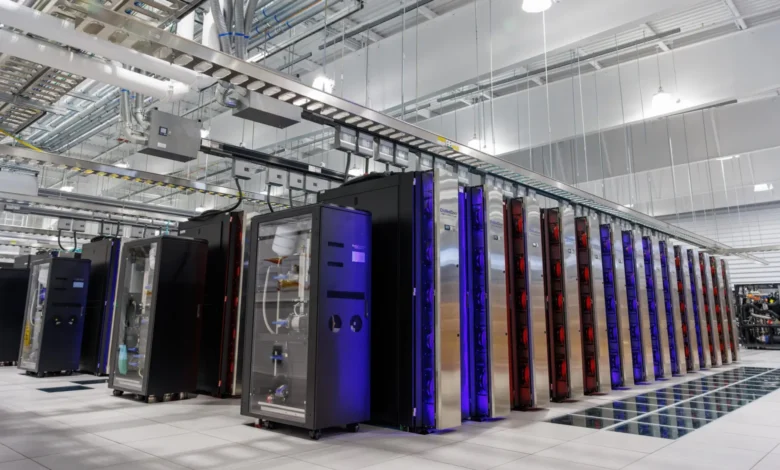
The rapid proliferation of artificial intelligence has ushered in a new era of technological capability, but it has arrived with a staggering environmental and infrastructural price tag. As data centers across the United States expand to accommodate the massive computational requirements of generative AI, the energy grid is facing unprecedented strain. However, a breakthrough from researchers at the Tufts University School of Engineering suggests that the future of AI does not necessarily have to be power-hungry. By developing a "neuro-symbolic" approach to artificial intelligence, a team led by Matthias Scheutz, the Karol Family Applied Technology Professor, has demonstrated a proof-of-concept system that reduces energy consumption by up to 100 times while simultaneously improving the accuracy and reliability of robotic tasks.
The Escalating Energy Crisis in the Age of Artificial Intelligence
The scale of AI’s energy appetite is no longer a theoretical concern for environmentalists; it has become a critical challenge for national infrastructure. According to recent data from the International Energy Agency (IEA), AI systems and the data centers that house them consumed approximately 415 terawatt hours (TWh) of electricity in 2024. To put this figure into perspective, this accounts for more than 10% of the total electricity production in the United States.
The trajectory of this demand is even more concerning for policymakers and utility providers. Projections indicate that AI-related power requirements are on track to double by 2030. This surge is driven by the transition from traditional cloud computing to "compute-heavy" generative models. While a standard Google search requires a negligible amount of electricity, an AI-generated response can consume significantly more power—sometimes up to 100 times the energy of a simple database query—due to the billions of parameters that must be processed to predict the next word in a sentence.
As tech giants race to build "gigawatt-scale" data centers, some of which require as much electricity as a mid-sized city, the limitations of the current power grid are becoming apparent. The research coming out of Professor Scheutz’s laboratory arrives at a pivotal moment, offering a potential "third way" that moves beyond the brute-force scaling of neural networks toward a more elegant, rule-based efficiency.
Understanding the Neuro-Symbolic Shift: Merging Logic with Learning
For the past decade, the field of artificial intelligence has been dominated by "connectionism"—the use of deep neural networks that learn patterns from vast amounts of data. This is the technology behind Large Language Models (LLMs) like OpenAI’s ChatGPT and Google’s Gemini. While these models are adept at recognizing patterns, they often lack a fundamental understanding of logic, physics, or "common sense" rules.
The Tufts research team is championing a hybrid approach known as neuro-symbolic AI. This method integrates the pattern-recognition strengths of neural networks (the "neuro" component) with the structured, rule-based logic of symbolic reasoning (the "symbolic" component).
"In many ways, this mirrors how human beings approach problem-solving," explains the research team. Humans do not simply rely on statistical probabilities to navigate the world; we use categories, labels, and logical constraints. For instance, a human knows that a heavy object cannot be supported by a fragile one, not just because they have seen a million examples, but because they understand the underlying concept of structural integrity. By encoding these types of rules into AI, researchers can bypass the need for the massive, energy-intensive "trial and error" learning cycles that define traditional models.
From Chatbots to Robots: The Rise of Visual-Language-Action (VLA) Models
While much of the public discourse surrounds text-based AI, the Tufts study focuses on a more complex frontier: robotics. Specifically, the team worked with Visual-Language-Action (VLA) models. Unlike LLMs, which only process and generate text, VLA models must integrate visual input from cameras and linguistic instructions from users, translating them into physical movements—such as moving a wheel, articulating a robotic arm, or grasping an object with mechanical fingers.
Traditional VLA systems are notoriously inefficient. To teach a robot a simple task, such as stacking blocks, conventional AI must run through thousands of simulations. Even after extensive training, these systems remain fragile. A slight change in lighting, a stray shadow, or an unfamiliar object shape can cause the "neural-only" system to fail, leading to "hallucinations" in the physical world—such as a robot trying to place a block in mid-air or attempting to grasp a shadow.
Empirical Success: The Tower of Hanoi Challenge
To test the efficacy of their neuro-symbolic VLA, the researchers utilized the Tower of Hanoi, a classic mathematical puzzle that requires moving a stack of disks from one rod to another while following specific rules (e.g., a larger disk cannot be placed on top of a smaller one). This puzzle is a perfect benchmark for AI because it requires long-term planning and strict adherence to logic.
The results of the comparative study were stark:
- Success Rates: The neuro-symbolic VLA achieved a 95% success rate in completing the puzzle. In contrast, standard neural-based VLA models managed only a 34% success rate under the same conditions.
- Generalization to New Challenges: When the researchers introduced a more complex version of the puzzle that the systems had never seen before, the neuro-symbolic model still succeeded 78% of the time. The traditional models, lacking a logical framework to handle the novelty, failed every single attempt.
- Training Speed: Perhaps the most significant finding for the industry was the reduction in training time. The neuro-symbolic system learned the task in just 34 minutes. Conventional models required more than 36 hours (a day and a half) to reach a much lower level of proficiency.
The Sustainability Dividend: Massive Energy Savings
The efficiency gains of the neuro-symbolic approach translate directly into a smaller carbon footprint. The researchers documented that training their hybrid model required only 1% of the energy consumed by a standard VLA system. Furthermore, during the "inference" phase—when the robot is actually performing the task—the energy consumption remained just 5% of what conventional approaches require.
Professor Scheutz highlights that the current "brute force" approach to AI is often disproportionate to the task at hand. "These systems are just trying to predict the next word or action in a sequence, but that can be imperfect, and they can come up with inaccurate results or hallucinations," Scheutz noted. He pointed out that the energy used by current AI-driven search summaries is a prime example of inefficiency, using vastly more power than is necessary to deliver information that could be found via simpler methods.
By using symbolic reasoning to "prune" the search space—essentially telling the AI which actions are logically impossible before it even tries them—the system avoids the high-energy cost of computing useless or incorrect permutations.
Industry Implications and the Road to ICRA Vienna
The findings of this research are scheduled to be presented at the International Conference on Robotics and Automation (ICRA) in Vienna this May. As one of the premier gatherings for robotics experts worldwide, the presentation is expected to spark significant debate regarding the future architecture of autonomous systems.
Industry analysts suggest that if neuro-symbolic AI can be scaled, it could solve several of the "bottlenecks" currently facing the tech sector:
- Edge Computing: By reducing the computational load, sophisticated AI could run locally on small devices (like household robots or drones) without needing a constant high-speed connection to a massive, power-hungry data center.
- Safety and Reliability: In fields like autonomous driving or robotic surgery, "black box" neural networks are a liability because their decision-making process is opaque. Symbolic reasoning provides an "audit trail" of logic, making the AI’s actions predictable and safer.
- Cost Reduction: For companies, a 100-fold reduction in energy use represents a massive decrease in operational overhead, potentially making AI more accessible to smaller firms that cannot afford the multi-million dollar electricity bills associated with training massive models.
Conclusion: A Paradigm Shift Toward Leaner Intelligence
The work coming out of the School of Engineering serves as a critical reminder that "bigger" is not always "better" in the realm of artificial intelligence. While the industry has spent the last several years obsessed with increasing parameter counts and data center acreage, the Tufts team has demonstrated that a more intelligent architecture can outperform massive models with a fraction of the resources.
As the United States grapples with the dual challenges of leading the AI revolution and maintaining a sustainable energy grid, neuro-symbolic AI offers a promising path forward. By combining the intuitive learning of neural networks with the disciplined logic of symbolic reasoning, researchers may have found the key to an AI future that is not only smarter but also significantly greener. The presentation in Vienna this spring may well mark the beginning of a shift from the era of "Big Data" to the era of "Smart Logic."
Related posts: