Indonesia’s B50 Biodiesel Program Delivers Tangible Economic Benefits and Bolsters Energy Independence, Ministry Confirms

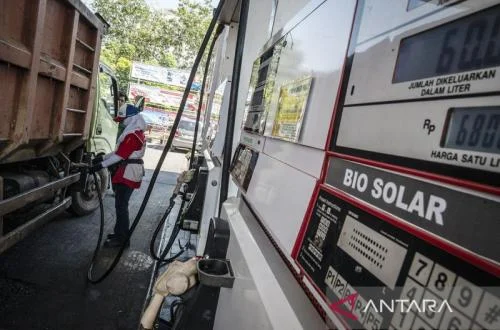
The Ministry of Energy and Mineral Resources (ESDM) has officially declared that the nationwide implementation of the mandatory B50 biodiesel program is poised to deliver profoundly significant economic advantages for Indonesia. This strategic policy initiative is also being lauded as a crucial step towards fortifying the nation’s energy sovereignty and reducing its susceptibility to volatile global energy markets. The program, which mandates a 50 percent blend of palm oil-based biodiesel with conventional diesel, is envisioned as a cornerstone of Indonesia’s sustainable energy transition and a catalyst for robust domestic economic growth.
Dwi Anggia, Spokesperson for the Ministry of ESDM, underscored the transformative nature of this policy, highlighting that it heralds a new era wherein national energy security is primarily driven by indigenous commodities, thereby diminishing reliance on imported fossil fuels. With the B50 mandate, a full half of every liter of diesel consumed across the archipelago will originate from crops cultivated and harvested by Indonesian farmers. This direct linkage to domestic agricultural output represents a fundamental shift in the country’s energy paradigm, creating a virtuous cycle that supports local economies, enhances national resilience, and leverages Indonesia’s abundant natural resources.
"The B50 program is projected to deliver tangible and substantial economic benefits to the nation. Our forecasts indicate that it will generate foreign exchange savings for Indonesia amounting to approximately Rp170 trillion (equivalent to around USD 10.8 billion) throughout the year 2026," Anggia articulated in a recent statement. This formidable figure underscores the profound financial impact of the program, demonstrating its capacity to shield the national economy from external shocks and reallocate significant capital towards domestic development priorities.
Deepening the Economic Impact: Forex Savings and Job Creation
The colossal foreign exchange savings projected from the B50 program are deemed critical for several reasons. Firstly, they provide a vital financial buffer, enabling the government to allocate more resources towards national development projects, infrastructure improvements, and social welfare programs. By reducing the need to spend precious foreign currency on crude oil imports, Indonesia can enhance its balance of payments, strengthen its currency, and improve overall macroeconomic stability. This financial insulation is particularly valuable given the inherent volatility of global oil prices, which have historically posed significant challenges to net oil-importing nations. The ability to mitigate these price fluctuations through domestic energy production offers a degree of economic certainty that is invaluable for long-term planning and investment.
Beyond the direct fiscal benefits, the macroeconomic impact of the B50 program extends profoundly into the national labor market. The Ministry of ESDM estimates that this ambitious initiative will be instrumental in generating up to 2.1 million new employment opportunities across various sectors throughout Indonesia. This staggering figure illustrates the powerful multiplier effect inherent in the downstream processing of agricultural products. The jobs created will span the entire value chain, from upstream activities in palm oil plantations, involving farmers, harvesters, and land managers, to midstream processing in biodiesel refineries, requiring engineers, technicians, and factory workers. Downstream, new roles will emerge in logistics, distribution, research and development, and even in supporting industries that adapt machinery and infrastructure for the higher biodiesel blend. This comprehensive job creation strategy is expected to significantly bolster household incomes, reduce unemployment rates, and contribute to a more equitable distribution of economic prosperity across different regions of the country.
Enhancing Energy Independence and National Sovereignty
The drive towards B50 is not merely an economic calculus; it is fundamentally about bolstering Indonesia’s energy independence and national sovereignty. As the world’s largest producer of palm oil, Indonesia possesses a unique strategic advantage in leveraging this abundant domestic resource for its energy needs. Historically, Indonesia, despite being an oil and gas producer, has become a net importer of crude oil and refined petroleum products, exposing it to geopolitical risks and the whims of international energy markets. Fluctuations in global oil prices directly impact fuel subsidies, inflation, and the national budget.
By increasing the proportion of domestically produced biodiesel in its fuel mix, Indonesia takes a decisive step towards mitigating these vulnerabilities. The B50 program signifies a conscious effort to detach the nation’s energy security from external pressures, ensuring a more stable and predictable energy supply for its citizens and industries. This move is aligned with the broader national strategy to diversify the energy mix, reduce reliance on fossil fuels, and achieve a more resilient energy landscape. It also empowers local farmers and palm oil producers, integrating them directly into the national energy supply chain and fostering a sense of shared ownership in the nation’s strategic direction. The concept of "kedaulatan energi" (energy sovereignty) is thus transformed from a policy aspiration into a tangible reality, underpinned by the nation’s own agricultural prowess.
Indonesia’s Commitment to Climate Targets: A Green Transition
Beyond its profound economic implications, the B50 mandate is also a critical pillar in Indonesia’s broader commitment to combating climate change and achieving its ambitious emission reduction targets under the Paris Agreement. The Ministry of ESDM projects that the transition to this higher biodiesel blend will result in a substantial reduction of greenhouse gas (GHG) emissions, estimated at up to 44.46 million tons of CO2 equivalent throughout 2026. This significant abatement contributes directly to Indonesia’s Nationally Determined Contribution (NDC), which outlines the country’s pledge to reduce emissions by 31.89% independently, or by 43.20% with international support, by 2030.
Biodiesel, derived from renewable sources such as palm oil, is considered a more environmentally friendly alternative to conventional fossil diesel. Its combustion typically results in lower net carbon emissions over its lifecycle, primarily because the carbon released during burning is reabsorbed by the growing feedstock plants. This circular carbon cycle makes biodiesel a vital component of decarbonization strategies, particularly in the transportation sector, which remains a significant contributor to global GHG emissions. The B50 program therefore positions Indonesia as a leader among developing nations actively pursuing green energy transitions, demonstrating that economic growth and environmental stewardship can be pursued concurrently through well-conceived policy frameworks.
Background and Evolution of Indonesia’s Biodiesel Program
Indonesia’s journey towards higher biodiesel blends has been a gradual yet determined one, evolving over more than a decade. The initial impetus for the biodiesel program stemmed from a confluence of factors: the need to stabilize palm oil prices amidst global market fluctuations, the desire to reduce dependency on imported fossil fuels, and the increasing global awareness of climate change.
The program officially began with the B20 mandate in 2016, requiring a 20% blend of biodiesel in all diesel fuel sold in the country. This was a significant step, but the government quickly recognized the potential for further integration. In January 2020, the mandate was elevated to B30, a 30% blend, which brought even greater forex savings and emission reductions. The implementation of B30 faced initial technical challenges related to engine compatibility and fuel distribution infrastructure, but these were largely overcome through robust coordination between government agencies, automotive manufacturers, and fuel distributors like Pertamina.
Following the success and lessons learned from B30, Indonesia initiated extensive trials for B40 (a 40% blend) in 2022 and 2023. These trials meticulously assessed the technical feasibility, engine performance, fuel economy, and emission profiles across various vehicle types, including heavy-duty trucks and passenger cars. The positive outcomes from these trials provided the necessary data and confidence to progress towards the even more ambitious B50 mandate. This incremental, evidence-based approach has been crucial in ensuring a smooth and sustainable transition, mitigating potential disruptions and building stakeholder confidence. The B50 program is therefore not an abrupt policy shift but the culmination of years of research, pilot projects, and strategic planning.
Ensuring Optimal Implementation: Coordination and Oversight
To guarantee the optimal implementation and success of the B50 program, the Ministry of ESDM is committed to continuous and rigorous monitoring of technical and operational execution on the ground. This involves close collaboration with a diverse array of stakeholders, including automotive manufacturers, fuel producers, distributors, and related industrial players. Regular assessments are conducted to address any emerging challenges, from ensuring adequate feedstock supply and refinery capacity to validating fuel quality and addressing engine compatibility concerns.
Dwi Anggia reiterated that the transition to B50 transcends mere energy diversification. She emphasized that this carefully calibrated and tested roadmap represents a strategic national instrument, meticulously designed with the overarching objective of maximizing the welfare of the Indonesian populace and fostering sustained economic prosperity. This holistic perspective underscores the government’s commitment to a program that is not only technically viable but also socially equitable and economically empowering.
Challenges and Mitigations: A Balanced Approach
While the benefits of the B50 program are clear, its implementation on such a large scale is not without challenges. Key considerations include:
-
Feedstock Sustainability: The reliance on palm oil raises questions about land use change, deforestation, and biodiversity. Indonesia has proactively addressed these concerns through the Indonesian Sustainable Palm Oil (ISPO) certification system, making it mandatory for all palm oil producers. Efforts are also underway to promote replanting of old plantations and improve yields on existing land, rather than expanding into new forest areas. The government is committed to ensuring that biodiesel production adheres to strict environmental and social sustainability standards.
-
Infrastructure Adaptation: Upgrading fuel storage tanks, pipelines, and distribution networks across the vast archipelago to accommodate higher biodiesel blends requires significant investment and coordination. Pertamina, the state-owned oil and gas company, plays a crucial role in this logistical overhaul, ensuring that the supply chain can efficiently handle the increased volume of biodiesel.
-
Engine Compatibility and Warranty: Close collaboration with automotive manufacturers is vital to ensure that new and existing vehicles are fully compatible with B50. This involves technical adjustments, material compatibility tests, and clear guidelines for consumers. The government’s proactive engagement with the automotive industry during B40 trials has laid a strong foundation for a smoother transition to B50.
-
Price Stability: Maintaining a stable and competitive price for biodiesel compared to conventional diesel is crucial for market acceptance. The government employs a levy mechanism through the Palm Oil Plantation Fund Management Agency (BPDPKS) to subsidize the price difference, ensuring that biodiesel remains economically attractive for consumers and viable for producers.
Broader Implications and Future Outlook
The B50 program places Indonesia at the forefront of global renewable energy efforts, particularly in the realm of biofuels. It demonstrates a powerful model for how a major agricultural producer can leverage its natural resources to address both energy security and climate change imperatives. The success of B50 could pave the way for even higher blends in the future, potentially moving towards B60 or even B100 (pure biodiesel) in specific applications, further solidifying Indonesia’s position as a leader in bioenergy.
Furthermore, the program’s emphasis on domestic production and value addition has significant implications for the global palm oil market. By creating a robust domestic demand for palm oil, Indonesia can better manage price volatility and reduce its reliance on export markets, thereby enhancing the stability of its palm oil industry. This strategy also reinforces the notion that palm oil, when produced sustainably, can be a versatile and valuable commodity for both food and energy security.
In essence, Indonesia’s B50 biodiesel program is more than just an energy policy; it is a comprehensive national strategy. It intertwines economic development, environmental stewardship, energy independence, and social welfare into a single, cohesive framework. By systematically moving towards higher biodiesel blends, Indonesia is not only securing its energy future but also demonstrating a tangible commitment to a greener, more prosperous, and self-reliant nation on the global stage. The projected savings, job creation, and emission reductions are not merely statistics but indicators of a profound transformation underway, signaling Indonesia’s resolve to forge a sustainable path forward in the 21st century.
Related posts: