Bulog Rejang Lebong Exceeds Annual Paddy Absorption Target, Bolstering Regional Food Security and Farmer Welfare

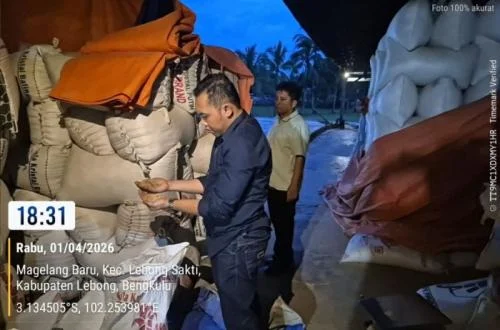
Perum Bulog Kantor Cabang Rejang Lebong in Bengkulu Province has significantly surpassed its annual target for paddy absorption, recording an impressive 1,851.5 tons of harvested dry paddy (GKP) from local farmers by mid-April 2026. This achievement stands in stark contrast to the initial yearly target of 1,000 tons of GKP, demonstrating a robust and efficient procurement strategy that has been executed well ahead of schedule. The early success underscores Bulog’s pivotal role in stabilizing food supplies, supporting agricultural communities, and contributing to national food security objectives.
A Musalim Yudha, the diligent head of Bulog Rejang Lebong, highlighted that the bulk of this substantial paddy absorption originated from Kabupaten Lebong. This region is critically recognized as one of the primary rice production centers within Bengkulu Province, making its contribution instrumental to the overall success of the procurement drive. Beyond paddy, Bulog Rejang Lebong has also successfully procured 237.7 tons of medium-quality rice, working towards its broader annual rice absorption target of 812 tons for the entirety of 2026. These figures not only reflect a proactive approach to procurement but also signal a healthy harvest season in key agricultural areas, providing a crucial boost to the local economy and farmer livelihoods.
Understanding Bulog’s Mandate and the Harga Pembelian Pemerintah (HPP)
Bulog, as the state-owned logistics agency, operates with a crucial mandate to manage Indonesia’s national food reserves, stabilize commodity prices, and ensure food availability across the archipelago. Its core functions include procurement, storage, distribution, and price intervention for staple foods, predominantly rice. The absorption of paddy and rice from farmers is a cornerstone of this mandate, designed to protect farmers from price volatility during harvest seasons and guarantee a minimum income for their produce.
The procurement process is guided by the Harga Pembelian Pemerintah (HPP), or Government Purchase Price, which serves as a floor price for agricultural commodities. For paddy, Bulog purchased GKP at Rp6,500 per kilogram. This HPP is strategically set to cover farmers’ production costs and provide a reasonable profit margin, thereby incentivizing continued cultivation and ensuring a stable supply of rice. Similarly, medium-quality rice was procured at Rp12,000 per kilogram. This dual-pronged approach, buying both paddy and milled rice, allows Bulog flexibility in its procurement and ensures that both raw materials and processed goods are secured for the national stock. The establishment and adherence to the HPP are vital mechanisms that shield farmers from market fluctuations, especially during periods of abundant harvest when prices might otherwise plummet due to oversupply.
Geographical Focus and Agricultural Landscape
The primary source of the absorbed paddy and rice, Kabupaten Lebong, is a key agricultural stronghold in Bengkulu. Its fertile lands and favorable climate conditions make it ideal for rice cultivation, contributing significantly to the provincial food basket. While Lebong accounted for the majority of the procurement, smaller yet significant contributions were also registered from Kabupaten Kepahiang and Kabupaten Rejang Lebong. These three districts collectively form an important agricultural corridor in Bengkulu, where rice farming is not just an economic activity but a way of life for many communities.
Bengkulu Province, located on the southwestern coast of Sumatra, possesses diverse topography that supports various agricultural commodities. However, rice remains a critical staple, and efforts to boost its production and ensure efficient post-harvest management are paramount for regional food security. The successful procurement by Bulog in these districts directly translates into improved food availability for Bengkulu’s population and strengthens the province’s contribution to national rice reserves.
Strategic Collaborations for Enhanced Efficiency
The remarkable success in exceeding the absorption target is not solely attributable to Bulog’s internal operations but also to a robust network of collaborations. Bulog Cabang Rejang Lebong actively partners with local rice mills, which play a critical role in processing GKP into ready-to-distribute rice. These partnerships are crucial for logistical efficiency, as they leverage existing milling infrastructure and expertise, reducing the need for Bulog to invest heavily in its own processing facilities in every location.
Beyond the private sector, Bulog’s coordination with local government agencies, agricultural extension workers (penyuluh pertanian lapangan), and even the military (Kodim 0409/Rejang Lebong) has been instrumental. Local government support facilitates access to farmer groups and provides crucial administrative backing. Agricultural extension workers serve as a vital link to farmers, offering technical guidance, disseminating information about Bulog’s procurement programs, and assisting in quality control. The involvement of Kodim 0409/Rejang Lebong, a regional military command, often provides logistical support, ensures security during procurement, and helps in mobilizing resources, reflecting a whole-of-government approach to food security. This multi-stakeholder collaboration streamlines the entire procurement chain, from identifying harvest-ready fields to transporting and storing the produce, ensuring that farmers can efficiently sell their harvests.
Harvest Season Dynamics and Sustained Commitment
The timing of Bulog’s procurement efforts aligns strategically with the agricultural calendar of the region. While the main harvest season in Kabupaten Lebong is nearing its conclusion by mid-April, Bulog’s early and aggressive absorption indicates a proactive approach to capturing the peak production period. Rice cultivation in Indonesia is often characterized by multiple harvest seasons annually, depending on irrigation and local climate patterns. In many parts of Sumatra, the main harvest typically falls between February and April, followed by a second, smaller harvest later in the year.
A Musalim Yudha confirmed Bulog’s unwavering commitment to optimally absorb farmers’ harvests throughout the entire harvest period. This commitment is crucial, as it provides a consistent market for farmers’ produce, reducing post-harvest losses and preventing distress sales at below-market prices. Even as the primary season winds down, Bulog’s continued presence ensures that any late harvests or subsequent smaller yields are also secured, contributing to a stable supply chain year-round.
Broader Implications for Food Security and Farmer Welfare
The achievement by Bulog Rejang Lebong carries significant implications that extend beyond mere quantitative targets.
1. Enhanced Farmer Welfare: The guaranteed HPP provides a safety net for farmers, protecting them from market price volatility. By offering a stable and fair price, Bulog helps ensure that farmers can cover their production costs, invest in future crops, and improve their overall economic well-being. This stability is crucial in retaining farmers in the agricultural sector and encouraging sustained rice production. Reports from farmers in similar regions often express relief and satisfaction when Bulog actively procures their produce, as it removes the uncertainty of finding buyers and securing reasonable prices.
2. Regional Price Stability: By absorbing a substantial volume of paddy and rice, Bulog directly influences market dynamics. This procurement helps prevent a glut of supply during harvest, which could otherwise drive down prices to unsustainable levels for farmers. Conversely, by building up its stock, Bulog is better positioned to release rice into the market during lean seasons or periods of price spikes, thereby stabilizing consumer prices and mitigating inflationary pressures on staple foods. This dual role of supporting producers and protecting consumers is central to Bulog’s mandate.
3. Strengthening National Food Reserves: The absorbed paddy and rice from Bengkulu contribute directly to Indonesia’s national food reserves. A robust national reserve is essential for responding to unforeseen events such as natural disasters, crop failures in other regions, or global supply chain disruptions. In a country as vast and populous as Indonesia, maintaining adequate rice reserves is a cornerstone of national stability and resilience. The success in Rejang Lebong provides a positive indicator for the overall health of national procurement efforts.
4. Economic Multiplier Effect: The steady demand for paddy and rice generated by Bulog’s procurement creates an economic multiplier effect in rural areas. It supports not only farmers but also local rice mills, transporters, agricultural input suppliers, and other related businesses. This economic activity fosters rural development and contributes to the overall prosperity of agricultural communities.
Challenges and Future Outlook
While the current achievement is commendable, Bulog’s operations are not without challenges. Climate change, for instance, poses an increasing threat to agricultural productivity through unpredictable weather patterns, droughts, and floods. Ensuring consistent quality of GKP, managing storage logistics efficiently, and adapting to evolving market dynamics are ongoing challenges.
Looking ahead, Bulog Rejang Lebong will likely focus on several strategic areas to maintain and exceed its performance:
- Expanding Farmer Partnerships: Continuously engaging with more farmer groups and cooperatives to ensure broader participation in procurement programs.
- Improving Infrastructure: Investing in or collaborating on modern storage facilities and drying technologies to minimize post-harvest losses and maintain quality.
- Leveraging Technology: Utilizing digital platforms for better data collection, inventory management, and communication with farmers and partners.
- Diversifying Procurement: While rice is primary, exploring opportunities to support other staple food commodities as part of a broader food security strategy.
The early and significant success of Bulog Cabang Rejang Lebong in exceeding its annual paddy absorption target by mid-April 2026 is a testament to effective strategic planning, robust logistical coordination, and strong multi-stakeholder collaboration. This achievement not only provides vital support to local farmers in Bengkulu by ensuring fair prices for their produce but also plays a critical role in bolstering regional food security and strengthening Indonesia’s overall national food reserves. As the country navigates the complexities of food supply and demand, the proactive efforts of agencies like Bulog remain indispensable in securing a stable and prosperous future for its agricultural sector and its citizens.
Related posts: