React Native 0.86 Release Marks Strategic Transition to React Foundation and Enhanced Android 15 Support

The React Native core team has officially announced the release of version 0.86, a milestone update that signals a significant shift in the framework’s governance while providing critical technical updates for the Android ecosystem. This release, which arrives as the second iteration following version 0.83 to feature no user-facing breaking changes, emphasizes stability and a commitment to seamless upgrade paths for developers. Beyond the technical refinements, the move of the React Native repository to the newly established React Foundation marks a historical transition for one of the world’s most popular cross-platform mobile development frameworks.
The release of version 0.86 comes at a pivotal moment in the mobile development landscape, particularly as Google prepares to enforce stricter UI requirements for Android 15. By focusing on comprehensive "edge-to-edge" support and enhancing developer tools, the React Native team is ensuring that the millions of applications powered by the framework remain compliant with modern operating system standards without requiring exhaustive manual refactoring from engineering teams.
The Migration to the React Foundation
Perhaps the most significant non-technical development in this release is the relocation of the React Native repository. Previously housed under the facebook GitHub organization, the repository—along with associated projects including React, Metro, Yoga, and the official documentation site—has moved to the react organization. This migration is the public-facing result of the transition of the React ecosystem to the React Foundation.
The React Foundation is an independent, non-profit entity designed to provide long-term stewardship for the ecosystem. While Meta (formerly Facebook) remains a primary contributor and user, the move to a foundation model aligns React and React Native with other industry-standard open-source projects like Node.js and Linux. This governance model is intended to foster a more vendor-neutral environment, encouraging broader collaboration from other tech giants such as Microsoft, Amazon, and Shopify, all of whom have significant stakes in the framework’s success.
From a practical standpoint for developers, GitHub will automatically handle redirections for existing URLs, issues, and pull requests. However, the symbolic weight of this change cannot be understated. It represents the maturation of React Native from a corporate project into a community-led industry standard.
Comprehensive Edge-to-Edge Support for Android 15
Technically, the centerpiece of version 0.86 is its robust support for Android 15’s edge-to-edge display requirements. With the release of Android 15 (SDK 35), Google has moved toward mandating that applications utilize the full screen real estate, drawing content behind the system status bar and the bottom navigation bar. While this creates a more immersive user experience, it presents significant layout challenges for developers who must now account for "safe areas" to prevent UI elements from overlapping with system icons.
React Native 0.86 introduces comprehensive fixes for this mode, specifically targeting scenarios where edge-to-edge display is enforced by the operating system even if not explicitly enabled via the edgeToEdgeEnabled property in Gradle. The framework now provides more sophisticated handling of window insets, ensuring that components like headers, footers, and floating action buttons remain accessible and visually coherent.
This update is particularly vital for enterprise applications that must maintain a polished look across a fragmented Android device market. By internalizing these fixes into the core framework, React Native 0.86 reduces the "boilerplate" code developers previously had to write using third-party libraries like react-native-safe-area-context to achieve OS-level compliance.
Innovations in React Native DevTools
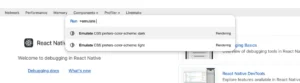
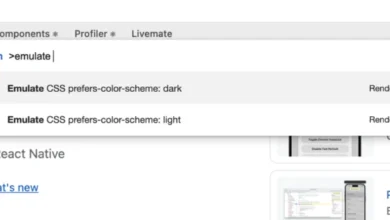
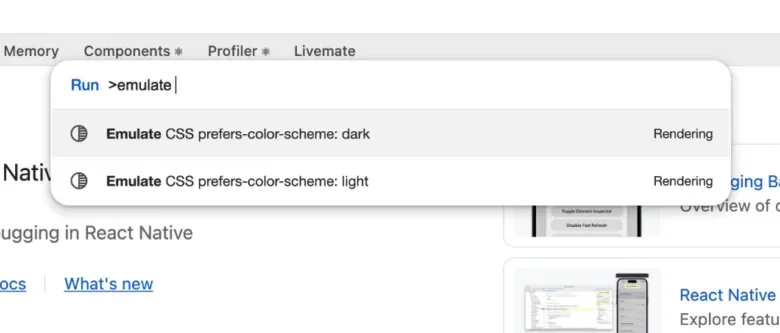
The developer experience (DX) receives a notable boost in this release through improvements to the React Native DevTools. A highlight is the introduction of light and dark mode emulation via the Emulation.setEmulatedMedia protocol. This feature allows developers to toggle the appearance mode of their application directly from the DevTools interface without needing to manually change the system settings on a physical device or emulator.
Accessible via the Command Palette (Cmd/Ctrl + Shift + P), this emulation tool mimics the functionality available in modern web browsers. It provides a temporary switch that resets once the DevTools are disconnected, allowing for rapid testing of dynamic styling and theme-switching logic. As mobile applications increasingly rely on system-level appearance preferences to dictate UI colors, this tool significantly reduces the feedback loop during the design and debugging phases.
A Continued Commitment to Stability
Following the precedent set by version 0.83, React Native 0.86 contains no user-facing breaking changes. This trend is a deliberate move by the core maintainers to address one of the long-standing criticisms of the framework: the difficulty of the upgrade process. Historically, upgrading React Native versions often required significant manual intervention, sometimes taking days or weeks for complex projects.
By ensuring that an app running on version 0.85 can transition to 0.86 without code modifications, the team is signaling that the framework has reached a level of API stability suitable for the most conservative enterprise environments. This "seamless upgrade" philosophy is supported by the React Native Upgrade Helper, a web-based tool that provides a diff of changes between versions, allowing developers to see exactly which configuration files need updating.
Technical Deep Dive: JSI and Web Spec Alignment
Under the hood, version 0.86 continues the work of aligning React Native’s runtime with web specifications and improving the efficiency of the "New Architecture." The JavaScript Interface (JSI), which serves as the bridge-less communication layer between the JavaScript engine and the native C++ code, has received several new APIs. These enhancements are designed to make the interface more capable and performant, particularly for developers building complex native modules or high-performance animations.
Furthermore, the release includes incremental updates to rendering, layout, and animation logic. Improvements in the Yoga layout engine (the C++ library that calculates Flexbox layouts) ensure higher fidelity when mirroring web-based CSS layouts. These changes, while subtle, contribute to a more predictable cross-platform development experience where "write once, run anywhere" becomes closer to reality.
The infrastructure and dependency layer has also been modernized. The release includes updates to internal dependencies, ensuring compatibility with the latest versions of Gradle, Ruby, and Xcode. For Android networking, optimizations have been made to how the framework handles data fetching and image loading, reducing memory overhead on lower-end devices.
Chronology and Development Statistics
The journey to version 0.86 involved a massive collaborative effort. According to the release data, the update contains over 596 commits from 97 unique contributors. This level of activity underscores the health of the ecosystem. The development cycle for 0.86 followed the standard "canary" and "release candidate" phases, allowing for extensive community testing before the stable tag was applied.
Chronology of recent major milestones:
- May 2024: Release of 0.84, focusing on the stabilization of the New Architecture.
- August 2024: Release of 0.85, introducing improved Windows and macOS support through community collaborations.
- Late 2024: The formation of the React Foundation and the official repository move.
- Current: Release of 0.86, cementing the "no breaking changes" policy and addressing Android 15 requirements.
Industry Implications and Expert Reactions
Industry analysts view the 0.86 release as a stabilizing force in the mobile development market. As Flutter and native development (SwiftUI/Jetpack Compose) continue to evolve, React Native’s move toward the React Foundation is seen as a strategic play to win over corporate IT departments concerned about long-term support and platform lock-in.
"The move to the React Foundation is a game-changer for governance," noted one independent software architect specializing in mobile infrastructure. "It removes the ‘Meta-only’ stigma and invites a more diverse set of contributors to shape the future of the framework. Technically, the focus on Android 15 edge-to-edge support shows that the core team is listening to the immediate needs of developers who are facing new OS mandates."
For developers using Expo—the popular framework built on top of React Native—the 0.86 updates will be integrated into the expo@canary releases. This ensures that the broader ecosystem, including those who rely on managed workflows, can benefit from the stability and Android 15 fixes immediately.
Looking Ahead: The Path to 1.0
While React Native remains in the "0.x" versioning scheme, the consistency and maturity demonstrated in the 0.86 release have reignited discussions about a potential 1.0 release. The team’s ability to ship significant features like Android 15 support and DevTools enhancements without breaking existing APIs suggests that the framework’s core is more robust than ever.
For now, the focus remains on the "New Architecture" rollout. While version 0.86 is compatible with both the old and new architectures, the team is gradually steering the community toward Fabric (the new rendering system) and TurboModules (the new native module system). The enhancements to the JSI in this release are a direct investment in that future.
In conclusion, React Native 0.86 is more than just a routine update; it is a declaration of intent. It promises a future where upgrades are no longer feared, where governance is transparent and inclusive, and where the framework remains at the cutting edge of mobile operating system trends. Developers are encouraged to use the React Native Upgrade Helper to begin their transition to 0.86, ensuring their applications are ready for the next generation of Android devices.
Related posts: